
Pantry Door Organization Ideas: Smart Storage That Actually Fits
A pantry door can create useful storage space, but only when the organizer fits the door, clears the shelves, and makes everyday items easier to use. The goal isn’t maximum door storage. It’s useful storage that works with your pantry.
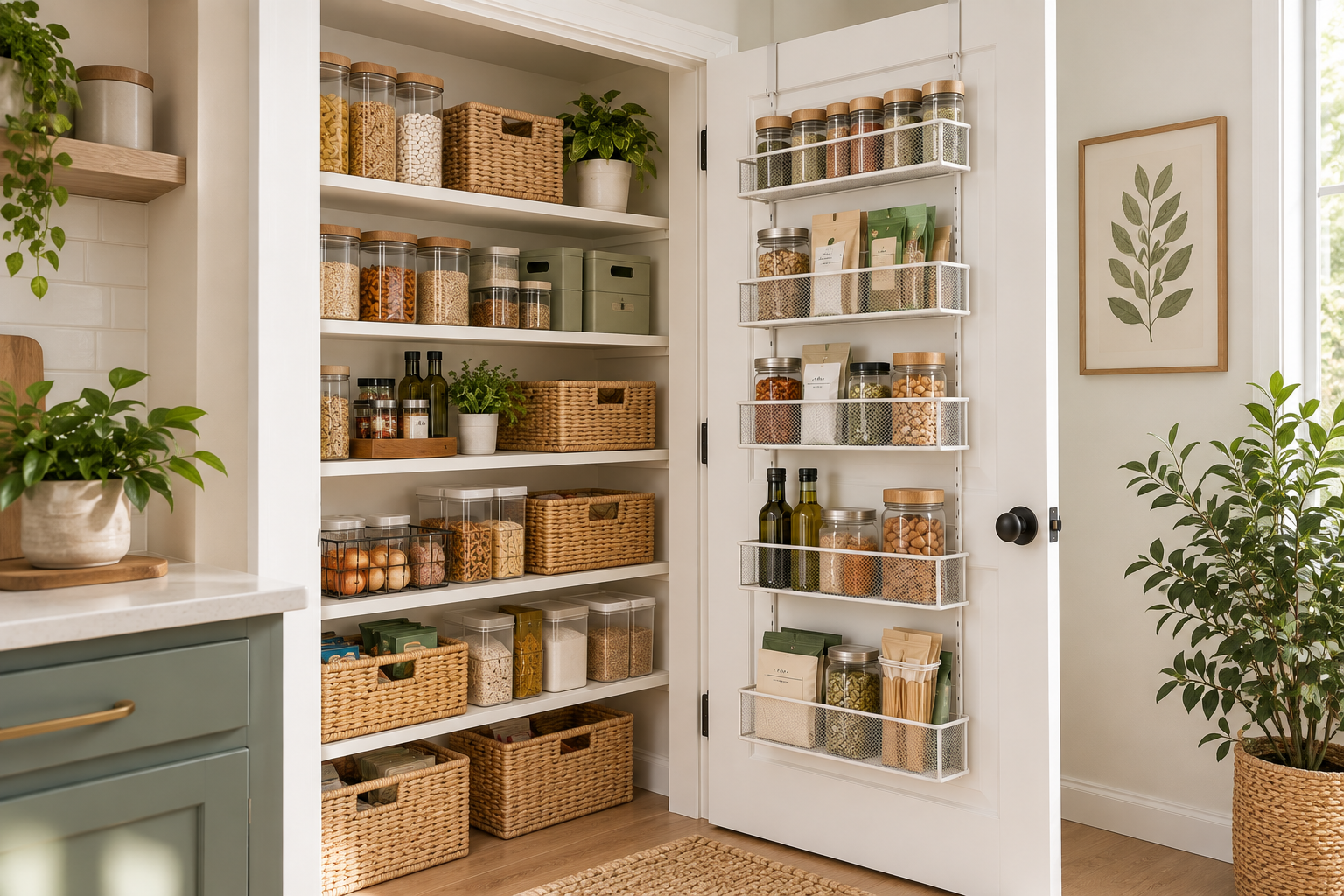
Start With the Door, Not the Organizer
Pantry door storage looks simple until the door actually has to close. The available space is affected by the door itself, the shelves inside the pantry, the frame, the hinges, and the depth of whatever you install.
That means an organizer that looks perfect in a product photo may not be the right solution for your pantry.
Before buying anything, treat the door like a space that needs to be measured and diagnosed.
You don’t need to fill the entire door. Add storage only when it solves a real problem without creating a new one.
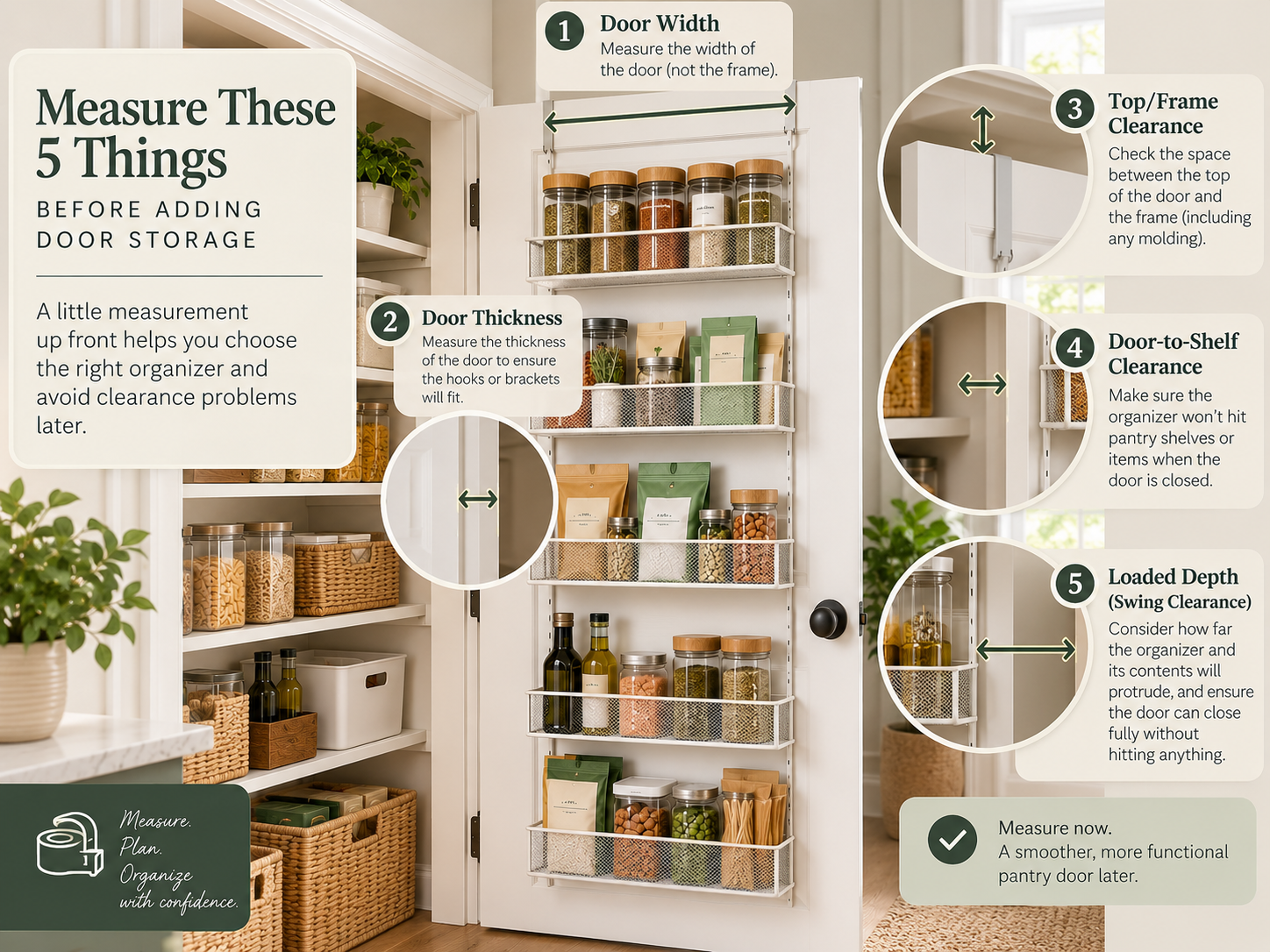
Measure These 5 Things Before Adding Pantry Door Storage
A few measurements can prevent one of the most common pantry-door problems: buying an organizer that technically fits the door but interferes with the pantry when the door closes.
- Door width: Measure the usable width of the door itself rather than assuming the frame dimensions are the same.
- Door thickness: Check the thickness of the door against the mounting method or hardware required by the organizer.
- Door-to-shelf clearance: Check how much space exists between the closed door and the pantry shelves.
- Top and frame clearance: Look for molding, trim, the door frame, and the space needed for the organizer to hang or mount correctly.
- Loaded depth: Think about how far the organizer and its contents will extend from the door. The important measurement is not just the empty organizer.
What If Your Pantry Door Has Almost No Clearance?
Some pantry doors simply don’t have enough space behind them for a deep organizer. That doesn’t mean you need to force one into the available gap.
First, measure the actual clearance between the door and the nearest shelf or stored item. Then compare that space with the depth of the organizer you are considering.
If the clearance is tight, look for a shallower solution designed for the available space. Keep the contents small and lightweight where appropriate, and make sure the door can still close normally.
If nothing can fit without interfering with shelves, trim, or the closing path, leave the door clear. Unused door space is better than storage that makes the pantry harder to operate.
Use the Pantry Door Storage Test
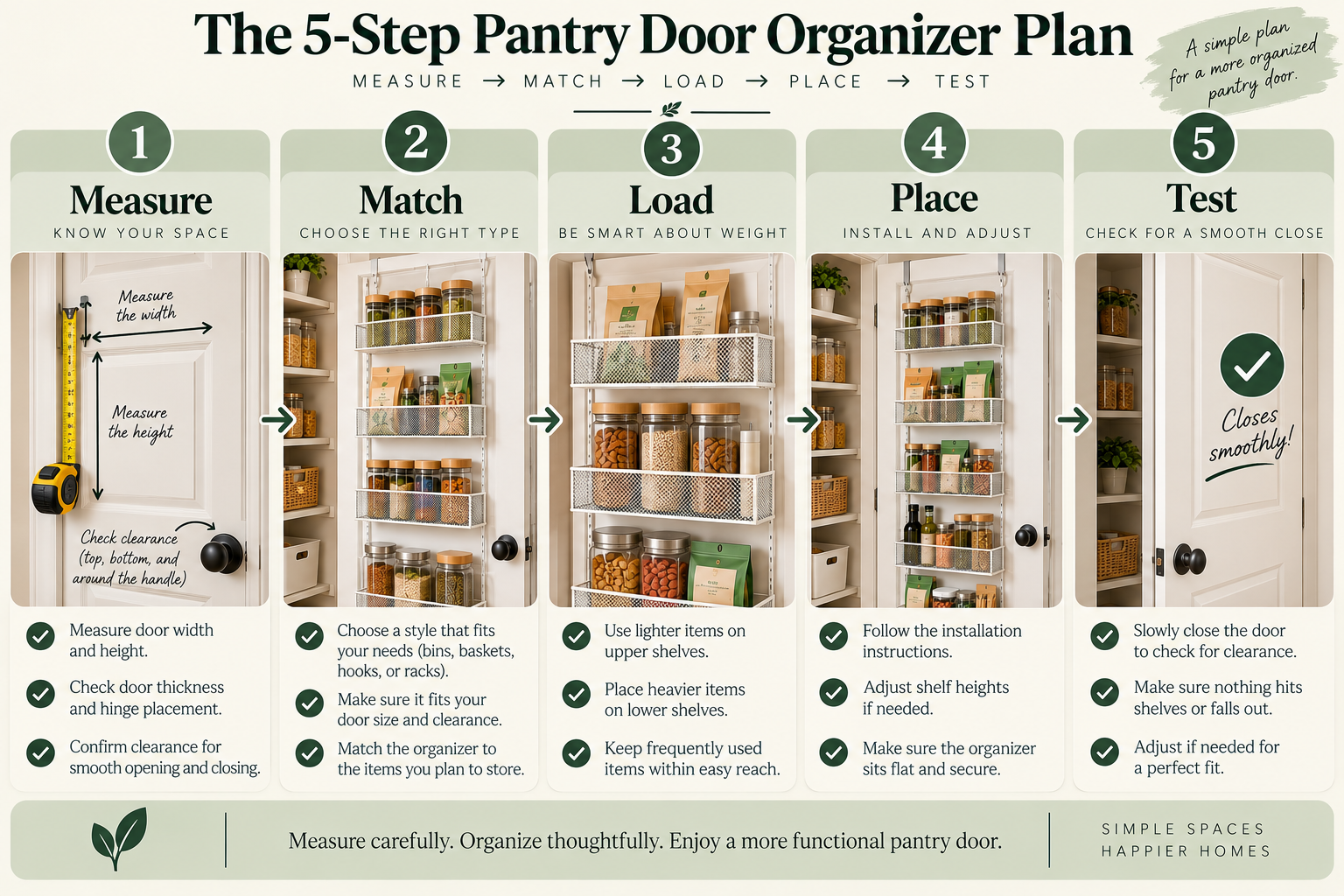
Once you’ve measured the space, use this five-step system before installing or loading the organizer.
Measure
Know the door width, thickness, available clearance, and the space the loaded organizer will occupy.
Match
Choose a storage type that solves the actual problem instead of choosing the largest organizer that fits on paper.
Load
Use the organizer for appropriate items and follow the product’s installation and load instructions.
Place
Put frequently used, suitable items where they are easy to see and reach without interfering with the pantry shelves.
Test
Open and close the door slowly. Check clearance, access, stability, and whether anything gets in the way.
Pantry Door Organization Ideas That Actually Solve Problems
Once you know the door can accommodate storage, choose the format according to what keeps going wrong in your pantry.
Use Clear Pockets for Small Packets
Small seasoning packets, drink mixes, snack-size packages, and other loose items can disappear easily on larger shelves.
Clear pockets or slim compartments can give these items a defined home while keeping them visible.
The useful feature isn’t simply that the pockets hold more. It’s that you can see and grab small items without searching through a larger container.
Use Slim Storage for Spices and Small Bottles
Spices and other small containers can work well in narrow door storage when the organizer provides enough support and clearance.
Keep the arrangement easy to scan. If several rows become difficult to reach, the added storage may be creating more work than it removes.
Choose Shallow Storage When Clearance Is Tight
A shallow rack, pocket, or narrow bin can be more useful than a deep organizer when the pantry shelves sit close to the door.
The available depth should be judged with the organizer loaded, not empty. Items inside the organizer can change how much space the door actually needs to close.
Use Narrow Bins for Loose Items
Small bags, packets, and grouped pantry supplies can benefit from a narrow bin with enough side or front containment to keep them from spreading.
Choose a bin that matches the size of the category. A very large bin can encourage unnecessary accumulation and make small items harder to find.
If you’re comparing bin styles for different pantry spaces, see our Best Pantry Storage Bins guide.
Consider Hooks for Suitable Lightweight Items
Hooks can make use of small areas that aren’t large enough for a shelf or bin. They can work for suitable lightweight items when the mounting method and location are appropriate.
Keep the door’s closing path clear and follow any installation instructions for the hardware you use.
Use an Over-the-Door Organizer When It Actually Fits
Over-the-door organizers can be convenient because they can add storage without permanently changing the door.
But the mounting style, door thickness, top clearance, loaded depth, and shelf clearance still matter.
Treat an over-the-door organizer as a fit decision, not an automatic solution.
Use Door-Mounted Shelving for a More Permanent Setup
A mounted shelving system can provide a more structured solution when the pantry door and installation surface are suitable.
This approach deserves more attention to mounting requirements, door construction, hardware, and load instructions than a simple removable organizer.
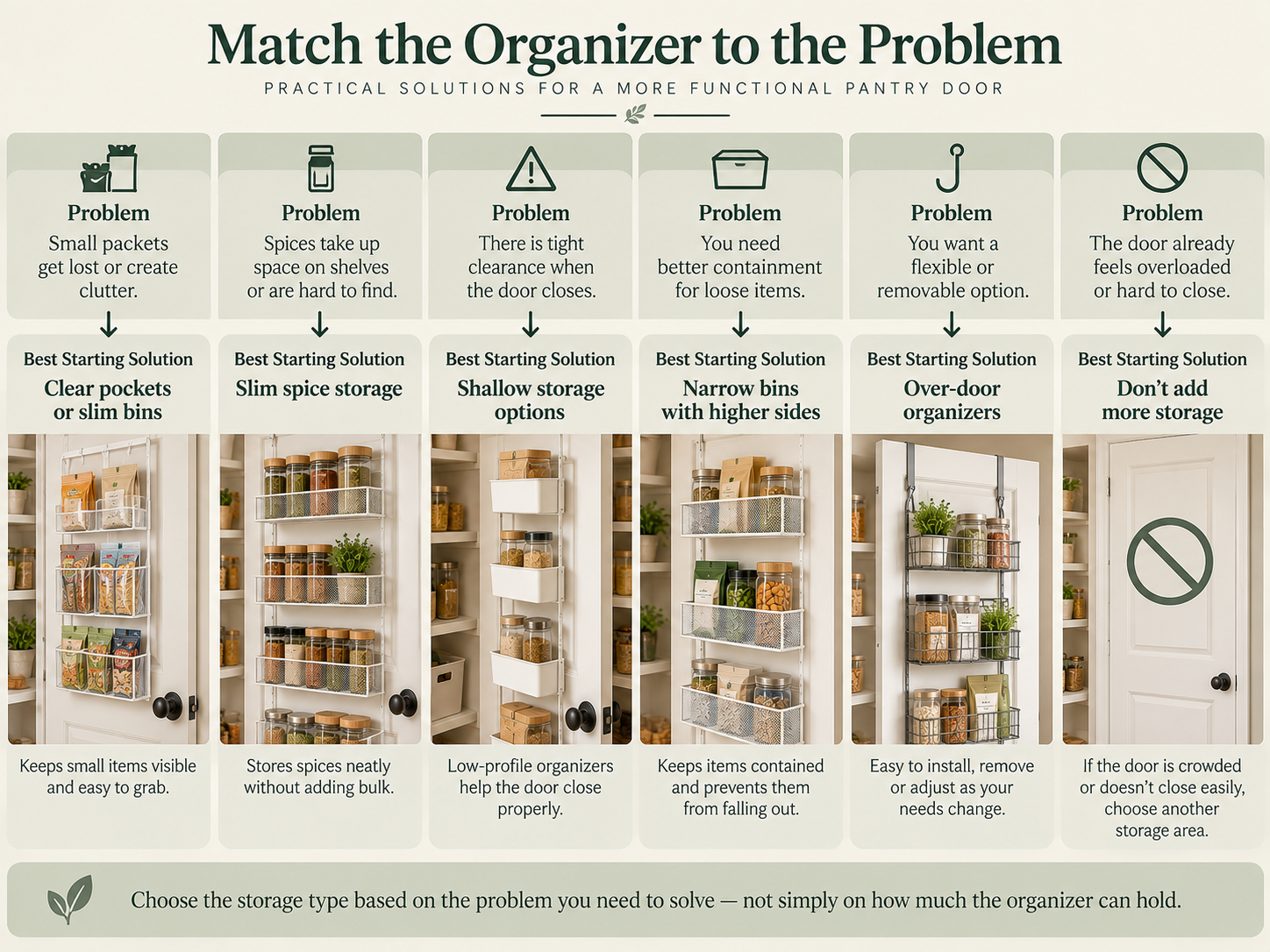
Match the Organizer to the Problem
The right storage type depends on what you need the door to do.
| Problem | Solution to consider | Check first |
|---|---|---|
| Small packets get lost | Clear pockets or slim bins | Visibility and category size |
| Spices are difficult to find | Slim spice storage | Depth and easy reach |
| Very little door clearance | Shallow storage or no door storage | Door-to-shelf clearance |
| Loose items spread around | Narrow bins with containment | Bin size and access |
| You need removable storage | Suitable over-the-door organizer | Door thickness and top clearance |
| The door already feels overloaded | Don’t add more storage | Closing, access, and overall usability |
What Should You Store on a Pantry Door?
Door storage is usually most useful for items that are relatively small, easy to access, and appropriate for the organizer and mounting system.
Depending on the setup, suitable categories may include:
- Spices and seasoning packets
- Small snack packages
- Tea or coffee packets
- Small baking supplies
- Food wraps and storage bags
- Other frequently used lightweight pantry items
The exact choice depends on the organizer, the door, and the way your household uses the pantry.
What Should You Avoid Putting on a Pantry Door?
Avoid treating the door as a place to store anything simply because there is technically room for it.
Heavy cans, bulky packages, large glass containers, and dense bulk foods may be poor choices when they make the door difficult to operate or exceed the organizer’s intended use.
Always follow the organizer’s mounting and load instructions. If adding an item makes the door difficult to close, causes interference, or makes access awkward, move that item somewhere else.
How to Organize a Small Pantry Door
In a small pantry, every inch has to earn its place. That makes door storage tempting—but it also makes clearance mistakes more costly.
Start with the measurements rather than the storage product. Then give the door a specific job.
For example, the door might become the home for small packets or frequently used lightweight items while the main shelves handle larger categories.
Keep the system simple enough that you can see, reach, remove, and return items without moving other things.
For the complete space-planning approach, see How to Organize a Small Pantry .
Don’t Let Door Storage Create a New Problem
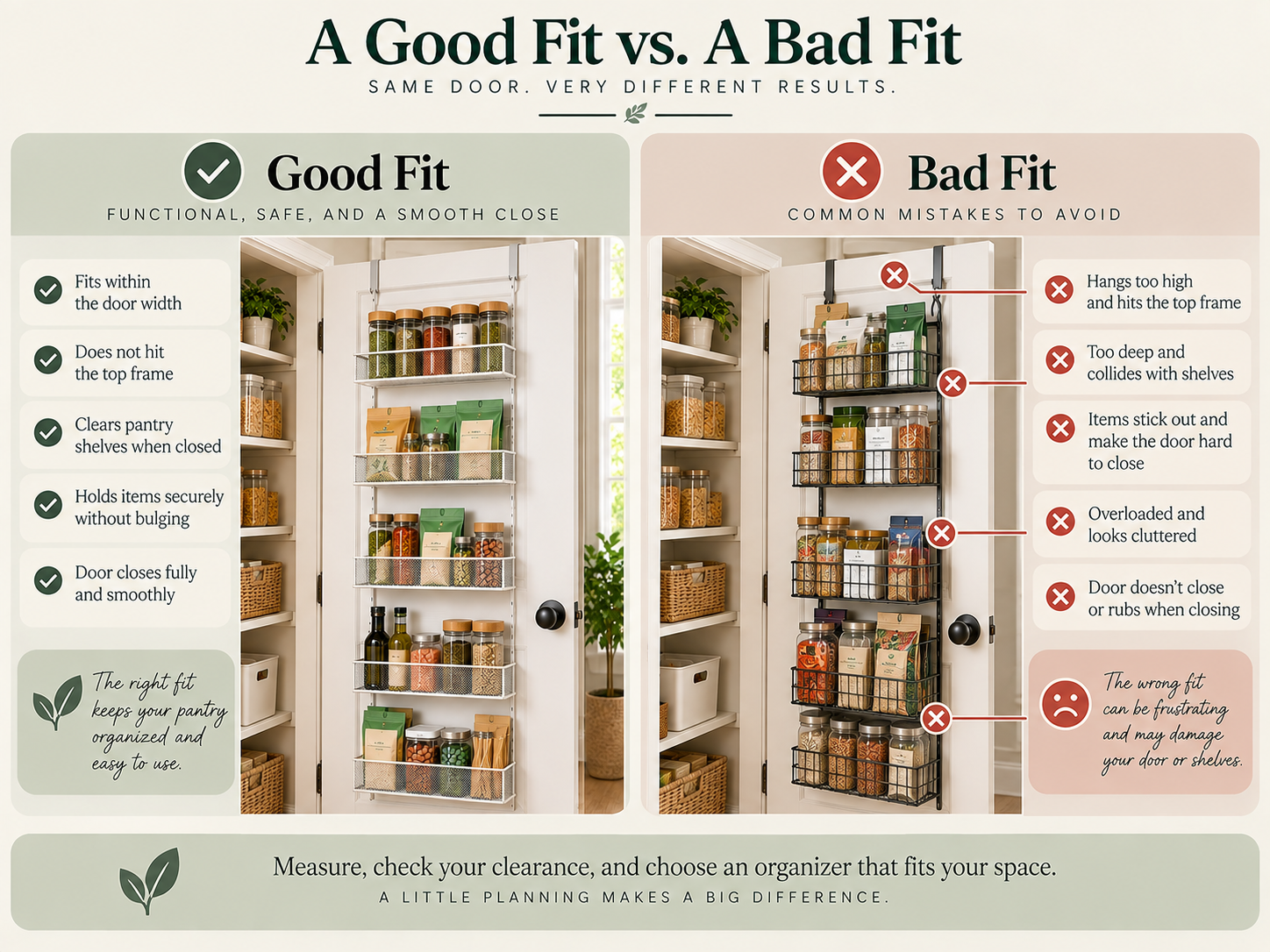
Adding storage can solve one problem while creating another. The most common warning signs are easy to spot once you know what to look for.
- The organizer hits or crowds the pantry shelves.
- The door becomes difficult to close.
- Items protrude into the closing path.
- The organizer swings or rattles excessively.
- Frequently used items are still difficult to reach.
- The door feels unnecessarily crowded or awkward to operate.
How to Stop Pantry Door Organizers From Swinging or Rattling
Some door organizers can move when the door opens or closes. The amount of movement depends on the organizer, mounting method, door, and contents.
Start by checking that the organizer is installed exactly as instructed and that its contents are appropriate for the design.
Then look at how the items are arranged. Loose objects can move inside an organizer even when the organizer itself is secure.
If the setup still swings into shelves, rubs against the pantry, or makes the door awkward to operate, reduce the load or reconsider the organizer.
Renter-Friendly Pantry Door Organization
Renters may prefer removable or low-commitment storage, but “no drilling” does not mean “fits every door.”
Check the organizer’s mounting method, door thickness requirements, top clearance, and loaded depth before buying.
Removable storage is only renter-friendly if it can be used without interfering with the door or damaging the property.
When You Should Not Use Pantry Door Storage
Sometimes the best pantry door organization idea is to leave the door alone.
Skip door storage when:
- There isn’t enough clearance for the organizer.
- The door cannot close normally with the organizer installed.
- The organizer interferes with shelves or stored food.
- The mounting method isn’t appropriate for your door.
- The added storage makes everyday items harder to reach.
- You would need to overload the organizer to make it worthwhile.
Not every available surface needs to become storage. A clear door can be more useful than a crowded one when the pantry’s physical constraints don’t support an organizer.
Run the Pantry Door Test
Before considering the project finished, test the door with the organizer installed and loaded.
- Close: Slowly close the door and check for contact with shelves, trim, or stored items.
- Open: Open the door fully and make sure the organizer remains stable.
- Reach: Check whether frequently used items are genuinely easy to reach.
- Remove: Take items out without having to move several other things first.
- Return: Put the items back and make sure the system is simple enough to maintain.
If the setup fails any part of this test, change the arrangement before adding more storage.
Pantry Door Organization Mistakes to Avoid
Buying Before Measuring
An organizer that almost fits can create clearance and access problems. Measure the door and the surrounding space first.
Choosing the Largest Organizer
More storage isn’t automatically better. A large organizer can reduce clearance and make the door harder to use.
Ignoring the Loaded Depth
The organizer’s empty dimensions don’t tell the whole story. The contents can change how far the storage projects into the pantry.
Putting Heavy or Bulky Items on the Door
Choose contents according to the organizer and door’s intended use. Don’t assume that because an item fits physically, it belongs there.
Filling Every Pocket
Leave enough room to see, grab, and return items comfortably. A packed organizer can defeat the purpose of organizing.
Ignoring Repeated Movement
If items shift, swing, or rattle every time the door moves, treat that as information. The setup may need less weight, different contents, or a different organizer.
More Pantry Organization Help
Pantry organization works best when each solution matches the problem. Continue with the guide that fits your space or storage need.
Frequently Asked Questions
What should I put on my pantry door?
Start with relatively small, lightweight, frequently used items that fit the organizer and leave enough clearance for the door to close normally. Spices, small packets, and other compact pantry supplies can be useful depending on the setup.
How do I organize a small pantry door?
Measure the available clearance first, then choose a shallow or compact solution that solves a specific problem. Avoid filling the door simply because storage space is available.
Are over-the-door pantry organizers worth it?
They can be useful when the door, organizer, and pantry have enough clearance and the storage solves a genuine access or containment problem. They are not a good fit for every pantry.
How do I know if a pantry door organizer will fit?
Check the door width and thickness, top and frame clearance, distance between the door and shelves, and the organizer’s loaded depth. Then test that the door can open and close without interference.
How much weight should I put on a pantry door?
There is no single safe weight that applies to every pantry door or organizer. Follow the product’s mounting and load instructions and avoid loading the door with unnecessary or unsuitable weight.
How can I organize a pantry door without drilling?
Depending on the door and organizer, removable or over-the-door options may work. Check the product requirements, door thickness, top clearance, loaded depth, and closing path before using one.
How do I stop a pantry door organizer from swinging?
Check the installation, reduce unsuitable or excessive contents, and make sure the organizer isn’t interfering with the shelves or door frame. If movement remains a problem, a different storage solution may be better.
Measure it. Match it. Make the door work for you.
Useful storage should make your pantry easier to see, reach, use, and maintain—not simply make it look fuller.
Order in every space. Simply.