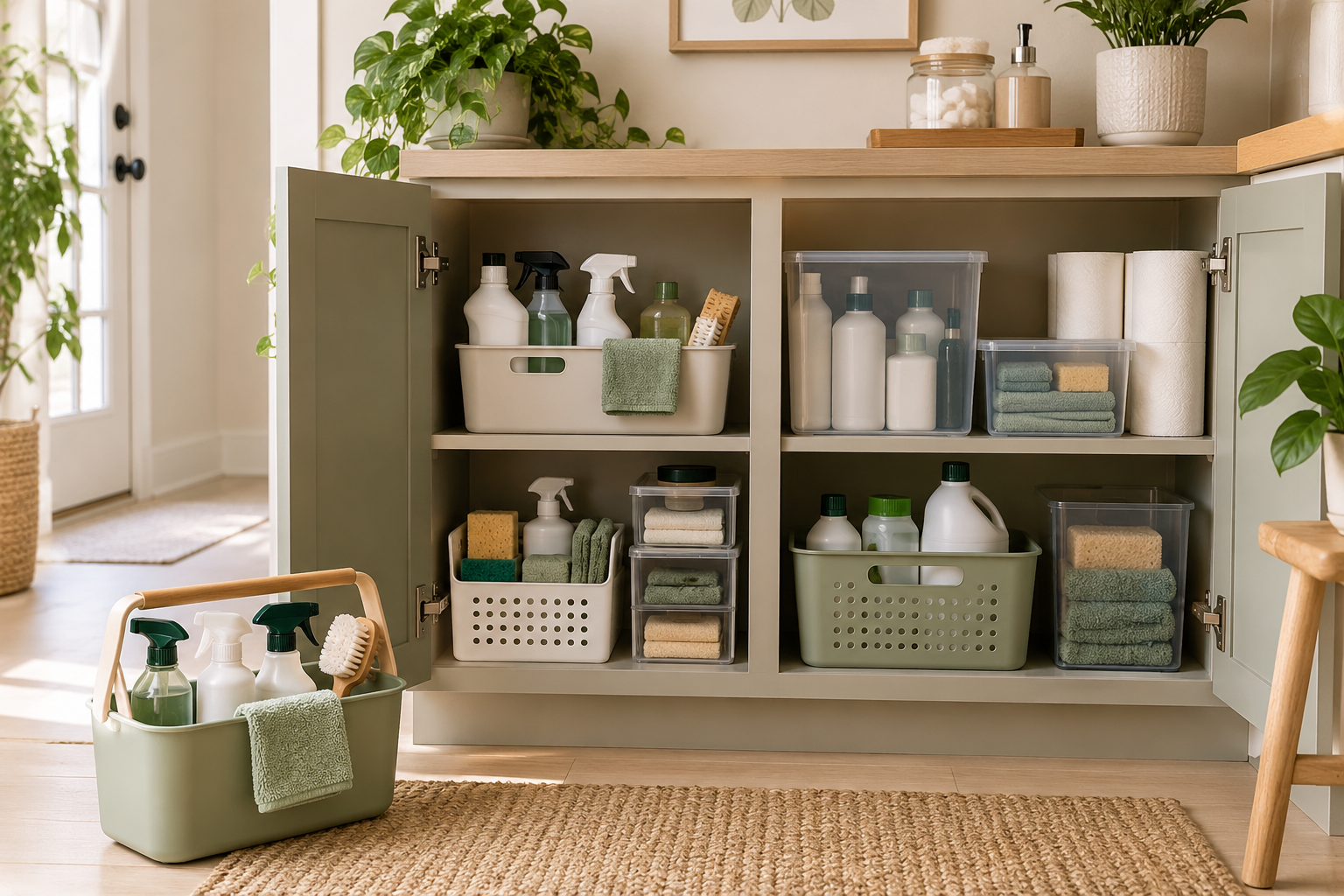
You do not need a dedicated cleaning closet to keep cleaning supplies organized. The key is to create a storage system around the space you already have, with clear homes for everyday supplies, small accessories, and back-stock.
Start by gathering all of your cleaning supplies, then choose a centralized, distributed, or hybrid storage system. Give everyday supplies an accessible home, keep back-stock contained separately, measure your storage area before buying organizers, and create a simple reset routine so supplies return to the same place after use.
The Our Storage System
Why Cleaning Supplies Become Difficult to Store Without a Closet
A dedicated cleaning closet gives supplies an obvious home. Without one, products often follow the rooms where they are used.
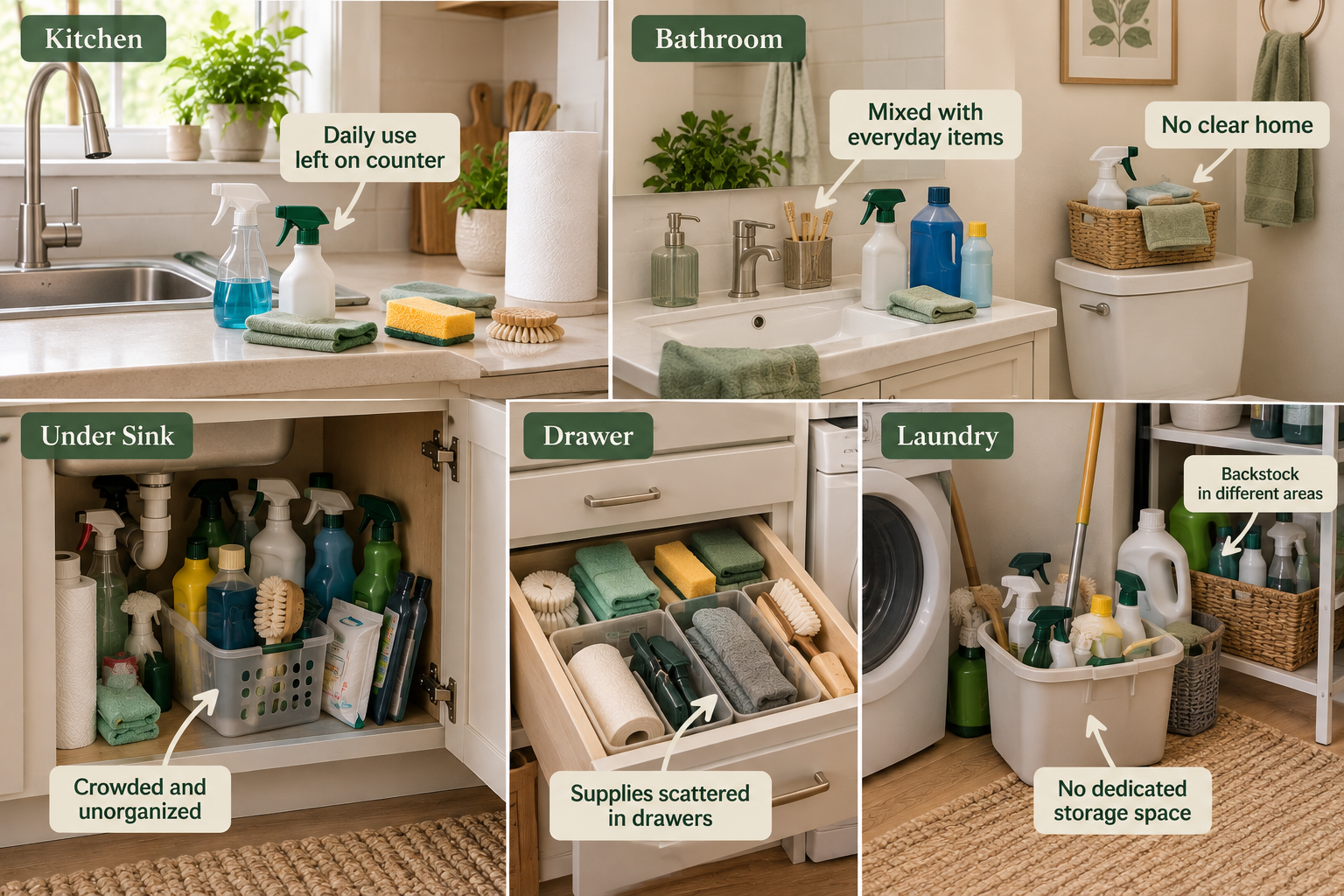
Spray bottles may stay under the kitchen sink. Bathroom cleaners may remain in a bathroom cabinet. Refills may end up in a pantry or utility area, while cloths and brushes get stored somewhere else.
The problem is not always the amount of cleaning supplies you own. Often, the problem is that there is no clear system for deciding where each category belongs.
1. Gather Every Cleaning Supply First
Before choosing an organizer, gather your cleaning supplies in one place.
Check under sinks, bathroom cabinets, laundry areas, utility spaces, pantry sections, and other places where cleaning products have accumulated.
Include bottles, sprays, powders, cloths, sponges, brushes, gloves, refills, and other cleaning accessories.
What to gather
Bring together both products and accessories. This gives you a realistic picture of the storage system you need.
Why start here?
An organizer chosen before you know your actual inventory can be the wrong size or create unnecessary storage.
2. Decide: Centralized, Distributed, or Hybrid Storage?
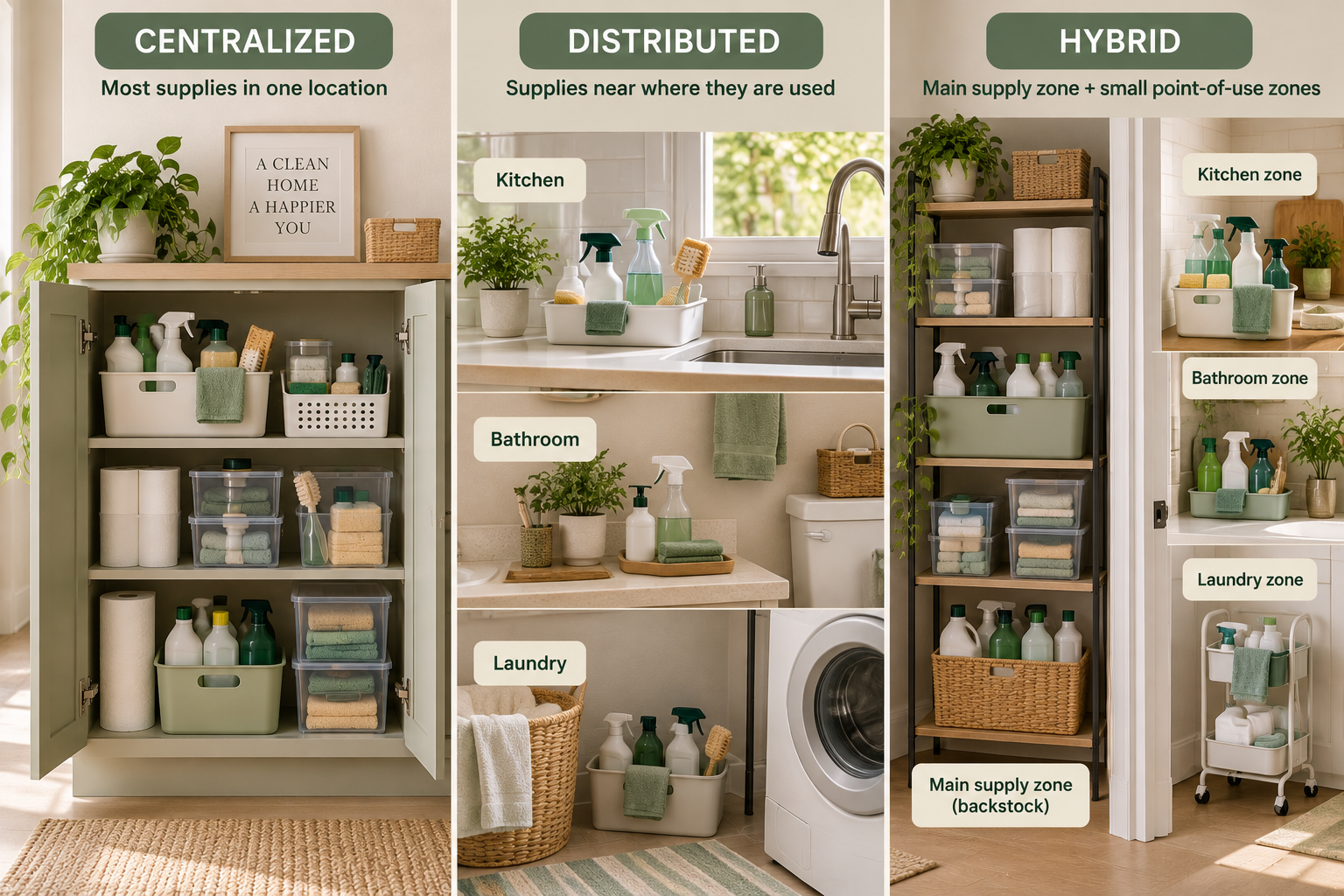
Without a cleaning closet, there are three practical ways to organize your supplies.
Choose the Storage Model
Keep most cleaning supplies together in one cabinet, cupboard, laundry area, pantry section, or other primary storage zone.
Keep smaller groups of supplies close to the rooms where they are normally used.
Keep your main inventory in one primary zone while placing a small number of frequently used supplies near their points of use.
Which model should you consider?
- Centralized: useful when one storage area can comfortably hold most supplies.
- Distributed: useful when supplies are regularly used in different areas and access matters.
- Hybrid: useful when you want one main inventory but also need a few everyday supplies closer to where they are used.
3. Choose Your Primary Cleaning-Supply Zone
If your home has one area that can become the main cleaning-supply zone, choose it before buying organizers.
Look for a location that is reasonably accessible, appropriate for the products you need to store, and large enough to hold the supplies you use regularly.
Possible primary zones
- Under-sink cabinet
- Kitchen cabinet
- Laundry cabinet
- Bathroom cabinet
- Pantry section
- Utility cabinet
What matters most
The largest space is not automatically the best space. A predictable location that is easy to access can be more useful than a larger but inconvenient area.
4. Create Small Point-of-Use Zones
A distributed or hybrid system can work well when cleaning products are regularly used in different rooms.
Instead of moving your entire cleaning collection from room to room, keep a small group of frequently used supplies close to the point of use.
For example, a small bathroom cleaning set could stay in a bathroom cabinet while larger refills remain in the primary storage zone.
A point-of-use zone should solve an access problem. It should not become another place where excess inventory accumulates.
5. Separate Everyday Supplies From Back-stock
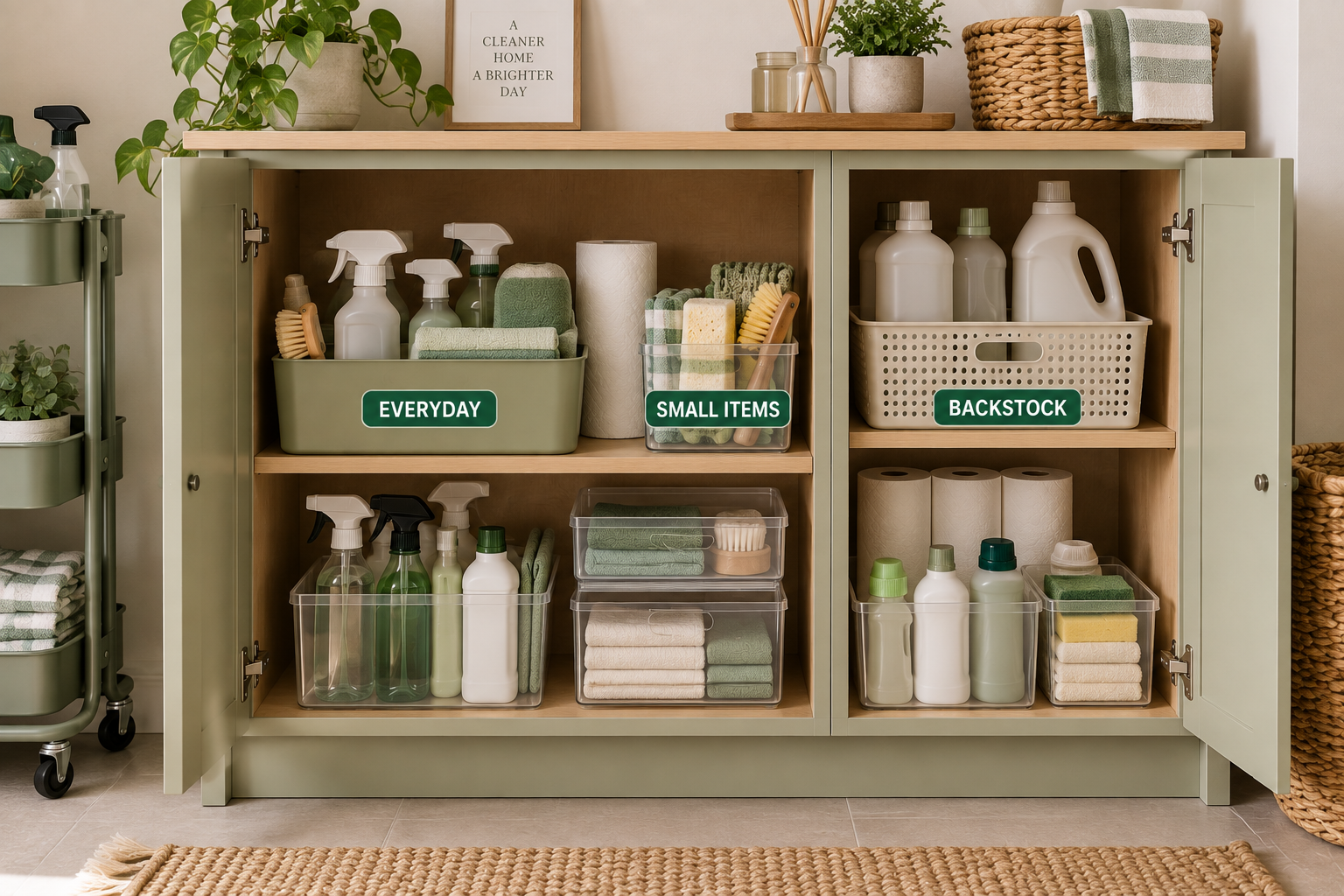
One of the simplest ways to make a small storage area work better is to separate what you use now from what you have in reserve.
Everyday supplies
Products and accessories you reach for regularly. These should receive the easiest access.
Back-stock
Unopened refills and extra products that do not need to occupy your easiest-to-reach storage space.
| Storage Group | What Belongs There | Priority |
|---|---|---|
| Everyday | Frequently used cleaners and tools | Easy access |
| Small Items | Cloths, sponges, brushes, and gloves | Easy visibility |
| Back-stock | Refills and unopened extras | Contained storage |
6. Measure the Space Before Buying an Organizer
Do not start with the organizer. Start with the storage space.
Measure These Four Things
- Width — the available side-to-side space.
- Height — the usable vertical space.
- Depth — how far the organizer can extend into the cabinet or storage area.
- Clearance — the space needed to open doors, pull baskets forward, remove bottles, or reach items behind the organizer.
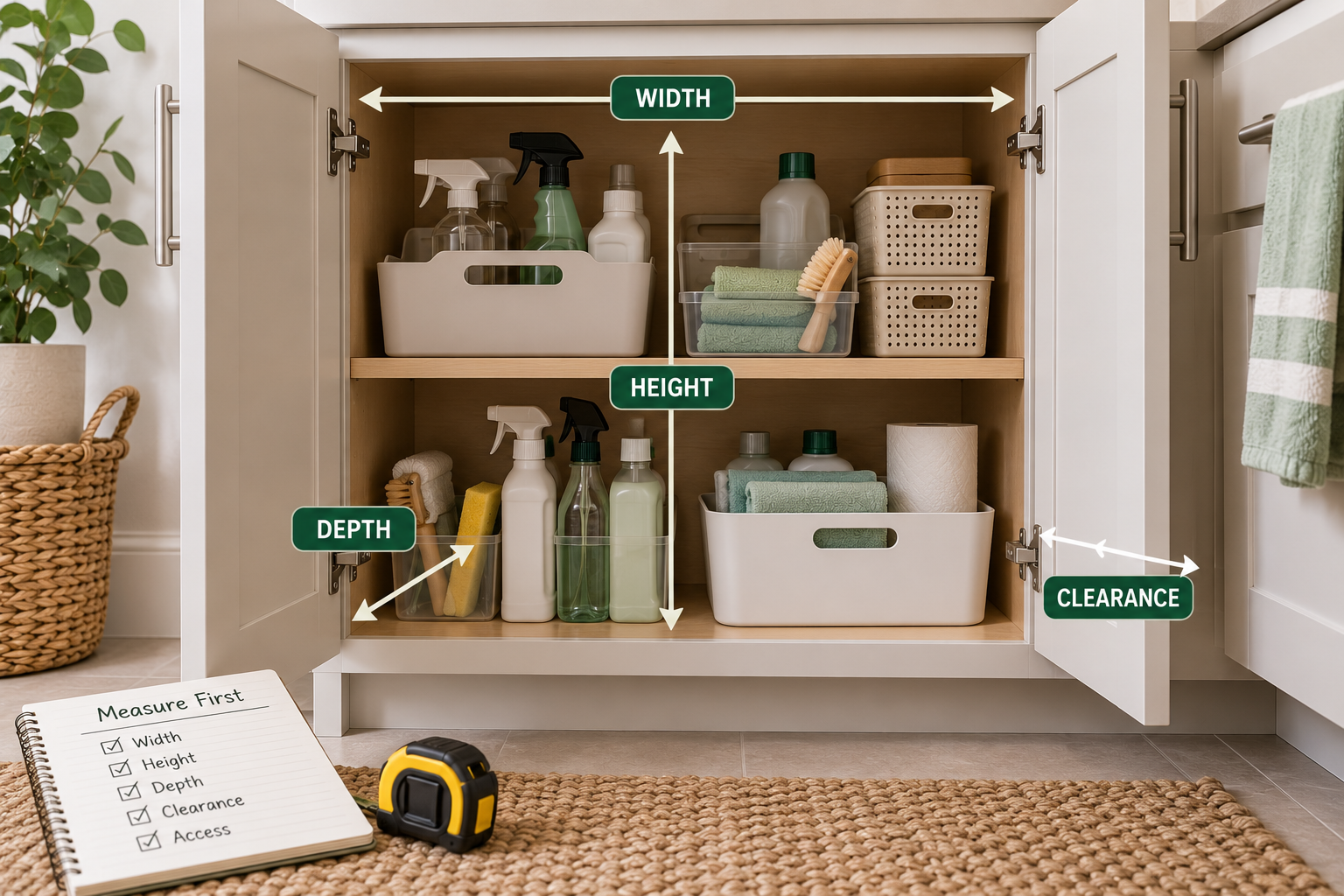
This is especially important in under-sink cabinets and narrow storage areas. An organizer can technically fit while still making the space harder to use.
7. Choose the Storage Method for the Space
Once you know the dimensions, choose storage based on the specific problem you are trying to solve.
Use a caddy when
You regularly carry several cleaning products from one area to another.
Use a bin when
You need to contain several loose or similarly sized cleaning accessories.
Use a basket when
You need to make products inside a deeper cabinet easier to pull forward.
Do not over-organize
Every organizer should solve a real access, visibility, or containment problem.
Cleaning Supply Caddy
A practical option when everyday cleaning products need to move easily between rooms.
Cabinet Storage Organizer
A useful approach when cabinet storage needs better access to items stored inside.
Before You Buy an Organizer
- Measure the available space.
- Identify the exact storage problem.
- Decide which category the organizer will hold.
- Make sure the finished setup will still be easy to access.
8. Make Frequently Used Supplies Easy to Reach
Storage should reflect how often you use something.
Frequently used products should be easier to reach than backup supplies. Less frequently used items can occupy higher, deeper, or less convenient areas when appropriate.
Within a cabinet, this might mean keeping everyday products toward the front while placing back-stock farther back or in a separate section.
Simple Access Rule
9. Keep Cleaning Products Safe
Cleaning-product storage also needs to account for safety.
Keep products in their original containers and follow the storage directions on their labels. Store them away from children and pets where required.
Do not move cleaning chemicals into food or drink containers. Keep cleaners separated from food, medications, and other items that could be mistaken for them.
If a product has specific storage instructions, follow the product label rather than treating all cleaning supplies as interchangeable.
10. What to Do When You Have Almost No Storage
If your home has very little storage, focus on reducing the amount of space your system needs rather than trying to recreate a full cleaning closet.
Small-Space Approach
Keep only what you actually use.
Give back-stock one defined home.
Keep everyday supplies accessible.
Use point-of-use storage only when it solves a real access problem.
Measure before adding organizers.
A small but predictable system is easier to maintain than several overflowing storage areas.
11. Common Cleaning-Supply Storage Mistakes
| Mistake | Why It Creates Problems | Better Approach |
|---|---|---|
| Buying organizers first | The organizer may not fit the actual space or inventory. | Gather supplies and measure first. |
| Keeping everything in one deep cabinet | Frequently used products can become difficult to reach. | Separate everyday supplies from back-stock. |
| Creating too many small zones | Supplies become scattered and harder to find. | Keep one primary zone and use point-of-use zones selectively. |
| Letting back-stock spread everywhere | Reserve supplies consume the easiest storage space. | Give back-stock one defined home. |
| Ignoring clearance | An organizer may technically fit but block access. | Measure how the storage will actually be used. |
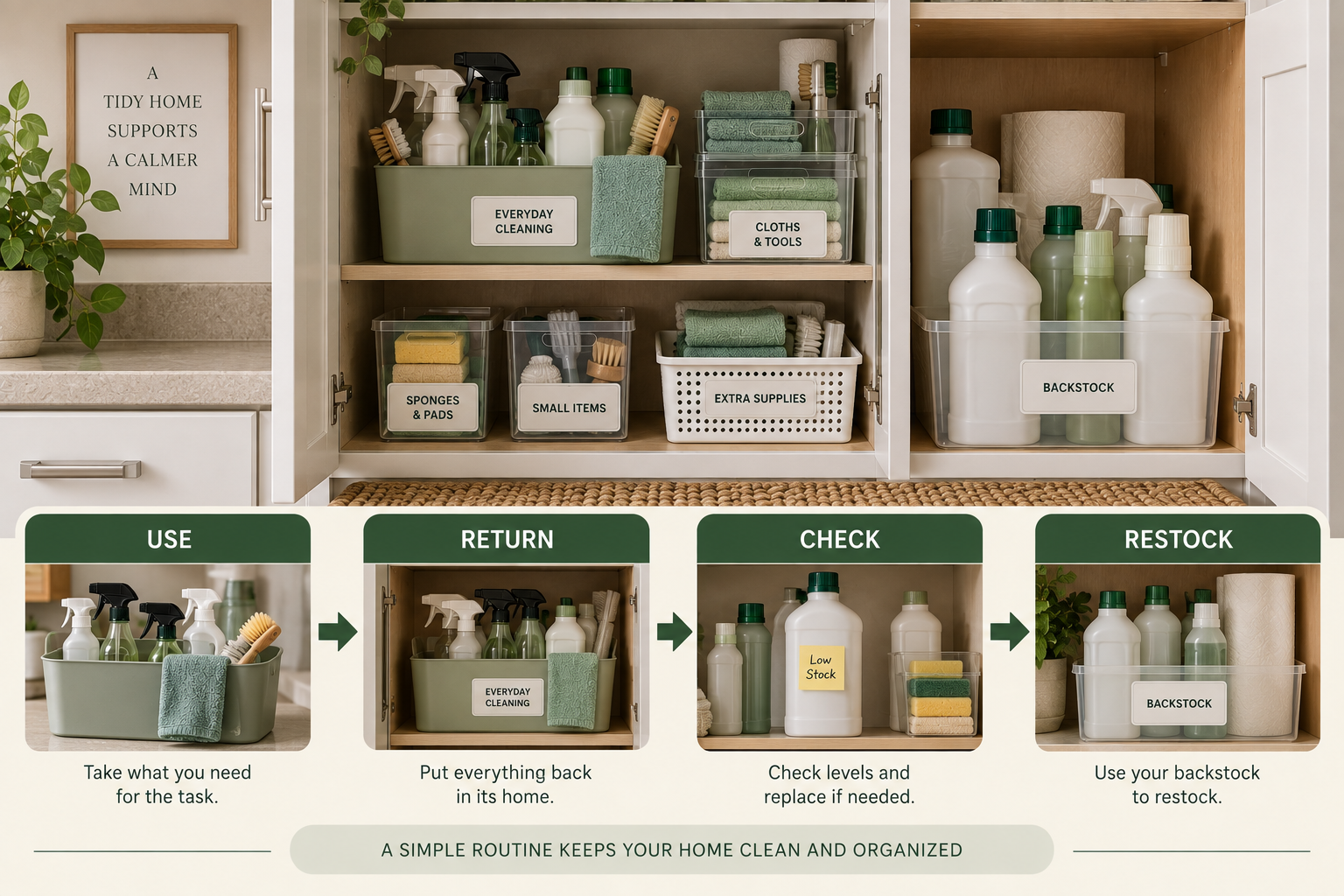
12. Create a Simple Reset and Restocking Routine
A cleaning-supply system works best when returning items takes almost no thought.
After cleaning, return products to their designated zone instead of leaving them in the room where they were used.
When you notice a low supply, check the back-stock before buying another one. When back-stock is running low, add the item to your normal shopping list.
Use
Take the supplies you need for the cleaning task.
Return
Put each product back into its assigned storage zone.
Check
Notice low everyday supplies and check the back-stock.
Restock
Replace only what is actually needed.
Keep Separate
Maintain a clear distinction between active supplies and reserve stock.
Reset
Leave the storage zone ready for the next cleaning task.
Cleaning Supply Storage Safety
Keep cleaning products in their original containers and follow the instructions on their labels.
Storage should keep products secure and separated from food, medications, and other items that could be mistaken for them.
Keep products inaccessible to children and pets when the label calls for it, and pay attention to product-specific storage requirements.
When in doubt, the product label is the starting point for safe storage.
Quick Answers
How do you organize cleaning supplies without a cleaning closet?
Choose one primary storage zone, separate everyday supplies from back-stock, and use small point-of-use zones only when they make cleaning easier. A cabinet, under-sink area, laundry area, pantry section, or other suitable storage zone can work.
Where should cleaning supplies go if you have no closet?
Use a storage area that is accessible, appropriate for the products, and large enough for the supplies you need to keep there. The right location depends on the layout and storage available in your home.
Should all cleaning supplies be stored together?
Not necessarily. A centralized system works for some homes, while a distributed or hybrid system can make more sense when supplies are regularly used in different areas.
How should you store cleaning back-stock?
Keep back-stock in one defined area whenever possible. Reserve supplies do not need to occupy the easiest-to-reach space used for everyday cleaning.
Should you buy organizers before measuring?
No. Measure width, height, depth, and clearance first. Then choose an organizer that solves the specific storage problem.
Related Guides
Final Thought
You do not need a dedicated cleaning closet to have an organized cleaning-supply system.
Start with what you already own. Decide whether centralized, distributed, or hybrid storage fits your home. Then give everyday supplies, small accessories, and back-stock clear places to live.
The goal is not to create more storage. It is to create a system that makes cleaning supplies easy to find, easy to return, and easy to restock.