SMALL LIVING ROOM ORGANIZATION
A small living room becomes easier to organize when you organize around what the room actually needs to do—not simply around where you can fit more storage.
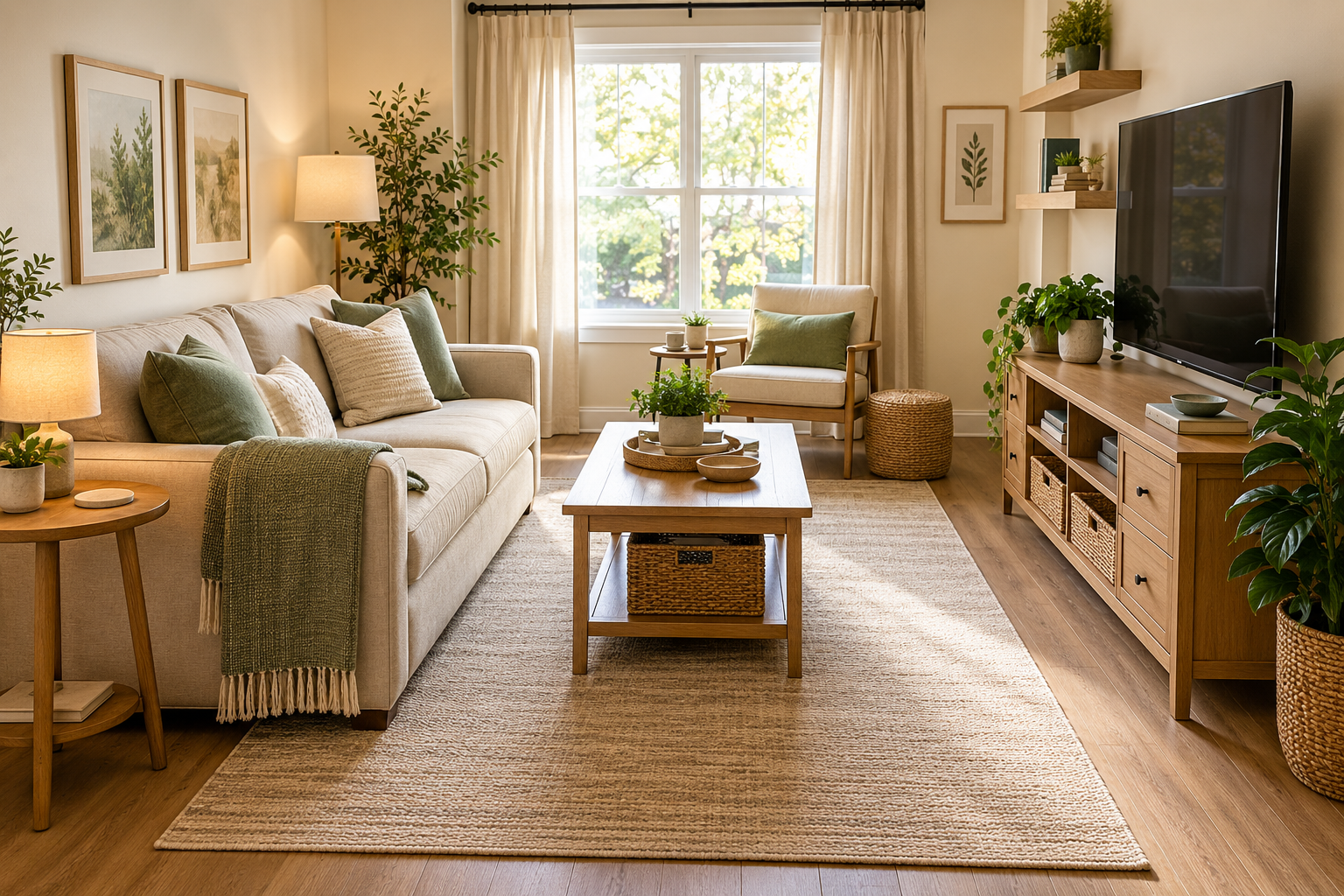
To organize a small living room, first decide what the room needs to support, then remove items that do not belong, protect the main walking paths, create simple activity zones, and give frequently used items specific homes. Add storage only after identifying what needs to be stored and where it is used.
1. Decide What Your Living Room Needs to Do
Before moving furniture or buying organizers, identify the activities that actually happen in the room.
A small living room might be used for watching TV, relaxing, reading, hosting guests, children’s play, working, or storing everyday household items.
Write down the main activities that happen there during a normal week.
| Activity type | What it means |
|---|---|
| Primary | Activities the room must support regularly. |
| Secondary | Activities that happen occasionally. |
| Belongs elsewhere | Activities or belongings taking space without needing to be there. |
Not every activity needs equal space. A room that is mainly used for relaxing and watching TV does not need to be arranged as though it were also a permanent office, playroom, reading room, and entertainment center.
Organize around the room’s real jobs. The less space you have, the more important it is to give the available space a clear purpose.
2. Clear Items That Do Not Support Those Functions
Once you know what the room needs to do, remove things that do not support those uses.
Start with obvious items:
- Trash
- Broken objects
- Duplicates
- Things waiting to be returned elsewhere
- Unused decor
- Items that belong in another room
Then look at larger objects. A small room can feel crowded because of one oversized piece of furniture just as easily as because of dozens of small objects.
The goal is not to empty the room. The goal is to make the room’s limited space serve the things you actually use.
3. Protect the Main Walking Paths
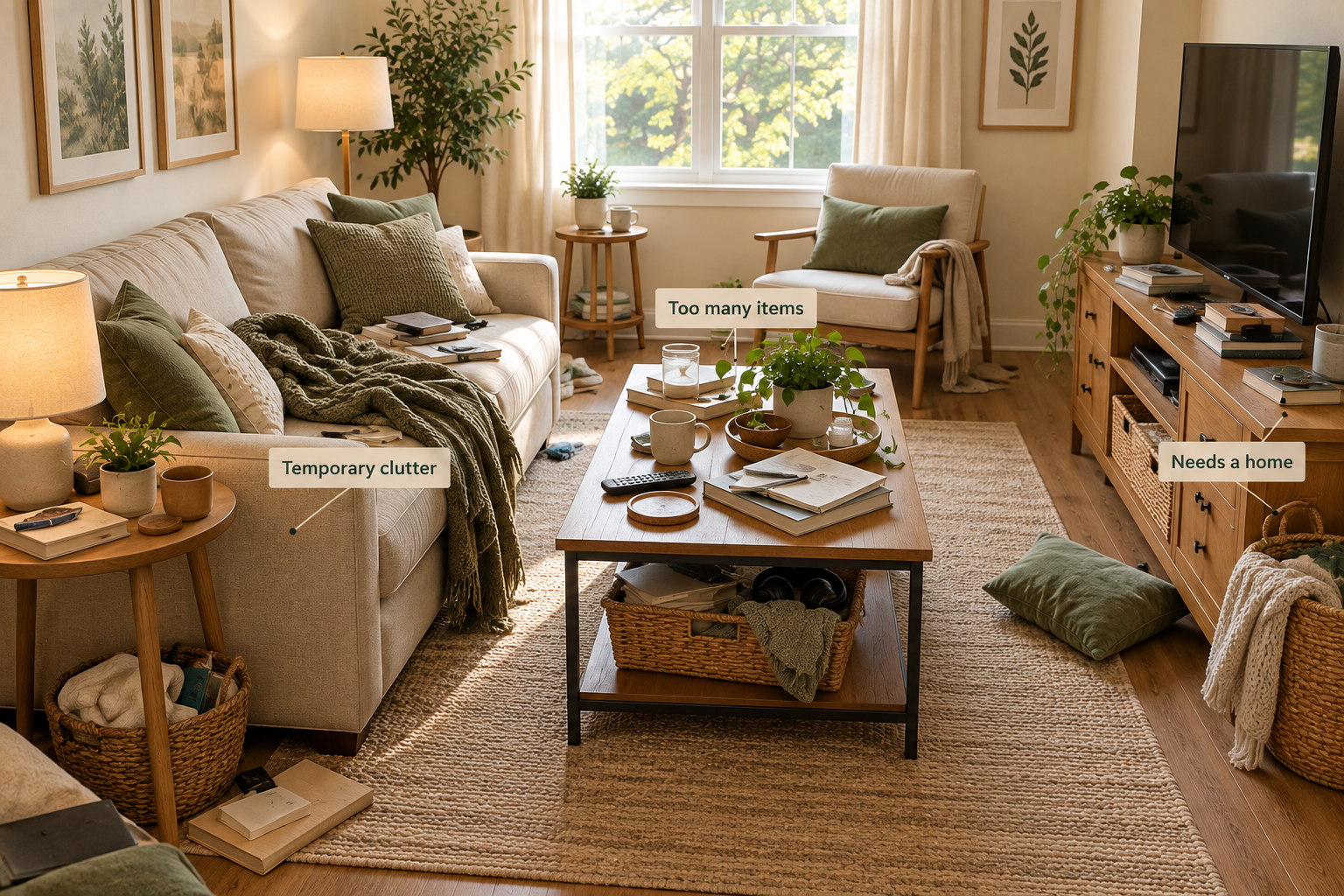
Before adding storage, test how people move through the room.
Identify:
- The main entrance
- The route to the seating
- The route to frequently used furniture
- Doors and drawers that need to open
- Paths to windows or other frequently accessed areas
Then arrange furniture so these routes remain practical.
Do not rely on a universal clearance number. Room shapes, furniture sizes, doors, and household routines vary.
Instead, physically walk the route. If you repeatedly have to turn sideways, move around furniture, or step around objects, the layout needs another test.
4. Create Zones Instead of Scattering Storage
A small room does not need a separate piece of furniture for every category.
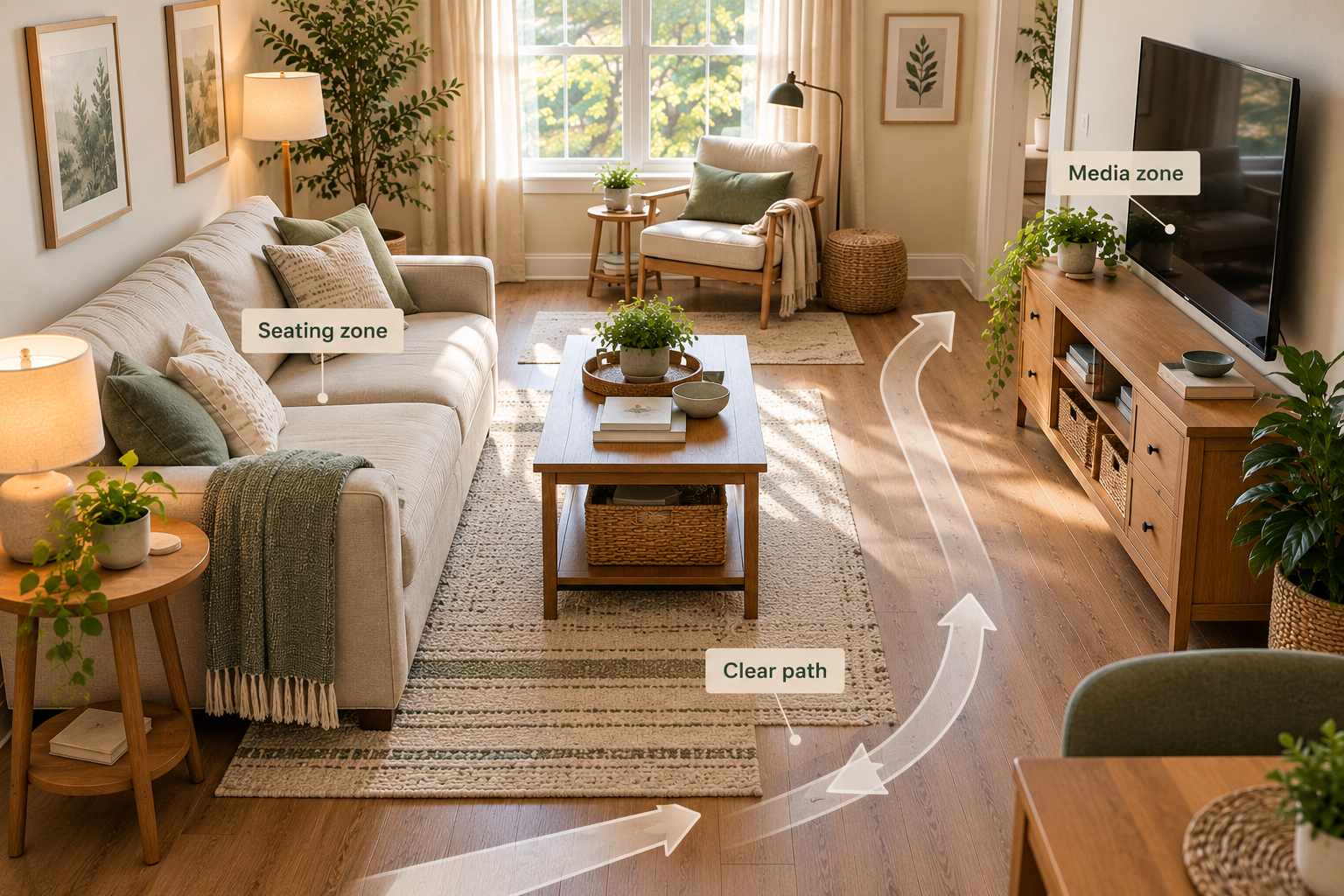
Instead, group activities.
Seating zone
Keep the sofa, side table, remotes, reading material, and other seating-related items connected.
Media zone
Keep the TV, controls, gaming accessories, and necessary electronics together rather than scattering them around the room.
Reading or activity zone
If reading, crafts, children’s activities, or another secondary activity happens regularly, give it a defined area instead of allowing its belongings to spread throughout the room.
The exact zones depend on the household. The important point is that each zone should have a clear purpose.
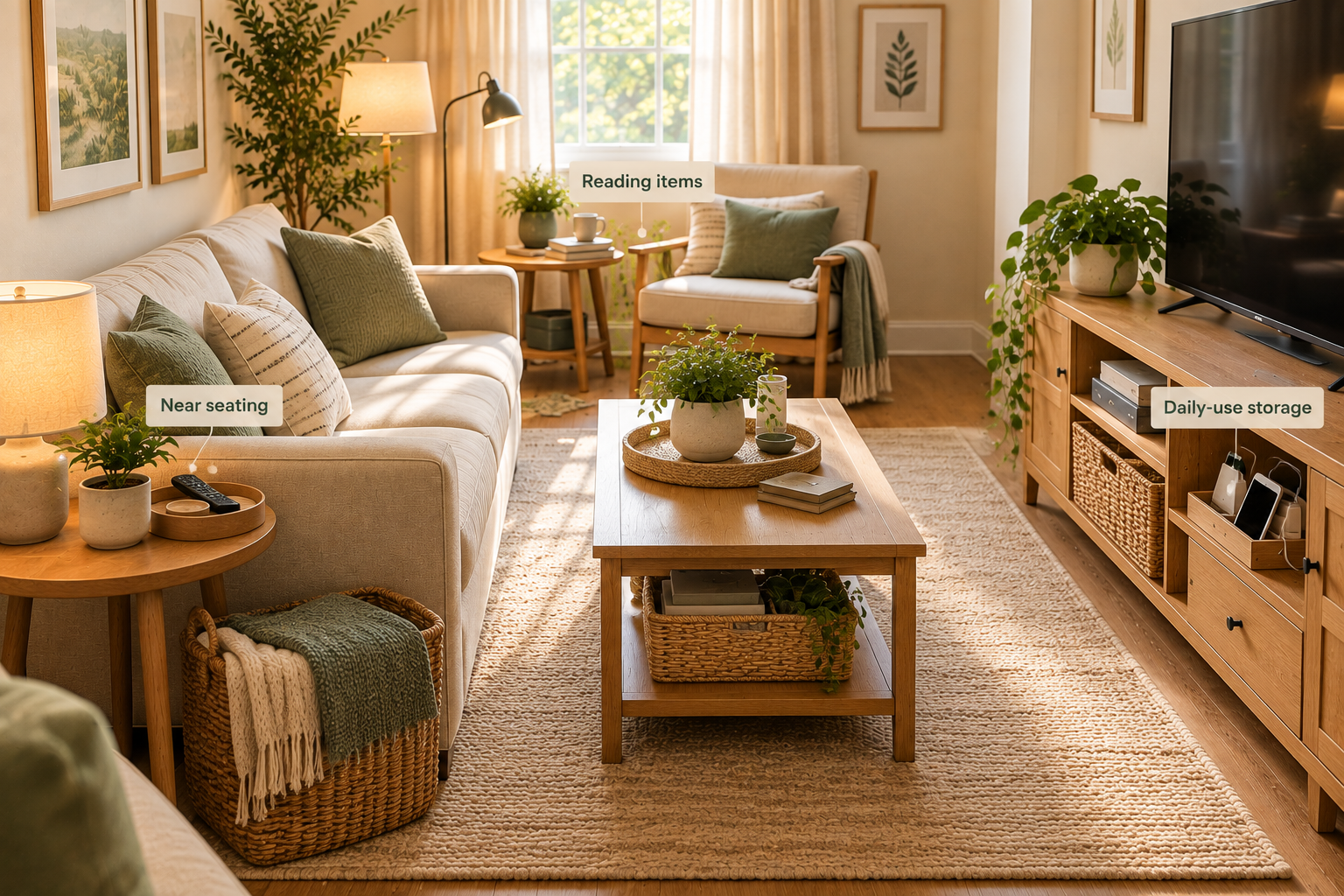
5. Give Frequently Used Items a Home Near Where They Are Used
A storage system works better when returning something is easier than leaving it out.
Keep frequently used items close to the activity that produces them.
| Item | Organizing principle |
|---|---|
| Remotes | One dedicated location near the main seating. |
| Blankets | Accessible basket or storage furniture near the sofa. |
| Books | Shelf or contained reading zone. |
| Chargers | One controlled charging location near normal device use. |
| Games | One defined category or container. |
6. Add Storage Only After Identifying the Problem
This is where it helps to resist the usual approach of buying several organizers first.
Ask three questions:
What keeps accumulating?
Identify the category that repeatedly becomes clutter.
Where is it used?
Keep its storage close enough that returning it is convenient.
How often is it used?
Frequently used items should remain easier to access than occasional items.
A basket may be useful for blankets. A drawer may work better for small items. Closed storage may be better for visually messy categories. Vertical shelving may make sense when floor space is limited.
But an organizer that does not match the category or routine simply creates another object to manage.
- Measure the available footprint.
- Confirm that doors, drawers, and walking paths remain usable.
- Check what the storage will actually hold.
- Choose access based on how often the items are used.
One example: dual-purpose seating and storage
If you need additional seating or a footrest and also need concealed storage near the seating area, a storage ottoman can combine those functions in one piece.
The SONGMICS 43.3-inch Folding Storage Ottoman Bench, MINOTA Collection is one example. Check the available footprint and dimensions before buying because its width makes it more appropriate for some room layouts than others.
7. Keep the Main Surfaces Easy to Reset
The coffee table, side tables, media console, and other visible surfaces often become temporary landing spots.
Give each surface a limited job.
| Surface | Simple rule |
|---|---|
| Coffee table | Keep only a small number of items used during the room’s main activities. |
| Side table | Keep useful everyday items such as a lamp, drink, or book. |
| Media console | Prioritize electronics and their necessary accessories. |
The goal is not perfectly empty surfaces. It is making the intended use of each surface obvious.
8. Test the System Before Buying More
Live with the arrangement for several days.
Watch what happens naturally.
- If the same item repeatedly ends up on the floor, its storage location may not be working.
- If a surface repeatedly becomes a dumping ground, the category needs a better home.
- If one container stays empty while another overflows, the storage allocation needs adjusting.
- If a walking route still feels awkward, revisit the furniture arrangement.
This turns organization into a feedback process rather than a one-time makeover.
9. Create a Simple Reset Routine
The final system needs to be easy enough to maintain.
A short evening reset can include:
- Return remotes.
- Put blankets back.
- Clear temporary items.
- Return misplaced objects to their rooms.
- Reset the main visible surfaces.
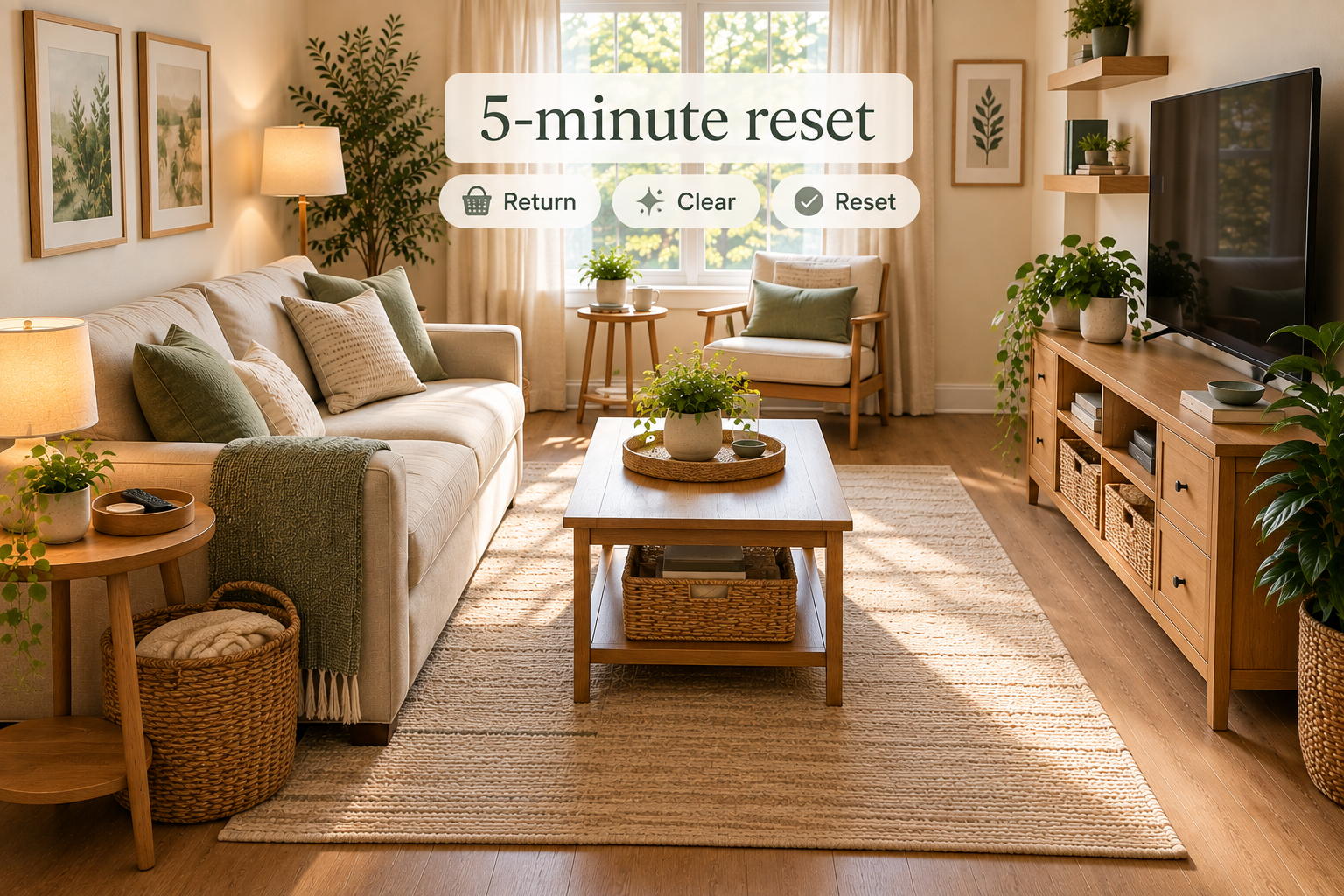
The purpose is not to make the living room perfect every night. It is to prevent small amounts of clutter from becoming a larger organizing project.
One example: accessible soft-item storage
For blankets and other soft items used around the sofa, an open basket can keep them contained without making them difficult to reach.
The INDRESSME XXXLarge Woven Rope Blanket Basket is one example, with a 90L capacity and handles. Measure the intended location first because a large basket needs enough floor space to remain practical.
See the INDRESSME blanket basket on Amazon (paid link)
As an Amazon Associate I earn from qualifying purchases. Some links below are paid links, which means Simply Tidy Home may earn a commission if you purchase through them, at no additional cost to you.
Small Living Room Organization: Choose Your Starting Point
| If your main problem is… | Start with… |
|---|---|
| Too much stuff | Decluttering |
| Furniture feels cramped | Layout and walking paths |
| Everyday items have nowhere to go | Designated homes |
| Storage takes over the floor | Vertical or dual-purpose storage |
| Surfaces keep becoming cluttered | Containment and a reset routine |
| The room serves several purposes | Simple activity zones |
Frequently Asked Questions
How do you organize a small living room?
Start by deciding what the room needs to support, then clear items that do not belong, protect the main walking paths, create simple zones, and give frequently used items specific homes. Add storage only after identifying the actual storage problem.
How do I organize a very small living room?
Prioritize the room’s most important activities, use appropriately scaled furniture, protect the main walking paths, and avoid storing unnecessary categories in the room. Choose storage that uses available space efficiently without obstructing movement.
How do I keep a small living room organized?
Give frequently used items clear homes near where they are used and finish each day with a short reset. If the same item repeatedly becomes clutter, change its storage location instead of simply putting it away again.
How do I declutter a small living room?
Remove trash, broken items, duplicates, unused decor, and belongings that belong elsewhere. Then evaluate larger furniture and objects that consume significant space without supporting the room’s primary functions.
How do I organize a small living room with limited storage?
First reduce what needs to be stored. Then keep frequently used items close to their point of use and consider vertical or dual-purpose storage where it genuinely solves a problem. Avoid adding storage simply because empty space exists.
Related Small-Space Organization
Key Takeaways
- Organize the room around its real functions.
- Clear items that do not support those functions.
- Protect the main walking paths before adding storage.
- Create simple zones for activities that actually happen there.
- Give frequently used items homes near where they are used.
- Add storage only after identifying the problem it needs to solve.
- Test the system and adjust it based on real use.
- Use a short reset routine to keep the system working.
A Small Living Room Does Not Need More Stuff to Become More Useful
The most effective organization system is usually the one that makes everyday actions easier.
Decide what the room needs to do. Clear what does not belong. Protect movement. Create simple zones. Give everyday items practical homes. Then add storage only where it solves a real problem.
When the system fits the way the room is actually used, keeping it organized becomes much easier.