
A small bedroom without a closet can become difficult to manage quickly. Clothes need a home, shoes need a home, seasonal items need somewhere to go, and the room still needs enough open space to move around comfortably. The solution is not to add storage everywhere. It is to replace the functions of a closet with one clear clothing system that fits the room.
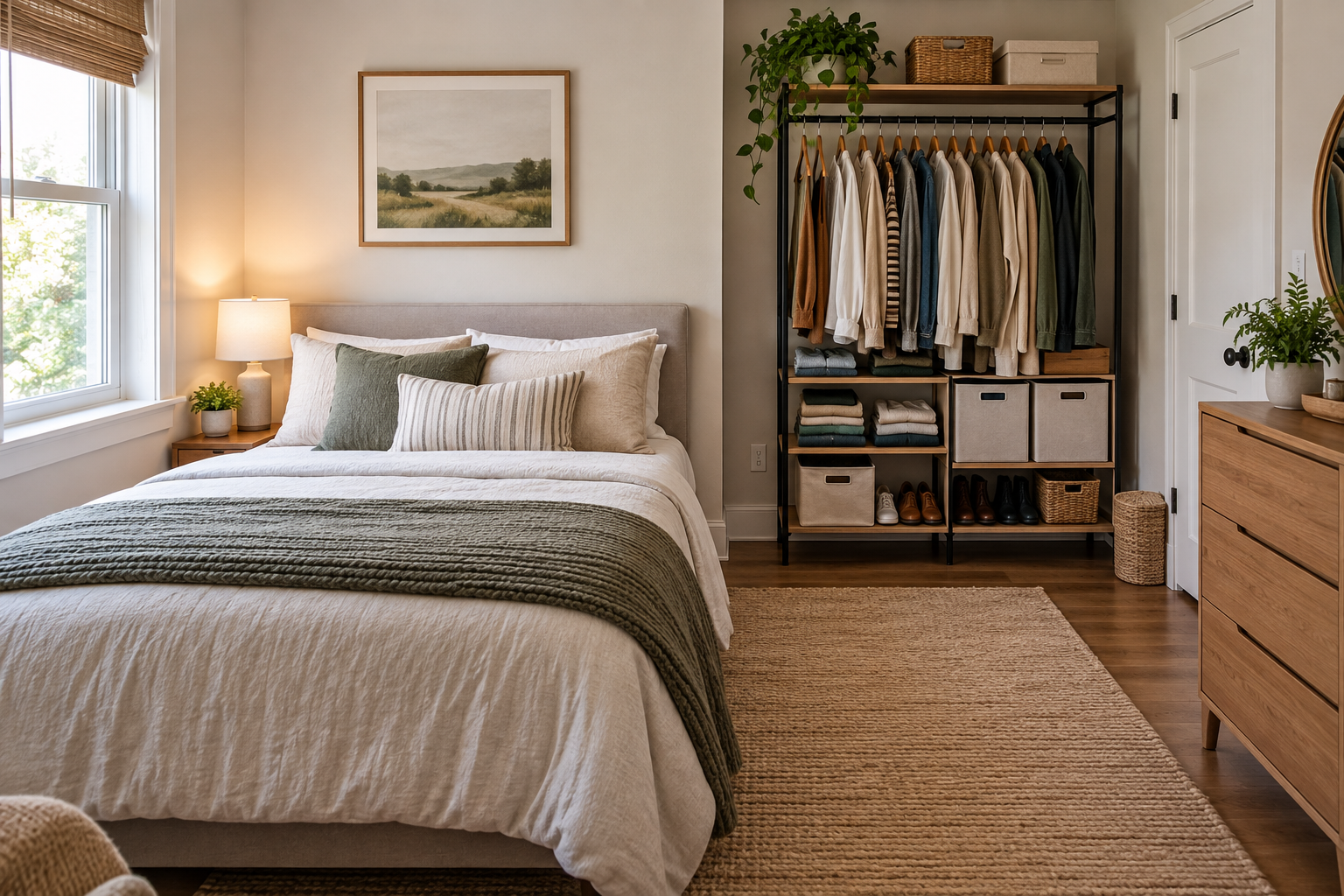
The most effective approach is to work through the room in order: audit, measure, edit, categorize, allocate, zone, store, test, and reset.
That changes the question from “What can I buy instead of a closet?” to “What functions does my closet need to perform, and where can each one live?”
1. Audit Why the Bedroom Is Not Working
Start with the problem, not the storage product.
Look at what is actually making the bedroom feel crowded. You may have too many clothes in the room, no dedicated hanging space, folded clothing without a proper home, shoes spreading across the floor, or seasonal items occupying the easiest-to-reach storage.
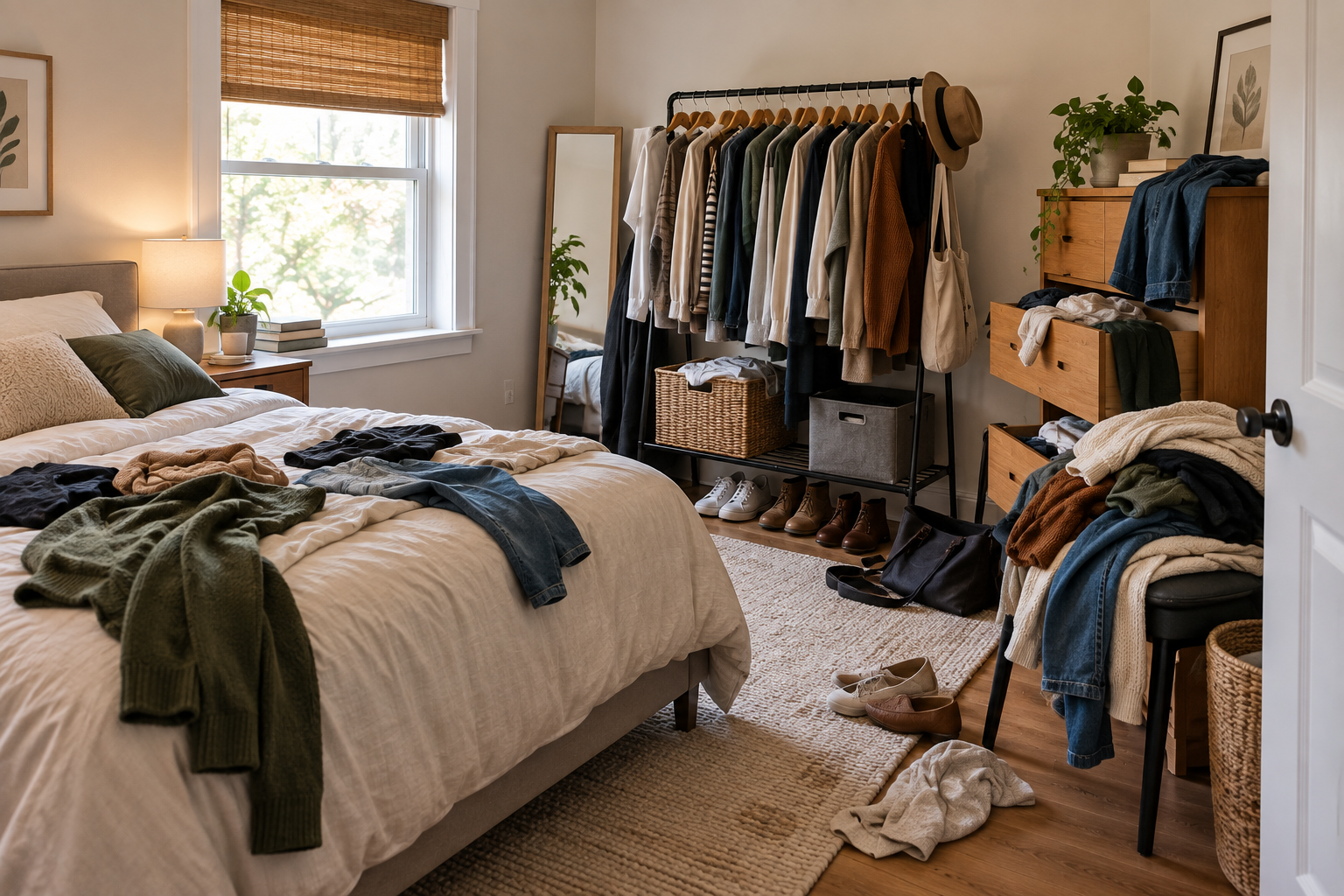
Before buying anything, identify the actual bottleneck.
- Clothes are staying on the floor or chair.
- There is nowhere to hang clothes.
- Folded clothing is mixed together.
- Shoes are taking over walking space.
- Accessories have no defined home.
- Seasonal clothing is occupying prime space.
- Storage furniture is blocking movement.
- The room has several small storage solutions but no overall system.
If you can identify the main bottleneck, you can solve that problem without adding unnecessary furniture.
2. Decide What Actually Needs to Stay in the Bedroom
A small bedroom does not need to hold everything you own.
Separate your belongings into four groups:
Items you use frequently and need to access in the bedroom.
Items that belong in another room or storage area.
Items you need, but not during the current season.
Items that are damaged, unused, duplicated, or no longer needed.
This distinction matters because keeping an item does not automatically mean it needs to live in the bedroom.
If your bedroom is small, prime storage should be reserved for the things you reach for most often.
3. Measure the Bedroom Before Choosing Storage
Storage furniture has a footprint. In a small room, that footprint can change the entire layout.
Measure the room before choosing a garment rack, wardrobe, dresser, shoe organizer, or other storage solution.
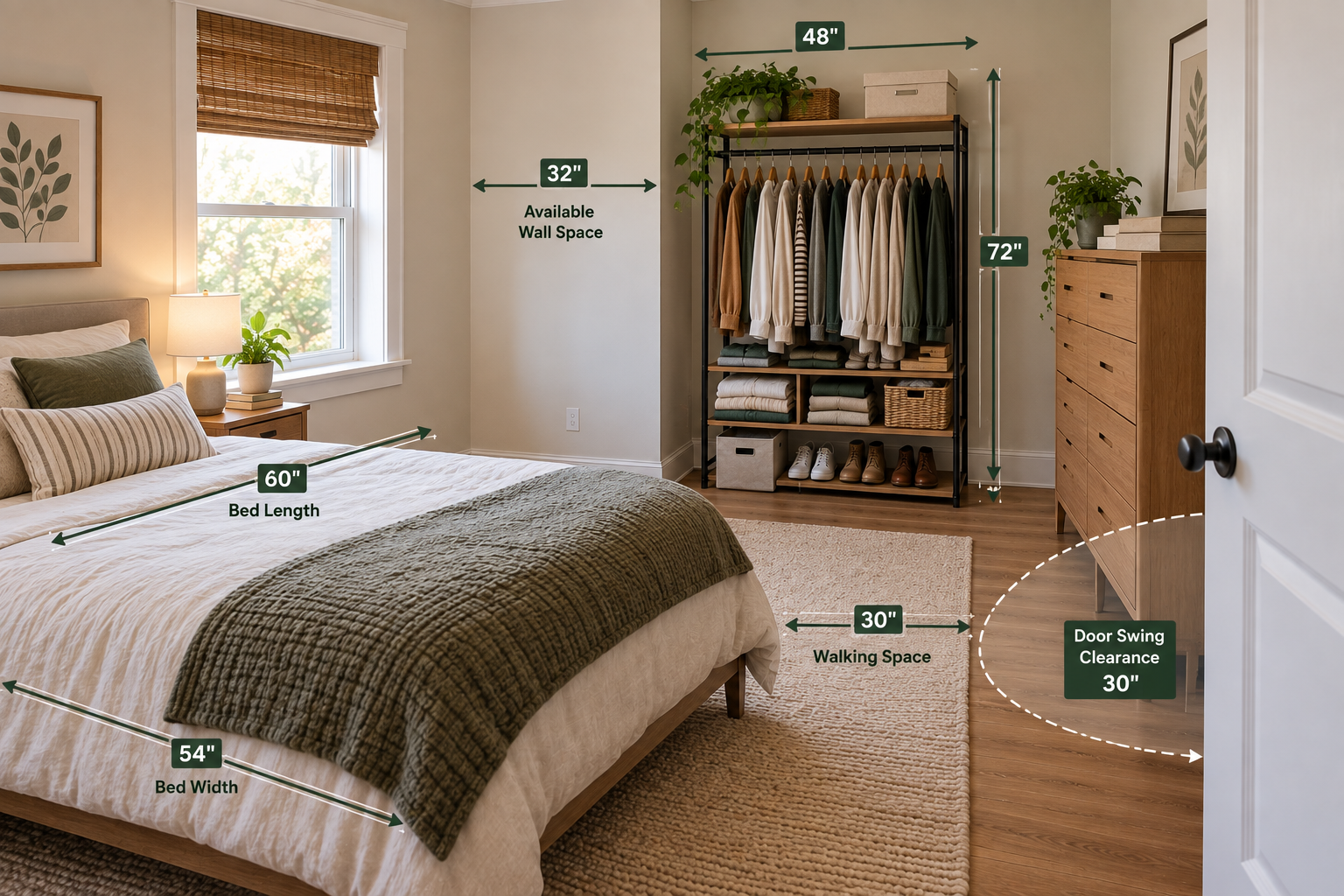
- Room width and length.
- Bed width and length.
- Available wall width.
- Door swing and clearance.
- Window location and access.
- Walking routes around the bed.
- Clearance between furniture.
- Available space under the bed.
- Available height for vertical storage.
4. Categorize Your Clothing
Once you know what is staying, separate clothing by the way it needs to be stored.
Items that wrinkle easily or work better on hangers.
T-shirts, knitwear, trousers, pajamas, and other foldable items.
Shoes, accessories, underwear, socks, and smaller categories.
Seasonal and occasional items that do not need prime bedroom space.
This gives you a storage requirement instead of a vague feeling that you “need more storage.”
5. Allocate Storage by Frequency
Not every item deserves the same level of access.
Put the things you use every day in the easiest locations. Weekly items can be slightly less accessible. Seasonal and occasional items can move into secondary storage.
Think of your bedroom storage as a frequency system:
- Daily: easiest to reach.
- Weekly: accessible but not necessarily prime space.
- Seasonal: secondary or under-bed storage.
- Occasional: lowest-priority storage locations.
This prevents a common mistake: using your best storage space for things you rarely use.
6. Create One Defined Clothing Zone
A bedroom without a closet still needs a clothing zone.
That zone might be one wall, one corner, one section of a dresser, or a combination of furniture grouped together. The important part is that clothing storage has a clear boundary.
Avoid scattering clothes across the entire bedroom. One defined clothing zone makes the room easier to use and easier to reset.
7. Replace the Functions of a Closet One by One
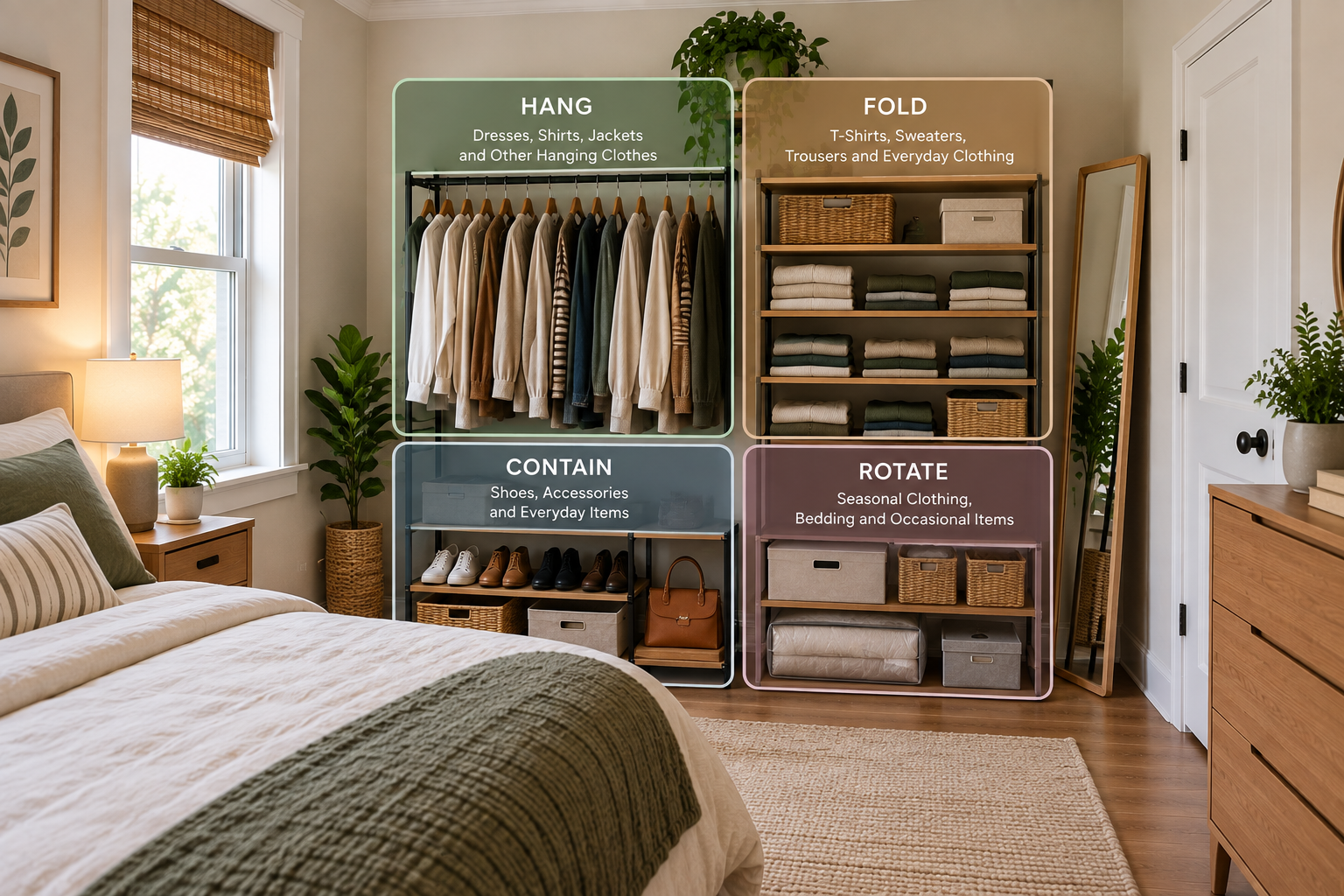
A closet performs several different jobs. You can reproduce those functions without reproducing the physical shape of a closet.
Function 1: Hanging Clothes
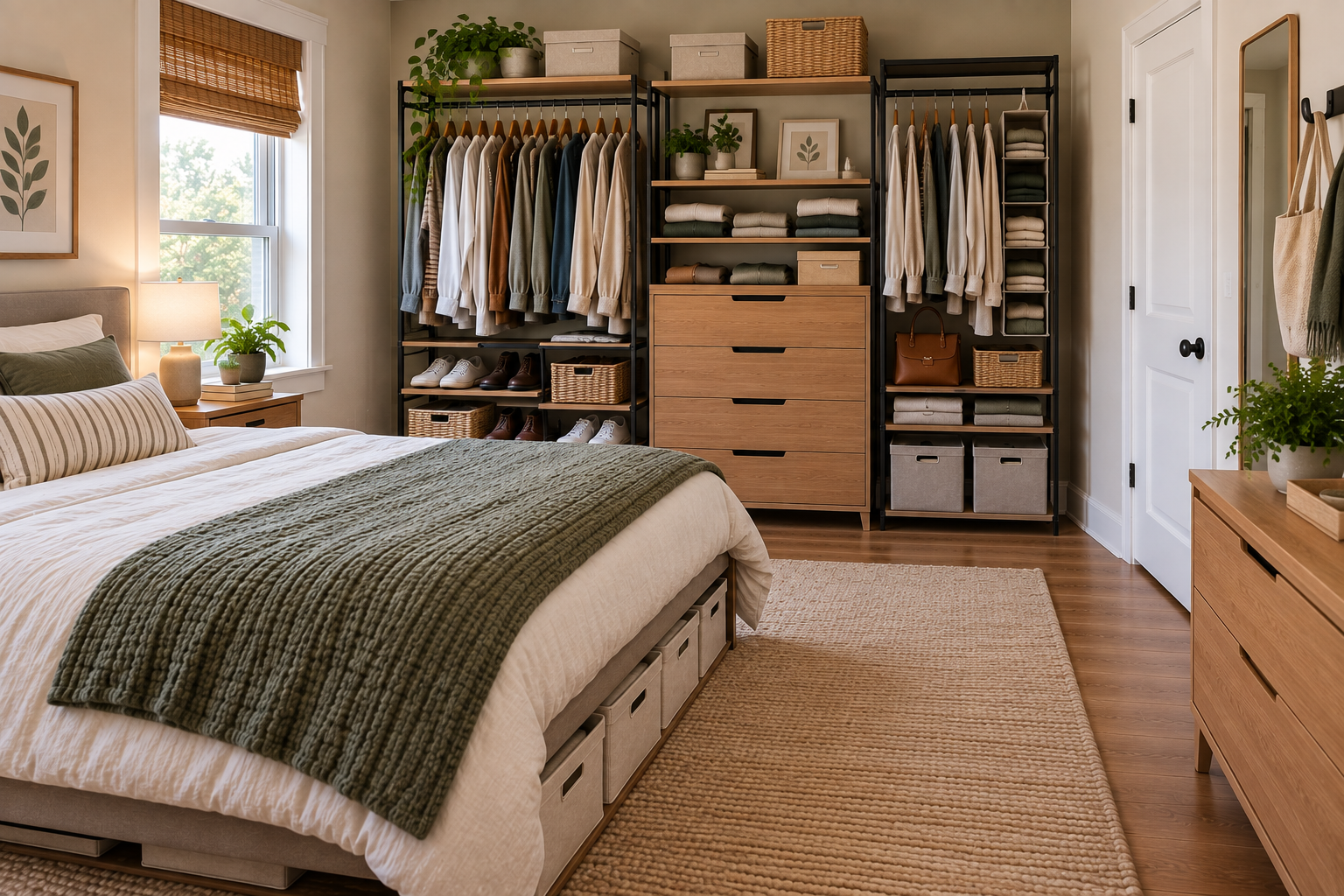
If a large portion of your clothing needs to hang, create a dedicated hanging zone instead of trying to spread hanging clothes across the room.
A slim garment rack can work when its width, height, and depth fit the room and when it does not interfere with the walking path.
See the hanging-storage option
Function 2: Folded Clothing
Folded clothing needs containment. Drawers, shelves, or appropriately sized bins can prevent folded categories from becoming one large pile.
The goal is not to maximize the number of containers. It is to give each major clothing category a predictable home.
See the folded-clothing storage option
Function 3: Shoes and Accessories
Shoes and small accessories often create visible clutter because they do not naturally stay contained.
Choose one location for them. Depending on the room, that could be a narrow shoe rack, an over-door organizer, a drawer, or another contained storage zone.
See the contained-storage option
Function 4: Seasonal and Occasional Items
Seasonal clothing should not consume your best everyday storage.
If you have usable clearance beneath the bed, this can become a secondary storage zone for items that are needed less frequently.
Measure the available height and depth first. Then choose storage that fits the actual space.
See the secondary-storage option
Function 5: Visual Containment
Storage is not only about capacity. It also affects how the room feels.
If every category is visible, even an organized bedroom can feel busy. Use drawers, appropriate bins, or other containment where it helps reduce visual noise without making everyday items difficult to access.
8. Use Vertical and Door Space Carefully
When floor space is limited, vertical space can provide additional capacity.
But “use every inch” is not a useful rule by itself. A wall or door should only carry storage when doing so improves the room.
Before using vertical or door storage, check:
- Will the door still open fully?
- Will the storage interfere with handles or trim?
- Can you comfortably reach the items?
- Will the added depth narrow the walking path?
- Will the storage make the room feel visually crowded?
If the answer to these questions creates a problem, use another location instead.
9. Use Under-Bed Storage for Lower-Frequency Items
Under-bed space is valuable because it can add storage without taking additional floor area from the walking zone.
It works particularly well for seasonal clothing, occasional clothing, spare bedding, and other items that do not need daily access.
The key is to treat under-bed storage as secondary storage, not as a dumping area.
Label or group the contents so you know what is there. Rotate the contents when the season changes.
10. Protect the Walking Space
A bedroom can have plenty of storage and still fail as a bedroom if the furniture makes movement difficult.
Trace the main route through the room:
The exact dimensions depend on the room, but the principle is consistent: storage should support movement rather than compete with it.
If adding a storage unit forces you to turn sideways, move furniture every time you open a drawer, or squeeze around the bed, the storage solution is probably costing more usable space than it provides.
11. Match Storage to the Amount of Clothing You Actually Own
Storage capacity should respond to your inventory.
If you have a small clothing collection, a compact hanging zone and a few drawers may be enough. If you have a large clothing collection, adding more organizers may only hide the underlying capacity problem.
Ask yourself:
- How many items actually need to hang?
- How many folded categories do I have?
- How many pairs of shoes need to stay in the bedroom?
- How much seasonal clothing needs to be stored?
- How much of my current inventory do I actually use?
12. Test the System Before You Call It Finished
A storage system is only successful if it works during normal life.
Test the room for several days and look for recurring failure points.
- Clothes return to the floor.
- A chair becomes a clothing pile.
- Shoes escape their storage zone.
- Accessories accumulate on the dresser.
- Clean laundry has nowhere to go.
- Frequently used items are difficult to reach.
- Walking paths become narrower.
- Storage becomes visually overwhelming.
These are not signs that you failed. They are feedback about the system.
Change the location, capacity, category, or accessibility of the problem area instead of immediately buying another organizer.
13. Give Every Clothing Category a Permanent Home
The final goal is simple: every category should have a home that makes sense.
| Category | Home | Access Level |
|---|---|---|
| Hanging clothes | Defined hanging zone | High |
| Folded everyday clothes | Drawers or accessible shelves | High |
| Shoes | Defined shoe zone | High to medium |
| Accessories | Small contained storage | High to medium |
| Seasonal clothes | Secondary or under-bed storage | Low |
| Occasional items | Secondary storage | Low |
| Laundry | Dedicated hamper | High |
When every category has a defined destination, tidying becomes a short reset instead of a complete reorganization.
14. Reset the Bedroom Regularly
A good organization system should be easy to maintain.
Use three simple reset levels:
Return clothes, shoes, and everyday items to their homes.
Check surfaces, drawers, laundry, and clothing overflow.
Rotate seasonal clothing and reassess what deserves prime storage.
15. What If You Still Do Not Have Enough Storage?
First determine whether you have a storage problem or an inventory problem.
If the clothing genuinely needs to stay and the current storage footprint is already efficient, then add capacity carefully. Use the measurements you already took to identify the safest location.
If the room is full because rarely used or unnecessary items are taking up space, adding storage will not solve the underlying problem.
The goal is not maximum storage. The goal is enough storage for the items that genuinely need to live in the room.
16. The System in One View
Start by identifying what is actually causing the clutter. Measure the available space. Remove what does not need to stay. Separate clothing by storage requirement and frequency. Create one defined clothing zone. Then replace the functions of a closet one by one.
HANG what needs to hang. FOLD what can be stored compactly. CONTAIN shoes and smaller categories. ROTATE seasonal and occasional items out of prime space.
Finally, test the system in real life and adjust the weak points.
Frequently Asked Questions
How do I organize a small bedroom without a closet?
Start by deciding which clothing actually needs to stay in the bedroom. Measure the available wall, floor, door, and under-bed space. Then create one defined clothing zone with separate homes for hanging clothes, folded clothes, shoes, accessories, and seasonal items. Keep frequently used items in the easiest locations and move lower-frequency items into secondary storage.
Where do I put clothes if my bedroom has no closet?
Create a defined clothing zone using the space that best fits your room. Hanging clothes can use a compact rack or wardrobe-style solution. Folded clothes can use drawers or shelves. Seasonal clothing can move into secondary or under-bed storage. The right combination depends on your clothing volume and available space.
How do you store clothes without a closet?
Separate clothes into hanging, folded, contained, and seasonal categories. Give each category a permanent home. Use hanging storage for clothes that need it, drawers or shelves for folded clothing, contained storage for smaller categories, and secondary storage for seasonal items.
What is the best way to store clothes in a small bedroom?
The best approach is to match storage to the amount and type of clothing you actually own while protecting the walking space. Measure first, prioritize everyday clothing, contain smaller categories, and keep seasonal items out of prime storage.
How do I maximize storage in a bedroom with no closet?
Use the room in layers: a defined clothing zone, appropriate vertical space, carefully selected furniture, and secondary storage for lower-frequency items. Do not automatically fill every available wall or corner. Storage only helps when it remains accessible and does not damage the room’s usable layout.
Where should I store seasonal clothes without a closet?
Use secondary storage rather than prime everyday space. Under-bed storage can work when the available clearance is sufficient. Other suitable locations may include higher shelves or another storage area outside the bedroom.
How do I keep a bedroom without a closet from looking cluttered?
Keep clothing storage concentrated in one defined zone, contain smaller categories, and avoid using every surface as storage. Give laundry, shoes, accessories, and seasonal clothing permanent homes. A clear walking path and fewer visible categories can make the room feel much more organized.
Related Guides
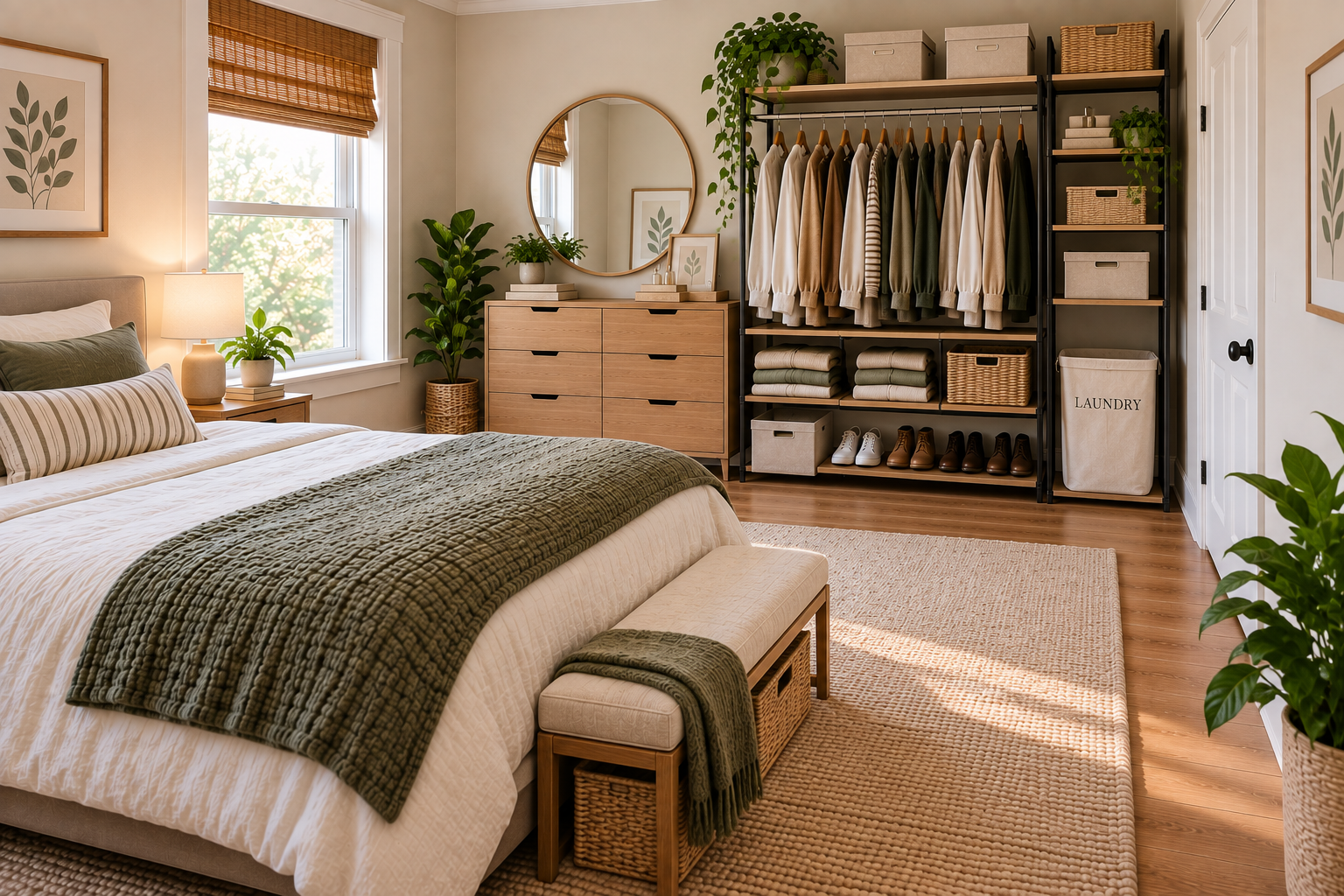
A small bedroom without a closet does not need to look like a storage room.
The goal is to give every important clothing category a clear home while protecting the space you need to live in the room.
Audit the problem. Measure the room. Edit the inventory. Build one clothing zone. Replace the functions of a closet. Then test and reset the system.
When the system fits the room and the amount of clothing you actually own, staying organized becomes much easier.