
Kitchen cabinets can become difficult to use even when they seem to have enough space. The problem is often not the number of cabinets. It is how the space is arranged, how easy it is to reach, and whether the storage system matches the way you use your kitchen.
A good cabinet organization system should make everyday items easy to see, reach, use, and put away. It should also work with the actual size and shape of your cabinets.
The easiest way to get there is to solve the storage problem first and buy kitchen cabinet organizers second. This guide walks you through that process step by step, including how to decide when a cabinet organizer is worth buying and when you simply need a better storage system.
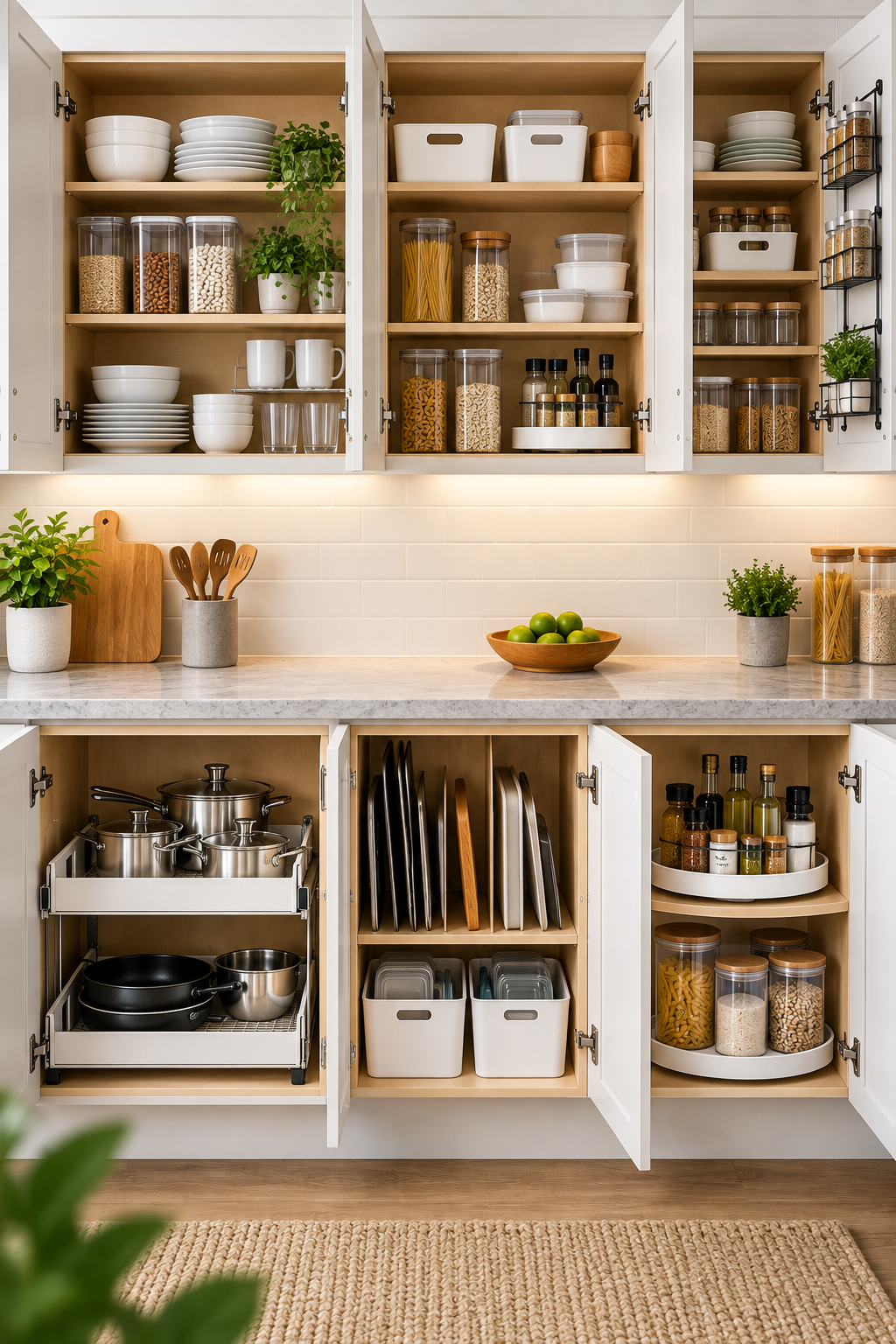
CLEAR → MEASURE → CATEGORIZE → ZONE → CHECK ACCESS → CHOOSE → INSTALL → MAINTAIN
Do not start by filling your cabinets with organizers. Start by understanding what is making them difficult to use.
1. Start With One Cabinet, Not the Whole Kitchen
Organizing every cabinet at once can quickly become overwhelming. A better approach is to start with one cabinet that causes a real problem.
Choose a cabinet that is frequently used, difficult to reach, or constantly becomes messy. Emptying one cabinet lets you see what is actually going wrong before you make changes throughout the kitchen.
Pick one cabinet and finish its system before moving to the next. The goal is not to make the entire kitchen perfect in one afternoon. The goal is to create a storage system that works.
2. Clear Out What Does Not Belong
Take everything out of the cabinet. This gives you a clear view of the available space and makes it easier to decide what should go back.
As you sort, look for things that are broken, duplicated, rarely used, stored in the wrong place, or no longer useful to you.
You do not need to get rid of something simply because you do not use it every day. The important question is whether it deserves the space it occupies and whether the cabinet is the right place for it.
Remove
Take everything out.
Sort
Group similar items together.
Decide
Keep, relocate, or remove.
3. Measure the Cabinet Before Buying Anything
Once the cabinet is empty, measure the space before buying a kitchen cabinet organizer. A product can look like it will fit and still fail because the usable space is different from the advertised cabinet size.
Measure the interior width, usable depth, and usable height. Then check the cabinet opening and the space around the hinges and door.
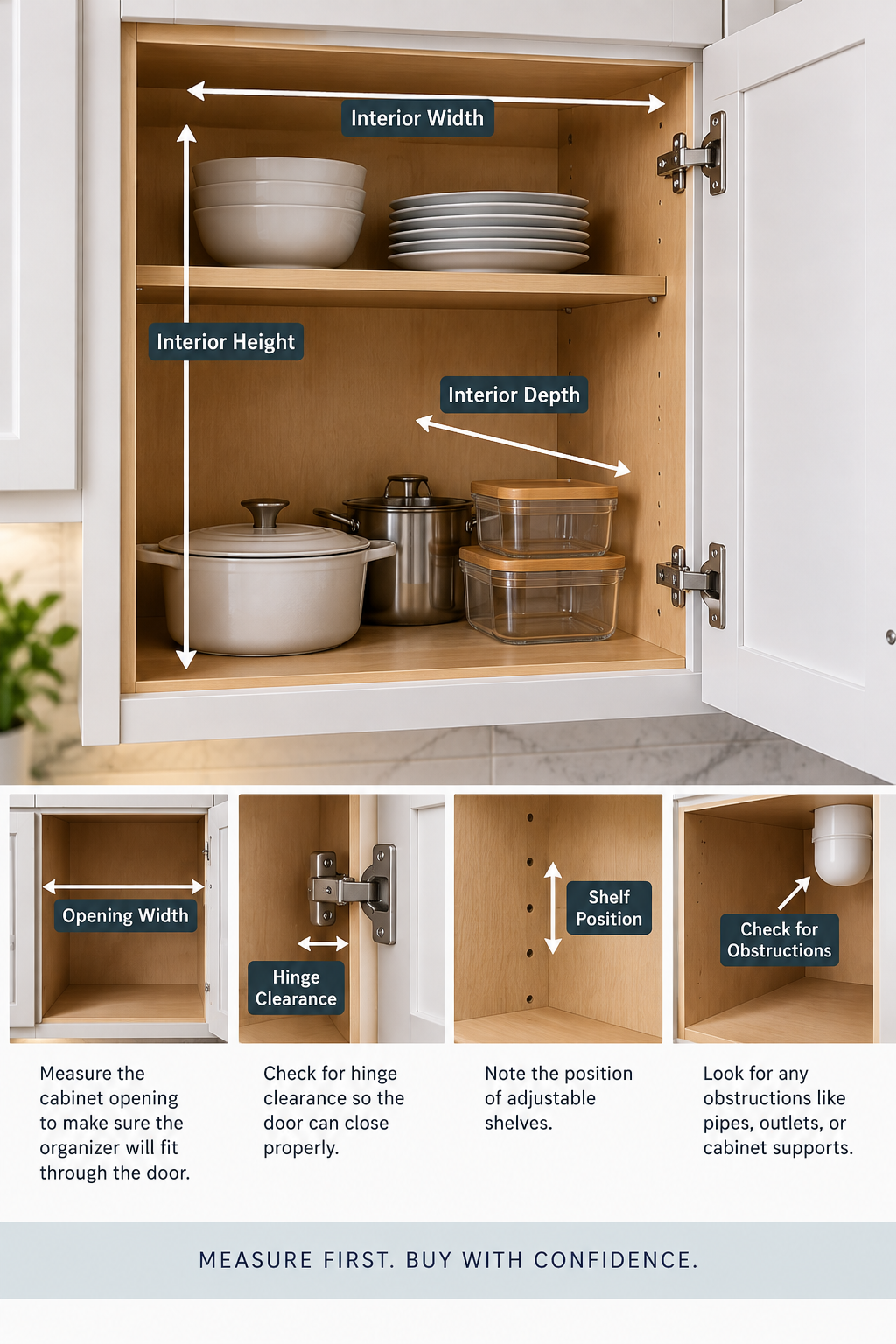
Pay attention to anything that could interfere with an organizer, such as hinges, fixed shelves, pipes, supports, or other obstructions.
Before you buy a cabinet organizer, check:
- Interior width
- Interior depth
- Usable height
- Cabinet opening width
- Door and hinge clearance
- Shelf position
- Any obstructions inside the cabinet
One measurement is not always enough. If an organizer needs to slide, rotate, or pass through the cabinet opening, make sure there is enough clearance for the entire movement.
4. Group Items by How You Use Your Kitchen
After measuring, group the items you actually plan to keep. You can group by category, but also consider how the items are used together.
For example, baking supplies may work well together. Everyday dishes may belong near the dishwasher or eating area. Cooking tools may be more convenient near the stove or food-preparation area.
The exact arrangement depends on your kitchen. There is no single correct cabinet map for every home.
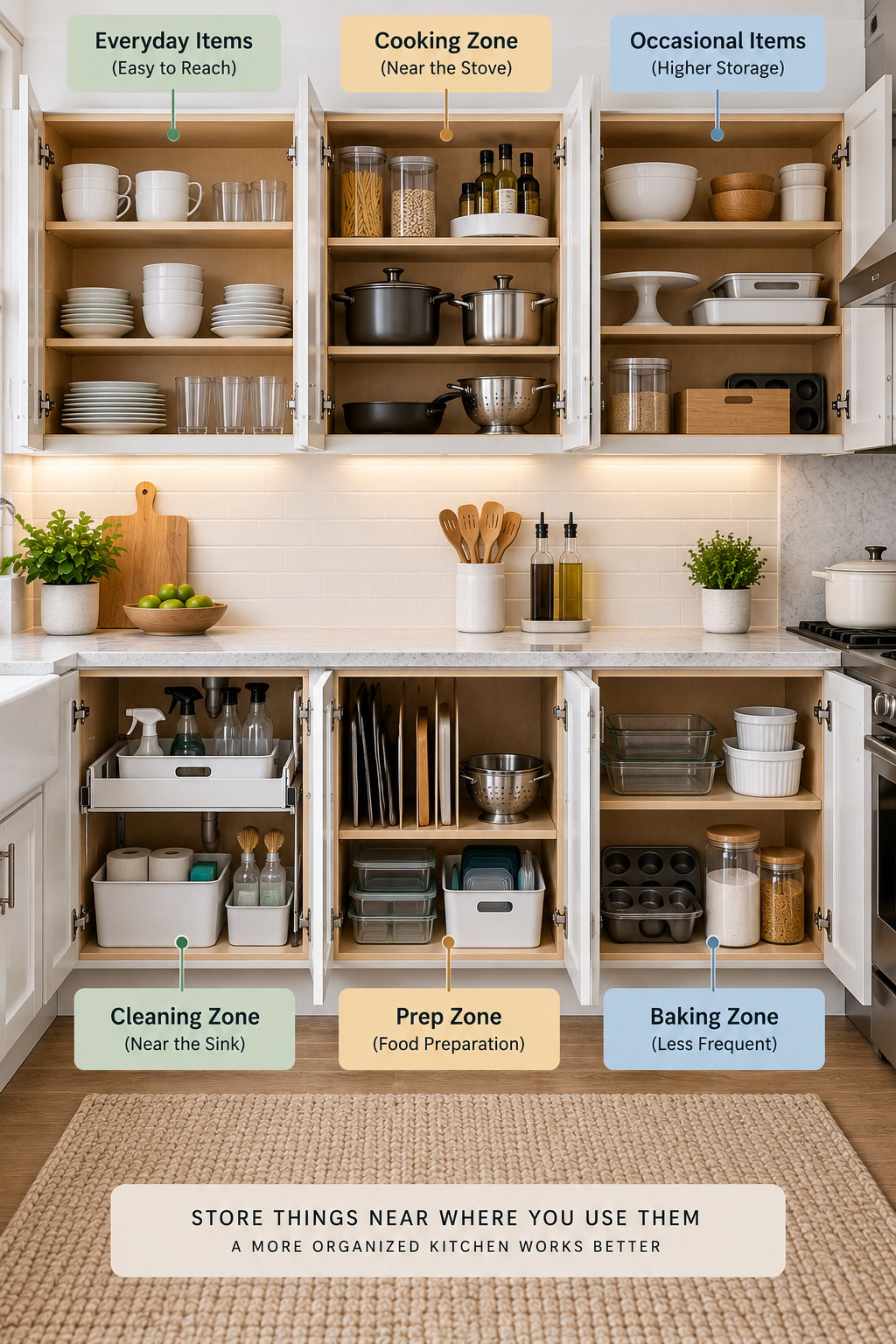
If you regularly use several items together, storing them where the task happens can reduce unnecessary movement around the kitchen.
5. Give Each Cabinet a Job
Once your items are grouped, assign each cabinet or cabinet section a simple purpose.
One cabinet might hold everyday dishes. Another might handle cookware. Another could store food-preparation equipment or baking supplies.
You do not need a complicated labeling system. The important thing is that you can quickly understand what belongs in each space.
Try to keep related items together instead of spreading one category across several unrelated cabinets. This makes both daily use and putting things away easier.
6. Put Frequently Used Items Where They Are Easiest to Reach
Your most convenient storage should usually go to the things you use most often.
Everyday dishes, frequently used cookware, and common food-preparation tools should not have to compete with items you use only a few times a year.
Less frequently used serving pieces, specialty equipment, or seasonal items can usually tolerate less convenient storage.
Also consider weight. Heavy cookware can be awkward to lift from a high or difficult location, so place it where you can handle it comfortably.
Frequent use → easiest access.
Occasional use → less convenient storage.
7. Organize Upper Cabinets Differently From Lower Cabinets
Upper cabinets
Upper cabinets are often easier to organize when you focus on visibility and comfortable reach.
Keep frequently used items on shelves that are easy for you to reach. Avoid creating tall stacks that make it difficult to remove the bottom item.
Shelf risers can sometimes create a second usable level when there is enough vertical space. But an extra level is only helpful if both levels remain easy to see and reach.
Lower cabinets
Lower cabinets often create different problems. They can be deeper, require bending, and make items at the back difficult to reach.
Use these spaces for items that make sense there, especially larger or heavier items that are easier to handle from a lower position.
If the main problem is depth rather than lack of storage, improve access before trying to fit more items inside.
8. Fix Deep Cabinets So the Back Is Actually Usable
Deep storage can look useful on paper but become frustrating in daily life. If you have to move several things just to reach one item at the back, some of that storage is difficult to use.
Start by reducing unnecessary layers. Items you use less often can go farther back, while everyday items should stay closer to the front when practical.
Depending on the cabinet, you may also consider pull-out shelves, pull-forward bins, or another access solution that brings stored items closer to you.
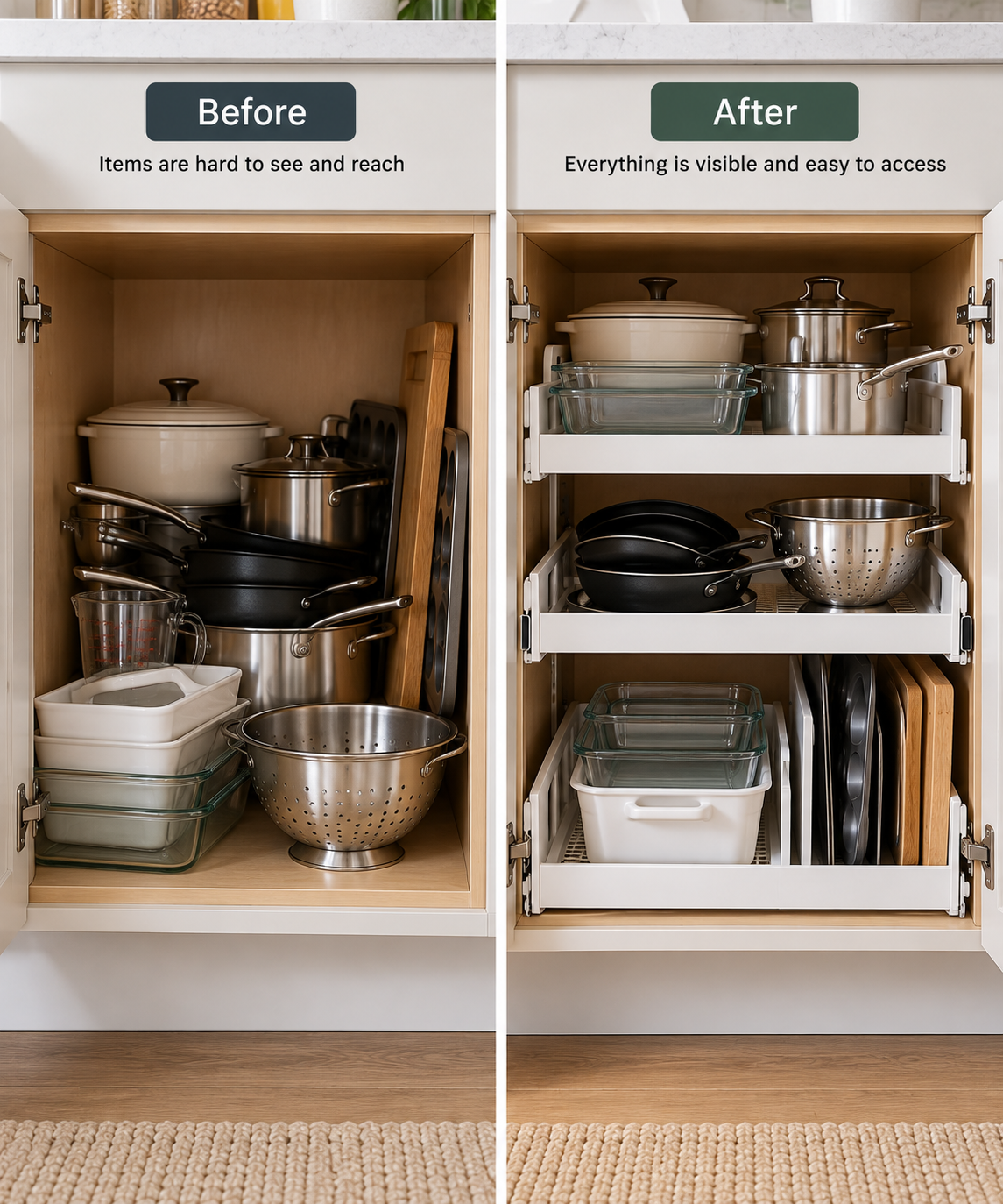
Open the cabinet and ask: Can I see it? Can I reach it? Can I remove it without moving several other things?
If the answer is no, adding more storage may not solve the problem. Improving access might.
9. Make Corner Cabinets Easier to Reach
Corner cabinets can be difficult because part of the storage sits outside the easiest line of sight.
First decide whether the space needs to hold frequently used items. If it does, improving access becomes more important.
A turntable can make some corner storage easier to access because items can be brought toward the opening. Pull-out corner hardware can also be useful in cabinets designed to support it.
But these solutions are not universal. Check the cabinet dimensions and clearance before choosing a corner cabinet organizer.
If you cannot comfortably see or reach the stored items, the underlying access problem is still there.
10. Use Vertical Space Without Overcrowding
Cabinets often have unused space above plates, bowls, containers, or other stacked items.
You may be able to use some of that space with a cabinet shelf riser or another simple stacking solution. Vertical dividers can also help keep trays, cutting boards, and similar flat items upright.
The important part is not to fill every empty inch. If items become difficult to remove, the extra storage has created a new access problem.
Leave enough room to comfortably remove the things you use.
11. Use Cabinet Doors Only When They Actually Fit
The inside of a cabinet door can provide useful storage, but it is not automatically suitable for every cabinet.
Before buying a cabinet-door organizer, check whether the door can still close properly and whether the organizer will interfere with shelves, hinges, or the items stored inside.
Also consider the weight of what you plan to store there. A door organizer is useful only when the complete setup works with the cabinet.
Close the cabinet slowly after installing or positioning a door organizer. Make sure nothing catches, blocks the shelves, or prevents the door from closing normally.
12. Choose a Kitchen Cabinet Organizer Only After You Know the Problem
This is where many kitchen organization projects go wrong. People buy an organizer because it looks useful, then try to find a place for it.
Reverse that process. Identify the problem first, then shop for a kitchen storage solution that fits the space and solves that specific problem.
| Cabinet problem | Kitchen storage solution to consider |
|---|---|
| Unused vertical space above short stacks | A cabinet shelf riser may create another usable level. |
| Trays or boards fall over | Cabinet dividers can keep flat items separated. |
| Items at the back are difficult to reach | A pull-out cabinet organizer or pull-forward solution may improve access. |
| Corner items disappear from view | A Lazy Susan organizer or other corner-access solution may help. |
| Cabinet door space is unused | A cabinet-door organizer may work if clearance and weight allow it. |
| The cabinet is simply too full | Declutter or relocate items before buying an organizer. |
None of these solutions should be treated as automatic. The cabinet’s dimensions, construction, contents, and daily use all matter.
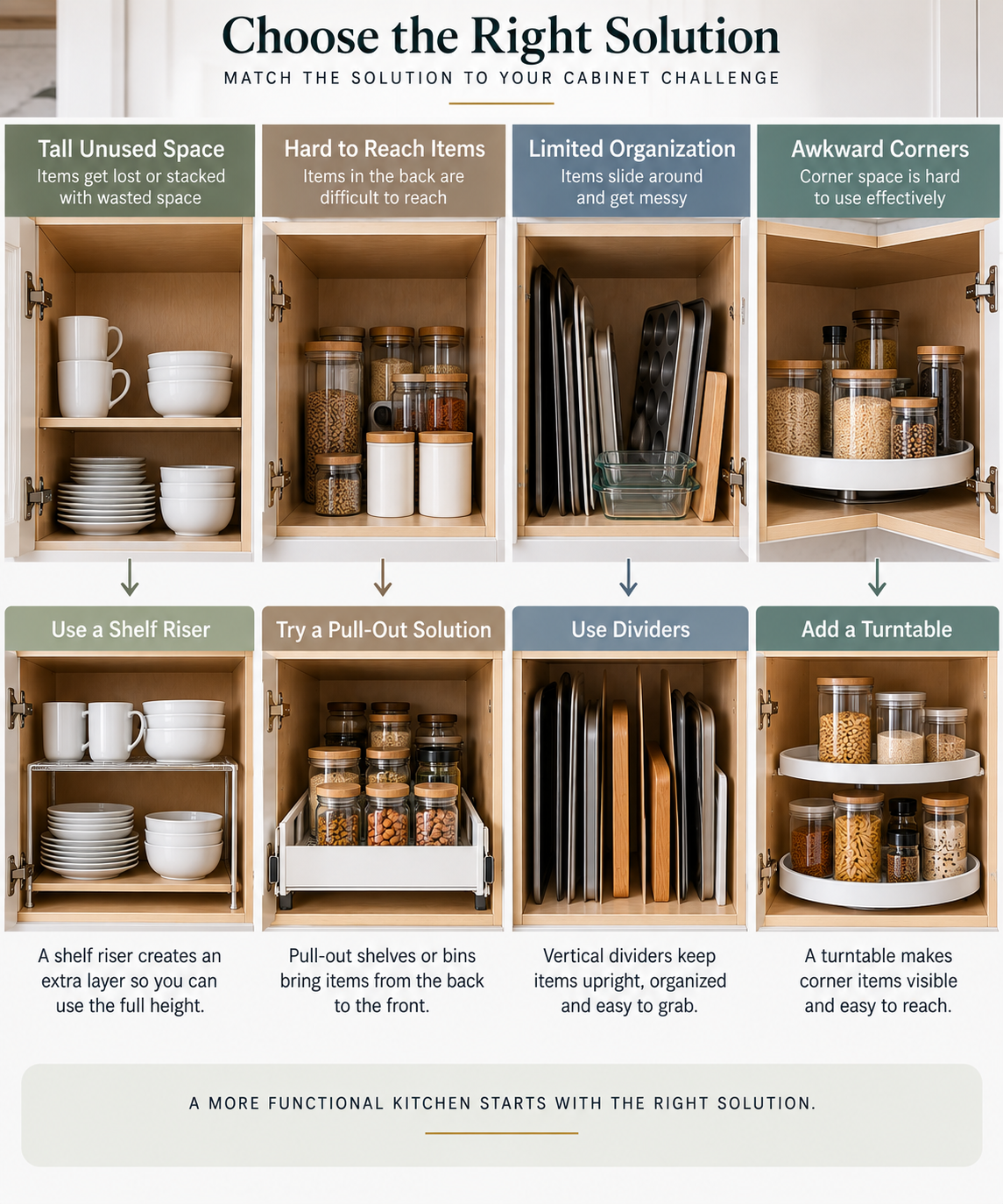
If you are shopping for a kitchen cabinet organizer, measure the space again and compare those measurements with the organizer’s actual dimensions and clearance requirements before you buy.
The right organizer is the one that makes the cabinet easier to use without creating a new problem. You do not need an organizer simply because an empty space is available.
13. Common Kitchen Cabinet Organization Mistakes
A cabinet can look organized immediately after a cleanup and still be difficult to maintain. These common mistakes can make that happen.
Buying organizers before measuring
A useful-looking organizer is not helpful if it does not fit the cabinet or prevents the door from closing.
Filling every available inch
Empty space is not automatically wasted space. Some clearance is necessary for visibility and access.
Creating too many categories
If every small group gets its own complicated system, putting things away can become harder. Use categories that make sense for how you actually use the kitchen.
Ignoring frequency of use
Frequently used items should not have to compete with rarely used items for the easiest storage locations.
Stacking items too high
A tall stack can use vertical space but become inconvenient when the bottom item is needed.
Adding storage to an overfilled cabinet
More organizers cannot solve every storage problem. Sometimes the correct first step is simply removing things that no longer need to be there.
14. Build a Simple Cabinet Reset Routine
The best organization system is one that is easy to maintain.
When something is used, it should have an obvious place to return. If putting an item away requires several steps, the system may eventually break down.
Every so often, do a quick reset. Return misplaced items, remove anything that has migrated into the wrong cabinet, and adjust a storage zone if your habits have changed.
Return
Put items back in their assigned zones.
Group
Move misplaced items back with their category.
Adjust
Change the system if it no longer works.
Kitchen Cabinet Organization Checklist
Use this checklist as you work through your cabinets:
- Start with one cabinet.
- Remove everything from the space.
- Remove or relocate items that do not belong.
- Measure the usable cabinet space.
- Check the cabinet opening and clearances.
- Group related items.
- Create simple cabinet zones.
- Give frequently used items easier access.
- Check whether deep storage is actually accessible.
- Use vertical space without overcrowding.
- Identify the storage problem before buying an organizer.
- Measure again before purchasing a product.
- Test the finished setup.
- Make sure every item has an easy place to return.
Frequently Asked Questions
How should I organize my kitchen cabinets?
Start by clearing out one cabinet, removing items that do not belong, and measuring the available space. Then group related items, create simple zones, and place frequently used items where they are easiest to reach. Choose kitchen cabinet organizers only when they solve a specific storage or access problem.
What should go in upper and lower kitchen cabinets?
Upper cabinets often work well for items that are easy to lift and reach, such as everyday dishes, glasses, and lighter kitchen supplies. Lower cabinets can be useful for larger or heavier items and storage that benefits from being closer to the floor. Your kitchen layout and daily habits should guide the final arrangement.
How do I organize deep kitchen cabinets?
First reduce unnecessary layers and place less frequently used items farther back when practical. If access is still difficult, consider a pull-out, pull-forward, or other suitable storage solution. Measure the cabinet and check clearance before buying a deep cabinet organizer.
How do I make corner kitchen cabinets easier to use?
Treat the problem as an access issue. Depending on the cabinet, a Lazy Susan organizer or another corner-access solution may make stored items easier to see and reach. If you do not need frequent access, storing larger or less frequently used items there may also make sense.
Should I buy kitchen cabinet organizers before organizing?
Usually, no. First clear the cabinet, measure the usable space, group your items, and identify the actual problem. Then decide whether an organizer is necessary and which type fits the space. This helps you avoid buying a product that creates another storage or access problem.
Start With One Cabinet
You do not need to reorganize your entire kitchen at once. Pick the cabinet that causes the most frustration and work through the system step by step.
CLEAR → MEASURE → CATEGORIZE → ZONE → CHECK ACCESS → CHOOSE → INSTALL → MAINTAIN
A better-organized cabinet is not the one that holds the most things. It is the one that makes the things you keep easier to use and easier to put away.