
Organizing living room storage works best when you match each category to the right storage type, place it where it is actually used, and stop adding storage when the room has enough.
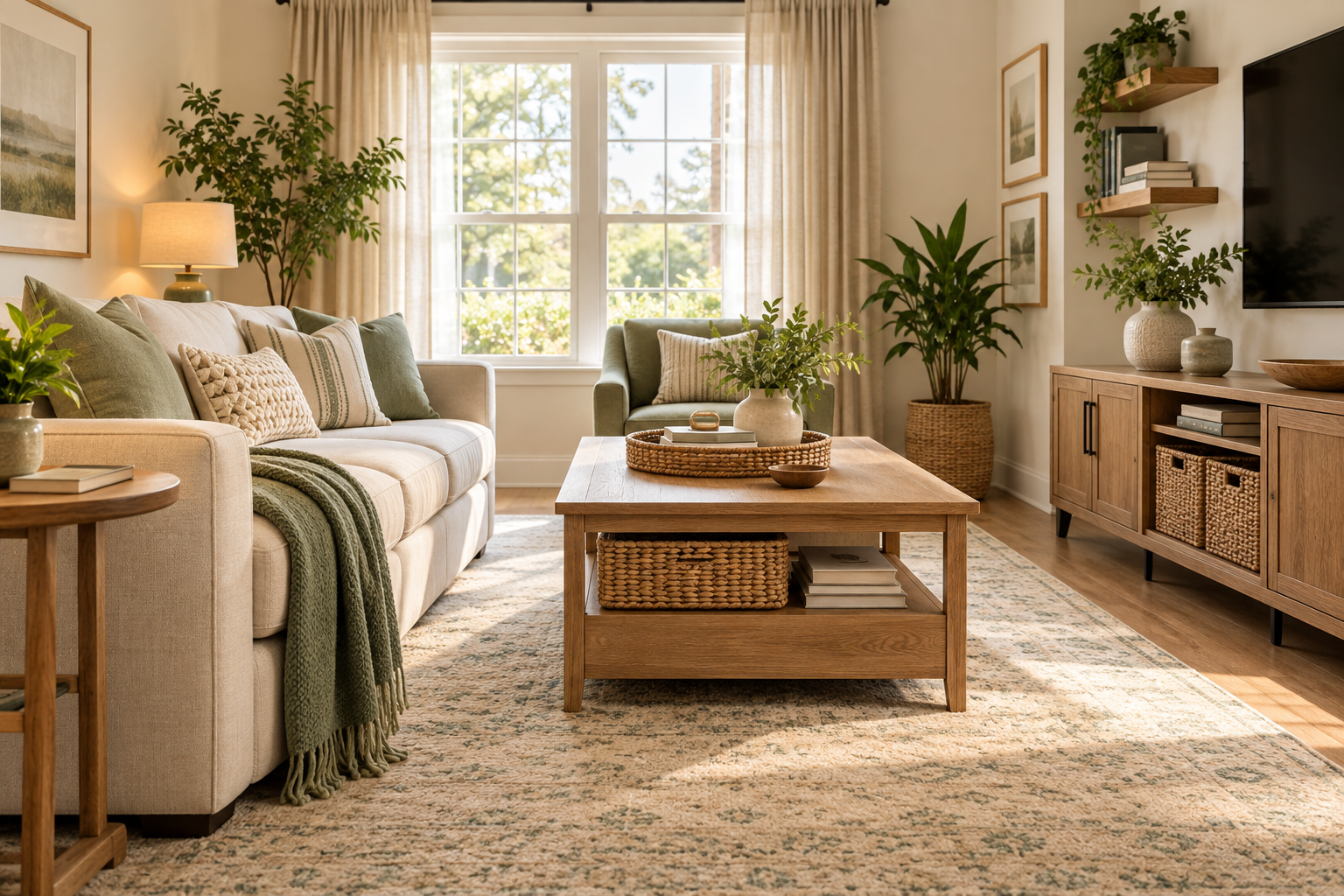
To organize living room storage, identify what actually needs to stay, group items by use, match each category to the right storage type, decide what should be open or concealed, place storage near the point of use, and test the arrangement before buying more.
The Living Room Storage System
The biggest storage mistake is choosing the product before understanding the problem. A basket, cabinet, shelf, or ottoman can all be useful, but only when the form of storage matches the category, frequency of use, available space, and access you need.
Key Takeaways
- Start with the items that genuinely need to live in the living room.
- Group belongings by function and frequency of use.
- Use open storage for items that benefit from visibility and closed storage for visually busy categories.
- Place storage near the activity where the items are used.
- Use vertical or dual-purpose storage only when it improves the room rather than adding bulk.
- Measure the real footprint and account for doors, drawers, movement, and access before buying.
- Stop adding storage when it begins to interfere with circulation.
1. Start With What Actually Needs to Be Stored
Before buying a basket, cabinet, shelf, or storage table, make a quick inventory of what repeatedly needs a home in the living room.
Common categories include books, blankets, remotes, games, toys, magazines, small electronics, media accessories, chargers, paperwork, and everyday objects that collect on visible surfaces.
| What you notice | Ask first |
|---|---|
| Items repeatedly left on the sofa | Where are these items actually used, and what makes their current storage inconvenient? |
| Crowded coffee table | Which items genuinely belong within reach? |
| Full shelves | Are the contents useful and accessible, or are the shelves holding overflow? |
| Overflowing storage | Is the category too large, or is the storage type wrong? |
Start with the category, not the product.
2. Group Items by How You Use Them
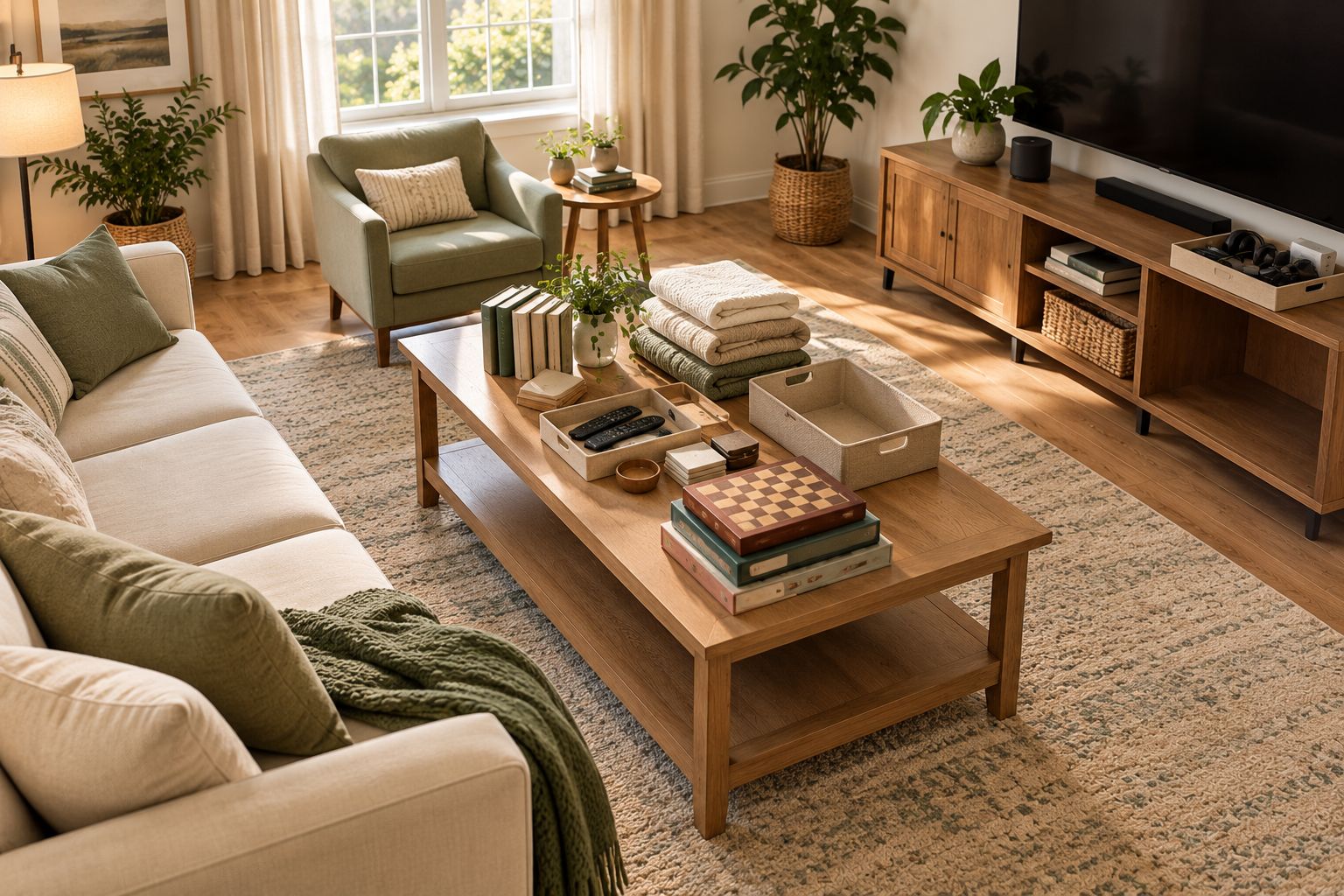
Group items according to how they are used rather than simply putting similar-looking objects together. Frequency matters too. Something used every day should not be buried behind something used once a month.
Daily-use items
Keep them easy to reach and close to the activity where they are used.
Occasional items
They can use less accessible storage if retrieval remains practical.
Visually busy items
Consider concealed storage when visibility makes the room feel cluttered.
Items used together
Store the group together when doing so makes the activity easier.
3. Match Each Category to the Right Storage Type
Different categories need different kinds of storage. There is no single organizer that works well for everything.
| Storage need | Possible solution | Why it can work |
|---|---|---|
| Books used often | Open shelving | Items stay visible and easy to reach. |
| Blankets near seating | Basket or storage ottoman | Soft items stay contained close to where they are used. |
| Small everyday accessories | Drawer, small bin, or contained tray | Small objects stay together. |
| Games or visually busy categories | Closed cabinet or concealed bin | Containment can reduce visual clutter. |
| Media equipment | Purpose-built media storage | Related equipment can stay together with appropriate access and cable routing. |
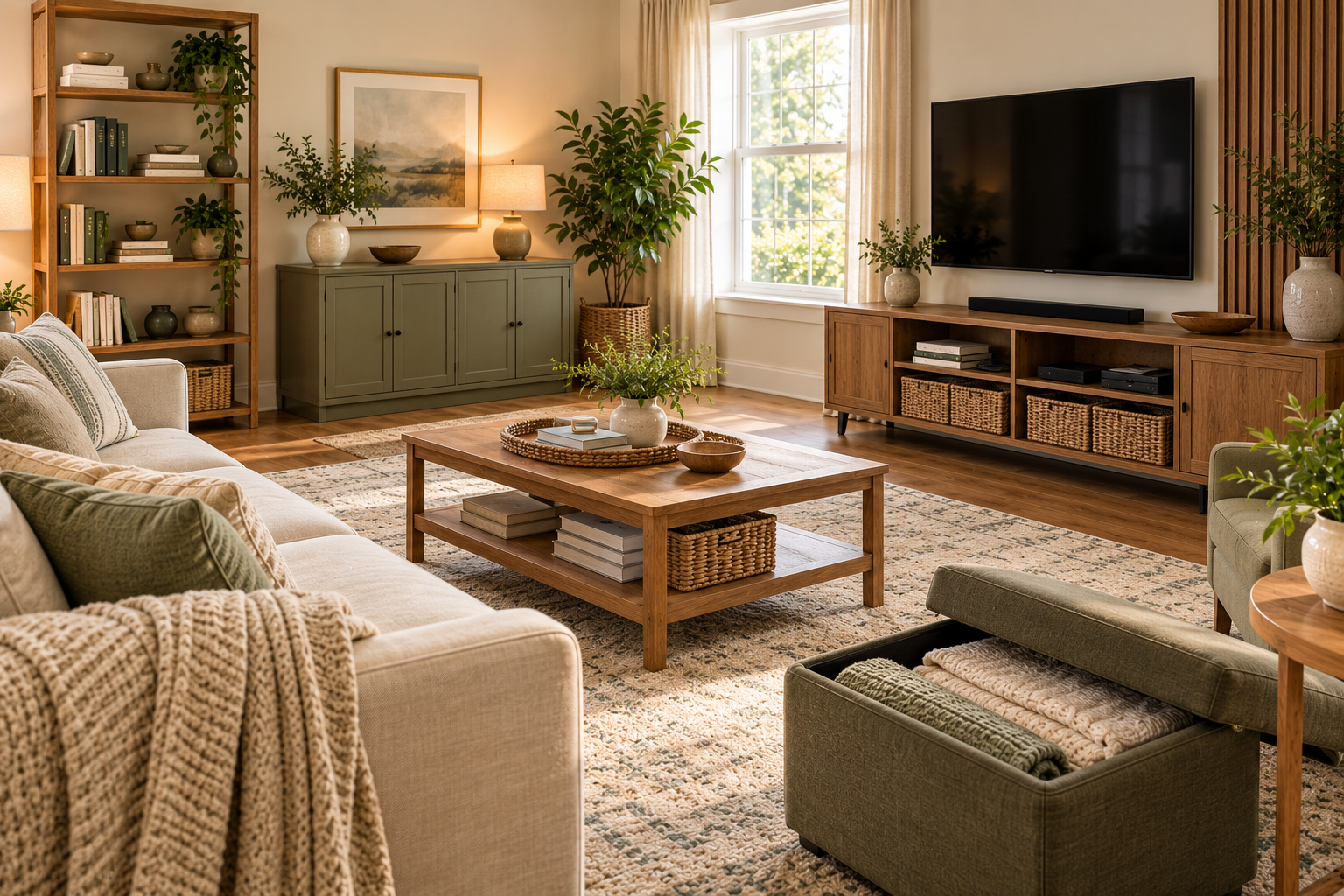
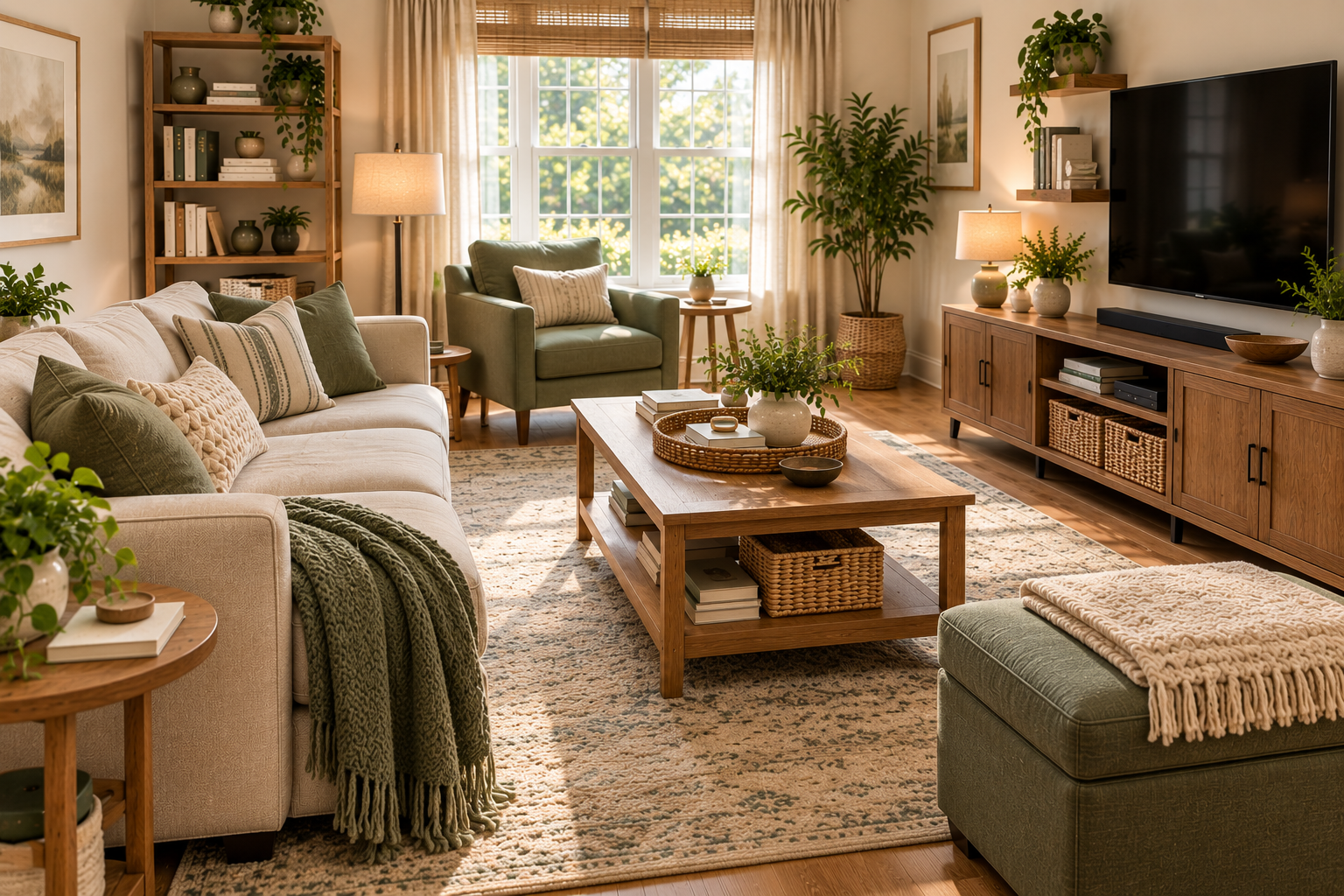
Think of storage as a tool. Open shelving helps when visibility matters. A cabinet helps when concealment matters. A basket helps when quick drop-in access matters. A storage ottoman can perform more than one job.
4. Decide Between Open and Closed Storage
Open and closed storage solve different problems. The choice should depend on what you are storing and how often you need to see or reach it.
Choose open storage when…
Visibility helps, the category is visually calm, and frequent access matters.
Choose closed storage when…
The category is visually busy, contains many small pieces, or looks better contained.
Open storage is not automatically more organized, and closed storage is not automatically better. The useful question is whether visibility or concealment makes the category easier to manage.
5. Use the Space You Already Have Before Adding Furniture
Before adding a new storage unit, look at the furniture and spaces already in the room.
- Remove items that do not belong in existing storage.
- Move rarely used items away from prime-access areas.
- Group related categories instead of spreading them across several locations.
- Use unused vertical capacity when it remains practical to reach.
- Leave enough space for doors and drawers to operate normally.
Empty space is not automatically wasted space. Some open space is what makes storage, furniture, and movement easier to use.
6. Put Storage Where the Items Are Actually Used
Storage works better when it follows the activity rather than simply filling an empty corner.
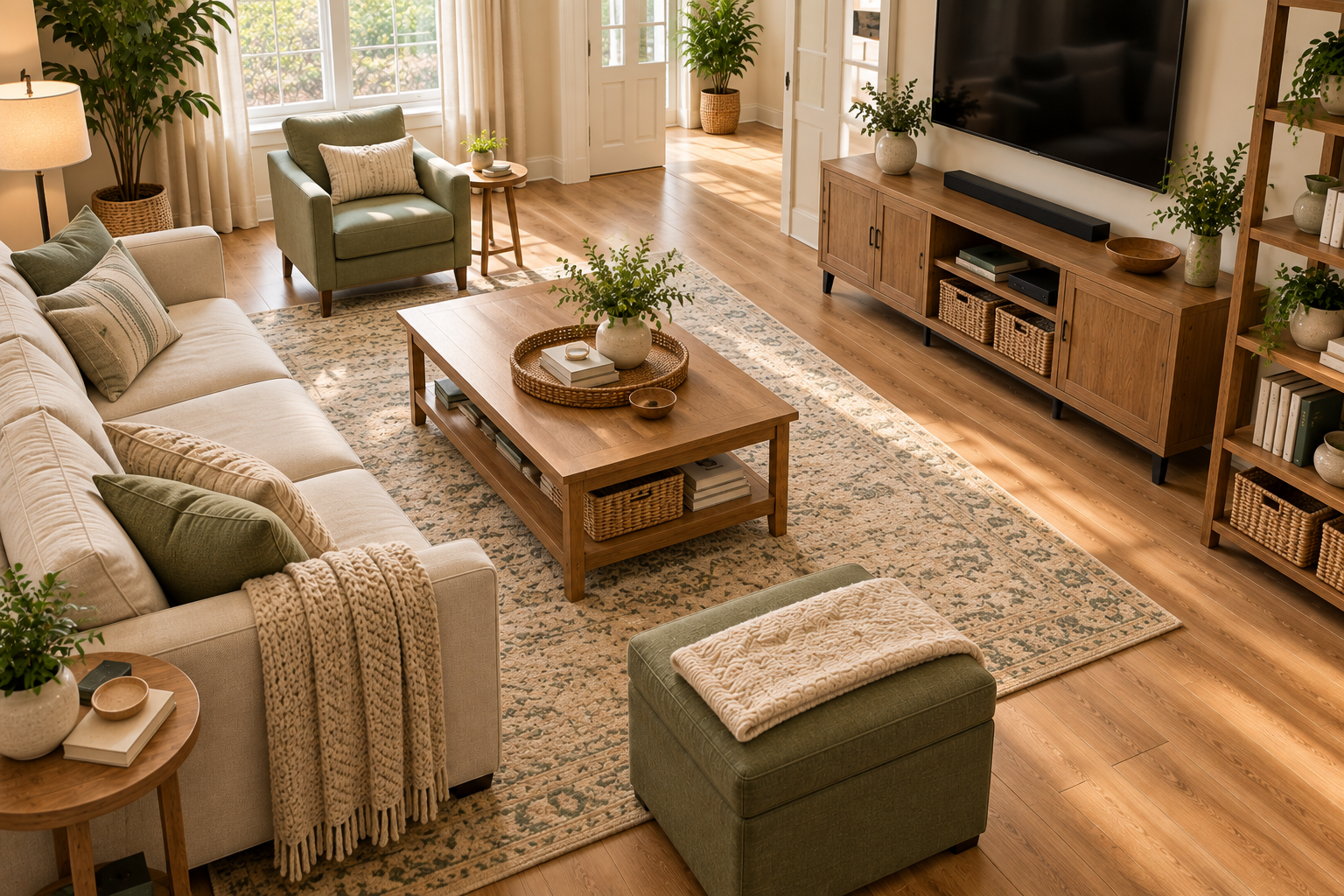
Keep reading materials near the place where you read. Keep blankets near seating. Keep remotes and frequently used media accessories close to the media area. Keep games near the area where they are played.
Reach
Can you get the item without interrupting another activity?
Return
Can the item be put away just as easily after use?
Circulation
Does storage leave the main walking route comfortable?
7. Use Vertical and Dual-Purpose Storage Carefully
Vertical storage can increase capacity without spreading furniture across the floor, but more capacity is not always better.
Use vertical space when items remain practical to access and added height does not make the room feel visually heavy. Dual-purpose furniture can also help when one footprint can reasonably perform two jobs.
SONGMICS 43.3-Inch Folding Storage Ottoman Bench
A practical example of dual-purpose storage for blankets and other soft items while also providing a seating or footrest function.
INDRESSME XXXLarge Woven Rope Blanket Basket, 90L
A large open-access basket can work for blankets, pillows, and other soft living-room items near seating.
As an Amazon Associate, Simply Tidy Home earns from qualifying purchases. Some links above are paid links, which means Simply Tidy Home may earn a commission if you purchase through them, at no additional cost to you.
8. Organize the Media and Electronics Zone
Electronics need a slightly different storage approach because access, cable routing, ventilation, and manufacturer requirements can affect placement.
- Keep frequently used controls easy to reach.
- Group related accessories rather than scattering them.
- Leave appropriate access around equipment according to manufacturer instructions.
- Plan cable paths before pushing storage tightly against equipment.
- Do not use closed storage where equipment requires airflow or direct access.
9. Measure Before Buying Storage
Measure the actual space where the item will live. Check width, depth, and height, then account for doors, drawers, walking routes, nearby furniture, and access to the items inside.
Living Room Storage Measurement Checklist
- Measure available width.
- Measure usable depth.
- Check height and overhead obstructions.
- Account for doors, drawers, and lids when open.
- Check the walking route around the footprint.
- Consider how stored items will be removed and returned.
- Check cable access and manufacturer requirements for electronics.
10. Know When You Have Enough Storage
More storage is not always the solution. There is a point where another cabinet, basket, shelf, or table makes the room harder to use.
| If the problem is… | Try this first |
|---|---|
| Too many stored items | Reduce duplicates, unused items, and categories that do not need to live in the room. |
| Storage is overflowing | Reassess the category and whether the storage type fits the way it is used. |
| Walking space is shrinking | Remove or relocate storage before adding another piece. |
| Open shelves look busy | Reduce visible categories or move visually busy items into closed storage. |
| Every surface becomes storage | Create homes for recurring categories and reset the surfaces. |
Daily
Return everyday items to their homes and clear visible surfaces.
Weekly
Notice which categories are overflowing or repeatedly being left out.
Before buying
Measure the footprint and identify the specific problem the new storage needs to solve.
A useful stopping point is reached when everyday categories have clear homes, the room remains easy to move through, and the storage itself does not become the new source of clutter.
Related Living Room Guides
Frequently Asked Questions
How do I organize living room storage?
Identify what needs to stay, group items by use, match each category to the right storage type, place storage near the point of use, measure before buying, and test the system.
What should be stored in a living room?
Store items genuinely used in the room, such as books, blankets, games, media accessories, remotes, and other everyday household items.
Is open or closed storage better for a living room?
Neither is universally better. Use open storage when visibility and access help; use closed storage when concealment reduces visual clutter.
How can I hide living room clutter?
Reduce what needs to be stored, group recurring categories, and use closed cabinets, drawers, or contained storage for visually busy items.
Where should I store blankets in the living room?
Keep blankets close to the seating where they are used. A basket or storage ottoman can work when it provides quick access without interfering with walking space.
How should I organize living room electronics?
Group related electronics and accessories around the media area, keep controls accessible, plan cable routes, and follow manufacturer requirements.
How do I add living room storage without making the room feel crowded?
Identify the category first, measure the footprint, protect walking routes, and consider storage that performs more than one useful function.
How do I choose living room storage furniture?
Choose it by the problem it needs to solve, considering category, frequency of use, access, dimensions, footprint, and circulation.
Key Takeaways
- Audit categories before buying storage.
- Group items by function and frequency of use.
- Match storage to the category.
- Use open storage for visibility and closed storage when concealment helps.
- Place storage where the activity happens.
- Use vertical and dual-purpose storage selectively.
- Plan electronics around access, cable routing, and manufacturer requirements.
- Measure before buying.
- Stop adding storage when usability starts to decline.
- Reset the system based on real use.
Good Living Room Storage Makes the Room Easier to Use
The goal is not to fill every empty space with another organizer. It is to give the things you use a practical home without making the room harder to move through or maintain.
Start with the categories. Group them by use. Match each one to the right storage type. Place storage where the activity happens. Measure before buying. Then watch the system in real life and reset what is not working.
AUDIT → GROUP → MATCH → PLACE → TEST → RESET
When storage follows the way the room is actually used, organization becomes much easier to maintain.