
REFRIGERATOR ORGANIZATION
A refrigerator can be full without being organized. The goal is not to make every shelf look perfect. It is to create a simple system that makes food easier to see, reach, use, restock, and maintain.
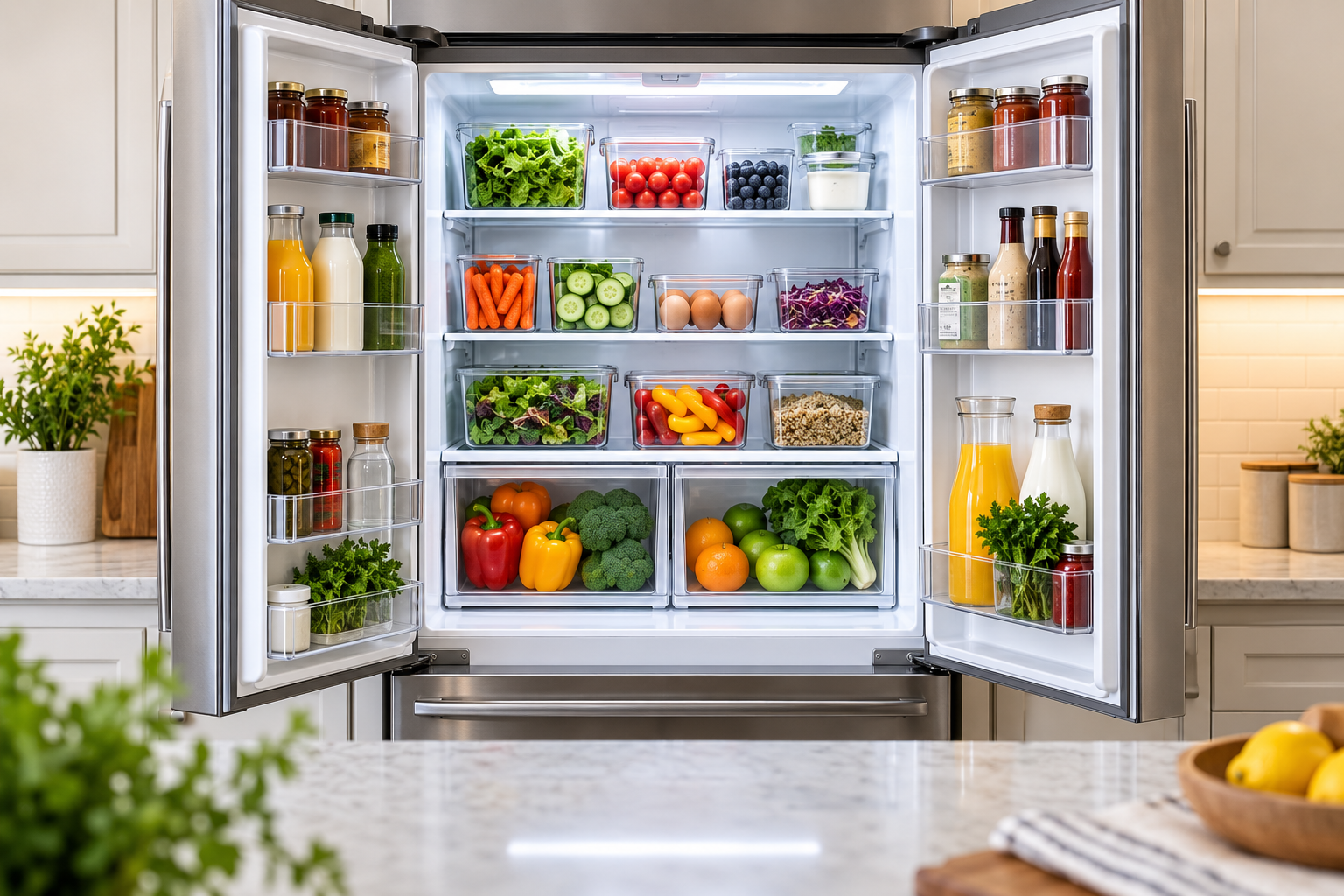
The best refrigerator organization system depends on what you actually store, how often you use it, and how your refrigerator is designed. Instead of copying a rigid shelf map, build zones that make sense for your household.
The STH refrigerator system: CHECK → CLEAR → CATEGORIZE → ZONE → PLACE → TEST → RESTOCK → RESET.
Start by Understanding Your Refrigerator
Before moving anything, look at the refrigerator as a storage system rather than a collection of shelves and drawers.
Notice:
- How many shelves and drawers you have.
- Which areas are easiest to reach.
- Which foods you use most often.
- Which foods need to stay together.
- Where larger containers or tall bottles fit best.
- Which areas tend to become crowded or forgotten.
This quick audit gives each part of the refrigerator a purpose instead of forcing every refrigerator into the same layout.
Check the Temperature Before You Organize It
Organization should come after basic food-safety conditions are in place. The USDA recommends keeping the refrigerator at 40°F (4.4°C) or below and using an appliance thermometer to verify the temperature.
If you store raw meat, poultry, or seafood, keep those foods contained so their juices cannot drip onto other foods. Avoid packing the refrigerator so tightly that cold air cannot circulate.
A useful distinction
Your organization system can assign foods to practical zones, but it should not replace your refrigerator manufacturer’s guidance or food-safety requirements.
Clear the Refrigerator Before Organizing It
Trying to organize around everything already inside the refrigerator usually creates more work. Clear enough space to see what you actually have.
As you remove food, sort it into simple groups:
- Keep and use soon.
- Keep and use regularly.
- Needs a different storage location.
- Expired or no longer wanted.
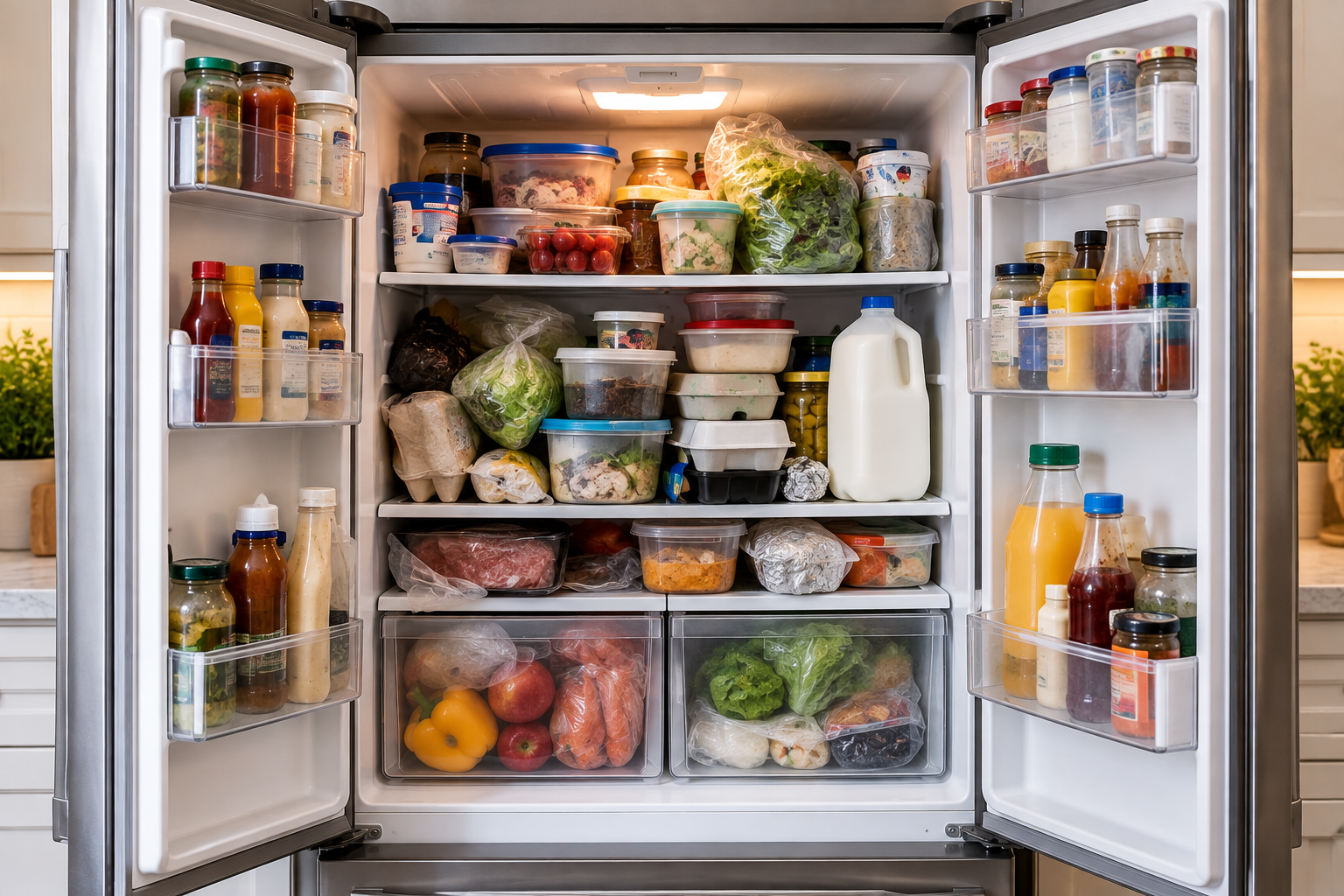
You do not need to empty every part of the refrigerator at once if that feels impractical. Work shelf by shelf or zone by zone.
Group Food Into Practical Categories
Grouping similar foods makes the refrigerator easier to understand. Instead of remembering where every individual item lives, you begin to recognize where categories belong.
Useful categories might include:
- Ready-to-eat foods and prepared meals.
- Everyday dairy and breakfast foods.
- Raw proteins.
- Fruits and vegetables.
- Condiments and frequently used sauces.
- Drinks.
- Leftovers and foods that need to be used soon.
Your categories do not need to match this list exactly. Build them around the foods your household actually buys and uses.
If your refrigerator connects closely with your pantry system, keeping the two systems coordinated can also reduce duplicate purchases and forgotten food. See our pantry organization ideas for the same measure, group, zone, and maintain approach.
Create Refrigerator Zones That Have a Purpose
Once foods are grouped, assign each refrigerator area a job. A zone does not have to occupy an entire shelf. It simply needs to make a category easier to find and return.
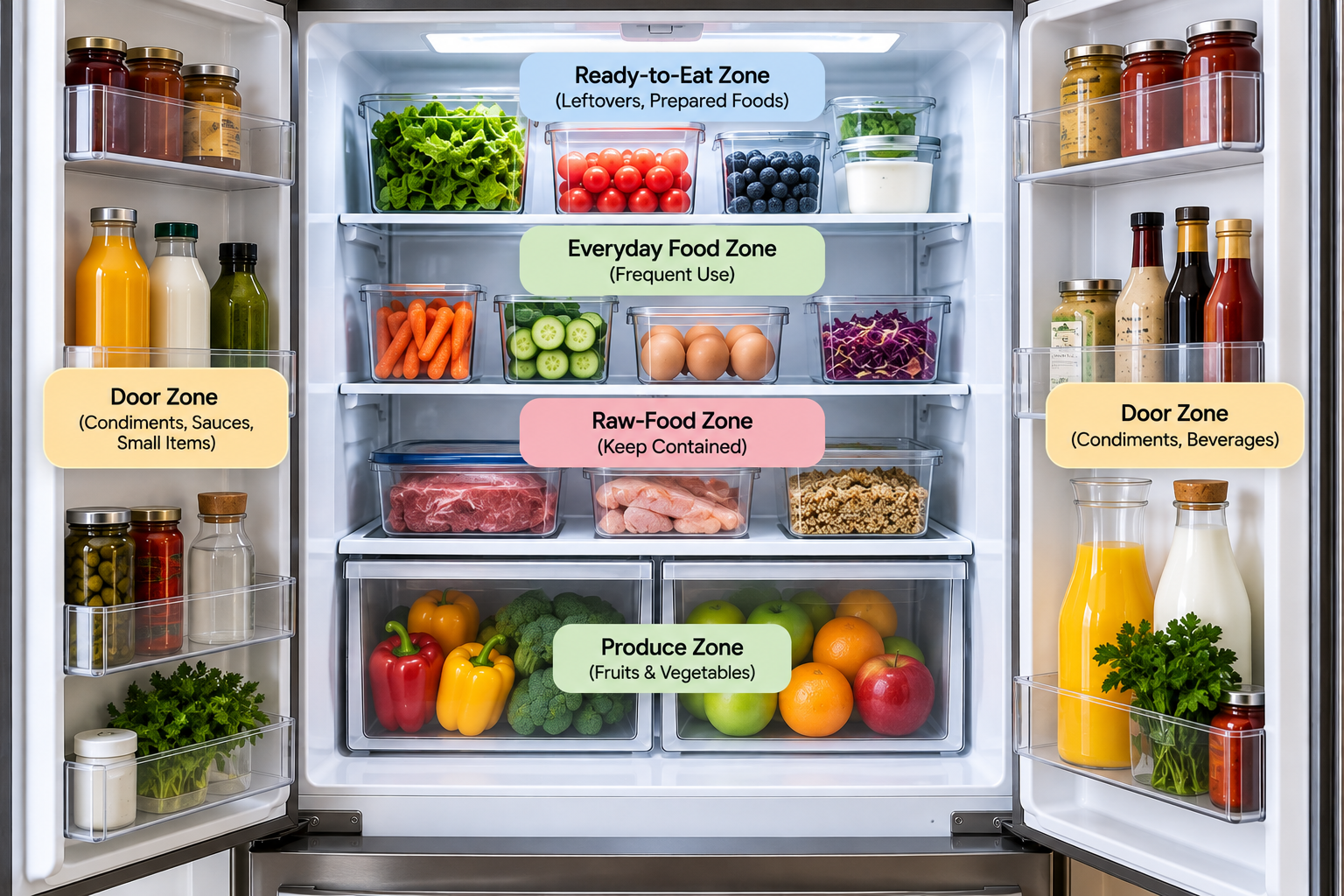
Everyday Food Zone
Keep foods you reach for frequently in an easy-to-access area that works with your refrigerator’s layout.
Ready-to-Eat Zone
Give prepared foods and ready-to-eat items a clearly visible home so they are easier to notice and use.
Raw-Food Zone
Keep raw meat, poultry, and seafood contained and positioned according to safe food-storage practices and your refrigerator’s design.
Produce Zone
Use the crisper drawers and other suitable areas for fruits and vegetables, keeping the arrangement easy to see and access.
Door Zone
Use door storage for items that fit comfortably and make sense for the space rather than treating the door as overflow storage for everything.
Organize Refrigerator Shelves by Access and Food Needs
A useful shelf system balances two things: what the food needs and how often you reach for it.
Put frequently used foods where they are easy to see and reach. Less frequently used items can occupy areas that require a little more effort to access.
For organization, keep newer groceries behind food that needs to be used sooner. This simple arrangement can help prevent older items from disappearing behind newer purchases.
Do not assume that a particular shelf is always the safest or coldest location in every refrigerator. Temperature performance varies by appliance, so use your refrigerator’s instructions and an appliance thermometer rather than relying on a universal shelf rule.
If you are working on other kitchen storage areas at the same time, our guide to organizing kitchen cabinets uses the same principle: give each storage area a clear job based on access and use.
Make the Crisper Drawers Work Better
Crisper drawers can quickly become difficult to use when produce is stacked without a system. The goal is not to fill every inch. It is to make the contents visible enough that food does not disappear underneath other items.
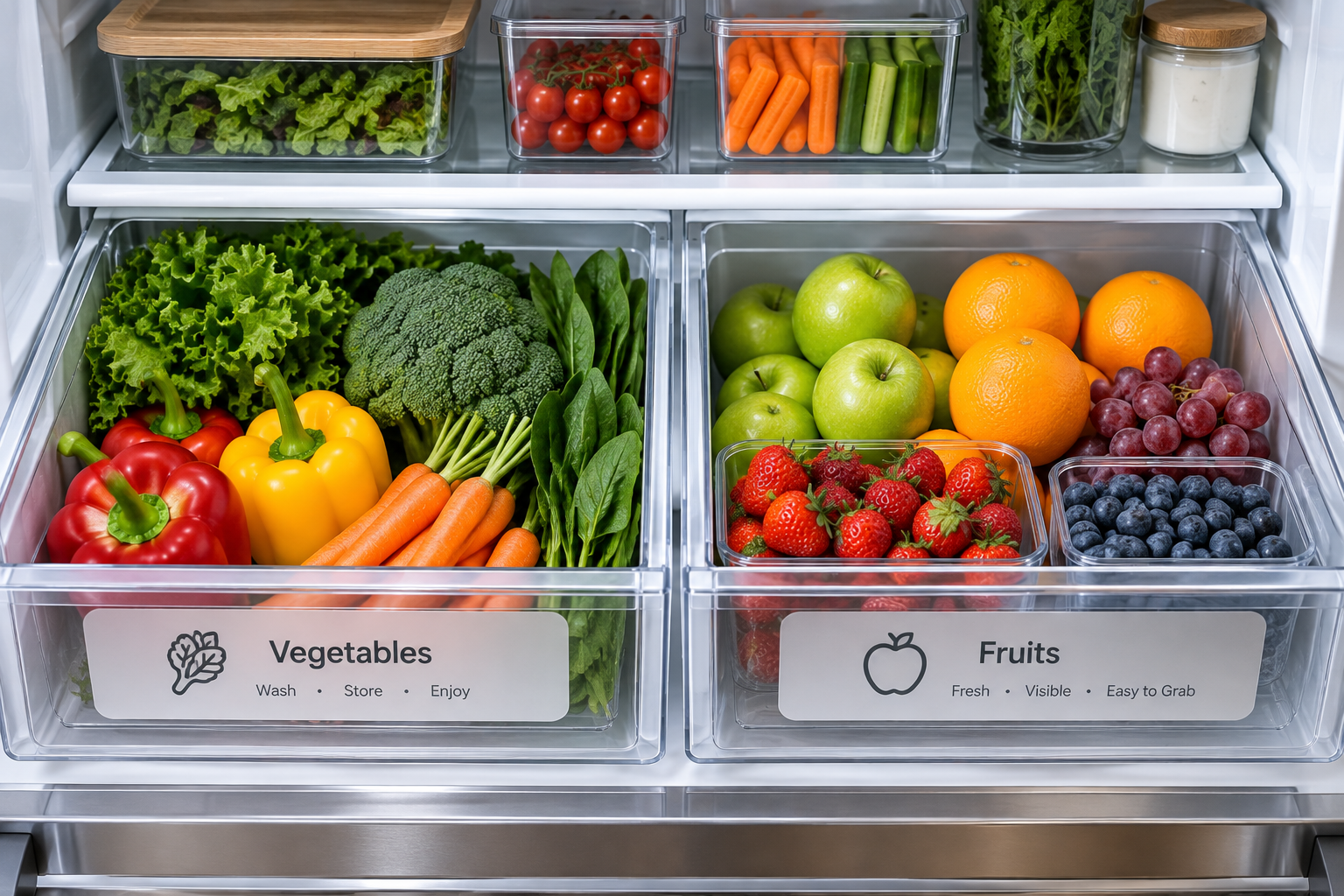
Separate produce in a way that makes sense for your refrigerator and household. Avoid packing drawers so tightly that smaller items disappear underneath larger ones.
A quick visual check when you restock can help you notice produce that needs attention before adding another layer on top.
Use Refrigerator Door Storage Carefully
Refrigerator doors provide convenient storage, but convenience can become clutter when every small item gets pushed into the same compartment.
Group similar items together and avoid allowing the door to become a miscellaneous category. Give each door section a recognizable purpose based on the foods you regularly store there.
Tall bottles, frequently used condiments, and smaller grouped items can each have a defined place if the door configuration supports it.
Make Leftovers Easier to See and Use
Leftovers are easy to forget when they are hidden behind containers or scattered across different shelves.
Create a visible area for prepared foods and leftovers. Clear containers can help when they genuinely improve visibility, but the bigger improvement usually comes from giving these foods a consistent home.
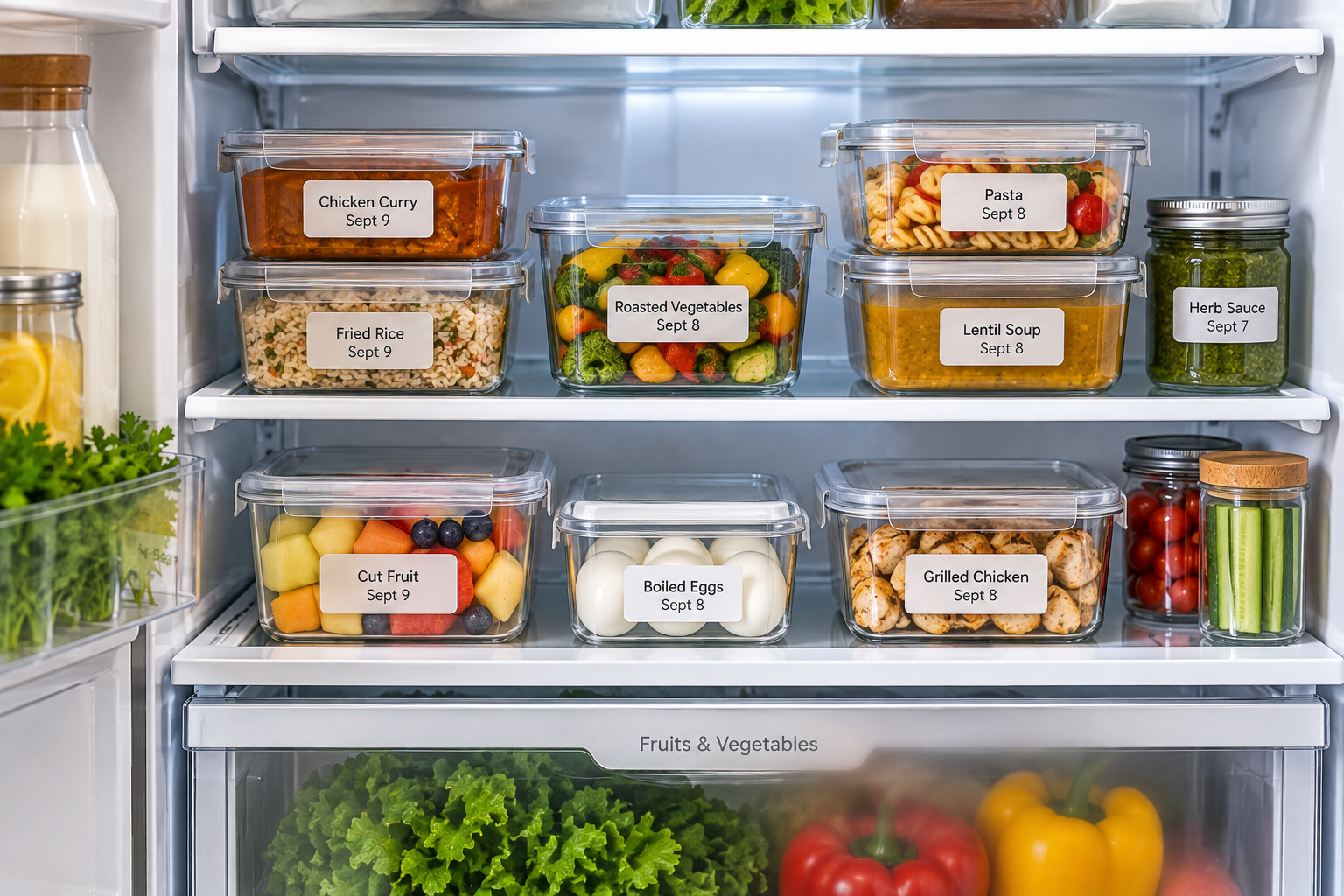
USDA guidance recommends refrigerating leftovers promptly and using refrigerated leftovers within 3–4 days. Organization should make those foods easier to notice, but always follow current food-safety guidance for storage and disposal.
Don’t Overfill the Refrigerator
More storage capacity does not always mean more useful storage. When shelves become tightly packed, food becomes harder to see, containers become harder to remove, and forgotten items are more likely to accumulate.
Leave enough usable space for cold air to circulate and for your hands to reach the foods behind the front row.
A simple test
If you cannot quickly see what is behind the front row or remove one item without moving several others, the refrigerator is probably too crowded for the system to work well.
Use Bins and Containers Only When They Solve a Problem
Refrigerator bins can be useful, but adding containers to every shelf can create more work rather than less.
Before buying or adding an organizer, ask:
- What specific problem will this solve?
- Will it make food easier to see?
- Will it make a category easier to access?
- Can the organizer fit without wasting useful space?
- Will it be easy to clean?
- Will everyone in the household know what belongs there?
The same rule applies throughout the kitchen: organize first, then choose a storage product only when there is a demonstrated problem to solve. Our kitchen-without-a-pantry guide follows this same idea of making existing storage work before adding more.
Create a Grocery-to-Fridge Routine
A refrigerator stays organized more easily when putting groceries away follows the same process every time.
Shop
Buy according to what your household can realistically store and use.
Sort
Group groceries into broad categories before putting them away.
Put Away
Return each category to its assigned refrigerator zone.
Check
Notice foods that need to be used sooner and keep them visible.
Use
Take food from its assigned zone instead of creating temporary piles elsewhere.
Reset
Return items to their zones and clear obvious clutter before the next grocery trip.
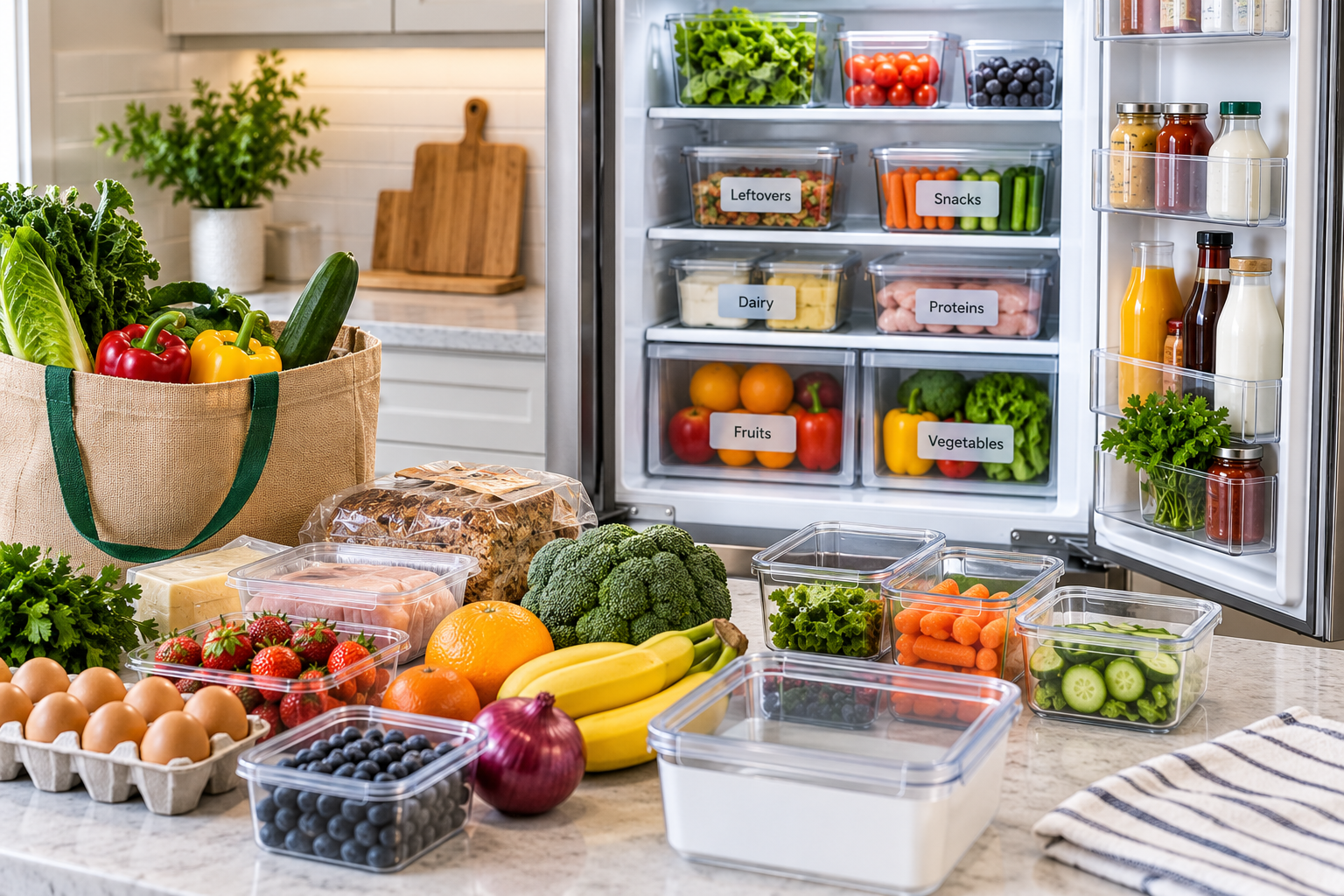
This is similar to organizing kitchen counters: the goal is to create a repeatable flow rather than relying on a major cleanup every few weeks. You can see the same approach in our guide to organizing kitchen counters.
Common Refrigerator Organization Mistakes
Trying to copy someone else’s refrigerator layout
A layout that works for one refrigerator may waste space in another. Build around your appliance and your household’s actual habits.
Buying organizers before identifying the problem
Containers cannot fix a system that has not been defined. Decide what needs to be easier first.
Hiding food behind too many containers
Organization should improve visibility. If a container creates another layer of hidden food, reconsider whether it is helping.
Using every available inch
A completely packed refrigerator may look efficient, but it can make access and visibility worse.
Creating zones nobody follows
A system only works when the people using the refrigerator can understand where things belong and return them there.
How to Keep Your Refrigerator Organized
You do not need a complete refrigerator reset every week. A small routine is usually easier to maintain.
- Use: Take food from its assigned zone.
- Return: Put items back where they belong.
- Check: Notice leftovers, produce, and foods that need attention.
- Reset: Clear obvious clutter and restore the zones.
A few minutes of maintenance can prevent the refrigerator from reaching the point where everything has to be removed and reorganized.
Refrigerator Organization FAQ
What is the best way to organize a refrigerator?
Start by checking your refrigerator’s layout, clearing unnecessary items, grouping similar foods, and assigning practical zones based on access, food needs, and your household’s habits.
How should I organize refrigerator shelves?
Organize shelves according to what you use frequently, what needs to be easy to see, and what storage requirements apply to the foods you keep. Avoid relying on a universal shelf-temperature map.
How can I make my refrigerator easier to use?
Give common food categories consistent homes, keep frequently used items accessible, avoid overfilling, and make foods that need to be used soon easy to see.
Should I use bins in my refrigerator?
Use bins when they solve a specific problem such as grouping small items or improving access. Do not add containers simply because they look organized.
How should I organize leftovers?
Give leftovers and prepared foods a visible, consistent area so they are easier to notice and use. Follow current food-safety guidance for refrigeration and storage times.
How full should a refrigerator be?
Avoid packing the refrigerator so tightly that food becomes difficult to see and cold air cannot circulate effectively. Leave enough usable space for access and airflow.
How often should I organize my refrigerator?
Use a small reset routine regularly and do a deeper organization when zones stop working, food becomes difficult to see, or clutter begins accumulating.
What temperature should a refrigerator be?
USDA recommends keeping the refrigerator at 40°F (4.4°C) or below. An appliance thermometer can help verify the actual temperature.
A refrigerator can be organized without being perfect.
The best system is the one that helps you see what you have, reach what you need, use food in time, and put groceries away without having to rethink the entire refrigerator every time.