
Deep pantry shelves can hold a lot, but they can also make food disappear behind other items. The goal is not to fill the entire shelf. It is to make the space visible, reachable, and easy to reset.
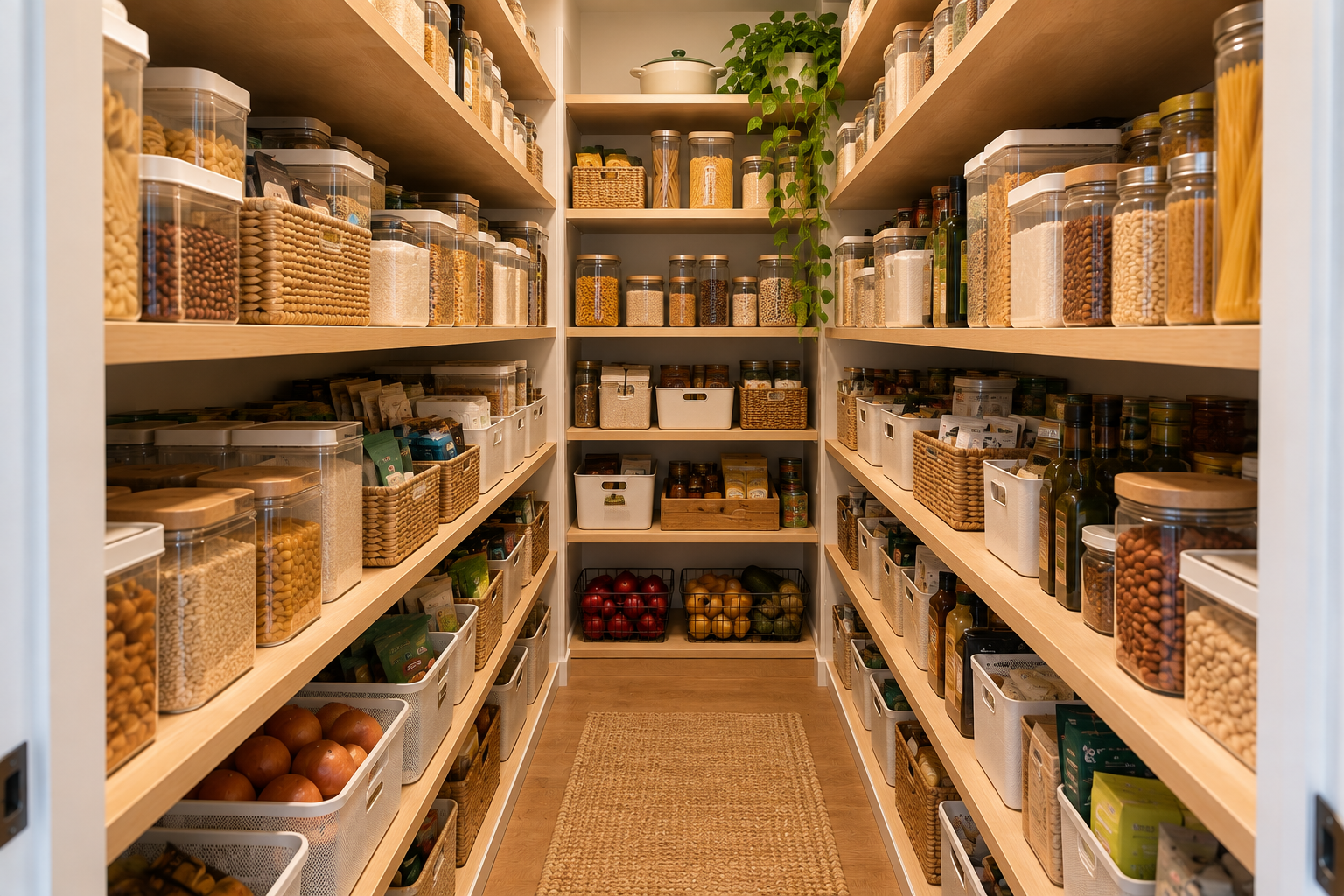
The best way to organize a small pantry with deep shelves is to measure the usable shelf space, identify what makes the depth difficult to use, create zones around frequency of use, and then use storage that improves visibility or access where needed.
Keep frequently used items easy to see and reach. Use the back of deep shelves for appropriate back-stock or less frequently used items, but do not create a second hidden layer that requires you to move everything in front.
Before buying bins, risers, or turntables, find out what is actually making the shelf difficult to use.
The Deep Pantry Shelf System
Key Takeaways
- Measure shelf width, depth, vertical clearance, and usable opening space before buying storage.
- Do not use the full depth simply because it exists.
- Keep everyday foods where they are easiest to see and reach.
- Use pull-forward storage when reaching is the main problem.
- Use risers when visibility is the main problem and vertical clearance allows it.
- Use rotating storage only when rotation genuinely improves access.
- Keep back-stock controlled instead of creating hidden layers.
- Test the arrangement before buying more organizers.
If you need the broader system first, see our pantry organization ideas guide . This article focuses specifically on the problem created by deep shelves in a small pantry.
Why Deep Pantry Shelves Become Difficult to Use
A deep shelf gives you more physical space from front to back. That does not automatically mean you have more usable storage.
The problem begins when the back of the shelf becomes difficult to see or reach.
A few common situations cause this:
- Everyday items are placed behind less frequently used items.
- Small packages disappear behind taller products.
- Loose items become difficult to group.
- Several layers of food are placed front to back.
- Organizers consume too much of the usable shelf footprint.
- The shelf is filled simply because there is empty space.
The goal is therefore not maximum physical capacity. It is usable capacity.
1. Measure the Pantry Before Buying Organizers
Deep shelves make measurement especially important because the organizer must fit not only the shelf but also the way you need to use it.
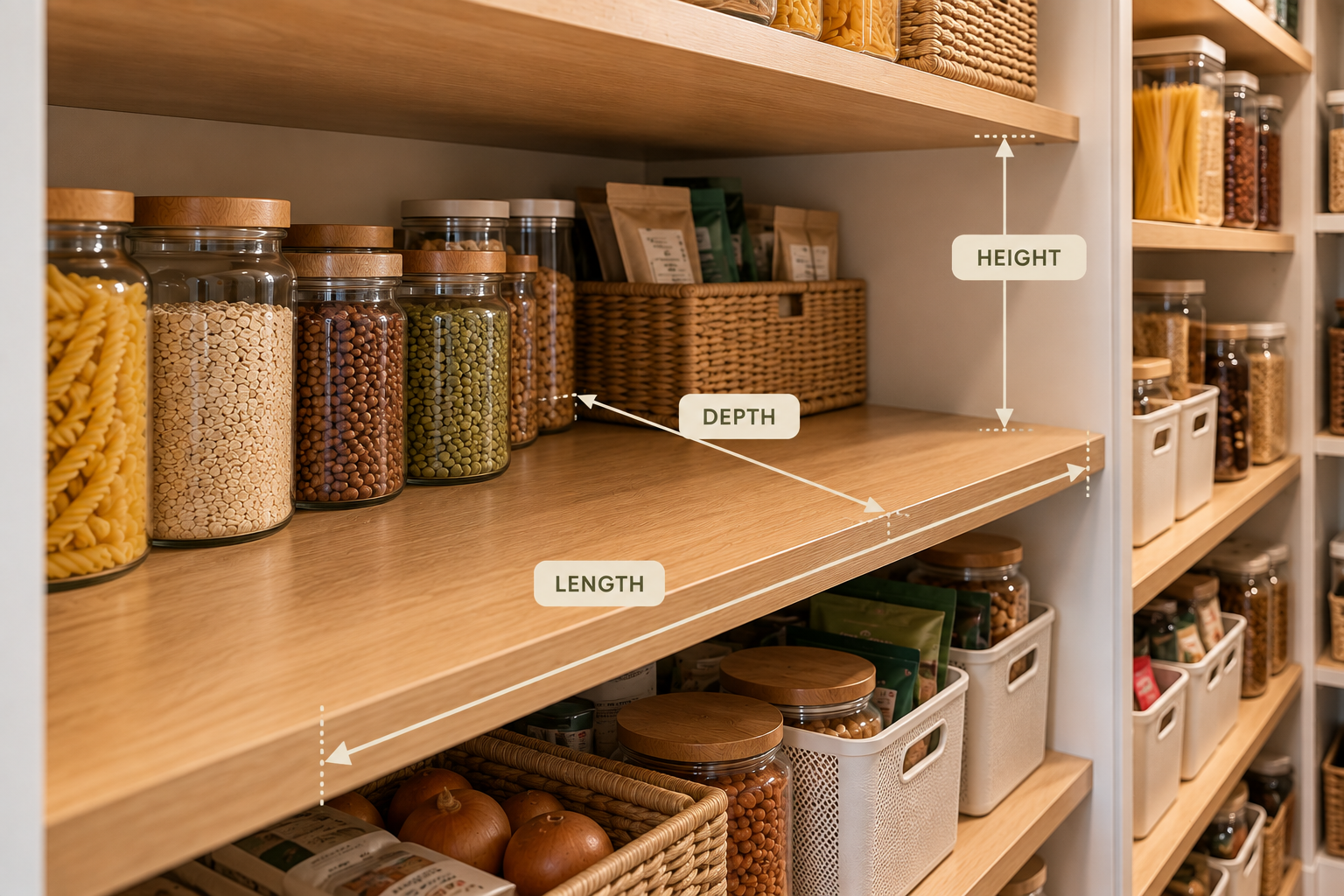
- Width: measure the usable space from side to side.
- Depth: measure from the usable front edge toward the back of the shelf.
- Vertical clearance: check the space between the shelf surface and the shelf above it.
- Opening: check whether the pantry opening or cabinet door limits what can actually be inserted or removed.
- Obstacles: note hinges, brackets, trim, pipes, or other features that reduce usable space.
An organizer can physically fit on a shelf and still make the pantry harder to use. Leave enough room for your hand, the stored items, and whatever movement is required to retrieve them.
2. Decide What the Depth Is Actually For
Before adding storage, decide whether the back of the shelf should be used for everyday items, occasional items, or back-stock.
A useful starting rule is simple: the more often you use something, the easier it should be to see and reach.
The Reach Test
If an item disappears behind another item, visibility is already becoming a problem.
You should not need to remove unrelated items every time you need a frequently used product.
A system that works only when you carefully rebuild it is unlikely to stay useful during normal daily use.
Rarely used back-stock can occupy deeper space when it remains identifiable and reachable.
3. Create Pantry Zones Based on Use
Deep shelves become easier to manage when every part of the shelf has a clear job.
Start with broad categories rather than creating too many tiny zones.
- Everyday foods
- Breakfast items
- Snacks
- Baking supplies
- Canned or packaged foods
- Back-stock
The exact categories should reflect what your household actually uses. There is no need to copy someone else’s pantry categories simply because they look neat.
4. Make the Back of a Deep Shelf Easier to Reach
Once you know the problem, choose the smallest change that fixes it. Different access problems call for different solutions.
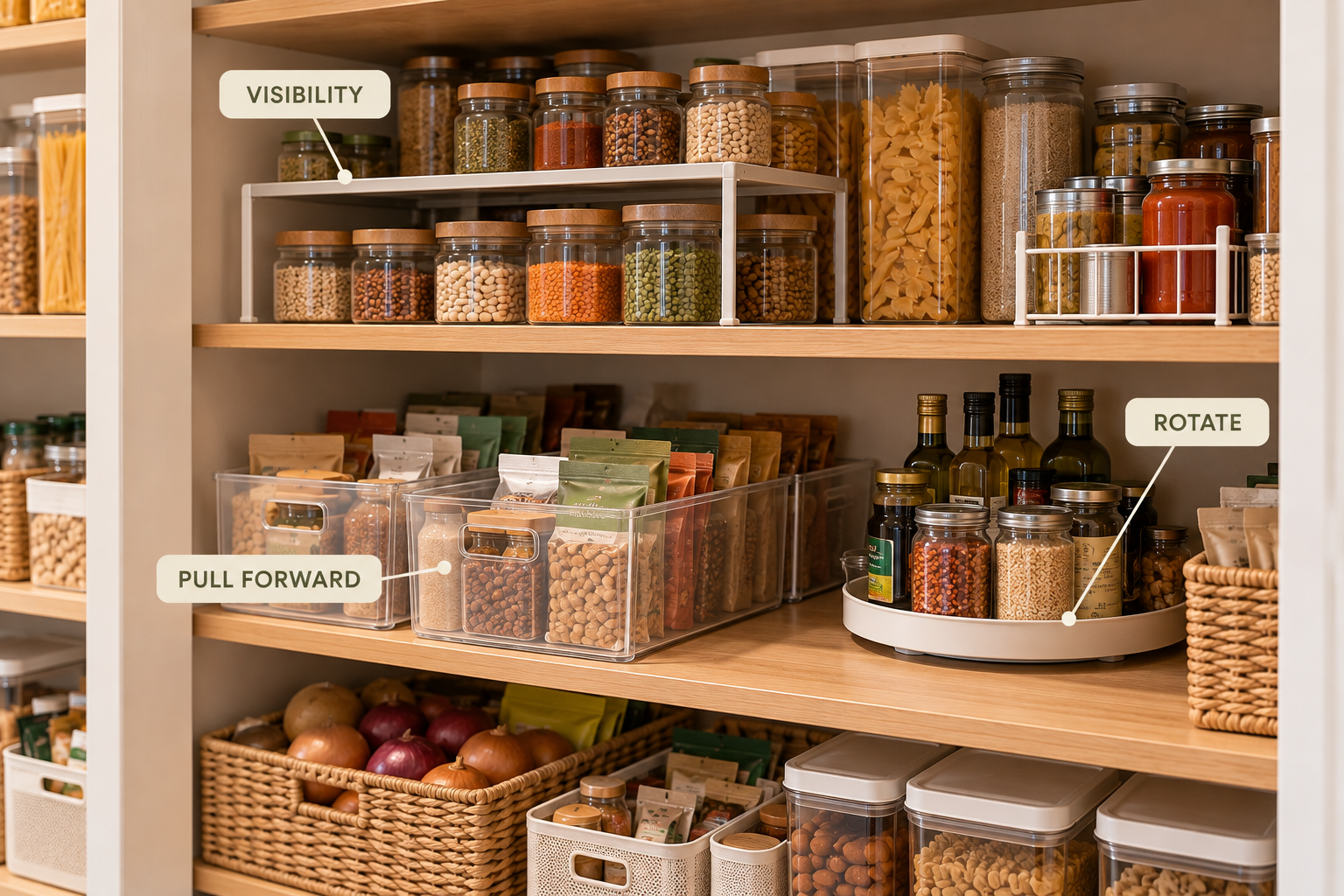
| Problem | Possible Solution | Check First |
|---|---|---|
| Items behind one another are hard to see | Shelf riser | Vertical clearance |
| Loose packages are hard to retrieve | Pull-forward bin | Bin footprint and loaded depth |
| Bottles or jars are difficult to reach | Turntable | Diameter, height, and surrounding clearance |
| Rarely used items occupy prime space | Move them toward controlled back-stock | Whether they remain identifiable and reachable |
None of these solutions is automatically correct. The organizer should follow the problem, not the other way around.
5. How to Use Bins on Deep Pantry Shelves
A bin can make a deep shelf easier to use when it turns several loose items into one movable category.
Instead of reaching around individual packages, you can pull the category toward you.
This works best when:
- The items naturally belong together.
- The bin remains easy to see into.
- The bin does not consume more space than the category needs.
- The loaded bin can actually be moved comfortably.
- Measure the shelf depth.
- Measure the usable shelf width.
- Check vertical clearance.
- Consider the loaded weight.
- Make sure the contents will remain visible.
- Check that you can pull the bin forward comfortably.
6. When a Shelf Riser Helps — and When It Doesn’t
A riser can be useful when the main problem is visibility rather than reach.
For example, if shorter cans or jars disappear behind taller packages, raising the rear items can create a clearer view.
But a riser is not automatically useful just because there is empty space above a shelf.
Check whether the extra level will leave enough room for the food and enough clearance for your hand to remove it.
7. When a Lazy Susan Makes Sense
Rotating storage can help when the contents are suitable for rotation and reaching into the back is the main problem.
It can work particularly well for categories containing bottles, jars, sauces, or other items that are easier to access when they can be brought toward you.
A turntable needs enough room to rotate. Measure the available footprint and vertical clearance before using one.
If a turntable takes up too much of the shelf or creates a new access problem, another solution may be more appropriate.
For a dedicated comparison of rotating storage, see our pantry Lazy Susan guide .
8. Keep Everyday Items Separate From Back-stock
Deep shelves are often easier to manage when you stop treating the entire shelf as one storage layer.
Put frequently used items in the easiest access position. Use deeper areas for appropriate back-stock or items you reach for less often.
Back-stock should still be controlled. If you cannot tell what is behind the front row, the shelf has become hidden storage rather than useful storage.
- Place everyday items where they are easiest to reach.
- Group similar categories together.
- Keep back-stock behind or below only when it remains identifiable.
- Use a bin when the category needs to move as one unit.
- Leave enough room to remove and return items.
9. Load Deep Shelves for Visibility and Access
Once the zones are established, load each shelf according to how it will actually be used.
Avoid creating a perfect-looking arrangement that becomes difficult the moment you unload groceries.
Keep the most frequently used items in the easiest access path. Put taller items where they do not hide shorter items. Group categories so that returning an item is obvious.
After organizing the shelf, imagine putting away a normal grocery haul. Can you return the new food without creating a pile or moving half the shelf?
If the answer is no, diagnose the friction before buying another organizer.
10. What Not to Do With Deep Pantry Shelves
Filling Every Inch
Empty space is not automatically wasted space. Some clearance is necessary for visibility, movement, and easy access.
Creating Multiple Hidden Rows
If the front row blocks the back row, you have created a retrieval problem. Use deeper space selectively instead of automatically filling it.
Buying Organizers Before Measuring
An organizer that is slightly too deep, wide, or tall can make a small pantry less usable.
Using the Same Solution Everywhere
One shelf may need a riser while another needs a movable bin. A third shelf may need no organizer at all.
Decanting Everything
Clear containers can help in some situations, but transferring every food into a container is not necessary. Use containers when they solve a genuine visibility, containment, stacking, or access problem.
11. Two Products That Can Solve Specific Deep-Shelf Problems
Products should come after the problem has been identified. These are examples of solutions for two specific constraints, not universal recommendations.
As an Amazon Associate I earn from qualifying purchases. Some links below are paid links, which means Simply Tidy Home may earn a commission if you purchase through them, at no additional cost to you.
For Deep Shelves With Loose Packages
A handled storage bin can turn several loose pantry items into one movable category. This can make a deep shelf easier to access when individual packages are difficult to retrieve.
The mDesign Deep Plastic Kitchen Storage Organizer Bin is an example of this type of solution. Because the loaded bin becomes a movable unit, measuring the shelf and considering the weight of the contents matters before buying.
Best fit if: you have a genuine grouping-and-access problem and the bin fits the shelf without hiding its contents.
Before buying: measure the shelf footprint and check the loaded height and depth.
For Unused Vertical Space
A shelf riser can create another visible level when there is useful vertical clearance above the food already sitting on the shelf.
The SONGMICS Cabinet Organizer Shelf, Set of 2, is an example of this type of solution. Separate risers can be useful when you need another level without committing the entire shelf to one large organizer.
Best fit if: your shelf has useful vertical clearance and visibility is the main problem.
Before buying: measure the available height and make sure the raised items remain easy to remove.
Product information can change. Check the current Amazon listing and confirm dimensions, configuration, availability, and fit before purchasing.
How to Keep Deep Pantry Shelves Organized
A deep pantry does not need a complicated maintenance routine. The system should make the reset easier.
- Return items to their zones.
- Bring frequently used foods back to the easiest access position.
- Move misplaced items to their normal locations.
- Check for empty packaging.
- Group duplicate items together.
- Check whether anything has become hidden behind another category.
- Adjust the shelf when repeated friction appears.
If the answer becomes no, the system needs adjustment. Do not automatically solve every new problem by buying another organizer.
- What exactly is difficult to access?
- Is the problem depth, visibility, height, width, or inventory?
- Can repositioning solve it first?
- What are the exact usable shelf dimensions?
- Will the organizer make the contents easier to see?
- Will you be able to reach and return the contents?
- Will the organizer consume more useful space than it creates?
More Pantry Organization Help
Continue with the guide that matches the problem you are trying to solve.
Frequently Asked Questions
How do I organize a small pantry with deep shelves?
Start by measuring the shelves and identifying why the depth is causing difficulty. Create zones based on frequency of use, keep everyday items easy to reach, and use pull-forward bins, risers, or rotating storage only when they solve the specific problem.
What should go at the back of a deep pantry shelf?
Less frequently used items and appropriate back-stock can go deeper when they remain identifiable and reachable. Avoid putting frequently used items behind unrelated products.
How can I make deep pantry shelves easier to reach?
First reduce unnecessary layers and reposition frequently used items. Then consider a pull-forward bin for suitable categories or a turntable for bottles and jars when there is enough room for rotation.
Are deep pantry shelves a waste of space?
Not necessarily. Deep shelves can provide useful storage when the full depth remains visible and accessible. They become difficult when the back turns into hidden storage.
Should I use bins on deep pantry shelves?
Bins can help when they group items into a movable category and make access easier. Measure the shelf first and avoid over-sized bins that hide contents or consume too much usable space.
Do shelf risers work on deep pantry shelves?
They can help when visibility is the main problem and there is enough vertical clearance. A riser is less useful when it makes the raised items difficult to remove.
Should I fill the entire depth of a pantry shelf?
No. Use as much depth as you can access comfortably. Leaving some space can make items easier to see, reach, and return.
Can I organize a deep pantry without buying organizers?
Yes. Start by removing unnecessary packaging, grouping similar items, moving everyday foods forward, separating back-stock, and changing shelf placement. Live with the arrangement before deciding whether an organizer is actually needed.
A small pantry with deep shelves does not need to hold more. It needs to make what you already have easier to use.
MEASURE → DIAGNOSE → ZONE → CREATE ACCESS → CHOOSE → LOAD → RESET
Fix the depth problem before adding storage. Keep everyday items visible and reachable. Use the back of the shelf deliberately rather than automatically.
The goal is not to make every inch full. The goal is to make the important space useful.