
LINEN CLOSET ORGANIZATION
A deep linen closet can hold a lot, but depth can also make everyday items harder to see and retrieve. The goal is not to fill every inch. It is to organize the depth so the items you use most remain accessible.
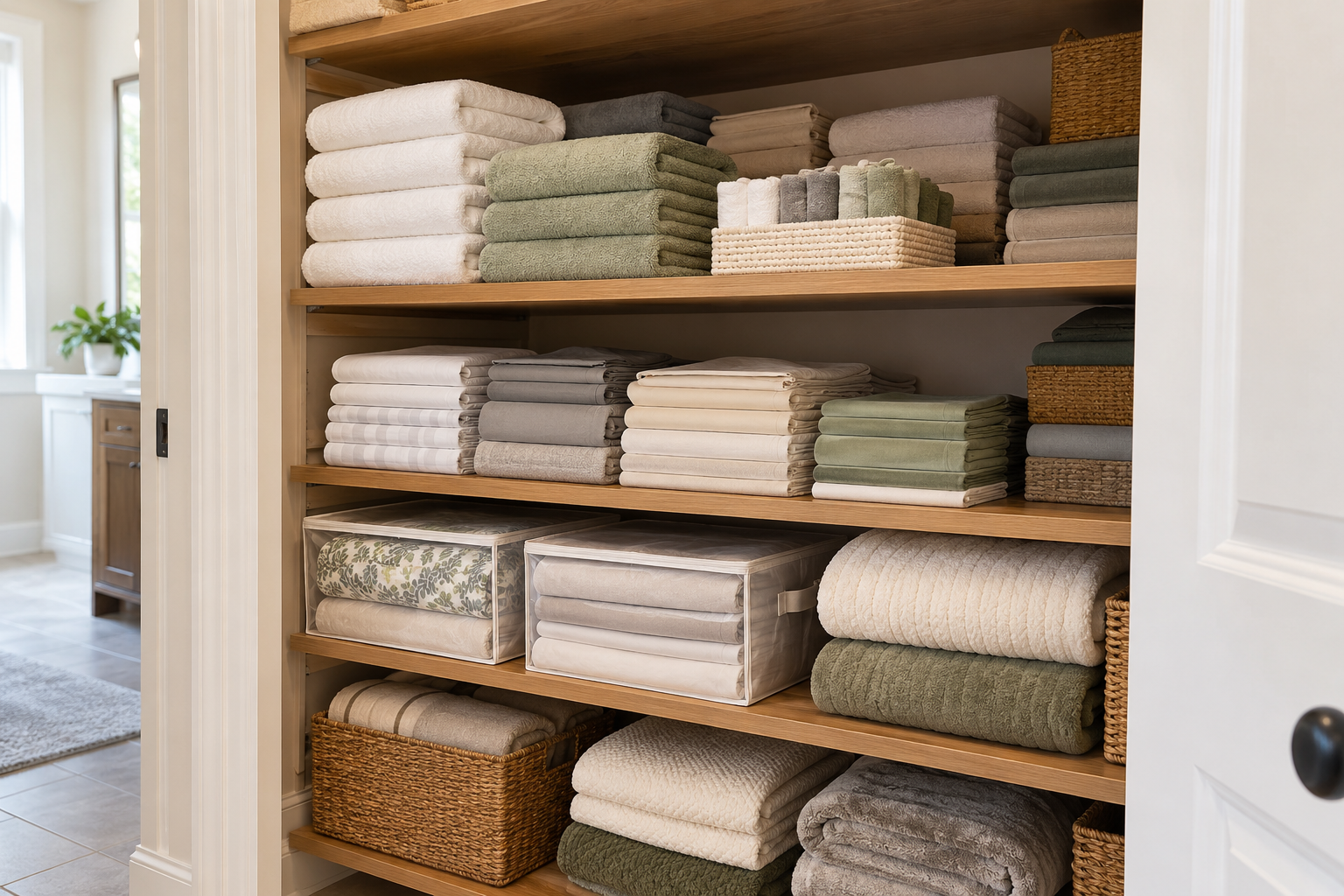
To organize a deep linen closet, measure the usable shelf depth first. Then map the reachable areas, place frequently used linens where they are easiest to access, and use deeper space for backup or less-frequent items. Add dividers when stacks become unstable and use a pull-forward container when the rear of a shelf is difficult to reach.
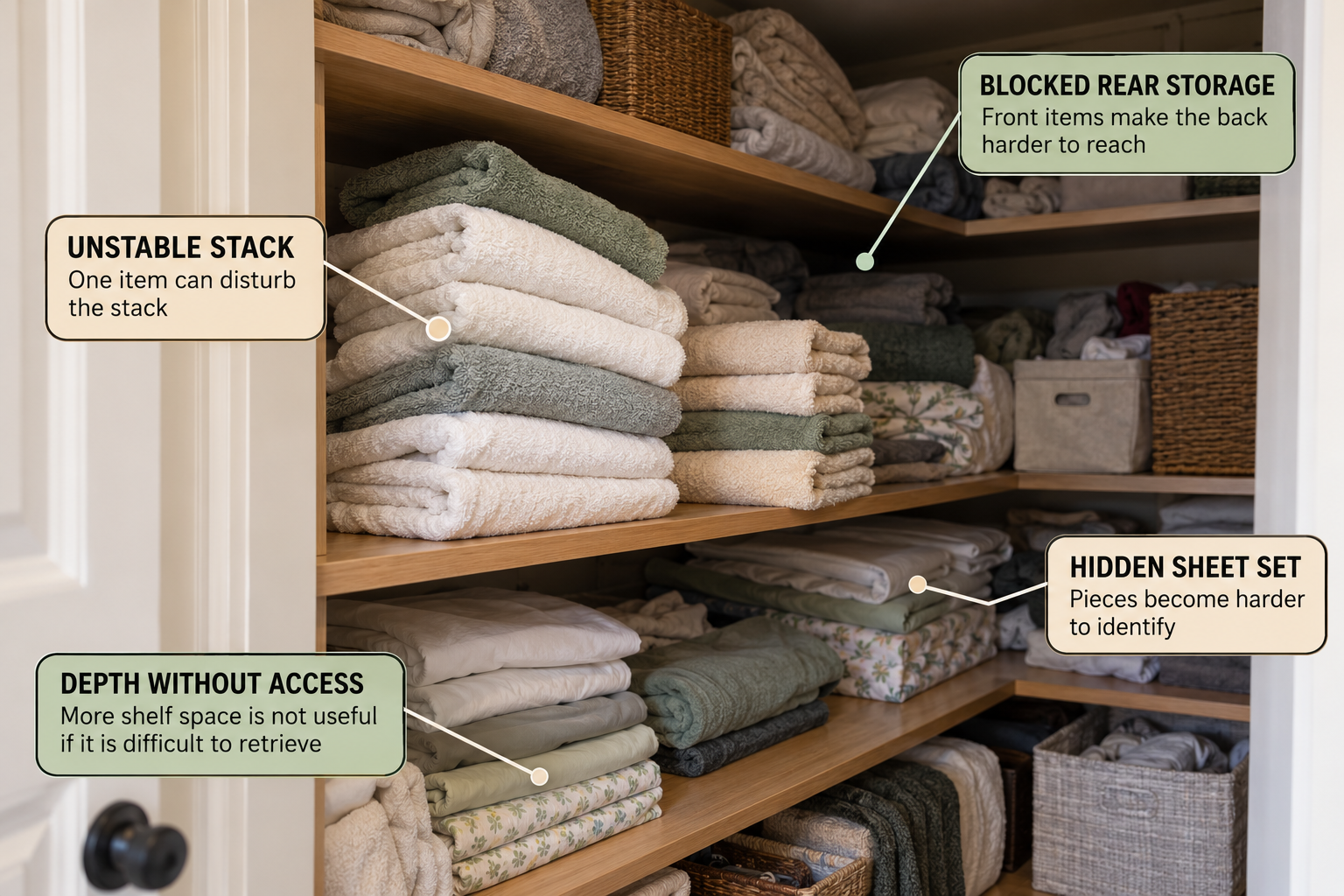
Why Deep Linen Closets Become Hard to Use
The main problem with a deep shelf is not necessarily the amount of storage. It is access.
When the front of a shelf blocks the back, items can become difficult to see, identify, or retrieve. A tall towel stack can also become unstable when you repeatedly remove pieces from it.
That means the solution is not simply adding more containers. The storage system has to match the depth of the shelf and the frequency with which you use each category.
Measure the Shelf Before Organizing
Start with the shelf itself. Measure the usable width, depth, and vertical clearance before deciding how anything should be stored.
Pay particular attention to depth. A shelf can physically hold more items than you can comfortably reach. That extra depth only helps if it remains usable.
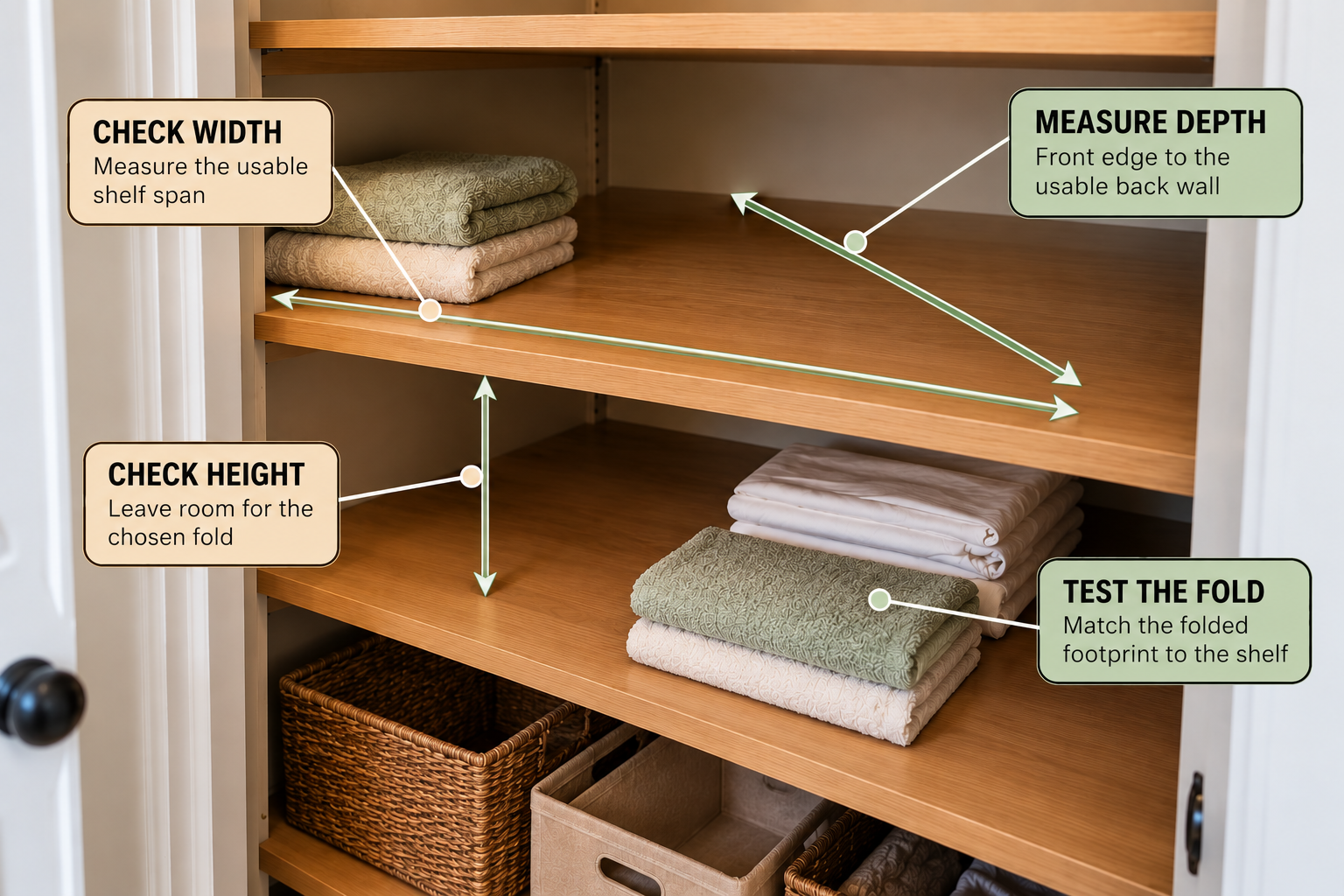
Measure Four Things
- Depth: front shelf edge to the usable back wall.
- Width: the usable shelf span.
- Height: the clearance available for your chosen fold or container.
- Clearance: enough room to remove a stack or pull a container forward.
Map the Reachable Areas
Once you know the shelf dimensions, look at how you actually use the space.
Think of the shelf as having a front, middle, and rear zone. These do not need to be equal. They should be assigned according to accessibility and frequency.
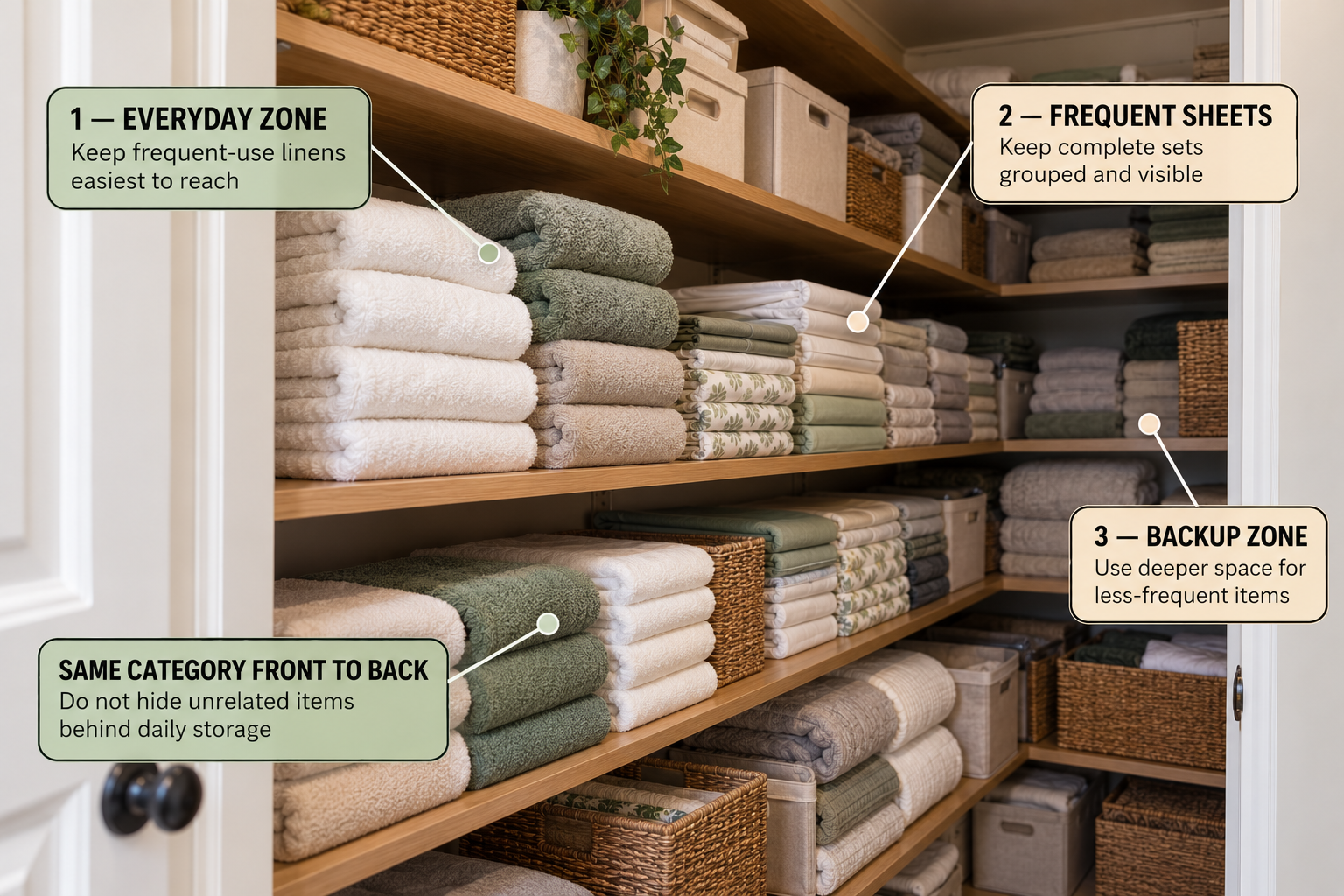
Put Frequently Used Linens Where They Are Easiest to Reach
Everyday towels and frequently used sheet sets should not be buried behind items you rarely need.
Use the easiest-to-reach part of the shelf for the categories that leave the closet most often. Deeper areas can then handle backup linens, guest bedding, seasonal items, or other categories you do not need every day.
Keep related categories together as they move from front to back. Do not place unrelated items behind everyday storage simply because there is room.
How to Organize Towels on Deep Shelves
Towels need a stable footprint. Choose a fold that fits the shelf rather than automatically using the same fold for every closet.
Keep bath towels, hand towels, and washcloths in identifiable groups. Avoid building very tall stacks simply because the shelf has plenty of vertical clearance.
The goal is simple: remove one towel without causing the rest of the stack to collapse or spread.
How to Organize Sheets on Deep Shelves
Sheets have a different problem. Their pieces are easy to separate and harder to identify when they are mixed together.
Keep each complete sheet set together. Group similar sets by bed size so you can identify what you need without opening multiple piles.
If a sheet set is rarely used, it can occupy a deeper zone as long as you can still retrieve it without dismantling the front storage.
Choose the Storage Method Based on the Problem
A deep linen closet does not need the same organizer everywhere. Match the organizer to the failure you are trying to solve.
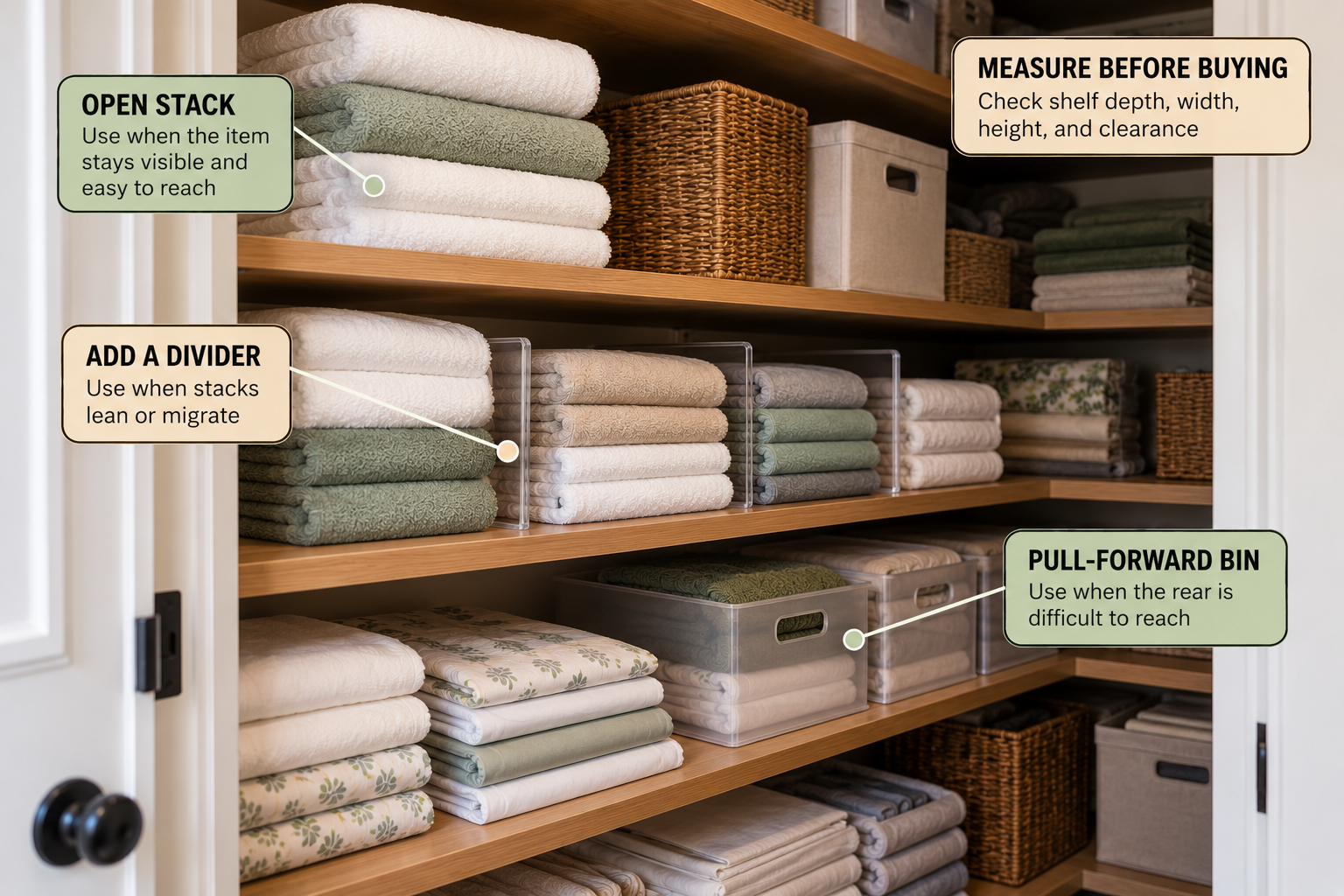
Use an open stack or grouped shelf zone.
Use a shelf divider to create a physical boundary.
Consider a pull-forward container for one logical category.
Do not force it. Re-measure and choose a different storage method.
When to Use Shelf Dividers
Shelf dividers are useful when a stack needs a physical boundary to stay upright or when two categories repeatedly migrate into each other.
A clear acrylic divider can be useful for folded towels and linens because it creates a visible separation without adding a large container.
HBlife Clear Shelf Dividers
Useful when folded towel or linen stacks lean, spread, or lose their category boundary.
Measure your shelf construction and thickness before buying because shelf compatibility varies.
Amazon Basics Collapsible Storage Bin
A handled fabric bin can work for a contained category of backup linens, washcloths, pillowcases, or other small loose items.
Measure the shelf before using it. The bin should fit without blocking the shelf or preventing it from being pulled forward.
Measure the shelf first. A container that fits the product description can still be the wrong choice for your particular closet.
What Should Go at the Back?
The rear of a deep shelf is best reserved for items that do not need to be retrieved constantly.
- Backup towels
- Guest linens
- Seasonal bedding
- Less-frequently used blankets
- Other clearly grouped backup linens
Avoid putting everyday individual items in the least accessible part of the closet. If you need something frequently, the storage system should not make you unload the shelf every time.
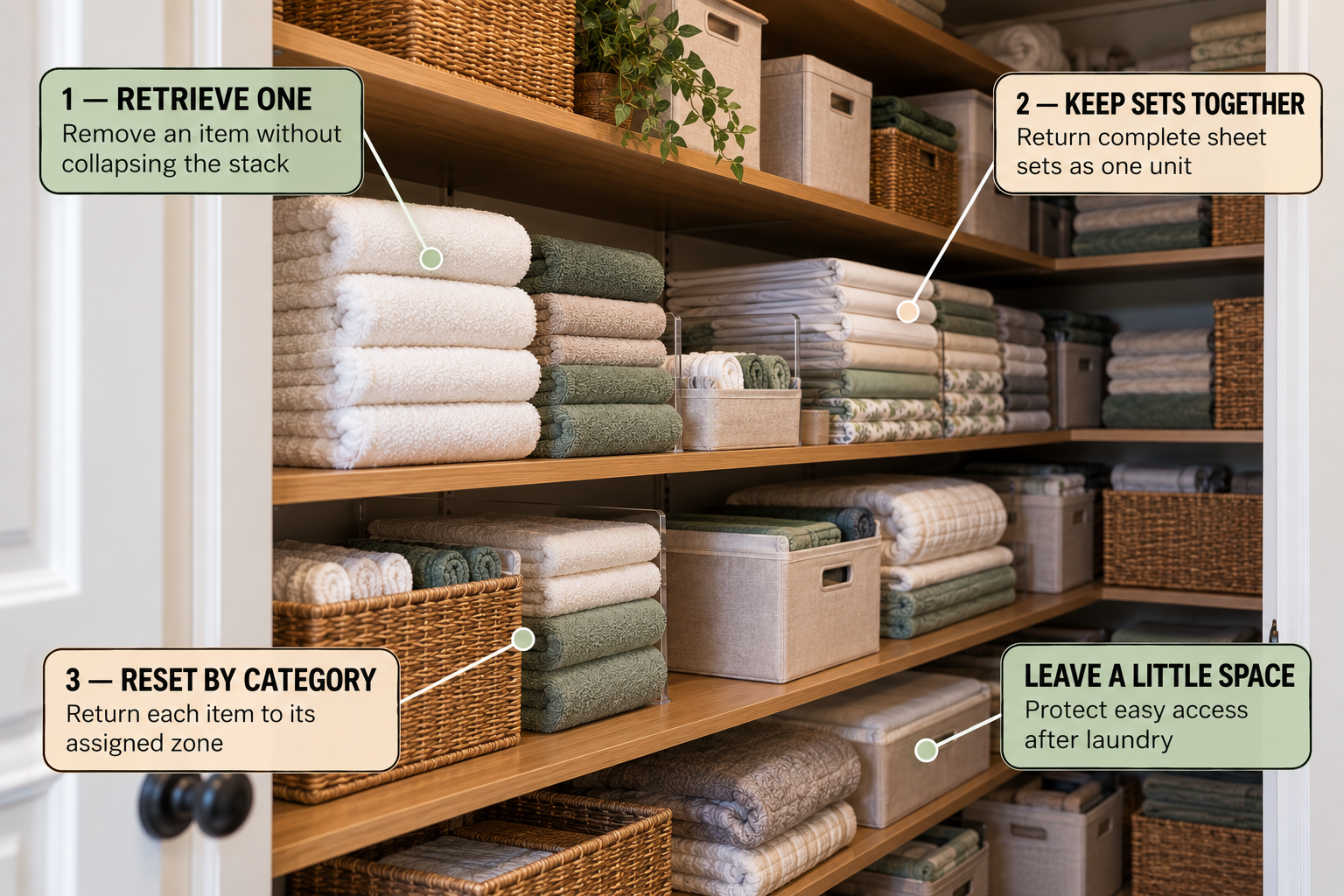
Use the One-Item Retrieval Test
This is the simplest way to test whether your deep closet is actually organized.
THE TEST
Can you remove one item without moving several others?
WHY IT MATTERS
If retrieval requires dismantling the shelf, the depth or storage method is working against you.
Reset the Closet After Laundry
A good linen closet should be easy to reset when clean laundry comes back.
Return each towel type to its assigned zone. Keep complete sheet sets together. Return any pull-forward container to its position. Avoid creating a temporary pile in the front simply because the rear is inconvenient.
Leave a little breathing room where possible. The goal is to preserve the access system after the next laundry cycle.
Common Deep Linen Closet Mistakes
- Treating every inch of depth as useful storage. Extra depth does not help if it becomes inaccessible.
- Putting unrelated categories front and back. This makes the rear harder to remember and retrieve.
- Overstacking towels. A taller stack is not useful if one item brings the whole stack down.
- Buying organizers before measuring. The shelf should determine the organizer, not the other way around.
- Using a large bin for a tiny category. The container should solve a real access problem without consuming unnecessary shelf space.
- Putting everyday items in the rear. Frequent-use items belong in the easiest-to-reach zones.
- Filling every gap. Some open space makes retrieval and resetting easier.
Deep Linen Closet Decision Flow
Know the usable depth, width, height, and clearance.
Separate easy-access space from deeper space.
Keep everyday linens easiest to reach.
Use dividers for unstable stacks and pull-forward storage for difficult rear access.
Remove one item without dismantling the shelf.
FAQ
How do you organize a very deep linen closet?
Measure the usable depth first, then divide the shelf into practical front, middle, and rear zones. Keep frequently used linens in the easiest-to-reach area and use the deeper space for backup or less-frequent items. If the rear is difficult to reach, a pull-forward container can make one category easier to access.
What should go at the back of a deep linen closet?
Backup towels, guest linens, seasonal bedding, blankets, and other less-frequently used items can occupy deeper areas. Keep everyday items toward the easiest-to-reach part of the shelf.
Should I use bins in a deep linen closet?
Use a bin when it solves a specific access or containment problem. A handled bin can work for a loose category that needs to move forward as one unit. Measure the shelf first so the bin does not consume useful space or block access.
How do you organize towels on deep shelves?
Use a stable fold that fits the shelf, group towel types separately, and keep stacks at a manageable height. If stacks lean or migrate, a shelf divider can provide a physical boundary.
How should sheets be stored on deep shelves?
Keep each complete sheet set together and group sets by bed size. Place frequently used sets where they are easiest to retrieve and reserve deeper space for less-frequent sets that remain identifiable and accessible.
How do I know if my deep shelf is actually usable?
Try the one-item retrieval test. If you can remove the item you need without moving several other items, the depth is being used effectively. If you cannot, change the zone or storage method.
Related Simply Tidy Home Guides
The Goal Is Accessible Storage
A deep linen closet does not need to be completely full to be useful. The better system is one where every zone has a job, frequently used linens remain accessible, and deeper storage does not become forgotten storage.
Measure first. Map the depth. Assign zones. Choose containment only where it solves a real problem. Then test whether you can retrieve one item without disturbing everything around it.
Affiliate disclosure: As an Amazon Associate I earn from qualifying purchases. Some links above are paid links, which means Simply Tidy Home may earn a commission if you purchase through them, at no additional cost to you.