
SMALL ENTRYWAY ORGANIZATION
A small entryway does not need more storage just because it feels crowded. It needs a system that gives the right things a clear home without taking away the space needed to move through the area.
Quick Answer
The best way to organize a small entryway is to measure the usable space, remove items that do not need to stay there, group the things you use when entering and leaving, create simple zones, and choose storage that fits the space without blocking the walking path.
Start by measuring the usable space. Then remove items that do not need to live there, group the things you use when entering and leaving, create simple zones, and choose storage based on the space you actually have.
The goal is not to fit everything near the door.
The goal is to make entering and leaving the home easier.
Why Small Entryways Become Cluttered So Quickly
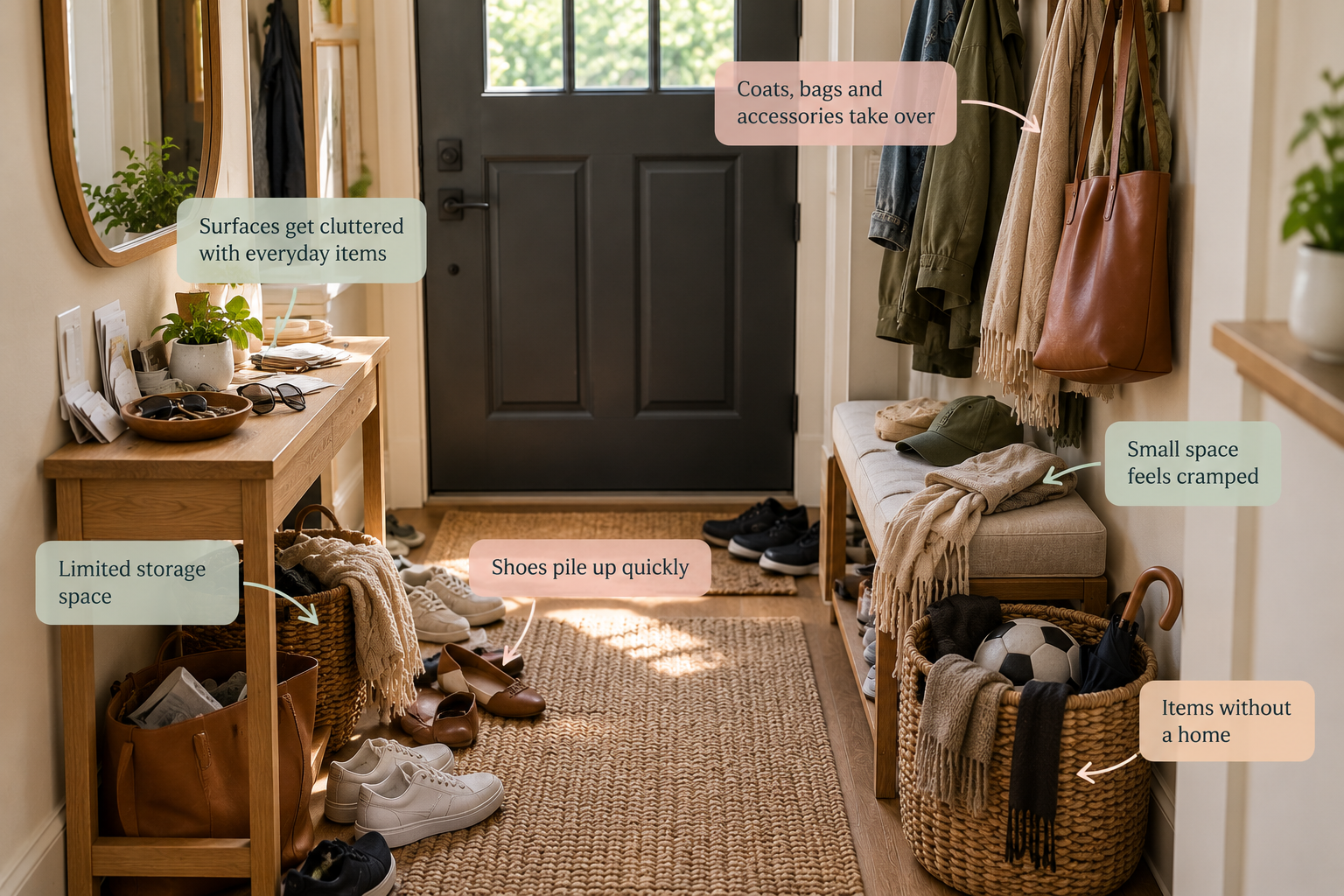
An entryway handles more daily tasks than its size suggests.
Shoes, coats, bags, keys, wallets, sunglasses, mail, umbrellas, and other small essentials can all pass through the same space.
The problem is usually not that every item needs a bigger organizer. The problem is that the entryway has not been given clear jobs.
Common problems include:
- Everyday items do not have a defined home.
- Storage takes up valuable floor space.
- Everyday items are mixed with seasonal or occasional items.
- Small essentials have nowhere consistent to go.
- Too many items are being stored near the door.
Our Principle
A small entryway works better when you organize it around what actually happens there, not around how much storage you can fit into it.
Start by Measuring the Entryway
Before choosing storage, understand the space you actually have.
A small entryway can become harder to use when a cabinet, bench, basket, or shelf blocks the natural route through the area.
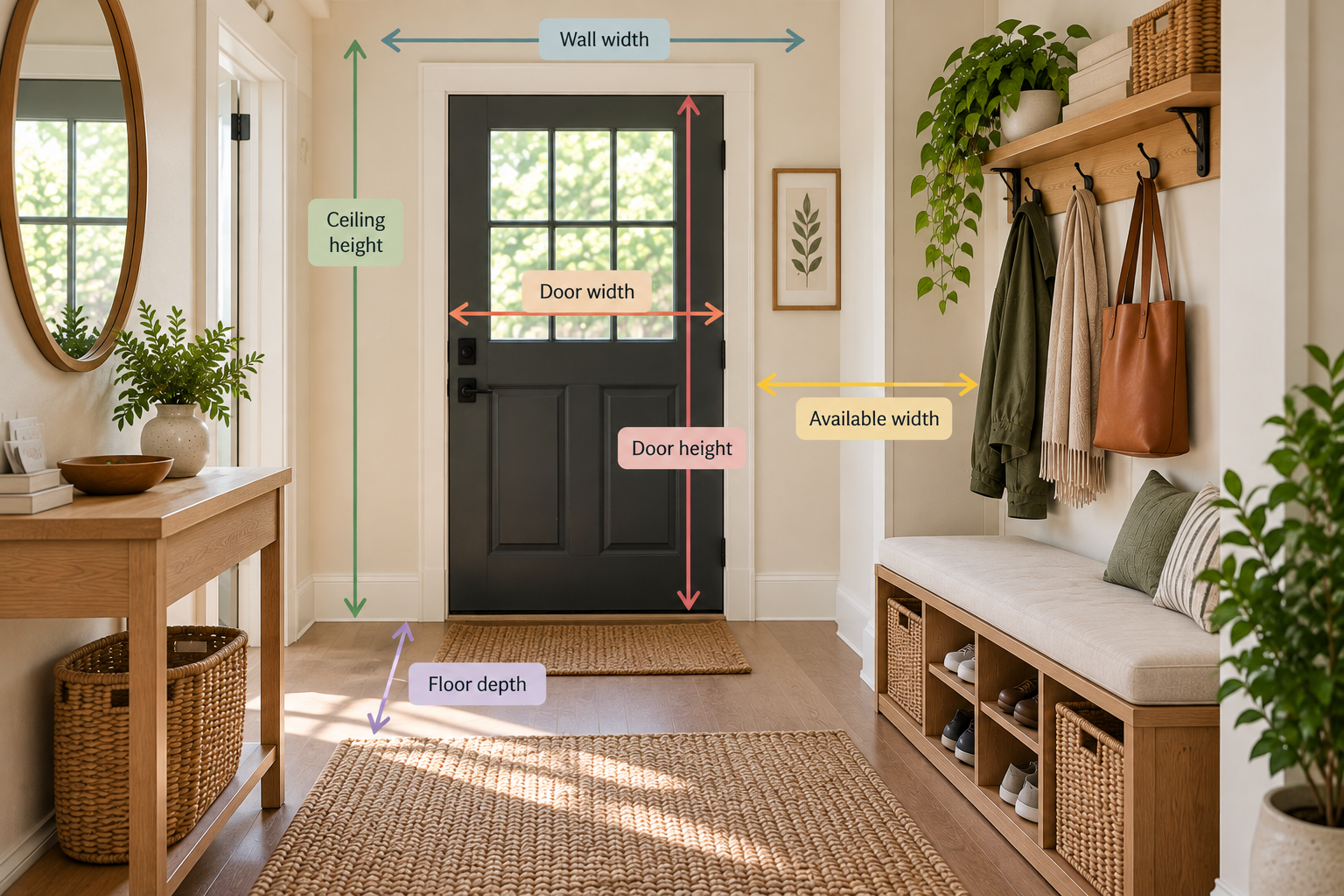
Measure Usable Wall Space
Note the available wall width and height, doors and trim, light switches, outlets, existing shelves or fixtures, and areas that need to remain accessible.
Measure Floor Space
If you are considering a shoe cabinet, bench, console, basket, or freestanding coat rack, pay attention to depth as well as width.
Protect the Walking Path
Not every empty area is available storage space. Some space needs to remain open so doors can operate normally and people can move through the entryway comfortably.
Capacity Principle
Storage capacity and usable entryway capacity are not the same thing.
A smaller organizer that leaves the walking path comfortable can be more useful than a larger organizer that fills the available space.
Clear Out Everything That Does Not Need to Live There
Before adding storage, reduce what the entryway has to hold.
Keep
Keep items that are genuinely useful when entering or leaving the home, such as everyday shoes, current coats, everyday bags, keys, wallets, sunglasses, and frequently used accessories.
Relocate
Move seasonal shoes, extra coats, special-use bags, and rarely used accessories somewhere that does not consume prime entryway space.
Remove
Remove old mail, packaging, random household items, and anything that belongs somewhere else.
The entryway should not become a temporary storage area for the whole house.
If an item repeatedly lands there but has no reason to stay there, give it a better home.
Categorize What Actually Needs a Home
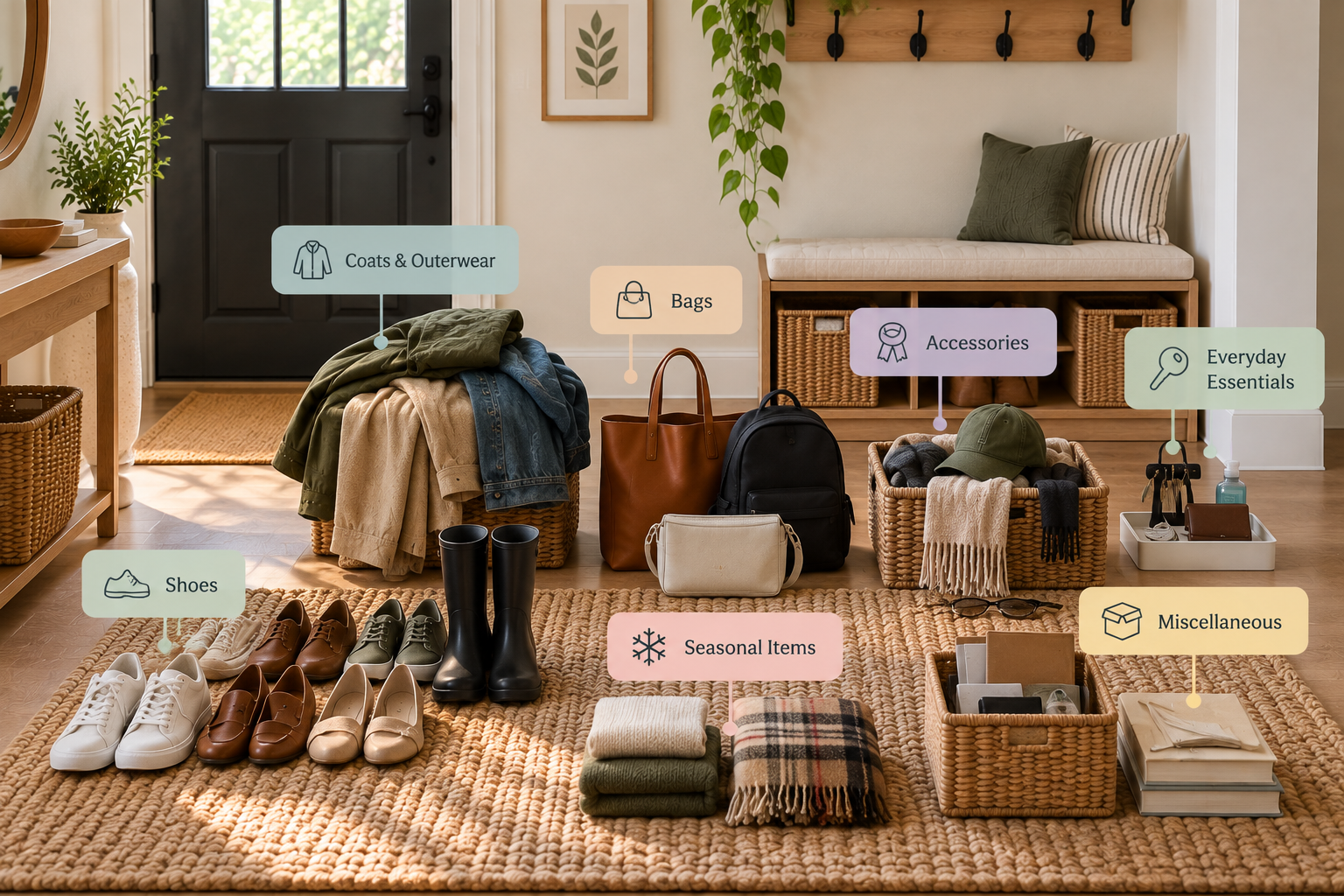
Do not choose organizers yet. First identify the categories that repeatedly appear in your entryway.
- Coats and outerwear.
- Bags.
- Shoes.
- Keys and small essentials.
- Mail and paperwork.
- Accessories.
- Umbrellas.
- Seasonal items.
Not every small entryway needs every category.
Quick Decision
Ask: What repeatedly lands here?
Your organization system should respond to the actual clutter pattern rather than an idealized list of things an entryway might contain.
Create Simple Entryway Zones
Once you know what actually needs to stay, give each recurring category a simple zone.
Create a Drop Zone
Give keys, wallets, sunglasses, small accessories, and important mail one predictable landing place. A small tray, drawer, shelf, or wall-mounted organizer can be enough.
Create a Hanging Zone
Use hooks or other hanging storage for everyday coats, bags, hats, scarves, and frequently used accessories. Do not treat every available hook as an invitation to store more.
Create a Shoe Zone
Keep regularly used shoes contained and easy to reach. Depending on the space, this might mean cubbies, shelves, a cabinet, or a bench with shoe storage.
Create an Overflow or Seasonal Zone
Seasonal items should not consume the easiest-to-reach space all year. Give occasional items a separate storage location whenever possible.
Choose Storage Based on the Constraint
Once the zones are clear, choose storage based on the problem the entryway actually has.
Limited floor space: prioritize wall-mounted hooks and shelves.
Limited wall space: consider compact freestanding storage.
Shoes are the main problem: prioritize shoe containment.
Coats and bags are the main problem: prioritize hooks and hanging storage.
Keys and small items are the main problem: create a defined drop zone.
The entryway opens directly into another room: use a compact console, bench, shelf, or similar feature only if it does not interfere with circulation.
Decision Rule
Problem → Diagnosis → Constraint → System → Solution → Product.
The product should solve the diagnosed problem. It should not create a new one.
Small Entryway Storage Solutions
These products are examples of solutions for specific entryway problems. You do not need all three. Choose according to the constraint you identified above.
For Shoe Clutter
Use a compact shoe-storage solution when shoes are the main source of floor clutter and need to remain close to the entrance.
For a Wall-Based Drop Zone
A wall-mounted organizer can combine a small landing surface with hooks when floor space is limited.
For Coats and Bags
Dedicated hanging storage can help when coats, bags, and frequently used accessories are creating the clutter.
Affiliate disclosure: Some links on this page are affiliate links. If you purchase through them, Simply Tidy Home may earn a commission at no additional cost to you.
Organize Around the Entering and Leaving Routine
A good entryway system follows the way people actually use the space.
When Entering
Enter → put down keys → remove shoes → hang coat → put away bag.
When Leaving
Collect keys → grab bag → put on shoes → take coat → leave.
Our Principle
The easiest action should be the correct action.
If keys always end up on a particular surface, make that surface their home. If bags always land on a bench, give them a better-defined hanging or storage location.
Give Each Zone a Capacity Limit
Small entryways work better when storage has limits.
For example, you might decide that the entryway can comfortably hold:
- A practical number of regularly used shoes.
- Current-season outerwear.
- One everyday bag per regular user.
- One defined location for keys.
- One defined location for mail.
Capacity Rule
When a zone reaches capacity, something leaves before something new comes in.
If the entryway is expected to hold more shoes, coats, bags, and accessories than the space can comfortably contain, another organizer will only delay the problem.
Test the System Before Buying More Storage
You do not have to get the system perfect on the first attempt.
Try the arrangement for several days and watch what happens.
Do shoes still end up on the floor?
Do bags still land on a bench?
Do keys disappear?
Does a particular organizer feel awkward to use?
Does the walking path feel tighter?
These failures provide useful information.
Quick Win
Test the behavior before adding more storage. A system that works with the household’s actual routine is more useful than an organizer that simply looks efficient.
Protect the Walking Path
A well-organized entryway should feel easier to move through, not merely look tidier.
Pay particular attention to:
- Door swings.
- Shoe-storage depth.
- Bench placement.
- Floor baskets.
- Freestanding furniture.
- Anything that protrudes into the normal route.
If you find yourself stepping around storage, reduce the footprint.
For homes with specific accessibility requirements, use the applicable accessibility standards rather than treating a general decorating measurement as a universal rule.
See What the Finished System Should Look Like
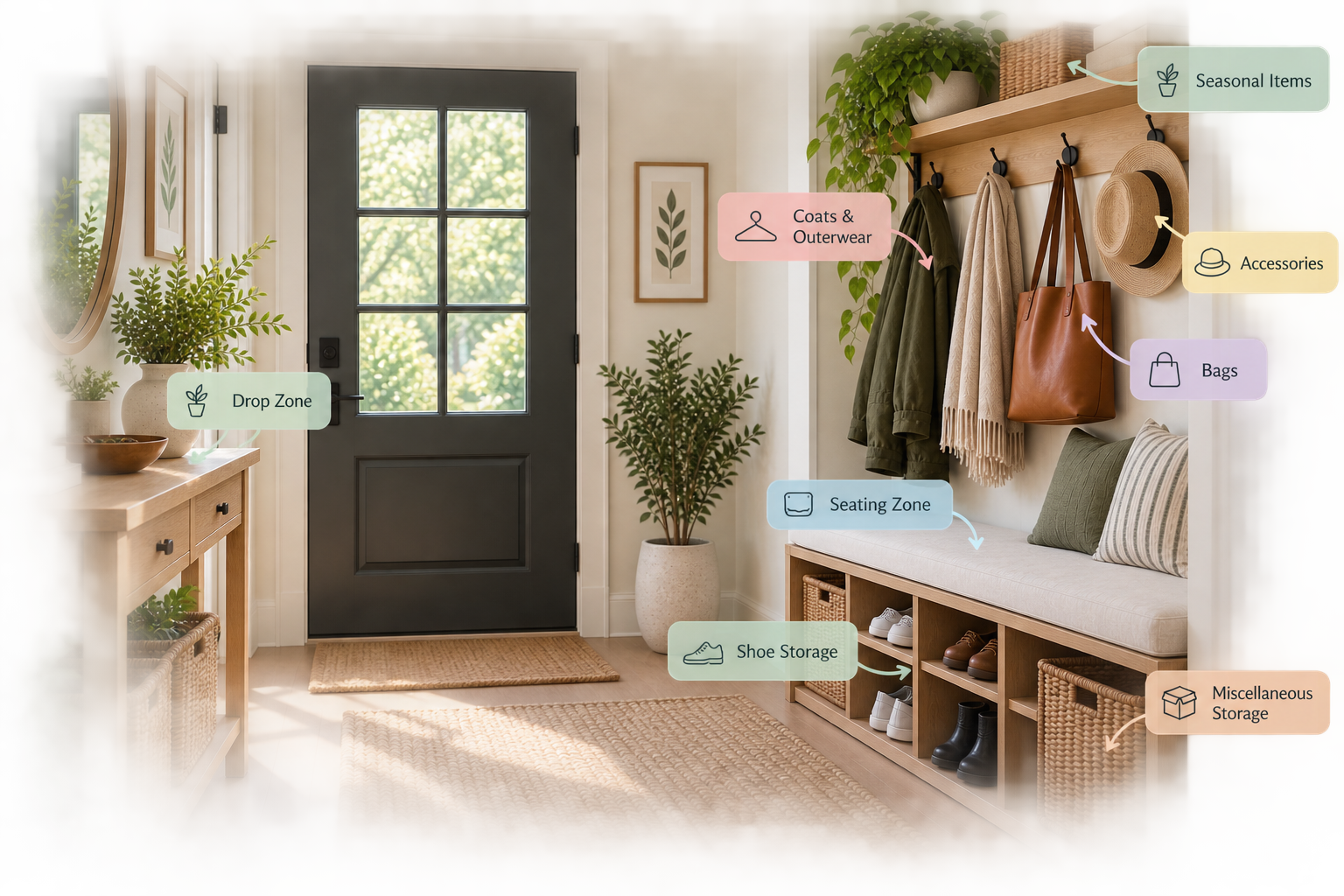
A finished small entryway does not need to look empty.
It should look intentional.
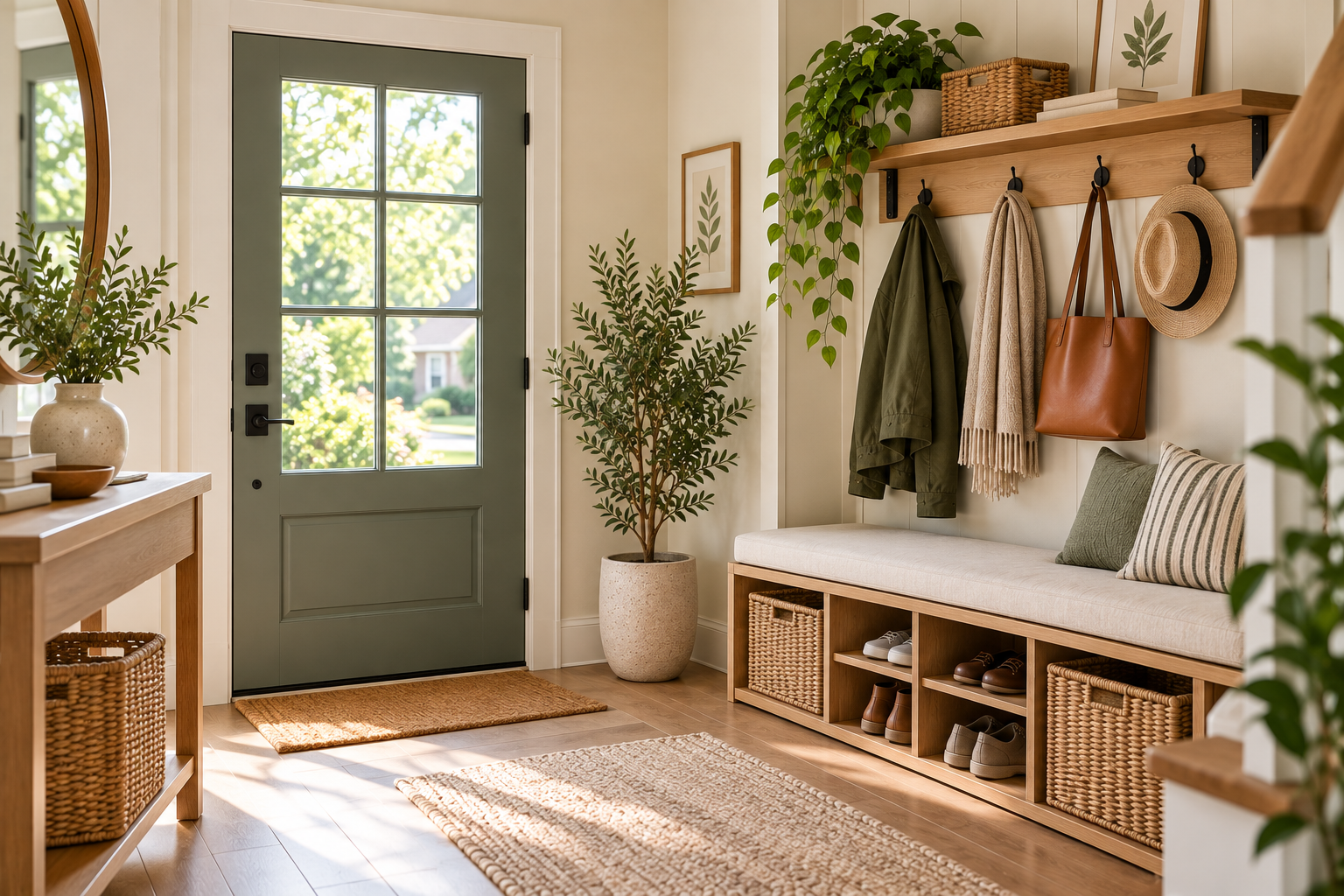
Every major category should have a home. Shoes should be contained. Coats and bags should be obvious. Small essentials should have a consistent landing place. Occasional items should not consume the best everyday space.
Common Small Entryway Organization Mistakes
Buying storage before measuring. Storage that technically fits can still make the entryway harder to use.
Storing everything near the door. The entryway is not automatically the correct home for every item used outside the house.
Using too much floor storage. Floor space is also circulation space. Protect it.
Creating too many categories. More categories do not automatically create better organization.
Ignoring small essentials. Keys, wallets, sunglasses, and mail can create disproportionate clutter because they are small and frequently handled.
Keeping seasonal items in prime space. Everyday storage should be reserved for everyday items whenever possible.
Choosing storage because it looks good. A beautiful organizer that does not fit the space or routine is still the wrong organizer.
Adding storage without reducing inventory. When the problem is too much stuff, another container is not always the solution.
Small Entryway Solutions by Space Type
Very Small Entryway
Prioritize wall space, hooks, a very small drop zone, and minimal floor storage.
Narrow Entryway
Use shallow storage, vertical organization, and a clear circulation path.
Entryway With Little Storage
Start with hooks, compact shelves, baskets, and a defined drop zone.
If the specific problem is that the entryway has no closet, see How to Organize a Small Entryway Without a Closet .
Entryway Shared by Several People
Give each regular user a defined amount of capacity rather than allowing everyone to use every available surface.
How to Maintain a Small Entryway
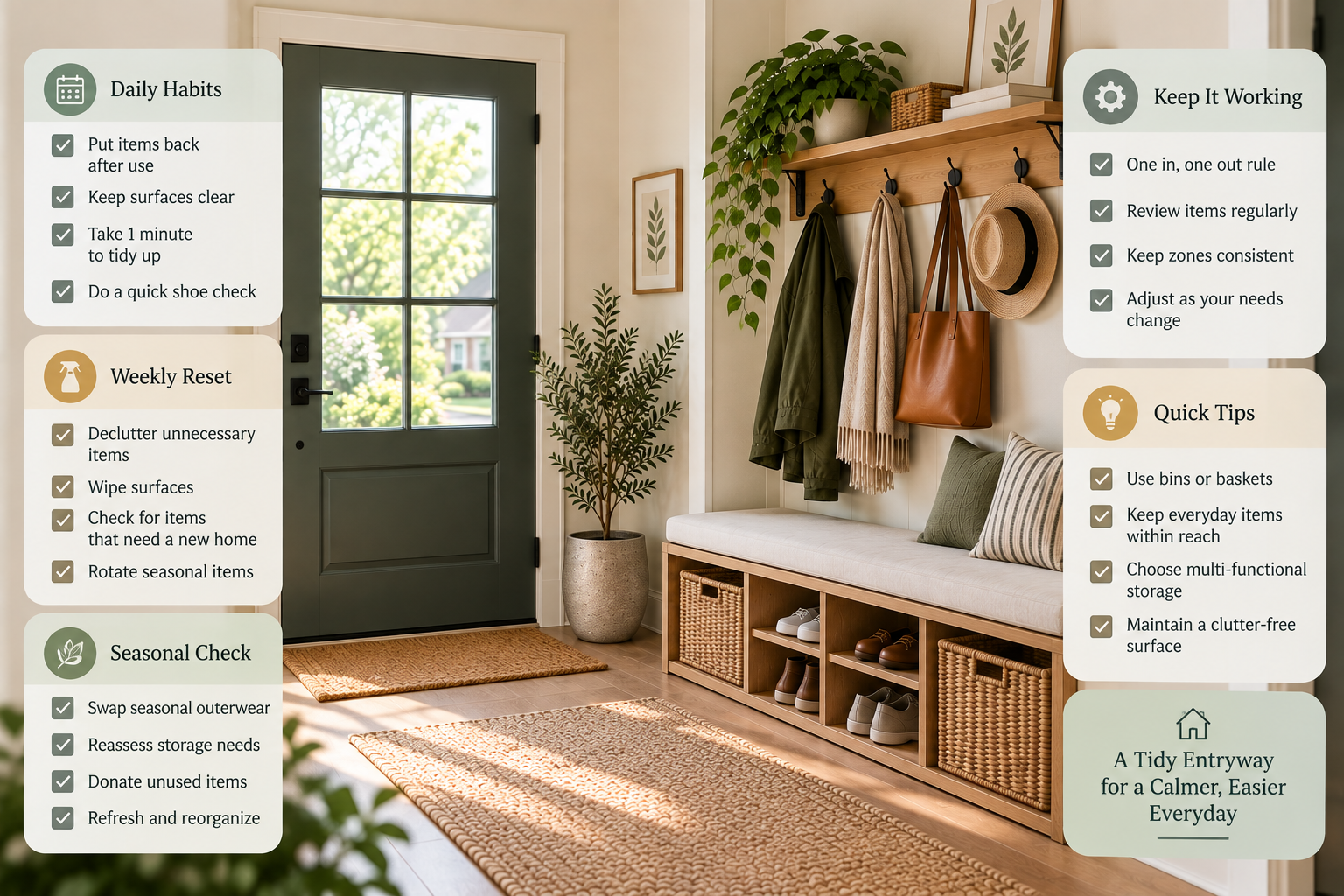
Daily Reset
Return shoes to their zone, hang coats, return bags to their homes, and put keys and small essentials back in the drop zone.
Weekly Reset
Remove stray items, clear old mail, return items that belong elsewhere, check whether shoes are exceeding the available space, and wipe the main surfaces.
Seasonal Reset
Move out-of-season coats, rotate shoes, move seasonal accessories, and reassess whether the current system still matches your routine.
If the same area repeatedly fails, do not immediately blame the storage product.
Ask whether the location, category, capacity, or routine needs to change.
Quick Takeaways
- Keep only the items that genuinely need to live in the entryway.
- Organize around the way you actually enter and leave the home.
- Give recurring categories a clear and predictable home.
- Protect the walking path before adding more storage.
- Give each zone a practical capacity limit.
- Choose organizers based on the actual constraint rather than appearance.
- Test the system before buying more storage.
Frequently Asked Questions
How do you organize a small entryway?
Start by measuring the usable space and protecting the walking path. Then remove items that do not need to live there, categorize the recurring items, create simple zones for shoes, coats, bags, and small essentials, and choose storage that fits the actual constraint.
What should be stored in a small entryway?
A small entryway should primarily hold items used when entering or leaving the home, such as everyday shoes, current coats, everyday bags, keys, wallets, sunglasses, and frequently used accessories. Seasonal and rarely used items should usually be stored elsewhere.
How do you organize a very small entryway?
Prioritize the most frequently used categories and protect floor space. Wall hooks, a compact drop zone, shallow storage, and a limited number of everyday shoes can work better than several large organizers.
How do you keep a small entryway from getting cluttered?
Give recurring items defined homes and set capacity limits for each zone. When a zone reaches capacity, remove or relocate something before adding another item.
How do you organize an entryway with little storage?
Use available wall space first with hooks or compact shelves, create a small drop zone for essentials, and keep seasonal and occasional items outside the entryway when possible.
Where should shoes go in a small entryway?
Keep regularly used shoes in a contained shoe zone close to the entrance. Depending on the available space, that can be a shallow cabinet, shelf, cubby, or bench with shoe storage. Seasonal and occasional shoes should usually be stored elsewhere.
How do you create a small entryway drop zone?
Choose one consistent location for small items that are handled when entering and leaving, such as keys, wallets, sunglasses, and important mail. A small tray, shelf, drawer, or wall-mounted organizer can serve as the drop zone.
The Simple Rule for a Small Entryway
The best small entryway system is not the one that stores the most. It is the one that makes the everyday routine easier without taking away the space needed to move through the home.
Measure the space. Clear what does not belong. Categorize what remains. Create simple zones. Choose storage around the constraint. Then test the system before adding more.
The best way to organize a small entryway is to keep only the items that need to be there, give each recurring category a defined home, protect the walking path, and choose storage based on the space and the household’s actual daily routine.