
SMALL BATHROOM ORGANIZATION
When counter space is limited, the goal isn’t to fit more around the sink. It’s to decide what needs to stay nearby and give everything else a better home.
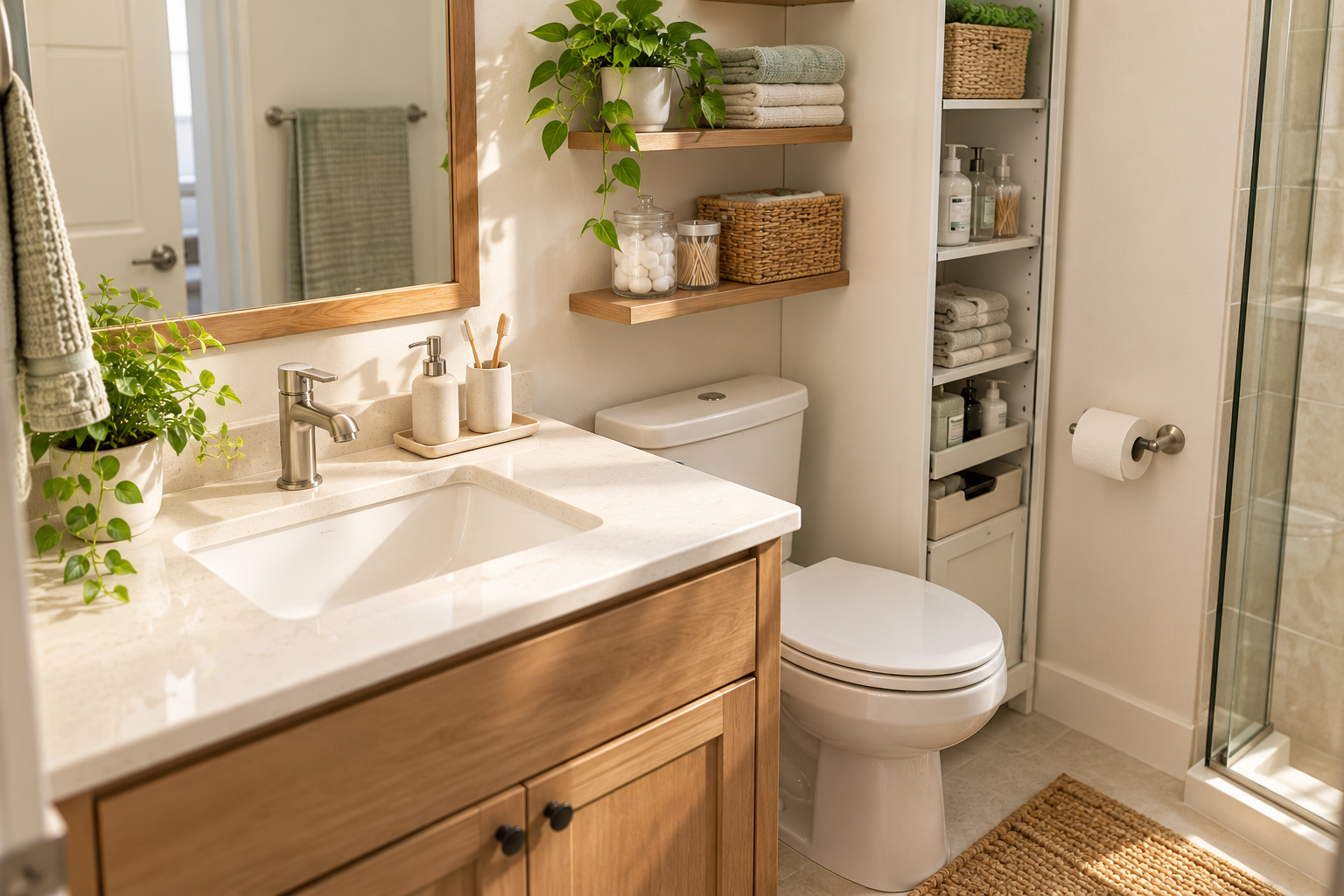
To organize a small bathroom with no counter space, clear the sink area first, keep only genuinely useful daily essentials nearby, and move occasional products and backups into cabinets, drawers, under-sink storage, door storage, or other suitable vertical spaces.
A tiny bathroom can feel cluttered even when you do not own very much. The problem is often that the sink becomes the default storage area.
When that happens, the counter becomes harder to clean, there is less usable surface, and daily items compete for the same small space.
Clear the Sink Area First
The answer
Remove everything from the counter before deciding what belongs there.
Why it matters
You need to see the actual usable surface before deciding how much storage the sink area can reasonably support.
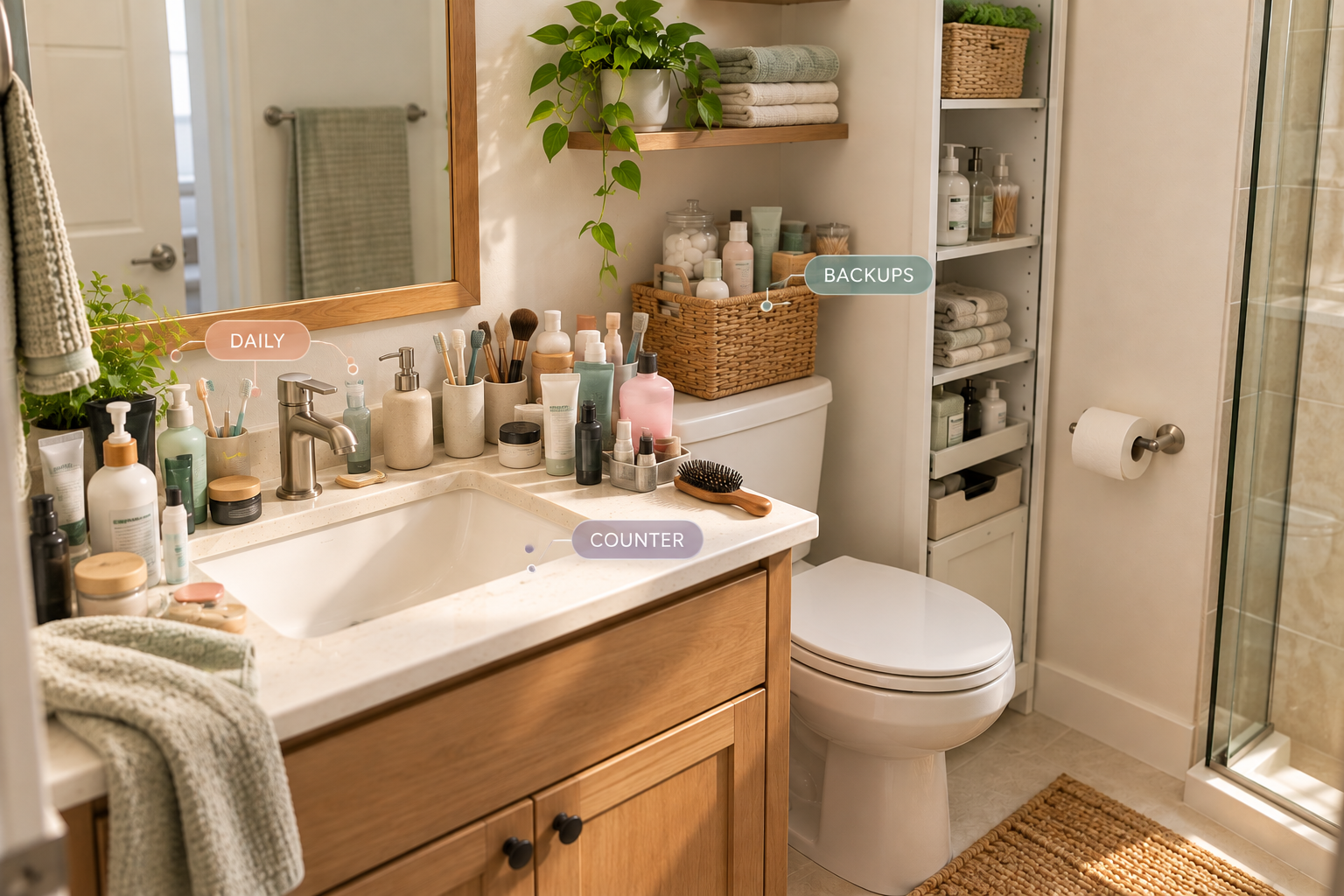
Before buying anything, remove everything from the counter. Put the items somewhere temporary so you can see how much usable surface you really have.
Then sort the items into three groups:
Daily, Occasional, and Backup
Items used most days and genuinely needed during the normal routine.
Items used sometimes but not during the normal daily routine.
Extra toiletries and supplies that do not need to be within reach.
A backup bottle does not need the same access as something you use every morning. Separating these groups immediately reduces the pressure on the counter.
Decide What Deserves the Counter
A small bathroom does not need a completely empty counter to work well. It needs a deliberate counter.
Keep an item near the sink when these three conditions are true:
A Simple Counter Decision
It belongs to the normal daily routine.
Moving it farther away would make the routine unnecessarily awkward.
It should leave enough usable surface for the actual bathroom task.
If an item fails those tests, it is a strong candidate for another storage zone.
Move Storage Off the Counter
The answer
Use storage that does not compete with the sink surface.
Why it matters
Moving products away from the counter gives the sink area a clearer job without requiring a larger bathroom.
Look at the spaces you already have before adding new furniture:
- under the sink
- inside cabinet doors
- drawers
- vertical wall or narrow shelf space
- the back of a suitable door
- nearby linen storage
The best location depends on frequency of use. Daily items should be easy to reach. Backups can live farther away.
Create Small Bathroom Zones
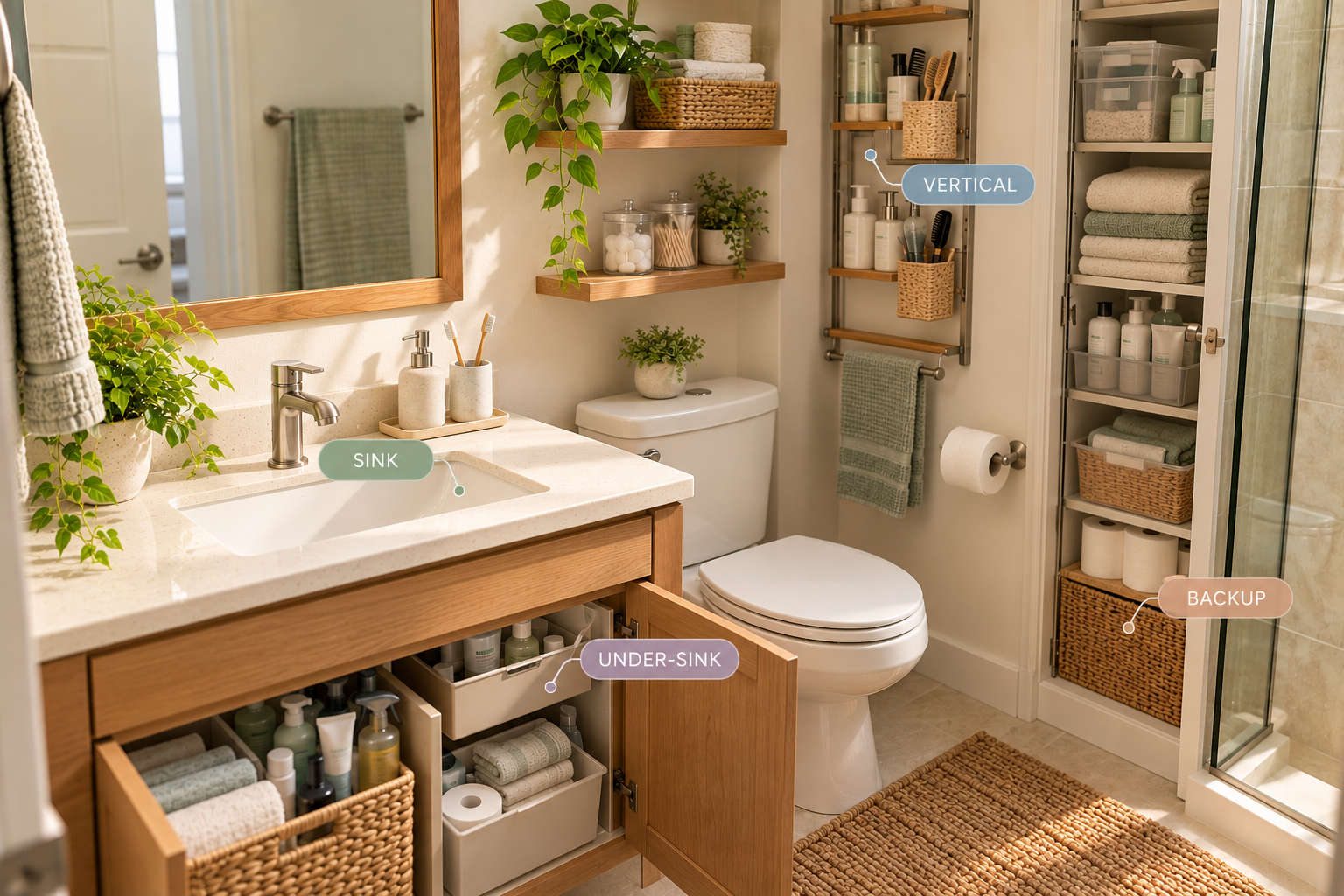
Instead of making every storage area do everything, give each useful space a simple job.
Sink: Keep only the small group of items needed for the normal routine.
Vertical: Use suitable upward or door space when floor and counter space are scarce.
Under-sink: Store grouped toiletries and supplies that do not need to sit on the counter.
Backup: Keep extra supplies together instead of mixing them with daily-use products.
Store Toiletries by Frequency of Use
Frequency is often a better organizing rule than product type.
The answer
Keep daily items closest, occasional items nearby, and backups farther away.
Why it matters
Not every product needs equal access. Giving prime space to frequently used items makes the system easier to use.
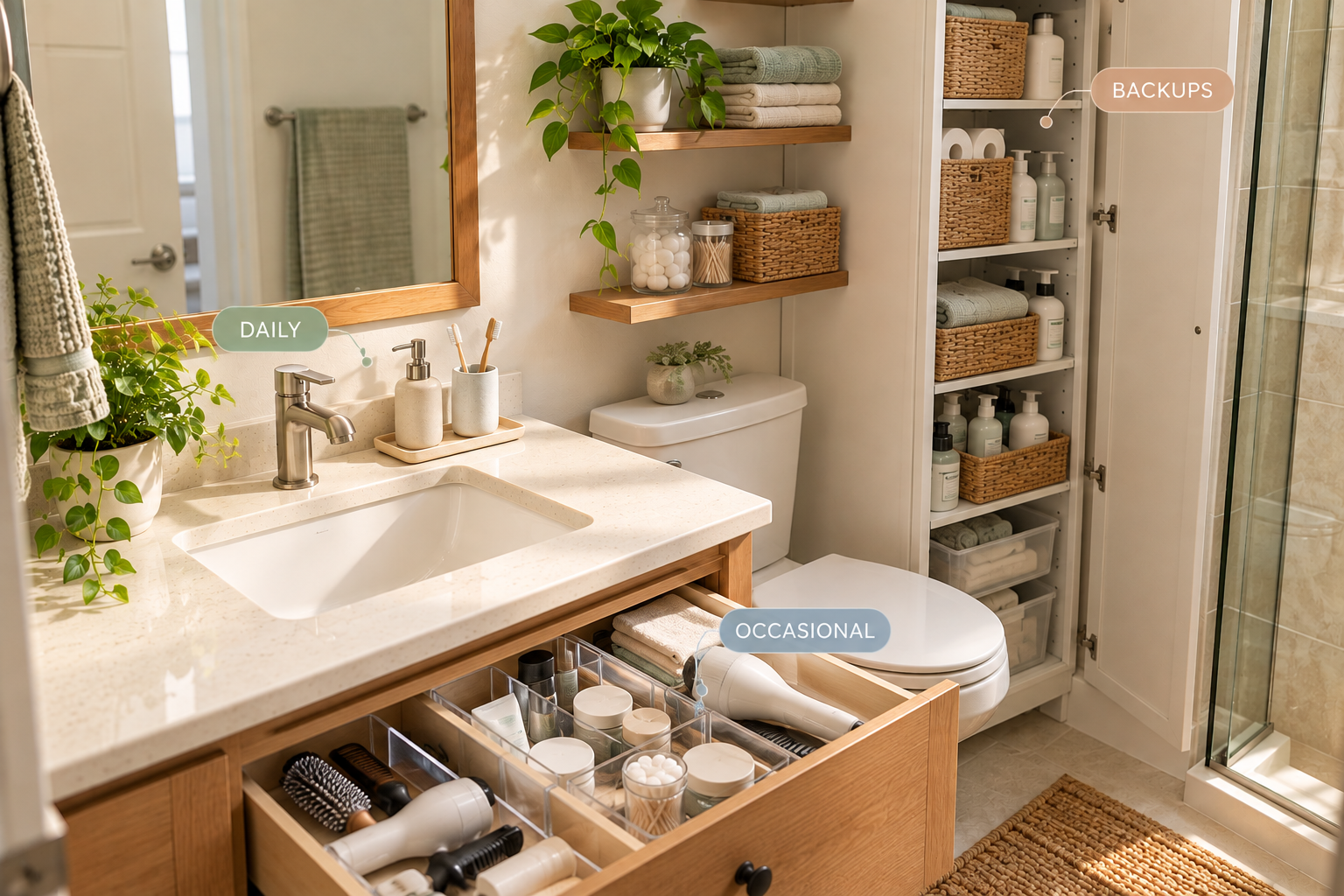
This prevents a common problem: keeping every product equally accessible even though you do not use every product equally often.
Use Vertical Space Without Crowding the Room
When a bathroom has almost no counter space, vertical storage can create capacity without taking another large piece of floor space.
Possible locations include a suitable door, a narrow wall area, or existing cabinet space.
But vertical storage should not simply become another place to pile products. Group similar items, keep frequently used items accessible, and avoid making the room harder to use.
What to Do When You Have No Vanity or Cabinets
The answer
Start with small unused zones instead of trying to create one large storage area.
Why it matters
A small bathroom may have useful storage capacity spread across several locations rather than in one cabinet.
- Use a narrow vertical area when one is available.
- Use suitable door space for lightweight, organized storage.
- Use a small nearby shelf or cabinet when the room allows it.
- Keep backup supplies outside the bathroom when that makes more sense.
The important point is that bathroom storage does not have to live beside the sink.
What Not to Do
- Do not store everything on the counter. Convenience for one item can create clutter for everything else.
- Do not buy an organizer before measuring. A product that does not fit is not a storage solution.
- Do not give backup supplies prime storage. They need less access than daily essentials.
- Do not fill every available space. Some empty space makes the system easier to use and reset.
- Do not confuse more storage with better storage. The goal is easier access and a usable sink area.
Measure First
MEASURE → ASSIGN → COMPARE → CHOOSE
- Measure: Check the available width, depth, and height.
- Assign: Decide what the storage will hold before choosing the organizer.
- Compare: Check whether the organizer’s shape and access match the space.
- Choose: Buy only when the product solves a specific storage problem.
An under-sink organizer can make use of cabinet space that would otherwise be difficult to access. A door organizer can use vertical space without taking counter space.
Check These Before Ordering
- Available width
- Available depth
- Available height
- Door or cabinet clearance
- What you actually need to store
REALINN Under Sink Organizer
This two-tier, L-shaped pull-out organizer is designed for under-sink cabinet storage. It gives toiletries and supplies a separate home instead of leaving them on the counter.
View the REALINN Under Sink Organizer on AmazonULG Over Door Organizer
This over-door storage format provides multiple compartments for using suitable door space. It can be useful when a bathroom needs additional storage without adding another counter or floor unit.
View the ULG Over Door Organizer on AmazonProduct availability, price, seller, and delivery details can change. Check the current Amazon listing and confirm the dimensions and installation style fit your bathroom before buying.
Keep the Sink Clear With a Simple Reset
A small bathroom stays organized when the system is easy to reset.
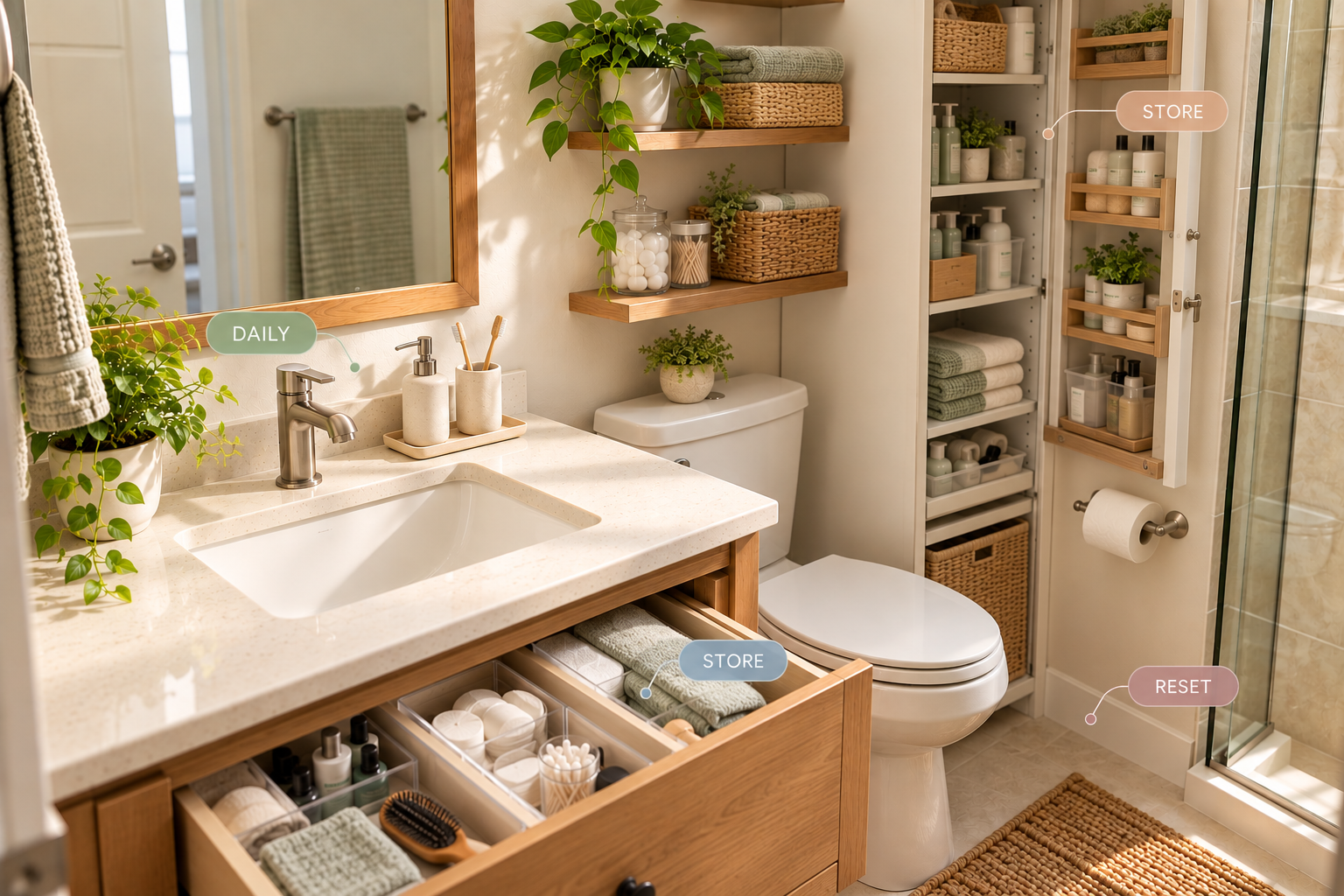
Daily
Return frequently used items to their assigned homes after the normal routine.
Occasional
Move products that do not belong on the counter back to their storage zone.
Backups
Keep extra supplies grouped together and outside the daily-use area.
Key Takeaways
- A small bathroom does not need more counter storage. It needs a better storage system.
- Clear the sink before deciding what should remain nearby.
- Separate daily, occasional, and backup items.
- Use under-sink, door, vertical, drawer, and nearby storage to move products away from the counter.
- Measure storage spaces before buying an organizer.
- Keep enough empty surface around the sink for the bathroom to remain easy to use.
Frequently Asked Questions
How do you organize a small bathroom with no counter space?
Clear the sink area first, keep only essential daily-use items nearby, and move occasional products and backups into cabinets, drawers, under-sink storage, door storage, or other suitable vertical spaces.
Where do you put toiletries when there is no counter space?
Store daily toiletries in the easiest nearby storage zone and move occasional and backup products farther away. Under-sink cabinets, drawers, suitable door storage, and narrow vertical storage can all help when available.
How do you keep a small bathroom counter clear?
Give the counter a limited job. Keep only items that are frequently used and genuinely need to stay within reach. Return everything else to an assigned storage zone after use.
What should stay on a small bathroom counter?
Only the small group of items that belong to the normal daily routine and need to be within reach. The exact items depend on the household and the bathroom’s storage options.
How can you add bathroom storage without using floor space?
Look first at existing vertical and unused spaces, including suitable door areas, under-sink cabinets, drawers, and narrow wall or shelf space. Choose storage only after measuring the available area.
What should you measure before buying a bathroom organizer?
Measure the available width, depth, and height, then check door or cabinet clearance and compare those dimensions with the organizer. Also decide what you need to store before choosing the product.
Should everything in a small bathroom be stored near the sink?
No. Keep frequently used items closest to the routine and move occasional products and backups to other suitable storage zones. The sink should not have to serve as the bathroom’s main storage area.
Key Takeaways
- A small bathroom does not need more counter storage. It needs a better storage system.
- Clear the sink before deciding what should remain nearby.
- Separate daily, occasional, and backup items.
- Use under-sink, door, vertical, drawer, and nearby storage to move products away from the counter.
- Measure storage spaces before buying an organizer.
- Keep enough empty surface around the sink for the bathroom to remain easy to use.
Related Simply Tidy Home Guides
The goal is not a fuller bathroom.
It is a bathroom where the small amount of space you have works well. Decide what deserves the counter, move everything else to a useful home, and make the daily reset simple enough to repeat.