
ENTRYWAY ORGANIZATION
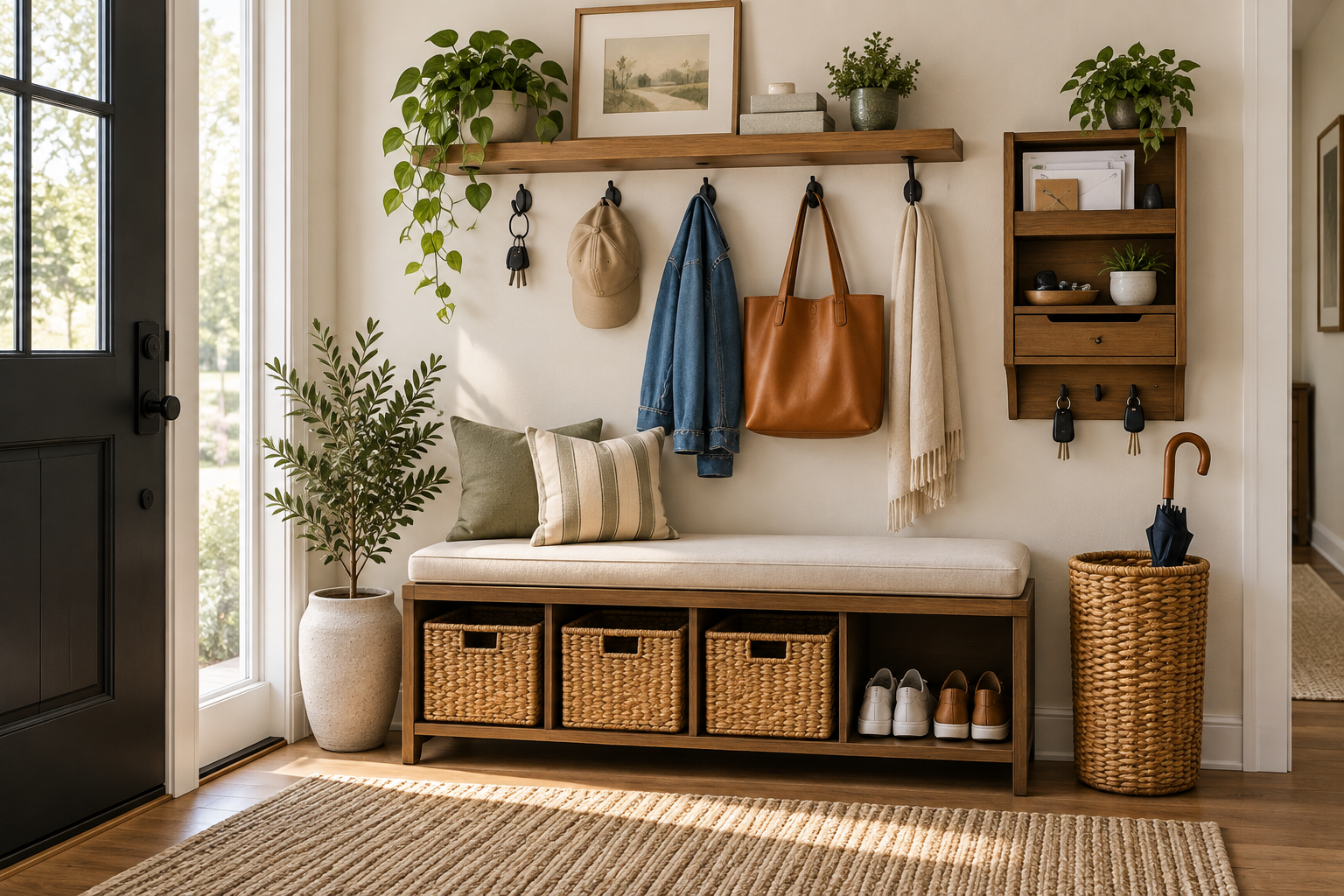
A drop zone should catch the things you carry through the door, not become a place to store everything near the door. The goal is to give everyday items an obvious landing place so they stop spreading across the entryway.
Quick Answer
To organize an entryway drop zone, first observe what actually gets dropped near the door. Then sort those items into simple categories, give each recurring category one obvious home, measure the usable space, position storage where it is easiest to use, and test the system for a week. A good drop zone reduces the number of decisions you have to make when you walk in or leave.
The key principle
Organize the behavior that actually happens, not the behavior you wish happened.
If keys always land on a particular surface, that surface may be the right place for a key tray. If bags end up on the floor, the solution may be a hook or low landing point rather than another shelf. The system should fit the routine.
What Is an Entryway Drop Zone?
An entryway drop zone is a small area near an entrance where the things you regularly carry in and out of the house have designated landing places.
It can be a console table, a narrow shelf, a wall-mounted arrangement, a few hooks, a small tray, a basket, or a combination of these.
The important part is not the furniture. It is the system.
A useful drop zone answers three questions:
- Where does this item land when I come home?
- Where does it go when I need to leave again?
- How do I return it to its home without creating another pile?
Step 1: Observe What Actually Happens at the Door
Before buying organizers, watch the entryway for several days.
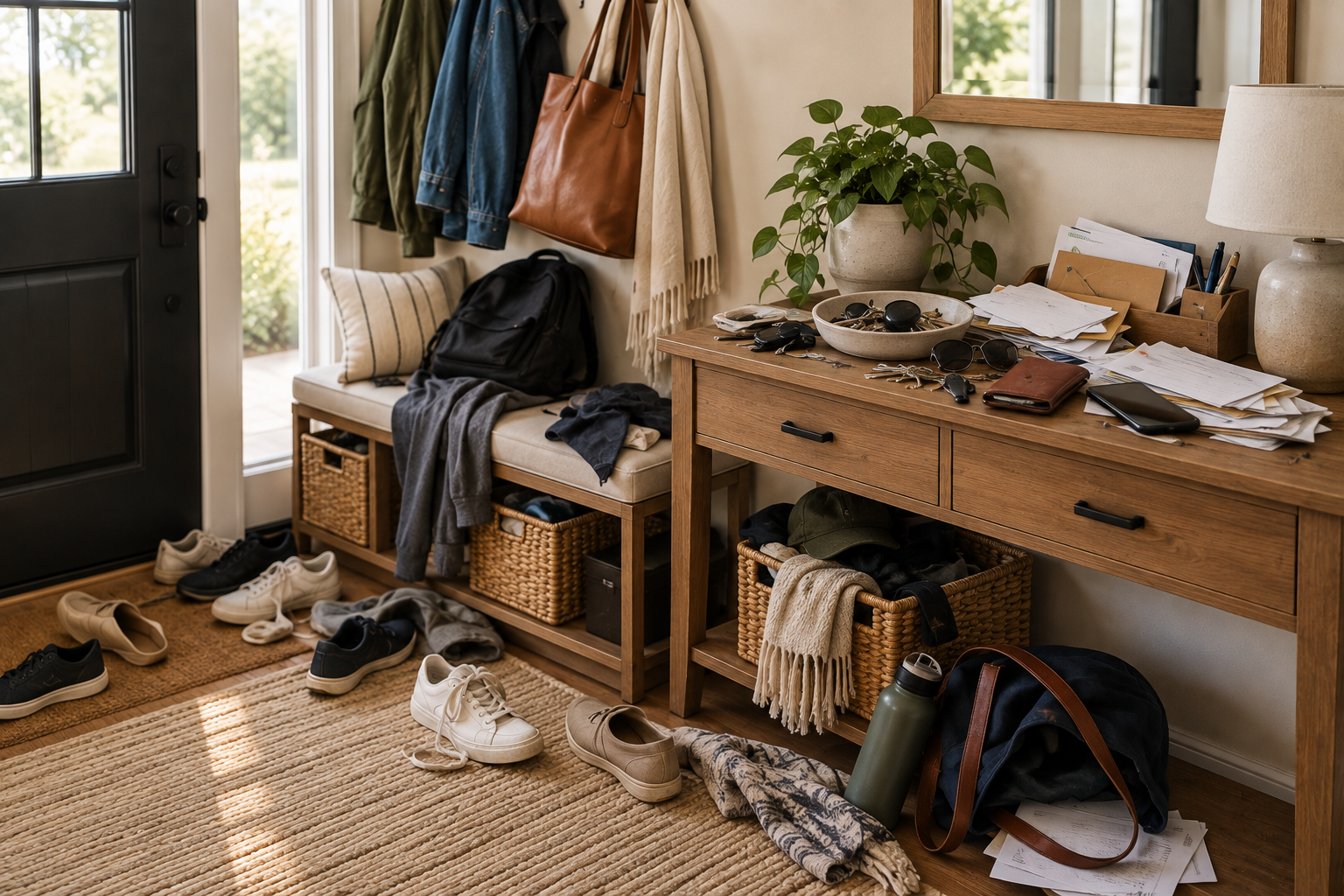
Notice what gets dropped, what gets carried through, and what repeatedly ends up in the wrong place.
Look at the clutter
Identify the items that repeatedly appear near the entrance. Do not start with the storage products you think you need.
Notice the behavior
Ask whether items are being dropped because storage is too far away, difficult to access, too small, or unclear.
Identify the repeat items
Focus on things that appear regularly. Occasional items should not determine the entire storage system.
This observation stage often reveals that the problem is not simply a lack of storage. It may be a distance problem, a capacity problem, or a missing landing place.
Step 2: Sort the Drop Zone Into Inbound and Outbound Items
One of the easiest ways to make an entryway drop zone work better is to separate what is coming into the home from what needs to leave it.
Inbound items
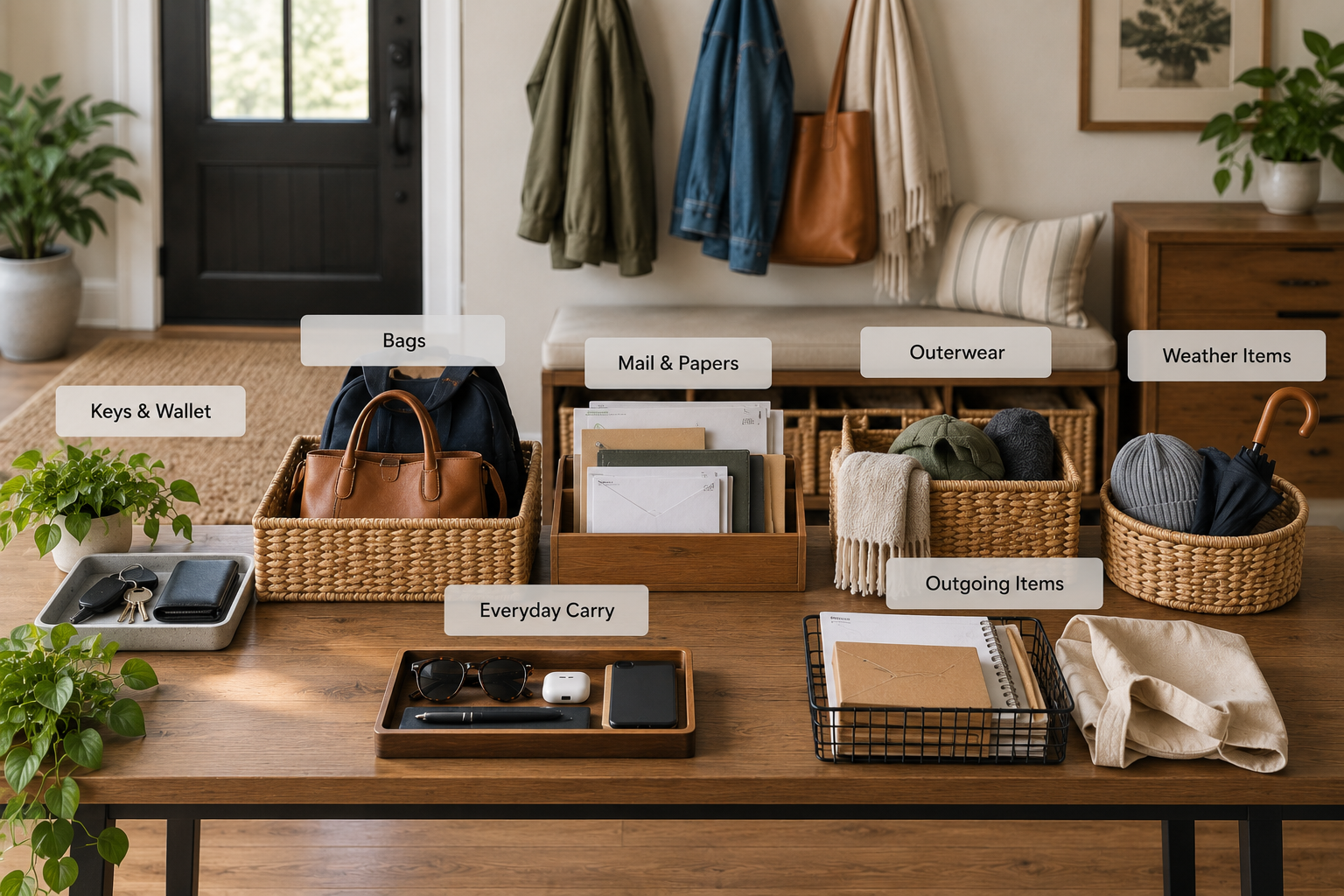
These are things that arrive with you and need a home after you enter.
- Keys
- Wallet
- Bag
- Coat or jacket
- Umbrella and weather items
- Other everyday carry items
Outbound items
These are things that need to leave the house soon.
- Work bag
- Returns
- Packages
- Documents
- Library books
- Reusable shopping bags
- Items that need to go to the car
Keeping these two flows visible makes the drop zone easier to maintain. Incoming items have a home. Outgoing items have a temporary departure area.
Step 3: Give Each Recurring Category One Home
A simple rule works well here: one home, one rule.
Each recurring category should have one obvious landing place and one simple return rule.
Small items
Keys, wallets, and other small everyday items can use a tray, bowl, or compact organizer.
Bags
Use hooks, cubbies, a shelf, or another accessible landing point based on how the bags are actually used.
Paper
Give incoming mail and papers one contained landing area instead of allowing them to spread across available surfaces.
Outerwear
Place frequently used coats and jackets where they can be hung immediately rather than dropped on furniture.
Outgoing items
Create a clearly defined temporary area for items that need to leave the house soon.
You do not need a separate container for every object. Categories should be broad enough to remain easy to use.
Step 4: Match Storage to the Available Space
A drop zone should fit the entryway rather than forcing the entryway to fit the storage.
Before choosing a product or piece of furniture, identify the usable space around the entrance.
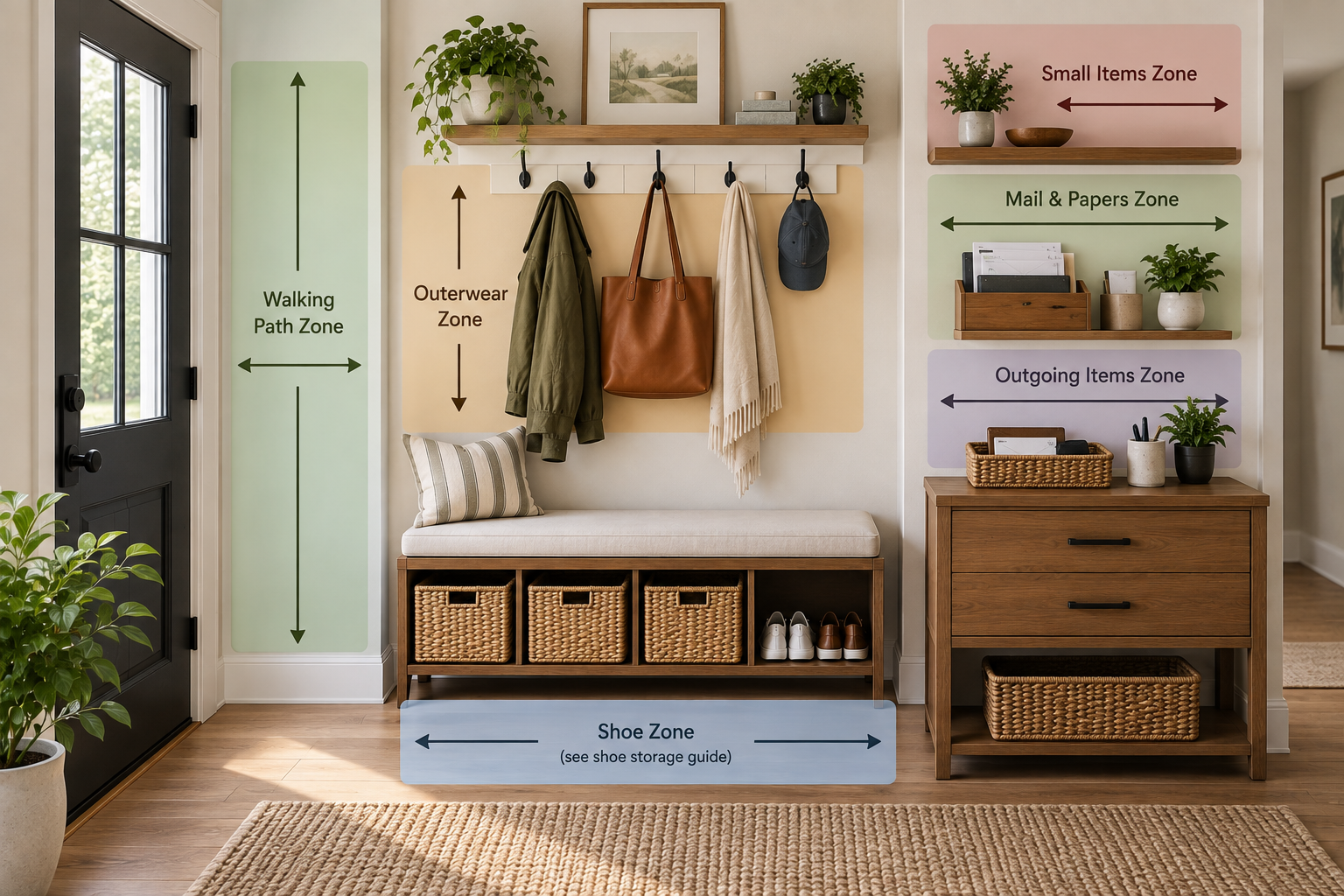
- Usable wall width
- Available depth
- Vertical space
- Door swing
- Walking route
- Existing furniture
- Outlets and switches
- Baseboards and other obstacles
- Space needed to open drawers, doors, or cabinets
Measure the space that will actually remain usable after the storage is installed. A product that technically fits can still make the entrance difficult to use.
Step 5: Choose the Storage Based on the Constraint
There is no single best type of entryway drop zone. The right solution depends on the constraint you are trying to solve.
| Entryway constraint | Useful direction |
|---|---|
| Very little floor space | Wall-mounted storage |
| No usable wall | Narrow freestanding storage |
| Many small items | Tray or compact organizer |
| Several bags | Hooks, cubbies, or another accessible landing system |
| Mail is the main problem | Dedicated paper landing area |
| Visual clutter is the problem | Contained or closed storage |
| Cannot drill into the wall | Freestanding or removable storage |
| Several people use the entryway | Clearly assigned landing points |
| Extremely small entryway | Combine functions where practical |
Step 6: Keep Frequently Used Items Within Easy Reach
The closer the storage is to the action, the less effort it takes to use it.
Keys should not require opening a cabinet across the room. A daily bag should not need to be lifted onto a high shelf if it is used several times a day. Frequently handled mail should not be buried behind rarely used items.
This is where many attractive entryway systems fail. They look organized but introduce too much friction.
A useful test
Ask yourself: Can I put this item away immediately when I walk through the door?
If the answer is no, the storage may be too far away, too difficult to access, or too complicated.
Step 7: Build the Inbound and Outbound Zones
Once the categories and constraints are clear, combine them into a simple working system.
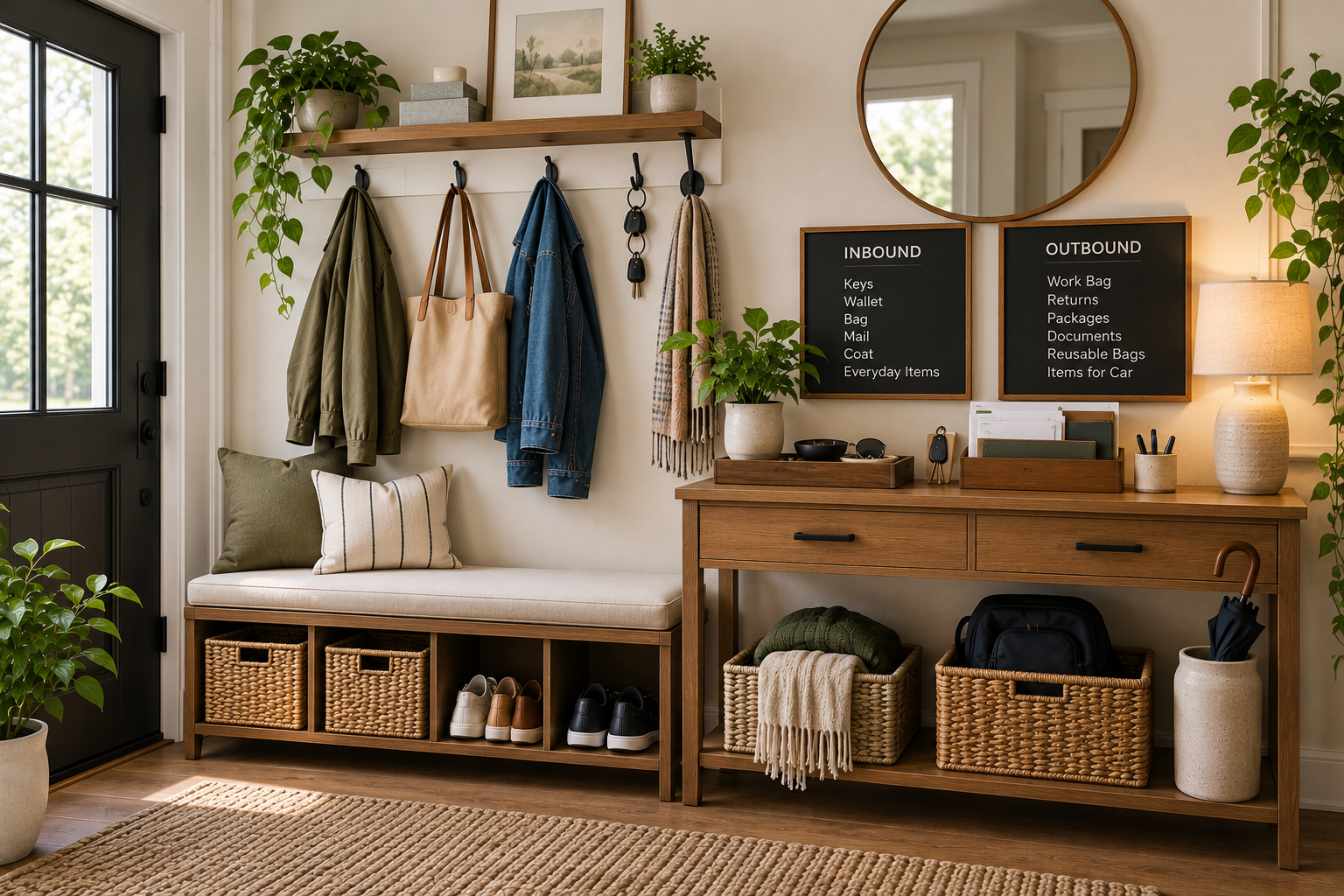
A practical arrangement might include:
- A small landing point for keys and wallet
- Hooks or accessible storage for everyday bags
- A defined place for coats and jackets
- A contained area for incoming mail
- A separate temporary area for outgoing items
- A secondary shoe area where needed
The important distinction is that each area has a job. The drop zone should not become a general-purpose storage area.
Two Simple Product Options for the Drop Zone
Once you know the constraint, a product can solve a specific part of the system. The product should follow the organization plan, not determine it.
Entryway Organization Option
Consider this type of solution when you need a defined landing area for everyday entryway items and want to keep the system contained.
Entryway Storage Option
Consider this type of storage when the entryway needs additional organization capacity without turning the entire area into a storage zone.
Affiliate note: Some links on this page are affiliate links. If you purchase through them, Simply Tidy Home may earn a commission at no additional cost to you.
How to Create a Drop Zone for a Family
A family drop zone needs enough capacity for the normal daily load without trying to store every possible item near the door.
Give each person a clearly recognizable landing point for the things they regularly carry. Shared categories such as mail and outgoing items can have their own common zones.
- Assign clear landing points.
- Keep daily items easy to reach.
- Give bags and outerwear enough capacity for normal use.
- Keep shared categories such as mail separate from personal items.
- Leave enough open capacity for ordinary daily variation.
If every hook or basket is already full, the system may have a capacity problem rather than a labeling problem.
How to Create a Drop Zone Without a Console Table
You do not need a console table to create a functional drop zone.
Depending on the space, you can combine a wall hook, a narrow shelf, a small tray, a basket, or an existing surface.
The goal is to create the functions you actually need. A small entryway may only require one place for small items, one place for bags or coats, and one contained area for outgoing items.
How to Create a Drop Zone Without a Traditional Entryway
If your home opens directly into the kitchen, living room, hallway, or another room, create a small micro-zone instead of trying to build a full entryway.
Look for the first practical location near the entrance where you can create:
- One landing point for small everyday items
- One place for a bag or coat
- One small outgoing area if needed
A small, clearly defined zone is usually easier to maintain than a larger storage system that takes over the room.
Step 8: Test the System for a Week
Do not decide that a drop zone works simply because it looks organized on the first day.
Use it normally for about a week and watch what happens.
Items that repeatedly escape their assigned homes are useful information. They can reveal a problem with distance, friction, capacity, category, or clarity.
Find the escape
Notice which items repeatedly end up outside their assigned location.
Find the reason
Ask whether the home is too far away, difficult to use, too small, unclear, or poorly matched to the item.
Change one thing
Adjust the location, capacity, category, or storage method rather than rebuilding the entire system.
Common Entryway Drop Zone Mistakes
Buying storage before observing the problem
A product cannot tell you what the real problem is. Observe the routine first.
Creating too much storage
More storage can encourage more accumulation. Capacity should reflect the normal load, not the maximum imaginable load.
Mixing inbound and outbound items
Items that need to leave the house should not disappear into the same storage used for everyday incoming items.
Giving everything its own container
Too many small containers can create another layer of maintenance. Use categories that are broad enough to remain simple.
Hiding frequently used items
If an item is handled every day, difficult access can create friction and encourage the item to be left out.
Putting storage too far from the entrance
A technically logical location may still fail if it is not convenient at the moment the item needs to be put away.
Ignoring capacity
If the storage fills every day, the system needs a capacity adjustment rather than another reminder to tidy.
Creating too many categories
A drop zone should reduce decisions. If every item requires a different decision, the system becomes harder to maintain.
How to Maintain an Entryway Drop Zone
A good drop zone should be easy to reset as part of normal life.
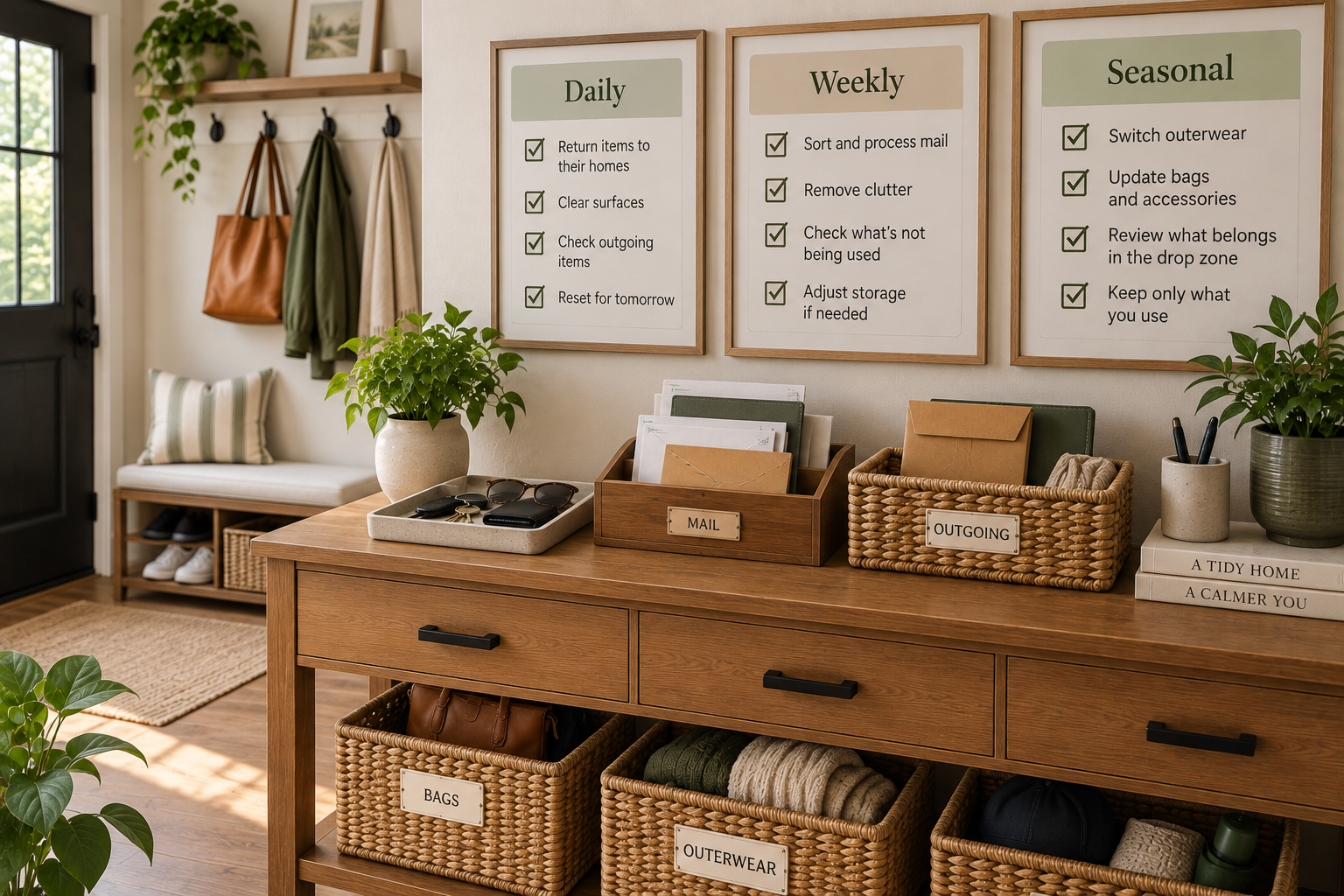
Daily
Return keys, bags, coats, mail, and other everyday items to their assigned homes.
Weekly
Remove outgoing items that have left, process accumulated papers, and clear anything that does not belong.
Seasonal
Adjust the system when weather, routines, bags, outerwear, or household needs change.
Quick Takeaways
- A drop zone should support the things you actually carry through the door.
- Observe the real behavior before buying storage.
- Separate inbound items from outbound items.
- Give recurring categories one obvious home.
- Match storage to the actual space constraint.
- Keep frequently used items easy to reach.
- Capacity should reflect normal use rather than maximum possible use.
- Test the system for a week and adjust based on what repeatedly escapes.
- A simple daily reset is more useful than a complicated organization system.
Entryway Drop Zone FAQ
What is an entryway drop zone?
An entryway drop zone is a designated area near an entrance where frequently carried items such as keys, bags, mail, coats, and everyday belongings have clear landing places.
What should go in an entryway drop zone?
The drop zone should hold the items that regularly enter or leave the home through that entrance. Common examples include keys, wallets, bags, mail, coats, weather items, and outgoing items.
How do I create a drop zone in a small entryway?
Start with the items that repeatedly collect near the door. Give the most important categories simple landing places, then use wall space, narrow storage, or a small existing surface according to the available space.
Where should I put keys and mail?
Put keys in a small, consistent landing place that is easy to reach immediately after entering. Keep mail in a separate contained area so incoming papers do not spread across the entryway.
How should I organize bags in a small entryway?
Use the storage method that matches the available space and the number of bags in normal use. Hooks, cubbies, shelves, or narrow storage can work when they are easy to access and located near the point of entry.
How do I create a drop zone without a console table?
Combine smaller functions such as a wall hook, narrow shelf, tray, basket, or existing surface. You only need enough storage to support the categories that actually occur at the entrance.
How do I organize a family drop zone?
Give each person a clear landing point for frequently carried personal items while keeping shared categories such as mail and outgoing items in common areas.
How do I stop my entryway drop zone from becoming cluttered?
Limit the drop zone to recurring categories, separate outgoing items from everyday storage, maintain realistic capacity, and reset the area regularly. Items that repeatedly escape their homes are signals that the system needs adjustment.
What if my home does not have a traditional entryway?
Create a small micro-zone near the entrance using one or two simple functions. A hook, tray, shelf, or basket can be enough to establish a clear landing area.
Should shoes be part of the entryway drop zone?
Shoes can be part of the broader entryway system, but they should have their own capacity and storage logic. For a dedicated shoe organization system, see our guide to organizing shoes in a small entryway.
The simplest way to think about a drop zone
Observe → Sort → Assign → Size → Position → Test → Reset.
The goal is not to create the most storage. It is to make the normal behavior of entering and leaving the home easier to manage.