
A small kitchen can feel crowded even when you do not own that much. The problem is often not a lack of storage. It is how the available space is being used.
A cabinet may have empty space above your dishes. A drawer may be full of tools you rarely use. Your most-used items may be stored in the hardest places to reach.
The answer is not always another organizer.
A better approach is to first understand the space, remove what you do not need, and then build simple zones around the way you use your kitchen.
This guide walks you through that process.
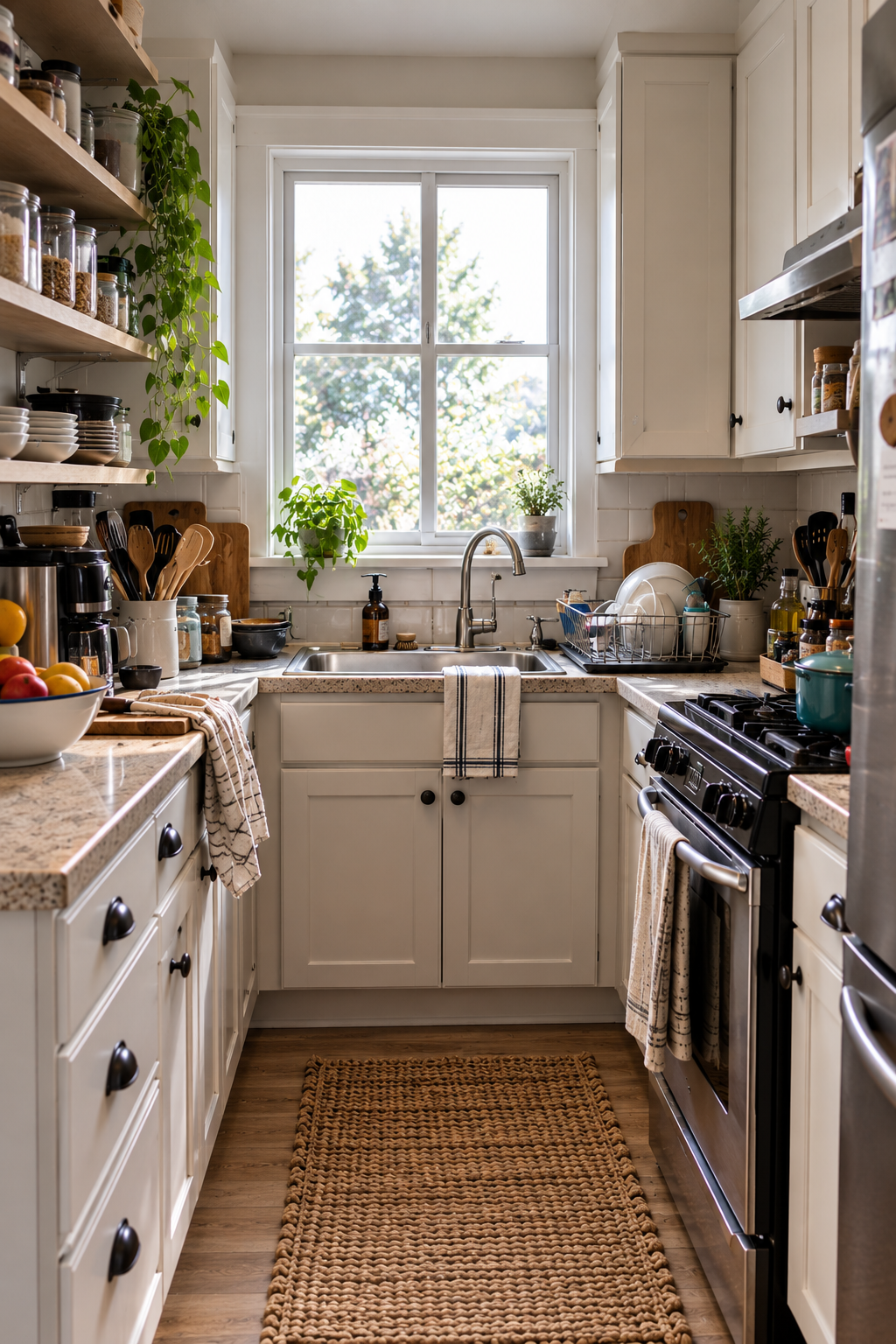
THE OUR APPROACH
Organize the Space Before You Buy More Storage
Start with the space you have. Measure it, clear what you do not need, group items by use, and identify the biggest storage problem.
Only then decide whether an organizer is actually needed.
1. Measure Your Kitchen Before You Organize It
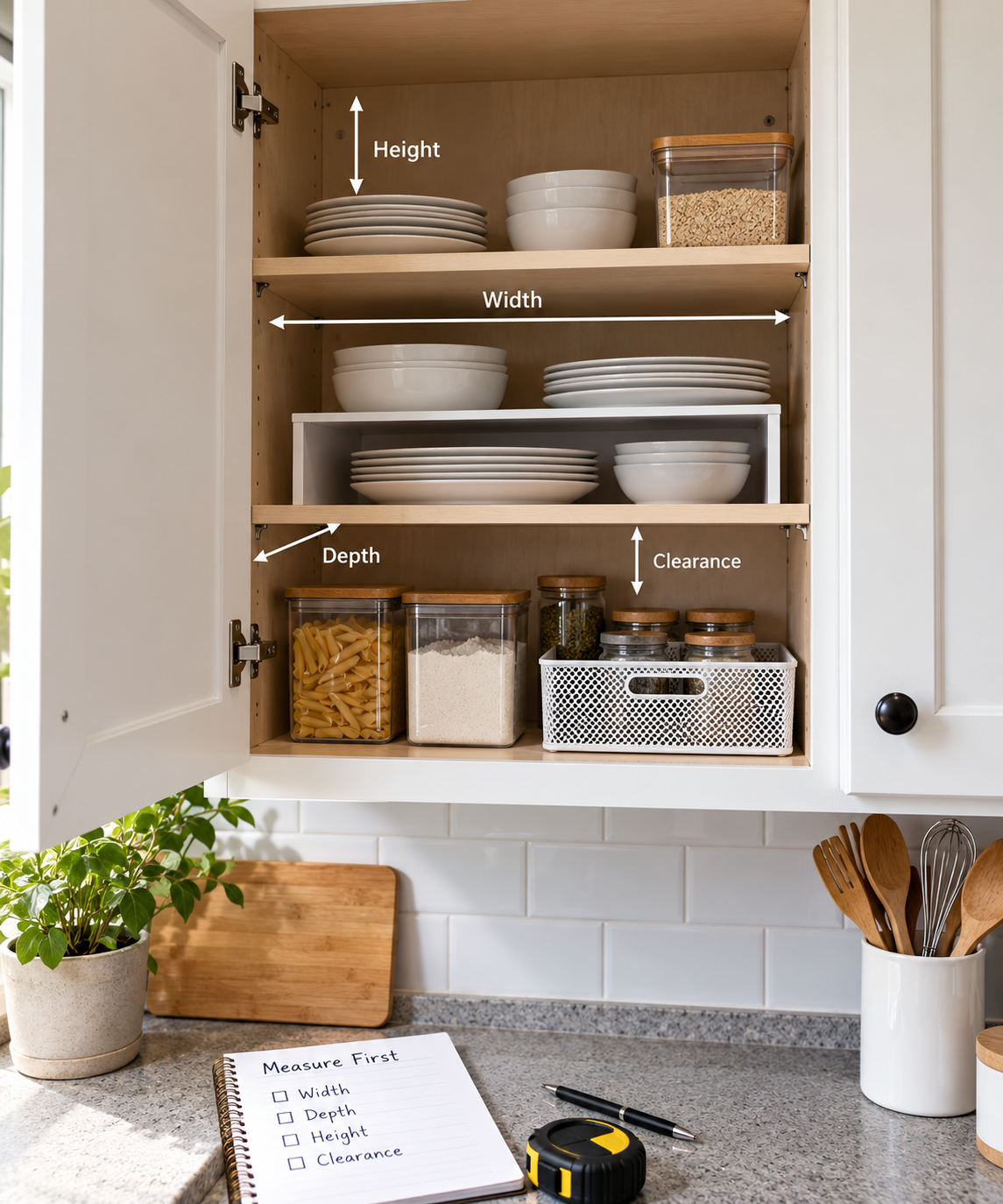
Before moving things around, look at the spaces you actually have.
Measure the areas where you may need to store something. For cabinets, drawers, shelves, and other storage spaces, pay attention to:
- Width
- Depth
- Height
- Door and drawer clearance
- Fixed shelves or other obstructions
Depth is especially important. A space can look large from the front but become difficult to use once items are placed inside it.
Start with the storage area that causes the biggest problem. You do not need to measure the entire kitchen at once.
2. Clear Out Things You Do Not Need
Organization works better when you are not trying to organize things you no longer use.
As you empty a cabinet, drawer, shelf, or counter area, look for:
- Broken tools
- Duplicates you do not need
- Expired food
- Appliances you rarely use
- Items that belong somewhere else
- Containers without matching lids
- Things you no longer use
You do not have to empty the whole kitchen in one day. Work on one problem area at a time.
A small improvement in one difficult cabinet, drawer, or counter area is more useful than reorganizing the entire kitchen without solving the underlying problem.
3. Group Things by How You Use Your Kitchen
It can be tempting to organize everything strictly by category.
But a small kitchen often works better when storage also follows your daily tasks.
For example, items you use together for food preparation can stay close to your main prep area. Cooking tools can stay close to the stove. Dishwashing supplies can stay near the sink.
The goal is simple: make the things you use together easy to reach together.
This can reduce unnecessary movement around a small kitchen and make the available storage easier to use.
4. Create Simple Kitchen Zones
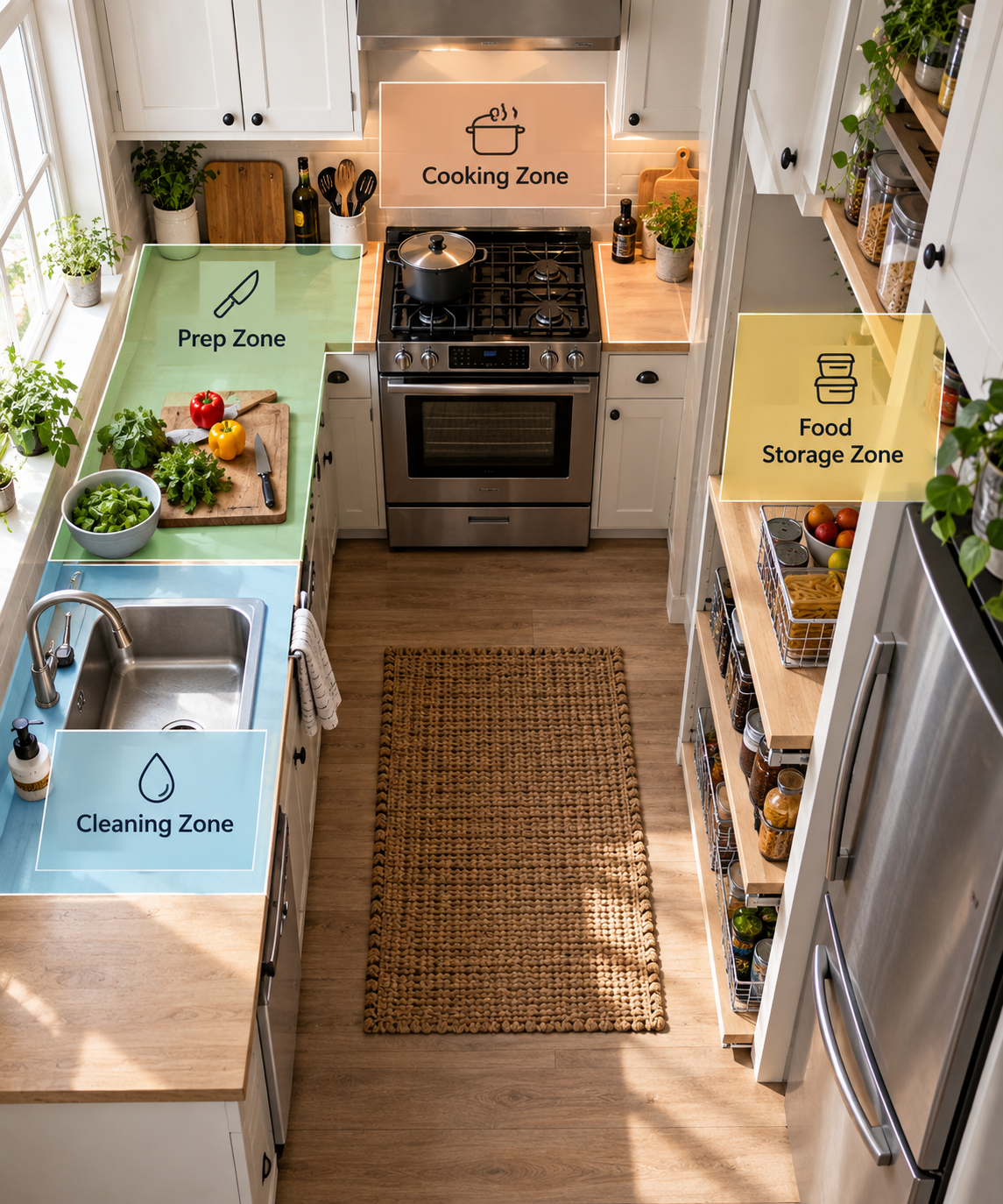
Once you understand how you use the kitchen, divide it into a few simple working zones.
You do not need a large kitchen to do this. The zones can overlap when space is limited.
Prep Zone
Cutting boards, knives, mixing tools, and other food-preparation items.
Cooking Zone
Pots, pans, cooking utensils, and items used near the stove.
Cleaning Zone
Dishwashing and cleaning supplies stored near the sink.
Food Storage Zone
Pantry items, containers, and other food-storage supplies.
Your kitchen layout will determine where these zones work best.
If you have a separate pantry, our pantry organization ideas can help you organize the food-storage side of the system.
If your pantry is also small, see our guide on how to organize a small pantry .
5. Fix Your Biggest Storage Problem First
Do not try to improve every storage area at the same time.
Find the problem that makes the kitchen hardest to use and start there.
It might be:
- Crowded counters
- Unused vertical cabinet space
- Deep cabinets where items disappear
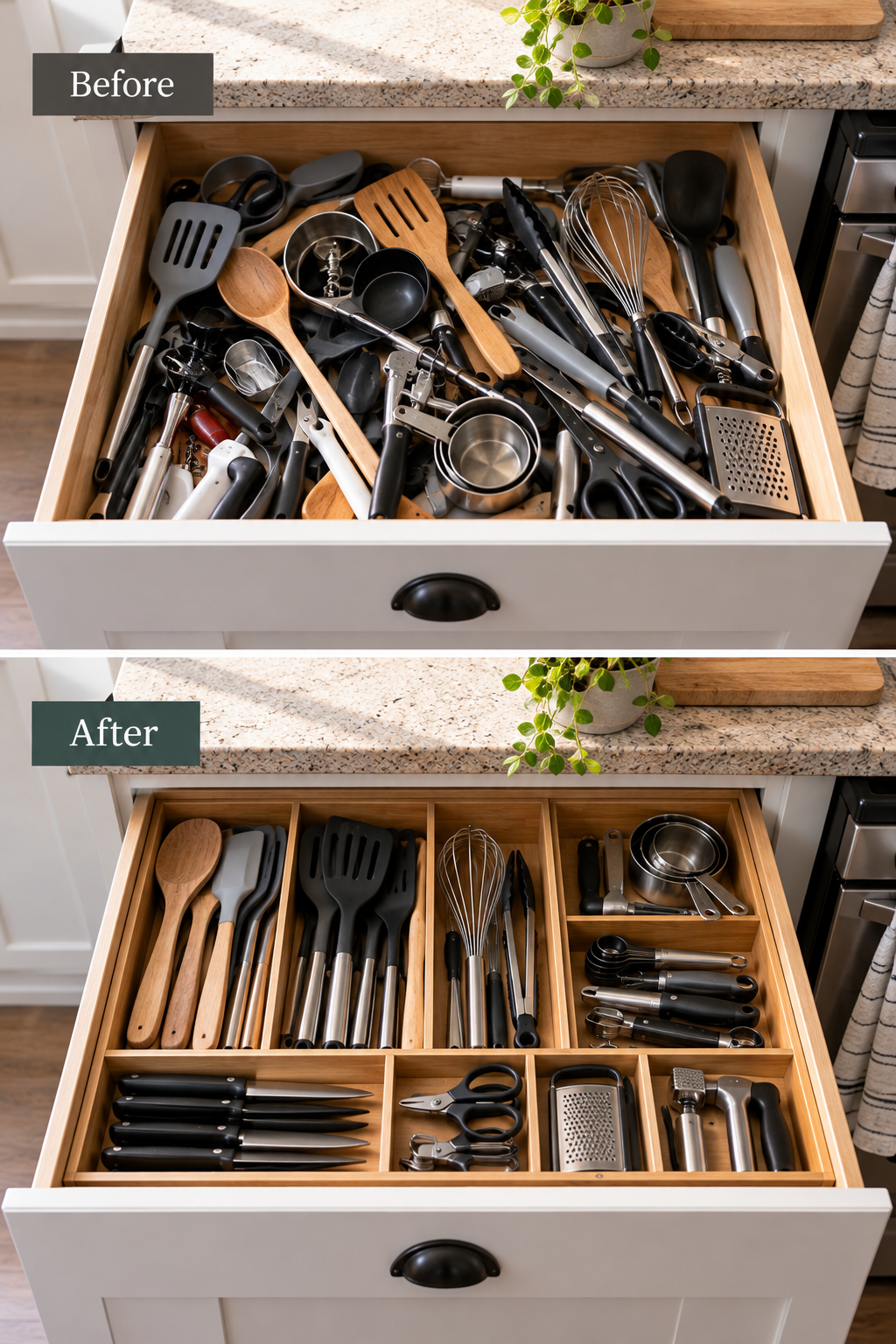
- A messy kitchen drawer
- A lack of pantry space
- Too many items competing for the same shelf
Solving one major problem can make the rest of the kitchen easier to organize.
6. Use Vertical Space Carefully
Small kitchens often have unused space above or around the things already being stored.
Look at:
- Space above cabinet shelves
- Cabinet doors
- Wall space
- Space under cabinets
- Narrow gaps
But do not treat every empty space as storage that must be filled.
Extra storage only helps when the items remain easy to reach and the space still works for the task around it.
7. Make Hard-to-Reach Spaces Easier
Some storage areas are difficult because they are deep, high, narrow, or tucked into a corner.
Before adding an organizer, ask why the space is difficult to use.
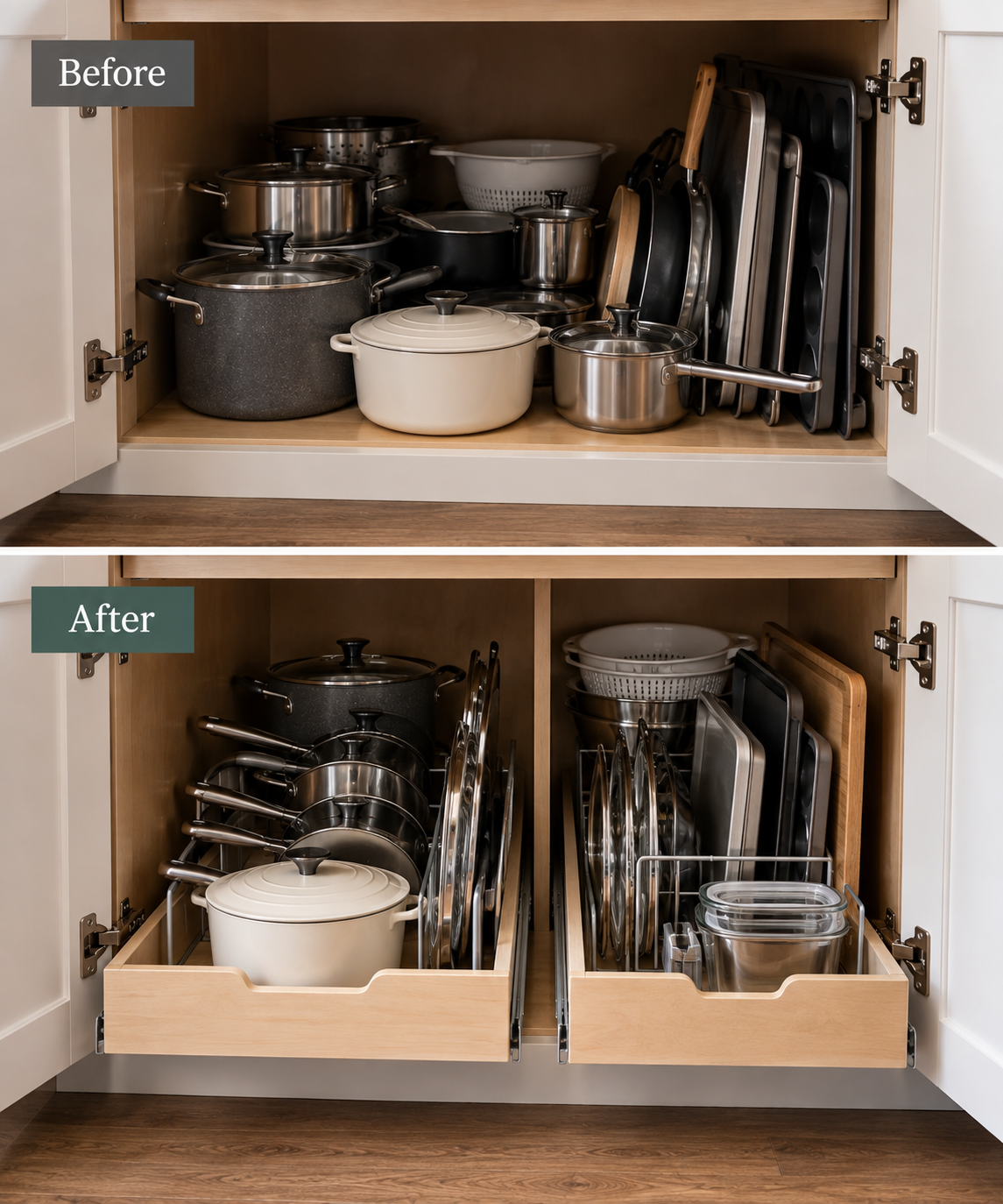
If items disappear at the back of a deep cabinet, the problem may be visibility and access. If a high shelf is difficult to reach, it may be better suited to items you use less often.
The goal is not simply to fit more into the space. The goal is to make the space easier to use.
8. Do Not Buy an Organizer Until You Know What Problem It Solves
This is one of the most important rules for a small kitchen.
Do not start with a product. Start with the problem.
For example:
- If a shelf has unused vertical space, a shelf riser may help.
- If items are difficult to reach at the back, a different storage system may improve access.
- If a drawer is crowded, dividing the space may make the contents easier to find.
- If a counter is always covered, moving some items into better storage may solve the problem.
The right solution depends on the space, the items, and how often you use them.
Choose the solution for the problem—not the other way around.
9. Measure Again Before Buying
Once you know what problem you are trying to solve, measure the space again before buying anything.
Check more than the basic width and height.
- Will the organizer fit through the cabinet opening?
- Will the door still close?
- Will a drawer still open fully?
- Is there enough depth for the items?
- Will you still be able to reach everything?
- Can the space be cleaned easily?
A product that fits the measurement but blocks access is not a useful solution.
10. Give Frequently Used Items the Best Locations
Your easiest-to-reach storage should usually go to the things you use most.
Daily
Keep everyday items within easy reach.
Weekly
Store these in normal cabinet or drawer locations.
Rarely
These can go into harder-to-reach storage.
This makes better use of limited space because the most important factor is not just how much storage you have. It is how easily you can use it.
11. Make the “Put Away” Step Easy
A kitchen can look organized after a major cleanout and still become messy again.
One reason is that putting things away takes too much effort.
If a pan has to be moved before another pan can be stored, or a container has to be pushed behind several other items, the system becomes harder to maintain.
For frequently used items, ask whether you can quickly see where something belongs, reach that spot, and put the item away without moving several other things.
Ask yourself:
- Can I put this away quickly?
- Can I see where it belongs?
- Can I reach that spot without moving several other things?
- Will other people in the home understand where it goes?
If the answer is no, simplify the storage system.
12. Avoid These Common Small-Kitchen Mistakes
A few common habits can make a small kitchen harder to manage.
Buying organizers before measuring
An organizer that does not fit wastes money and can make the storage problem worse.
Trying to fill every empty space
Empty space is not always wasted space. Some room is needed to see, reach, remove, and return items.
Keeping counters permanently crowded
Only keep regularly used items on the counter when possible. Everything else should have a practical storage location.
Putting frequently used items in difficult locations
If you use something every day, it should not require several steps to reach it.
Organizing only by category
Categories matter, but workflow matters too. Store related items where they are actually used.
Using too many bins
Containers can help, but adding a container to every space can make a small kitchen harder to access.
Ignoring clearance
Always check doors, drawers, handles, shelves, and nearby appliances before adding storage.
Creating a system that is too complicated
The best system is one you can maintain without thinking about it every time you use the kitchen.
Small Kitchen Organization Checklist
- Measure the space.
- Clear out what you do not need.
- Categorize what remains.
- Zone items around how you use the kitchen.
- Identify the biggest storage problem.
- Choose a solution that addresses that problem.
- Install it after checking measurements and clearance.
- Maintain the system by keeping the return path easy.
More Organization Help
If part of your small kitchen connects to a pantry, these published our guides can help you solve that specific storage problem.
Frequently Asked Questions
How do I organize a small kitchen with very little storage?
Start by measuring your available storage and clearing out items you do not need. Then group items by how you use the kitchen, create simple zones, and solve your biggest storage problem first. Use harder-to-reach spaces for items you use less often.
What should I organize first in a small kitchen?
Start with the area that causes the most frustration, such as a crowded counter, messy drawer, deep cabinet, or overloaded shelf. Fixing one major problem first makes it easier to see what the rest of the kitchen needs.
How can I make a small kitchen feel less cluttered?
Clear out unused items, keep frequently used things easy to reach, and avoid filling every available space. Keeping counters as clear as practical can also make the room feel more open.
How do I organize a small kitchen without buying lots of organizers?
Start with decluttering and rearranging before buying anything. Use the storage you already have more effectively, group items by task, and measure the space before deciding whether an organizer would actually solve a problem.
Where should I put things in a small kitchen?
Keep daily-use items in the easiest places to reach. Store weekly-use items in normal cabinet or drawer locations and move rarely used items to higher, deeper, or less convenient storage. Whenever possible, keep items close to the area where you use them.
SIMPLY TIDY HOME
A small kitchen does not need more stuff. It needs a better system.
Start with one problem area. Measure it. Clear it. Group what belongs there. Then choose a solution that makes the space easier to use and maintain.
MEASURE → CLEAR → CATEGORIZE → ZONE → CHOOSE → INSTALL → MAINTAIN