A small closet can feel full before you have actually used all of its available space. The problem may be too many hanging clothes, unstable stacks, shoes taking over the floor, accessories getting lost, or simply poor access to the things you use most.
The solution is not to buy more organizers first. Start by finding the bottleneck, measuring the space you can actually use, editing what belongs there, and then building a storage system around the way you live.
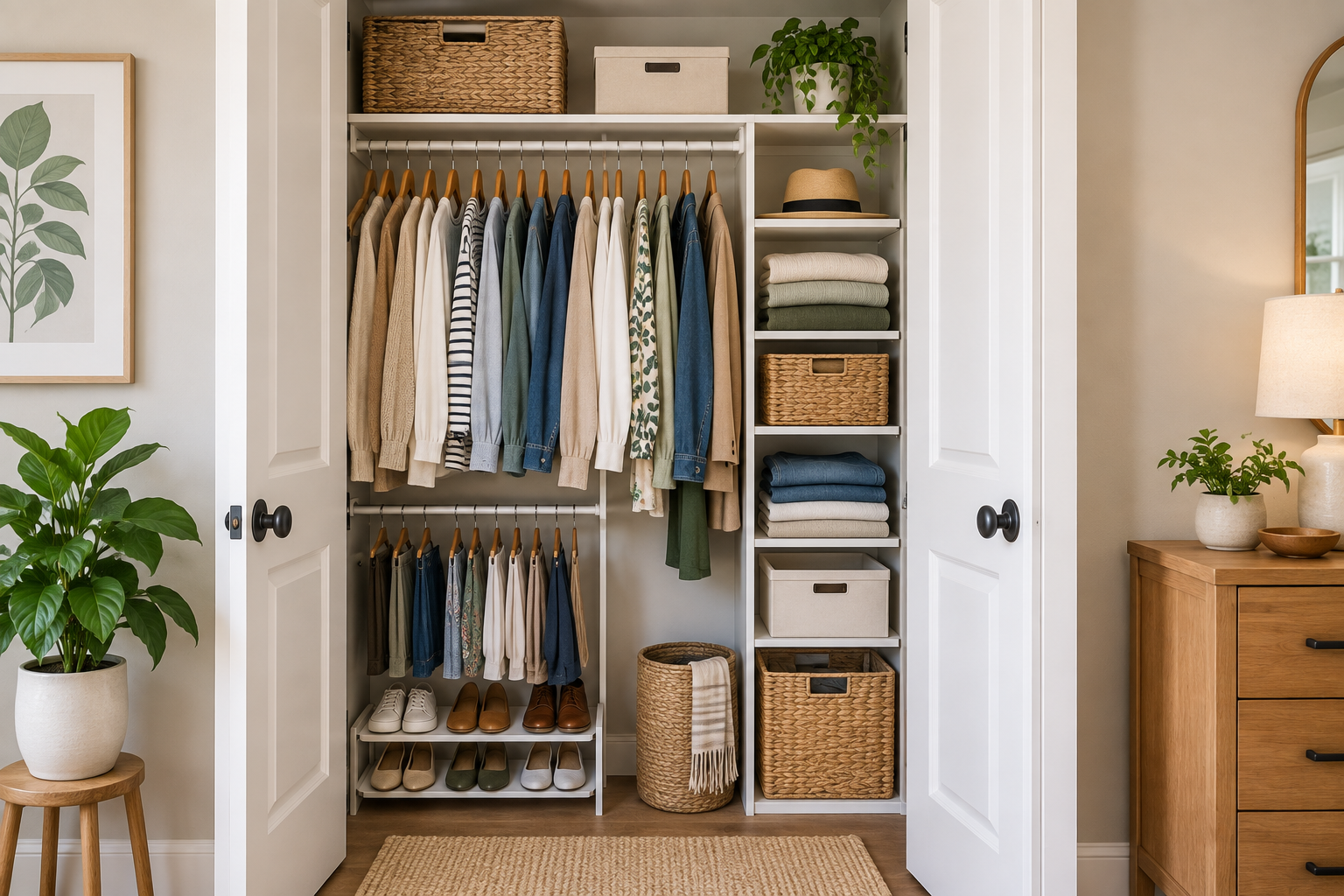
Find Your Closet’s Biggest Bottleneck First
A small closet does not have one problem. It has a bottleneck.
Before moving anything, identify what is making the closet difficult to use. That tells you where the organization effort should go first.
Organize the bottleneck first.
- Hanging bottleneck: clothes are packed tightly along the rod.
- Folded-item bottleneck: shelves are crowded or stacks keep falling over.
- Shoe bottleneck: shoes are taking up most of the usable floor space.
- Accessory bottleneck: smaller items disappear into piles or containers.
- Access bottleneck: something is technically stored but difficult to reach.
- Inventory bottleneck: there are simply more belongings than the closet can comfortably hold.
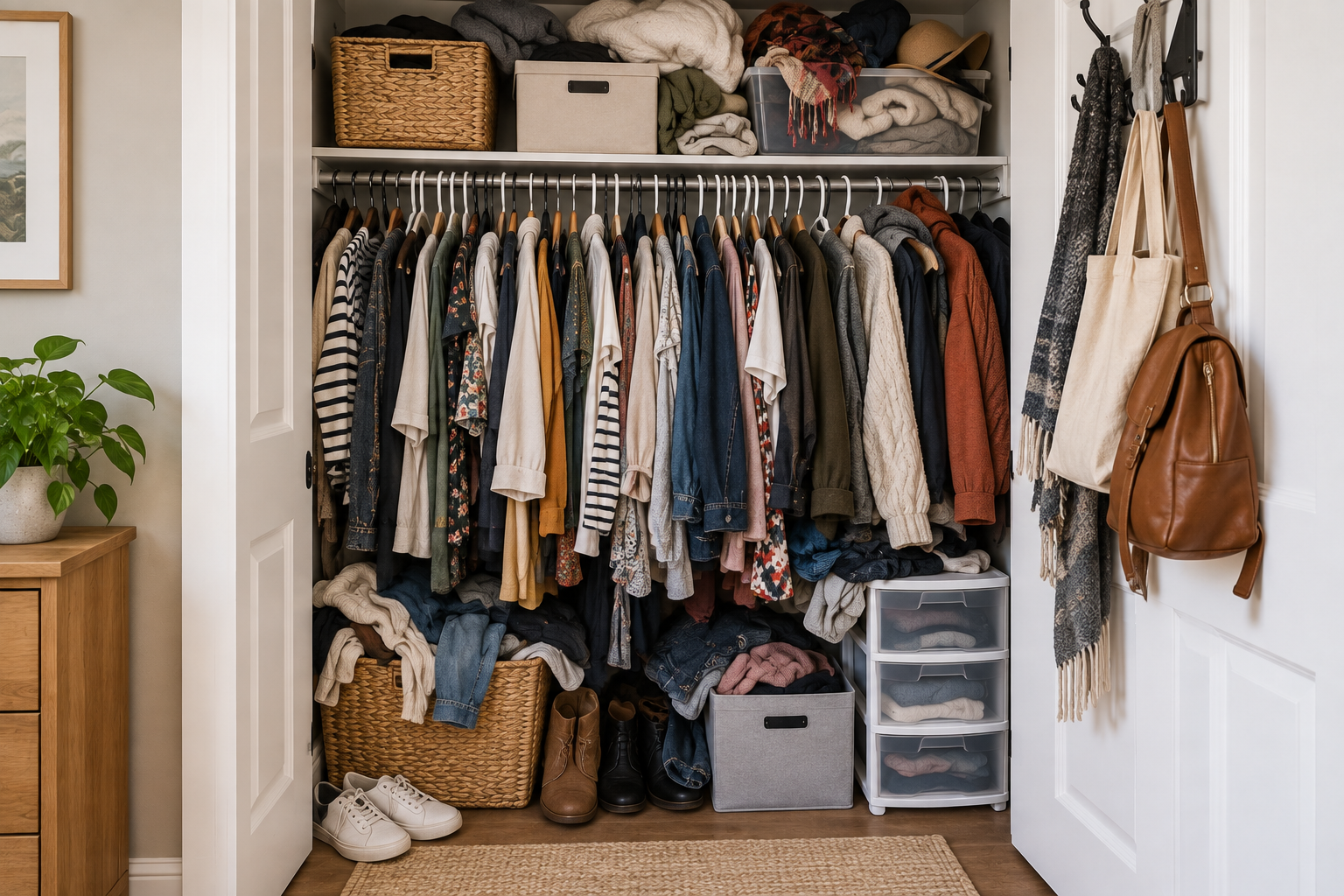
Empty the Closet Before You Reorganize It
Trying to organize around everything already inside the closet makes it difficult to see what the real problem is.
Empty the closet enough to see the shelves, floor, hanging space, corners, and upper areas. Then temporarily sort the contents into four groups:
- Keep here — items that belong in this closet.
- Store elsewhere — items you want to keep but do not need in this closet.
- Repair or decide — items that need a decision before they return.
- Remove — items you no longer need or want.
Keep does not automatically mean keep in this closet.
A small closet works better when its limited space is reserved for the things that actually need to live there.
Measure the Space You Can Actually Use
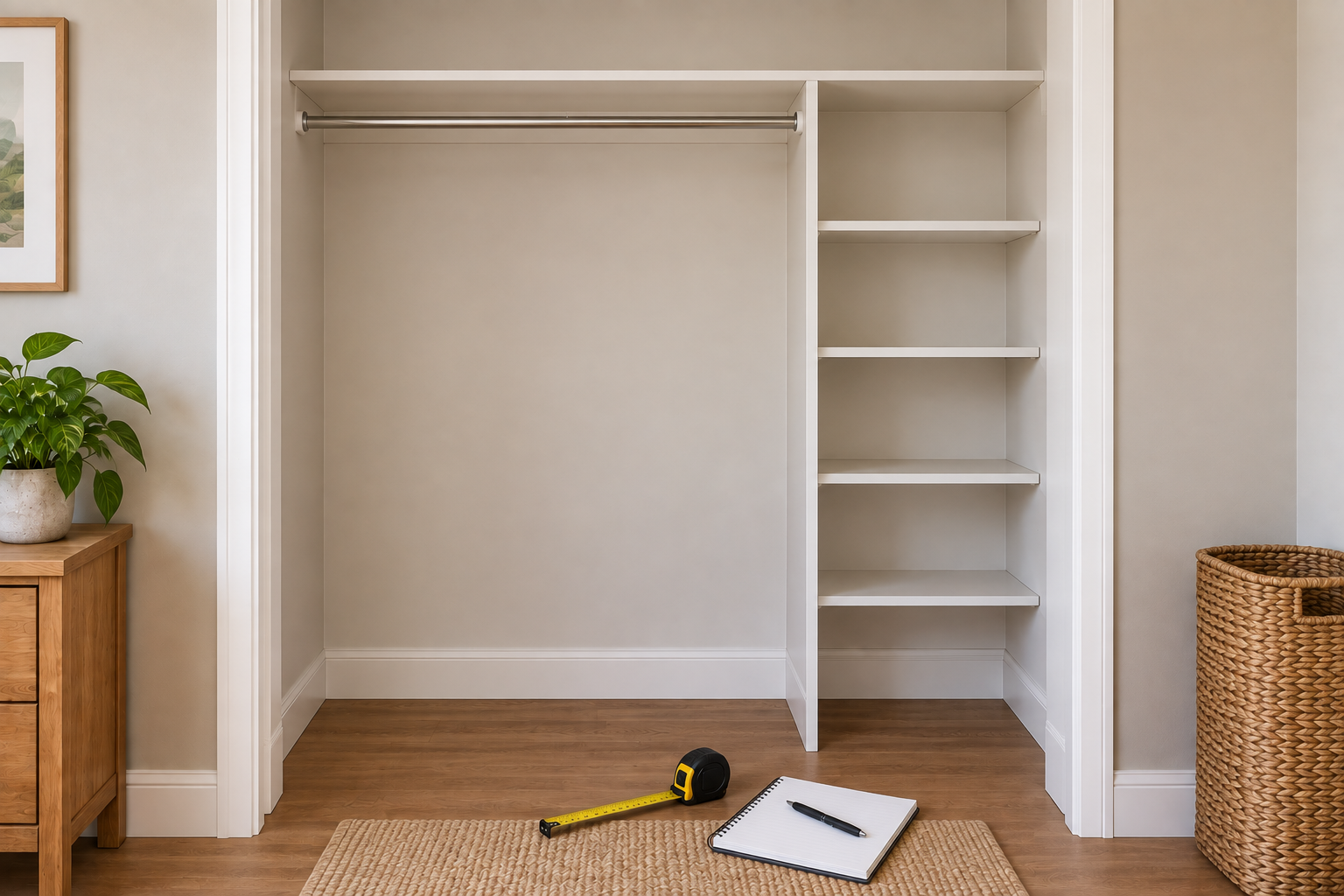
Measure the storage space, not just the room.
Small differences in width, depth, height, shelf position, and door clearance can determine whether an organizer is useful or simply makes the closet harder to access.
Record these measurements:
- Usable width
- Usable depth
- Usable height
- Hanging height
- Shelf width and depth
- Available floor space
- Door clearance
- Fixed shelves, rods, hinges, trim, and other obstructions
A simple phone note is enough. Record the measurements before shopping for storage.
Categorize What Is Staying
Once you know what belongs in the closet, group similar items together before deciding exactly where they should go.
- Hanging clothes
- Folded clothes
- Shoes
- Accessories
- Seasonal or occasional items
Then ask: How does this category need to be stored so that it remains visible and easy to retrieve?
This prevents the common mistake of choosing a container first and trying to force the category into it afterward.
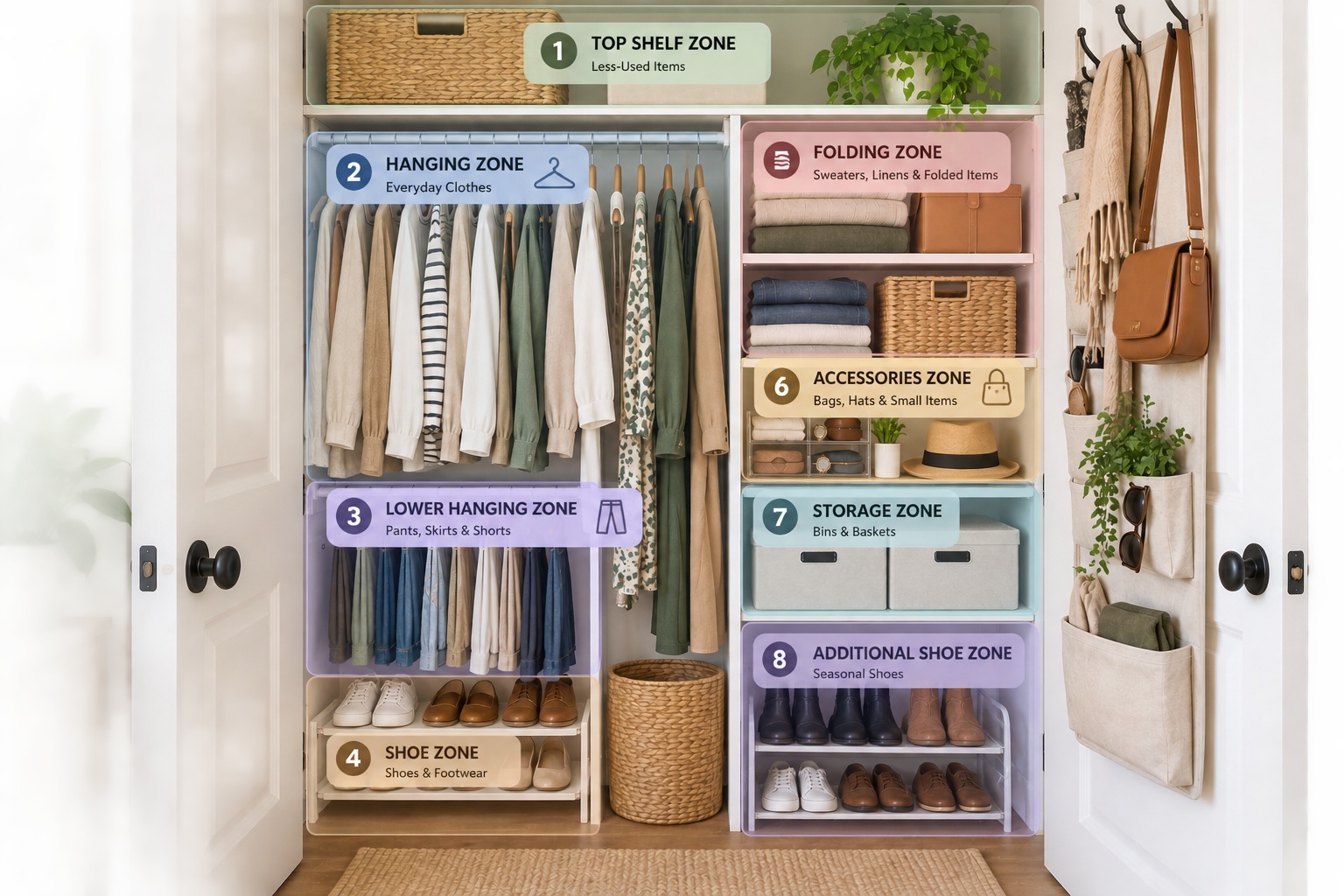
Create Zones Based on How Often You Use Things
Not every item needs the same level of accessibility.
Give the easiest-to-reach parts of the closet to the things you use most often. Less frequently used items can move higher, farther back, or into secondary storage.
Everyday
Items you reach for regularly.
Occasional
Items used less frequently.
Seasonal
Items that can move out of prime space when not needed.
Hanging
Clothing that needs to remain on hangers.
Folded
Clothing and linens that work better on shelves.
Shoes
Footwear kept together and easy to retrieve.
Accessories
Smaller items that need contained storage.
The easiest space should go to the things you reach for most often.
Use Vertical Space Before Adding More Floor Storage
When floor space is limited, look upward before adding another item to the floor.
Depending on the closet layout, useful vertical options can include:
- An additional hanging level
- Shelf dividers
- Stackable storage
- Accessible bins on upper shelves
- Vertical shoe storage
- Door storage where the door and surrounding clearance allow it
The goal is not to fill every available inch. More storage is not automatically better if it makes everyday access worse.
Match the Storage to the Actual Problem
Problem first. Product second.
The right organizer depends on what is creating the bottleneck.
| Actual problem | Possible storage direction |
|---|---|
| Crowded hanging clothes | Make better use of hanging height and rod space. |
| Unstable folded stacks | Use shelf dividers or contained shelf organization. |
| Shoes taking over the floor | Consider vertical or door-mounted shoe storage where clearance allows. |
| Small accessories getting lost | Give them dedicated compartmentalized or hanging storage. |
| Underused upper shelves | Use stackable storage that remains accessible. |
| Too many belongings | Edit, relocate, or rotate inventory instead of adding more containers. |
For Crowded Hanging Space
If hanging clothes are the main bottleneck, start by using the existing hanging area more effectively before adding bulky storage.
A cascading hanger system can help create additional usable hanging levels for suitable garments.
See the hanging-space solution on Amazon
For Unstable Shelf Stacks
If folded clothes spread across a shelf or fall into one another, shelf dividers can create clearer boundaries between categories.
The purpose is not simply to divide the shelf. It is to make each category easier to see, retrieve, and return.
See the shelf organization solution on Amazon
For Seasonal and Occasional Items
Seasonal belongings do not need to occupy the easiest-to-reach space all year. Use contained storage for items that can safely move to an upper shelf or another suitable storage location.
See the seasonal storage option on Amazon
For Vertical Folded Storage
When a closet has useful vertical height but limited shelf area, a hanging shelf organizer can create additional compartments without requiring another floor-level unit.
See the vertical storage option on Amazon
For a Shoe Bottleneck
Shoes can consume valuable floor space surprisingly quickly in a small closet. If the closet door and surrounding clearance permit it, vertical door storage can move footwear away from the floor.
See the shoe storage option on Amazon
Some links in this article are affiliate links. If you purchase through one of these links, Simply Tidy Home may earn a commission at no additional cost to you.
Organize for Access, Not Just Capacity
A closet can technically hold a lot while still being difficult to use.
After arranging each area, ask five simple questions:
- Can I see it?
- Can I reach it?
- Can I remove it?
- Can I put it back?
- Can the closet still close?
The goal is not maximum capacity. The goal is useful capacity.
Test the Arrangement Before Buying More
You do not need to get the arrangement perfect on the first attempt.
Live with the setup for several days and notice where friction appears.
Maybe the everyday clothes are too high. Maybe shoes still block the floor. Maybe a basket is difficult to pull out. Maybe an upper shelf is technically organized but rarely usable.
These observations are useful.
The first arrangement is a test, not a failure.
Give Every Category a Home
Once the layout works, give every major category a predictable home.
A home can be a shelf section, hanging section, drawer, basket, shoe area, or door organizer.
The important part is that you know where the category belongs and can return it there without having to rethink the system every time.
Predictability is what turns an organized closet into a maintainable closet.
Keep the Closet Organized With a Simple Reset
A small reset is easier than a complete reorganization.
- Daily: return displaced items to their homes.
- Weekly: correct small amounts of category drift.
- Seasonally: review seasonal items and adjust what occupies prime space.
You do not need a complicated maintenance schedule. The system should be simple enough that putting things away becomes the normal action.
What If Your Small Closet Is Still Too Full?
Sometimes organization is not the only issue.
Ask: Is the closet poorly organized, or is there simply more inventory than the available storage can comfortably hold?
If the closet is still overloaded after you have removed obvious clutter and improved the layout, consider:
- Relocating occasional items.
- Rotating seasonal belongings.
- Using suitable secondary storage.
- Removing items that no longer need to be kept.
- Reconsidering which belongings deserve the closet’s prime space.
The objective is not to make every possession fit at any cost. It is to make the closet work comfortably for the possessions that actually need to live there.
Small Closet Organization: The System in One View
- Audit — Find the biggest bottleneck.
- Measure — Record the usable space and clearances.
- Edit — Remove or relocate what does not need to stay.
- Categorize — Group what remains by storage need.
- Zone — Give prime space to frequently used categories.
- Match — Choose storage based on the actual problem.
- Test — Live with the arrangement and observe friction.
- Reset — Make small corrections before clutter builds again.
FAQ
How do I organize a small closet with lots of clothes?
Start by identifying whether hanging space, folded storage, shoes, or another category is creating the bottleneck. Then edit what needs to stay, measure the usable space, and use vertical or hanging space where it genuinely improves access.
How can I make a small closet feel less crowded?
Reduce visual and physical crowding by removing items that do not need to stay, grouping categories, using vertical space, and keeping frequently used items easy to see and reach.
Should I buy organizers before cleaning out my closet?
Usually, no. Clean out and measure the closet first. Buying storage before understanding the actual bottleneck can leave you with containers that consume space without solving the underlying problem.
How should I organize shoes in a small closet?
First determine whether shoes are actually the floor-space bottleneck. If they are, consider vertical storage or door-mounted storage where the door, frame, and surrounding clearance allow it.
Where should I put seasonal clothes?
Seasonal clothes can move into less accessible areas when they are not needed. Suitable upper-shelf or secondary storage can free prime space for everyday items.
How do I keep a small closet organized?
Give every category a defined home and use small resets instead of waiting until the closet becomes difficult to use again. Return displaced items, correct category drift, and review seasonal inventory when needed.
Final Thought
Organizing a small closet is not about fitting as much as possible into a limited space.
It is about making the space work for the things you actually use.
Start with the bottleneck. Measure what you can really use. Edit what belongs there. Categorize it, create practical zones, match storage to the problem, test the arrangement, and maintain it with small resets.
A small closet does not need to hold everything. It needs to work well for what belongs inside it.