
A small dresser works best when every drawer has a clear job. Instead of trying to fit more clothes into the same space, organize around what you wear most, how much each drawer can hold, and what needs to live somewhere else.
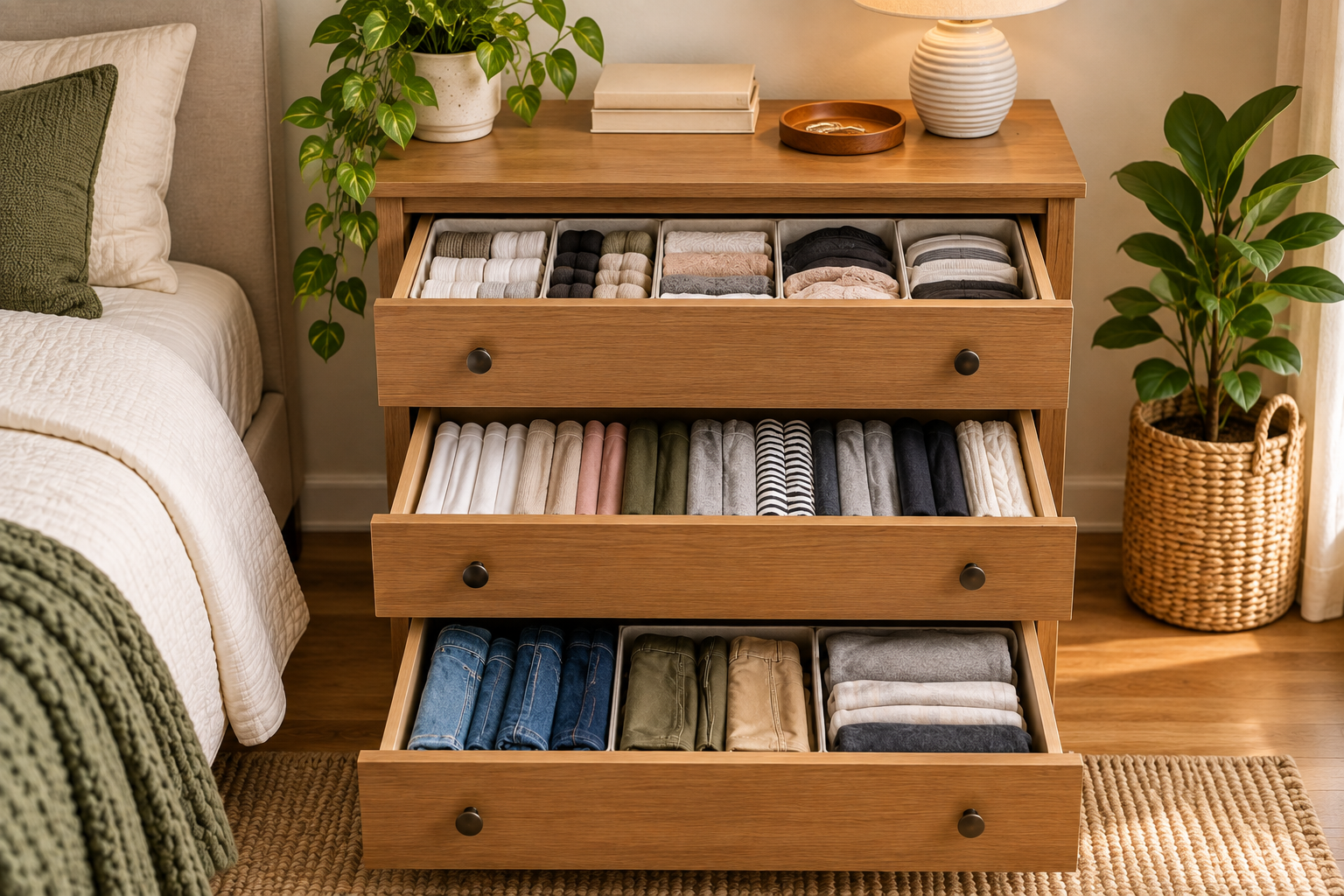
To organize a small dresser, first measure the usable drawer space and remove anything that does not need prime drawer space. Then group clothing by use, give each drawer one primary job, fold clothes so they stay visible, and use dividers only where categories tend to mix. Keep bulky and seasonal items elsewhere so the dresser does not become overcrowded again.
The Small Dresser System
Where Should Each Clothing Category Go?
Give everyday clothing the easiest-to-reach drawer space.
Group it with a clear category or use a divider if needed.
Consider storing it somewhere other than the dresser.
The category may be too large for the drawer and needs to be reduced, divided, or relocated.
1. Start by Measuring the Dresser
Before buying organizers or changing how you fold clothes, find out how much usable space you actually have.
Measure the inside of each drawer rather than relying on the dresser’s outside dimensions. Record the usable width, front-to-back depth, and height.
Measure These Three Things
- Usable width: the clear space from one inside wall to the other.
- Usable depth: the space from the front of the drawer to the back.
- Usable height: the vertical space available when the drawer is closed.
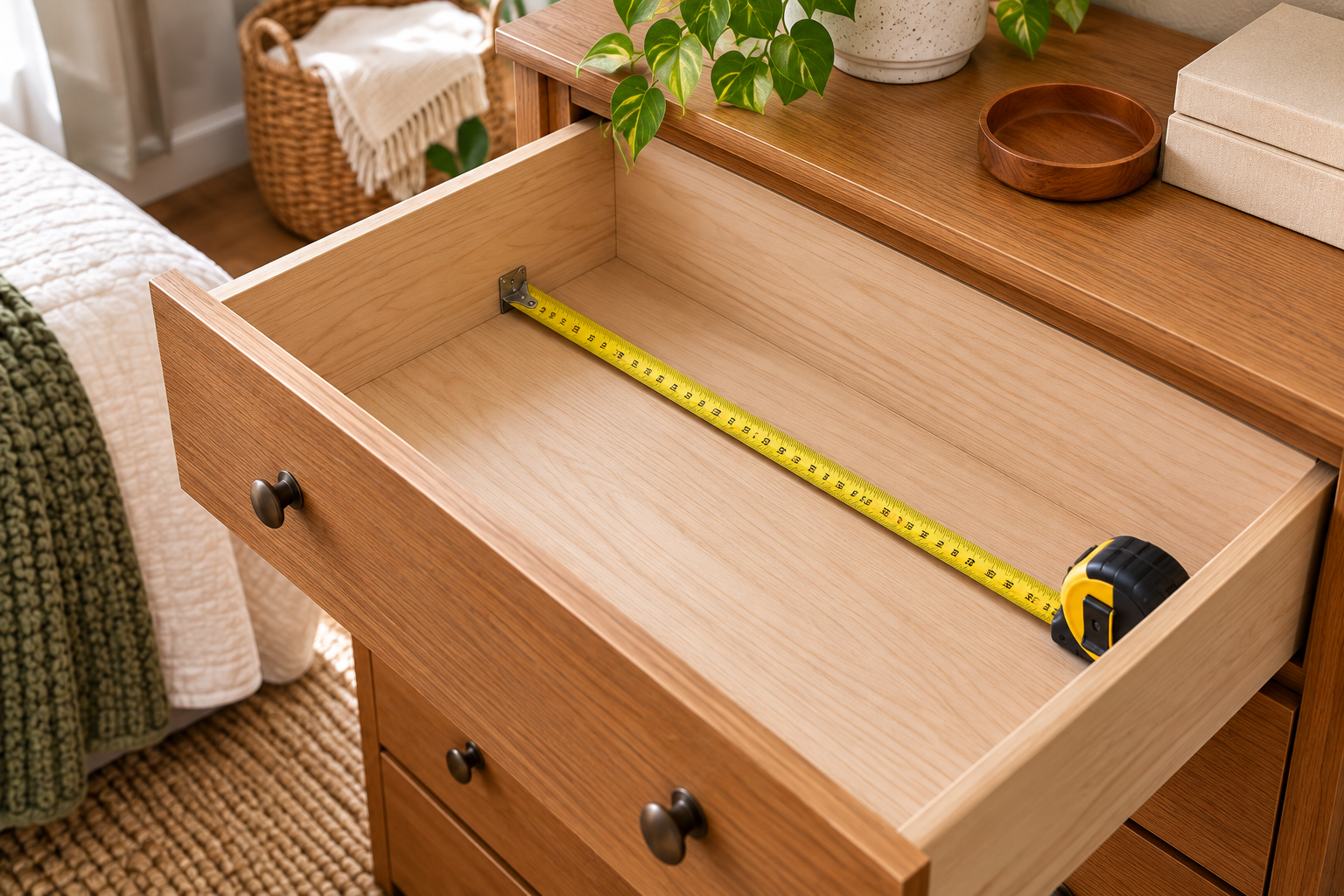
This matters because an organizer that looks compact in a product listing can still waste valuable space inside a shallow drawer. Measure first, then decide whether you need a product at all.
Before You Buy Anything
Ask whether the problem is actually a lack of organization or simply too much clothing for the available drawer volume. An organizer cannot create more drawer capacity.
2. Empty the Dresser Before Organizing It
Take everything out of the dresser. Work with the empty drawers rather than trying to rearrange clothing while it is still inside.
Separate the clothing into broad groups first. Do not create tiny categories before you understand how much space each group needs.
- Everyday tops
- Bottoms
- Sleepwear
- Underwear and smaller clothing
- Workout or lounge clothing
- Seasonal clothing
- Bulky items
- Clothing that no longer belongs in the dresser
As you sort, remove damaged, unused, uncomfortable, or rarely worn items that do not deserve limited drawer space.
3. Decide What Actually Deserves Drawer Space
A small dresser should not automatically hold every piece of clothing you own.
Its limited space is most useful for clothing that benefits from being easy to reach and easy to see.
Good Drawer Candidates
Frequently worn clothing, smaller garments, lightweight folded items, sleepwear, and categories you reach for regularly.
Why?
Small drawers work better when their limited capacity is reserved for clothing that needs frequent access.
Bulky sweaters, large seasonal items, extra bedding, and clothing you rarely use may be better stored elsewhere. Your dresser should support your daily routine rather than become the storage location for everything.
4. Give Each Drawer One Clear Job
One of the simplest ways to make a small dresser easier to use is to assign each drawer a primary category.
The exact layout depends on what you own. The goal is not to copy someone else’s drawer arrangement. The goal is to prevent unrelated categories from competing for the same space.
| Drawer | Possible Job | Best For |
|---|---|---|
| Top | Small everyday items | Underwear, socks, sleepwear, or other frequently used smaller clothing |
| Middle | Everyday tops | T-shirts, lightweight tops, and similar folded clothing |
| Bottom | Heavier clothing | Bottoms, lounge clothing, or another category that fits the available height |
You can change this arrangement. What matters is that each drawer has a clear purpose and that the category fits comfortably inside it.
5. Match the Folding Method to the Drawer
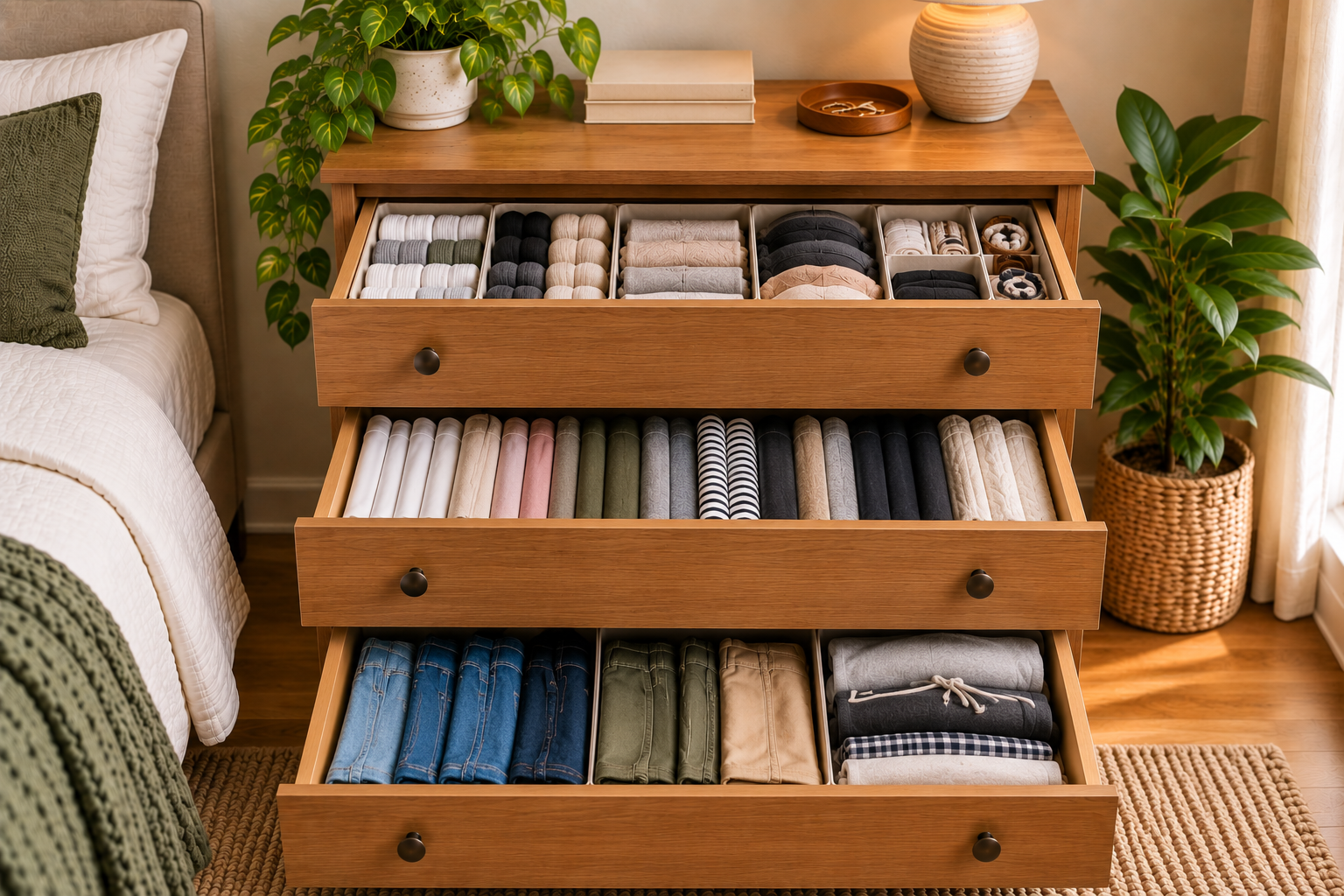
Folding is not about making every drawer look identical. It is about making the clothing easy to identify without digging through the drawer.
For many lightweight clothes, a vertical or file-style arrangement can make individual pieces easier to see. Heavier or bulkier clothing may work better in flatter stacks when the drawer height is limited.
Open the drawer and look at the clothing you use most. If you have to lift several items to find one shirt, the arrangement is hiding the category you need.
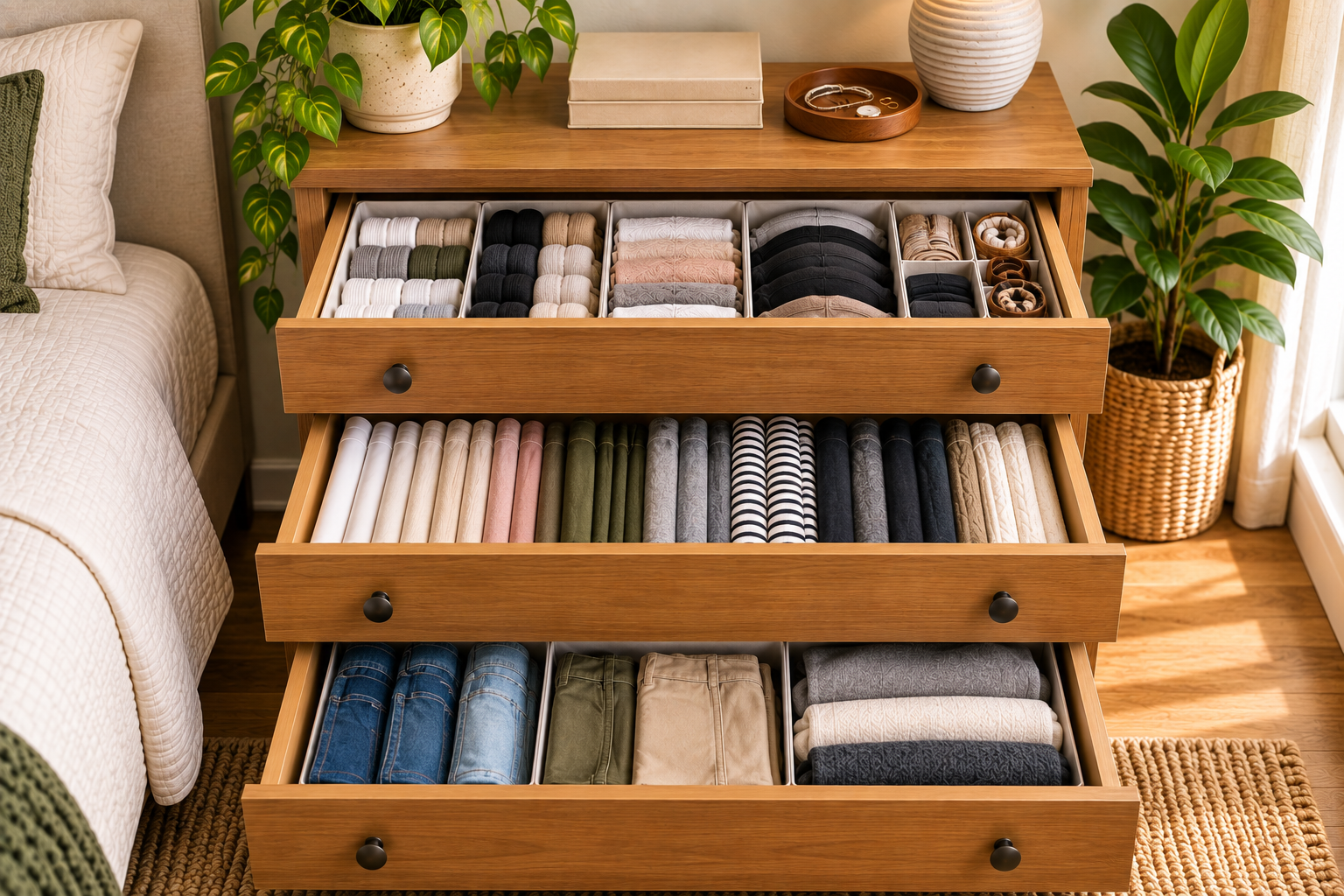
6. Use Dividers Only Where Clothes Migrate
Dividers can help, but a small dresser does not need an organizer in every drawer.
Use one when a drawer contains two or more categories that repeatedly become mixed together. If a drawer already stays organized without one, leave the space open.
Measure Before Buying Drawer Dividers
Check the usable drawer dimensions first. Look for an adjustable divider that fits the drawer rather than choosing a product based only on its advertised size.
Lifewit 5″ High 6-Pack Bamboo Drawer Dividers
A useful option when a larger dresser drawer needs separate zones for clothing categories. Measure the drawer before purchasing.
Bambüsi Adjustable Bamboo Drawer Dividers
An adjustable divider option for drawers where clothing categories tend to shift into one another. Confirm the fit against your drawer measurements first.
Affiliate disclosure: Some links on this page are affiliate links. If you purchase through them, Simply Tidy Home may earn a commission at no additional cost to you.
7. Create a Small-Dresser Layout That Fits Your Life
The best layout is based on your actual clothing habits.
If you wear T-shirts every day, give them an accessible drawer. If sleepwear takes up little space, it may fit well in the top drawer. If one category is much larger than the others, give it the drawer with enough usable space rather than forcing an equal split.
Start With Frequency
Put the clothing you reach for most often in the easiest drawer to access.
Then Follow Capacity
Give larger categories the drawer that can hold them comfortably without blocking the drawer or crushing the contents.
This makes the dresser a working system instead of a fixed display. Your drawer assignments can change when your routine or wardrobe changes.
8. Know When the Dresser Is Full
A small dresser is full when you can no longer put clothing away comfortably without compressing, hiding, or mixing categories.
Signs You Have Reached the Capacity Limit
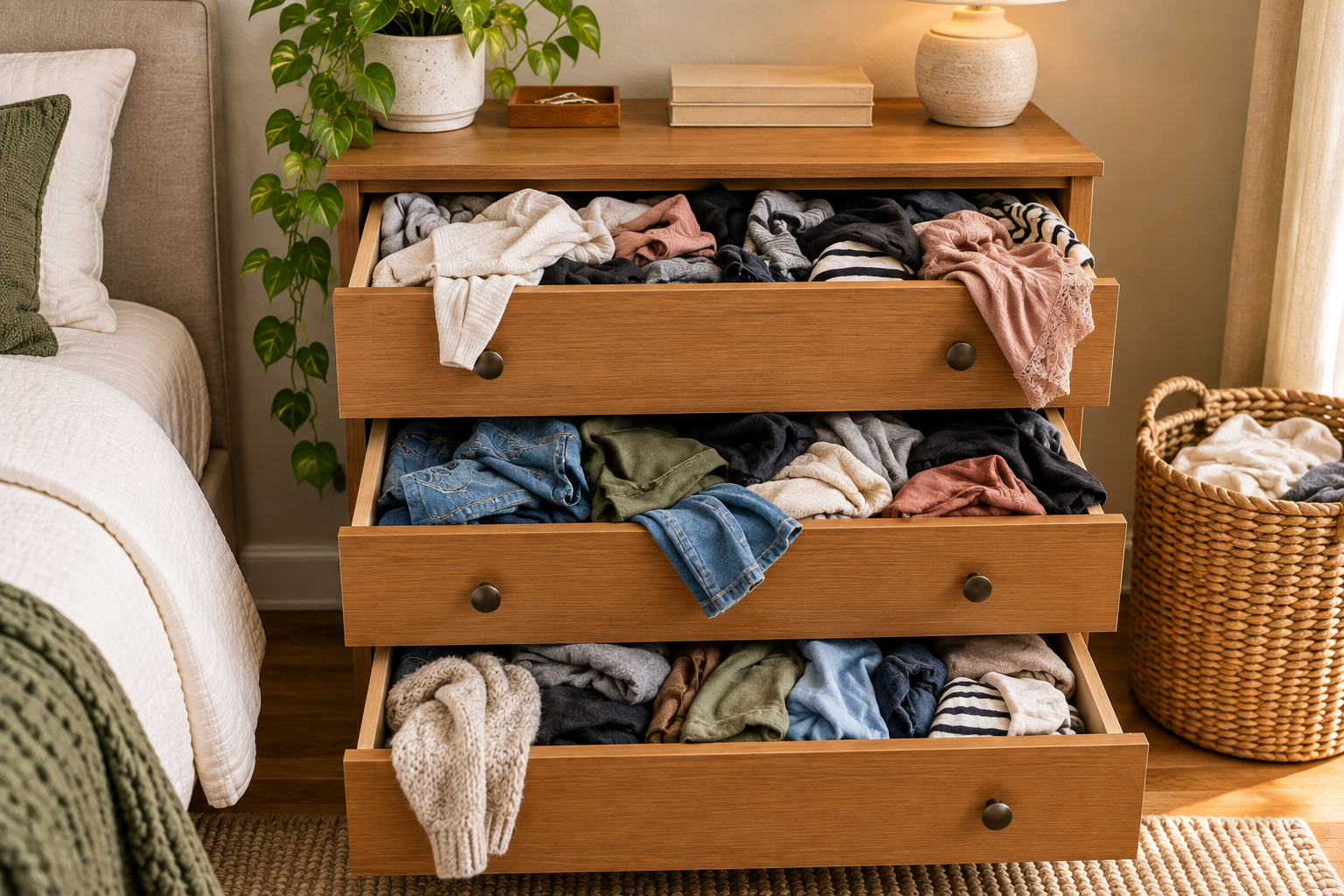
- The drawer is difficult to open or close.
- Clothing spills out when you open it.
- You regularly have to move clothes to find one item.
- Clean laundry stays outside because the drawers have no room.
- Categories repeatedly collapse into each other.
When this happens, do not immediately add another organizer. First reduce the amount in the drawer or move a category to another storage location.
9. Handle Bulky and Seasonal Clothes
Bulky clothing can consume a disproportionate amount of small-dresser capacity.
If you only need an item during part of the year, consider storing it elsewhere during the off-season. Under-bed storage, a larger closet, or another appropriate household storage area can keep the dresser available for everyday clothing.
The same principle applies to large sweaters, thick sweatshirts, and other pieces that make a small drawer difficult to use.
Keep in the Dresser
Clothing you use often and can store without overcrowding the drawer.
Move Elsewhere
Bulky, seasonal, duplicate, or rarely used clothing that consumes too much of the dresser’s limited capacity.
If you need another storage zone for clothing, see our guide to organizing under-bed storage .
10. Common Small-Dresser Mistakes
Trying to store too much
The biggest problem is often volume, not organization. If the drawer is consistently overfilled, more folding will not solve the underlying problem.
Giving every drawer too many categories
A drawer containing unrelated clothing becomes difficult to maintain. Start with one primary job.
Buying organizers before measuring
Products need to fit the actual drawer. Measure the usable interior space first.
Using organizers everywhere
Every organizer takes up some space. Use one where it solves a real problem rather than adding containers simply because they look organized.
Keeping bulky clothing in prime drawer space
Large seasonal or rarely used pieces can crowd out the clothing you actually reach for every day.
11. Create a Simple Reset Routine
A small dresser stays organized when putting clothes away is easier than creating a pile.
1. Return
Put clean clothing directly back into its assigned drawer instead of creating a temporary pile.
2. Correct
If a category keeps overflowing, adjust the category size or move some clothing elsewhere.
3. Protect
Keep each drawer below its practical capacity so the system remains easy to use.
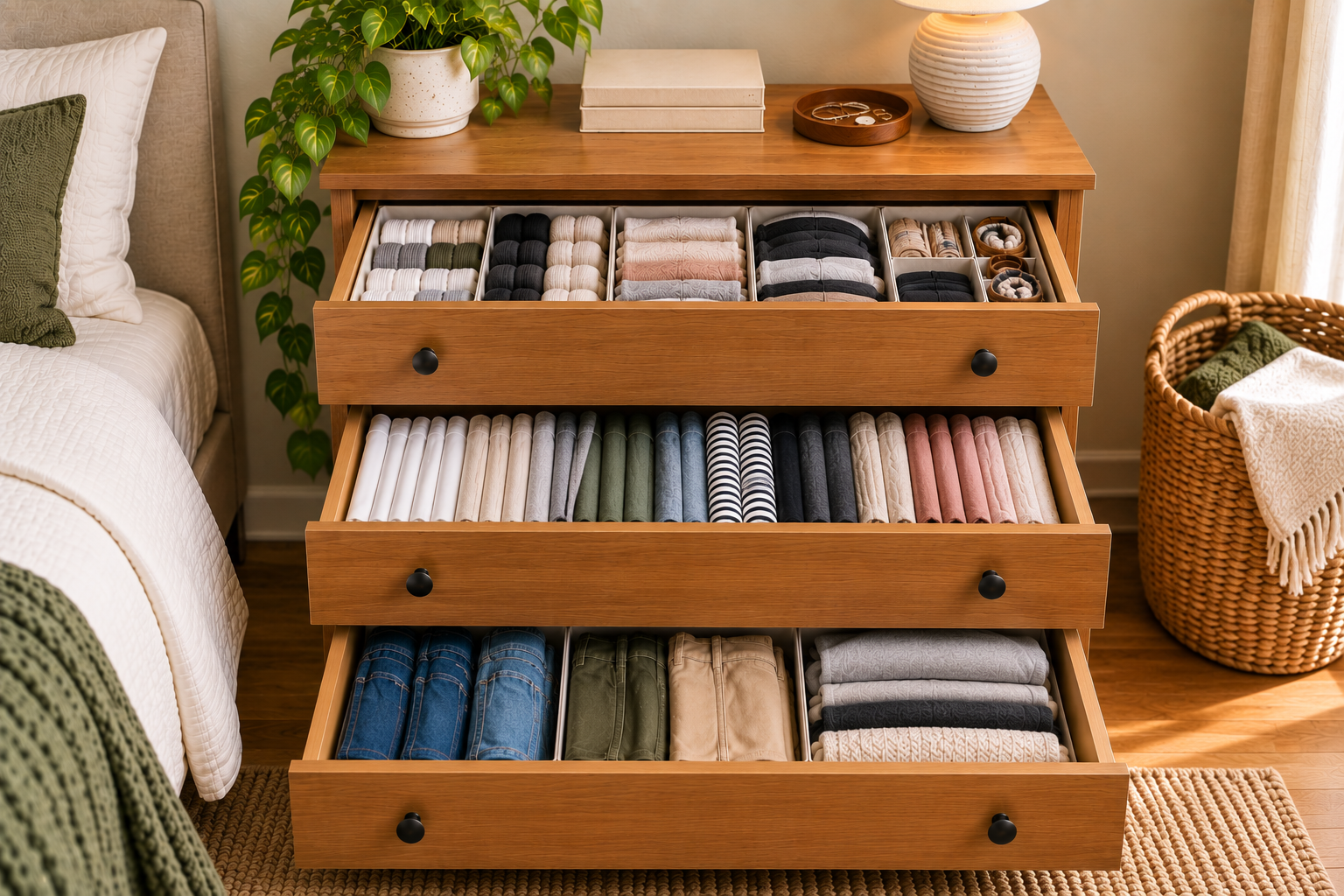
A small reset is easier than a full reorganization. When the drawer assignments remain clear, laundry can return to the same places each time.
Small Dresser Takeaways
- Measure the usable drawer space before choosing organizers.
- Remove clothing that does not need limited dresser space.
- Give each drawer one primary job.
- Choose folding methods that keep frequently used clothing visible.
- Use dividers only where categories repeatedly migrate.
- Move bulky and seasonal clothing elsewhere when it overwhelms the dresser.
- Treat overflow as a capacity problem, not just an organization problem.
- Use a simple reset routine after laundry.
Frequently Asked Questions
How do you organize a very small dresser?
Start by measuring the drawers and removing anything that does not need drawer space. Group the remaining clothing by category, assign each drawer a primary job, and use folding methods that keep the contents visible. Keep bulky and seasonal items elsewhere when possible.
How many clothes should go in a small dresser drawer?
There is no useful universal number because clothing thickness, drawer dimensions, and folding methods vary. The practical limit is when the drawer becomes difficult to close, clothing becomes hidden, or items no longer stay in their assigned category.
Should you use drawer dividers in a small dresser?
Use them selectively. They are most useful when two or more small clothing categories repeatedly mix together. Measure the drawer first and avoid adding dividers to drawers that already stay organized.
Where should bulky clothes go if the dresser is small?
Consider another suitable storage zone, such as under-bed storage or a larger closet. A small dresser is usually more useful when its limited drawer capacity is reserved for frequently used clothing.
What should go in the top dresser drawer?
The top drawer is often useful for smaller or frequently used clothing because it is easy to access. Underwear, socks, sleepwear, or another small everyday category can work well depending on your routine and drawer dimensions.
Related Guides
A Small Dresser Does Not Need More Stuff. It Needs a Clear System.
Start with the space you actually have. Measure it, reduce the volume, assign each drawer a job, and keep the categories simple.
When every item has a logical place and the drawers are not pushed beyond their capacity, a small dresser can stay organized without constant rearranging.