
SMALL ENTRYWAY ORGANIZATION
A small entryway without a closet does not need more storage by default. It needs a clear system for the things that actually arrive and leave through the door. Start by deciding what belongs near the entrance, measure the space while it is operating, then create defined zones for daily outerwear, active shoes, bags, and small essentials.
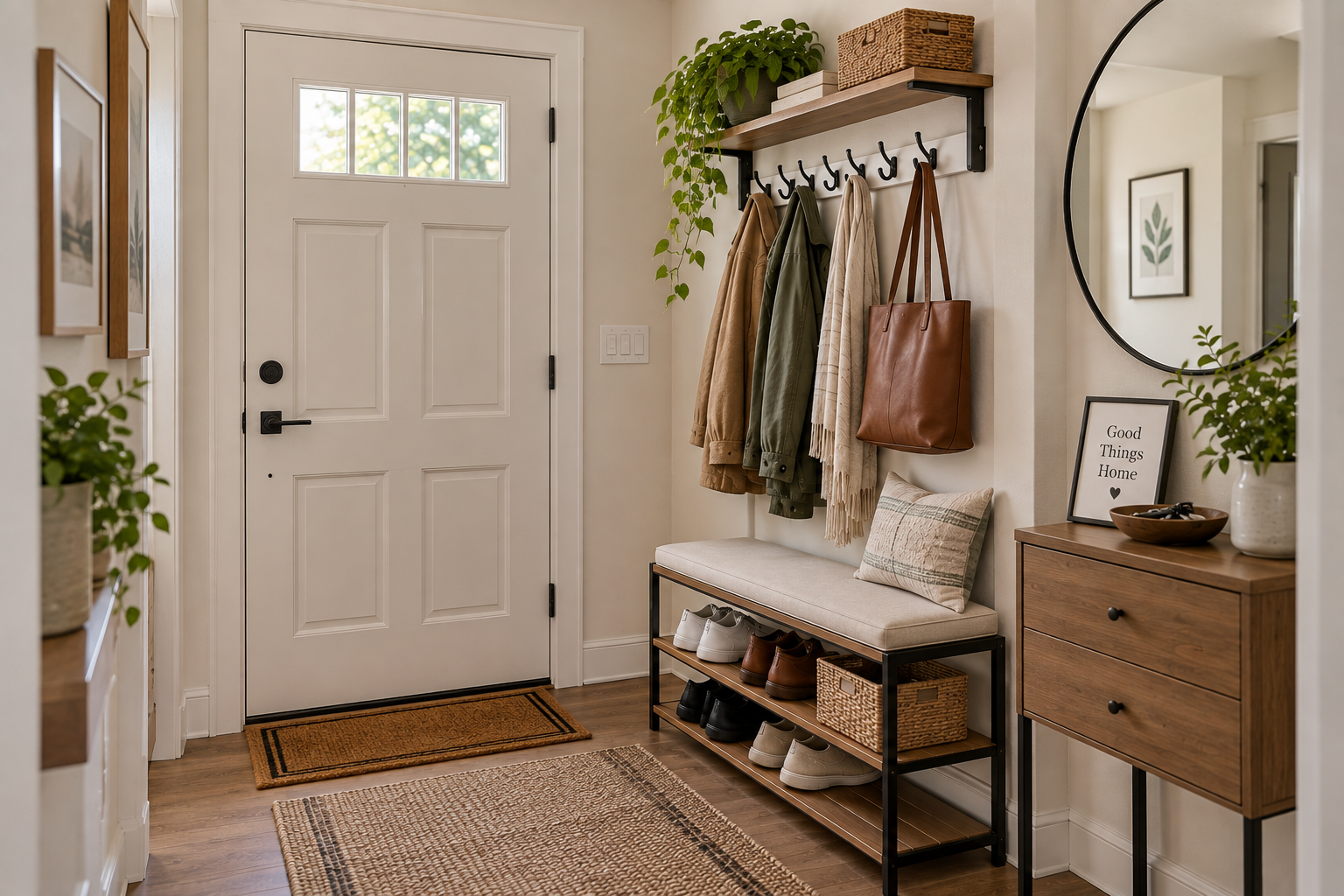
Start by deciding what genuinely needs to stay near the door. Measure the space while accounting for the open door and walking path, then create defined zones for daily outerwear, active shoes, bags and small essentials. Move seasonal and rarely used items elsewhere, add storage only where a specific problem remains, and test the setup during your normal arrival and departure routine.
Why Does a Small Entryway Without a Closet Get Cluttered?
The problem is usually not that the entryway has no closet. It is that too many different jobs are competing for the same small area.
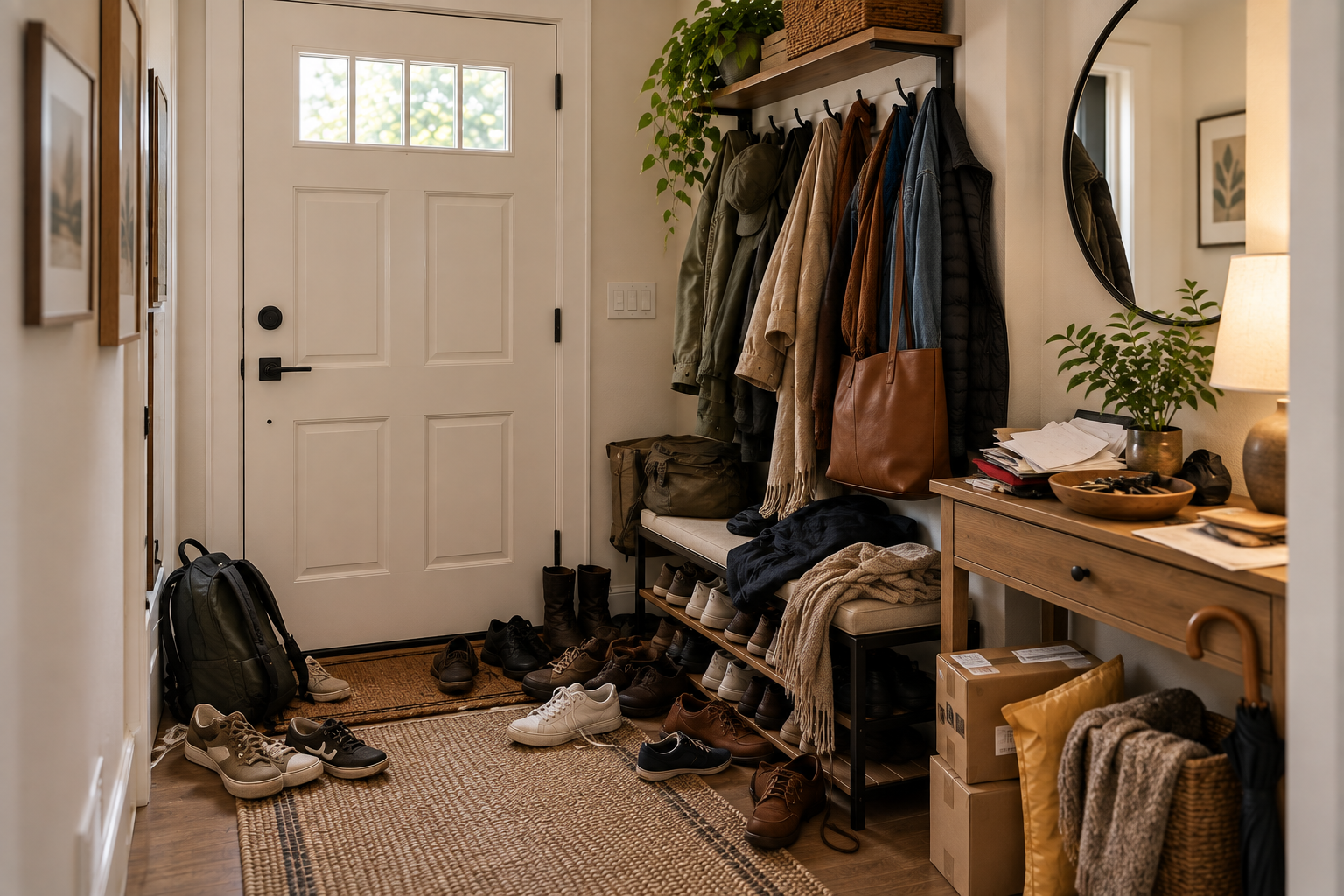
Coats, shoes, bags, keys, mail, packages, returns, umbrellas, and seasonal items can all land near the door. Without defined homes, the floor and nearest surface become the default storage system.
A better approach is to treat the entryway as a transition zone. It needs enough storage to support the arrival and departure routine, but it also needs enough open space for people to move through it.
1. Audit What Actually Lands at the Door
Before adding storage, watch what happens when someone comes home. The goal is to identify the real inventory and the reason each item ends up there.
- Daily: current shoes, current outerwear, daily bags, keys, wallet, and essential items that need to leave with you.
- Conditional: umbrellas, pet-walking supplies, children’s daily items, and frequently used accessories.
- Temporary: returns, packages, and things that are waiting to leave the house.
- Move elsewhere: seasonal coats, rarely worn shoes, occasional bags, and unrelated household storage.
This first edit matters because the entryway should not become a permanent warehouse simply because there is no closet.
2. Define What Belongs in the Entryway
Once you know what arrives at the door, divide it into two groups: items that genuinely need to live there and items that only happen to be there.
The permanent inventory should be small enough that the system still works when everything is being used. Seasonal and low-frequency items can have homes elsewhere.
3. Measure the Operating Space
Do not measure only the empty wall or the empty floor. Measure the entryway while thinking about how it operates.
Record:
- wall width available for storage
- floor depth available after accounting for movement
- door swing and the position of the open door
- walking path through the entrance
- baseboards, outlets, and switches
- existing furniture or architectural obstructions
- usable vertical space
- the depth of any storage you are considering
This creates an important distinction: empty space is not the same as operating space. A storage unit that technically fits on paper may still make the entrance difficult to use.
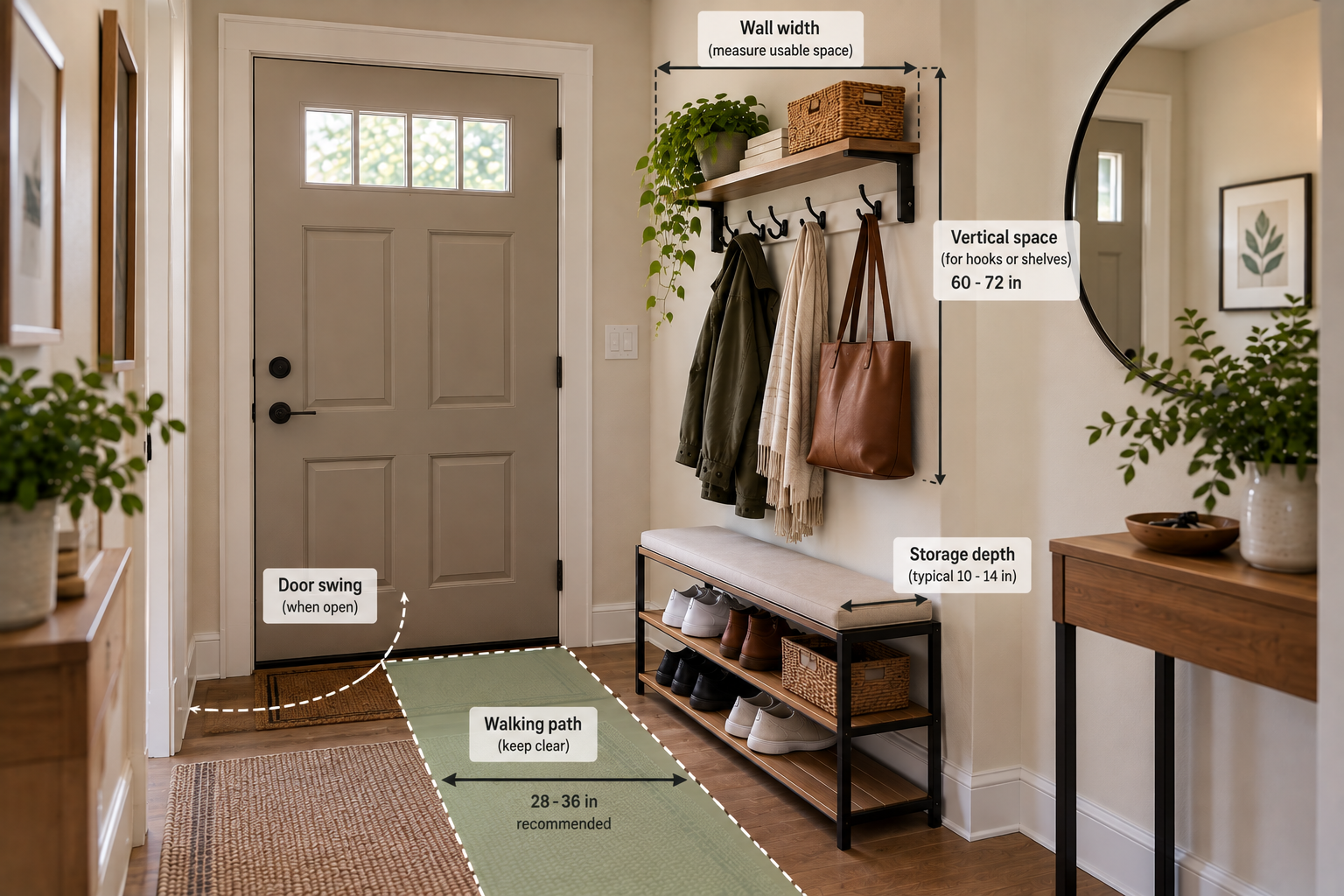
Measure the space, then account for the door, the walking path, and the storage depth when loaded. The goal is not to fill every available inch. The goal is to create a system that remains usable.
4. Protect Circulation Before Adding Storage
In a small entryway, circulation is part of the storage plan.
If a rack, bench, basket, or cabinet makes people step around it, squeeze past it, or move it whenever the door opens, the system is taking too much of the available space.
Think in terms of two capacities:
| Capacity | What it means |
|---|---|
| Storage capacity | How much clothing, footwear, bags, and small items can be contained. |
| Circulation capacity | How easily people can enter, leave, open the door, put on shoes, and move through the space. |
A storage solution is only useful if it preserves both.
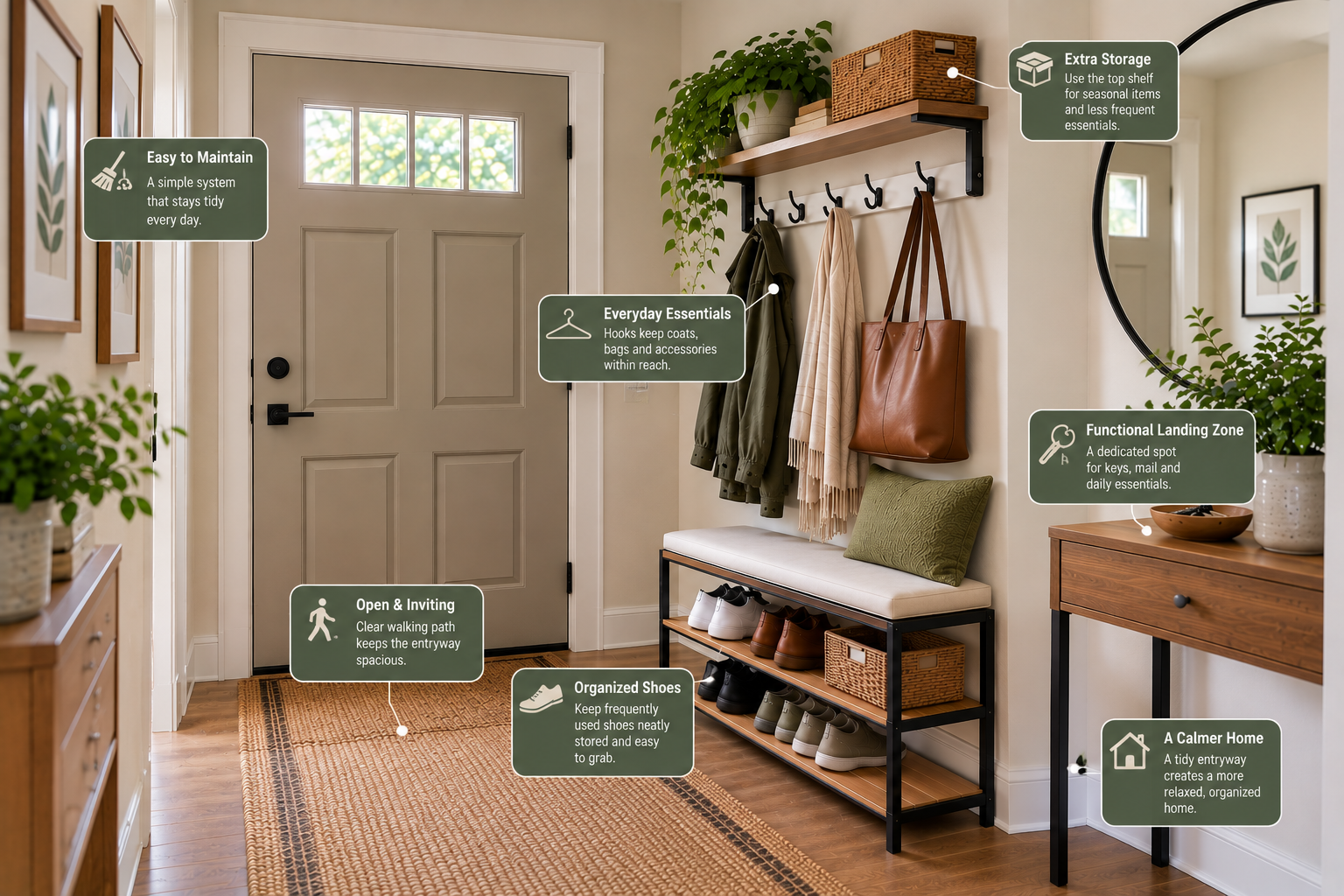
5. Build Four Functional Zones
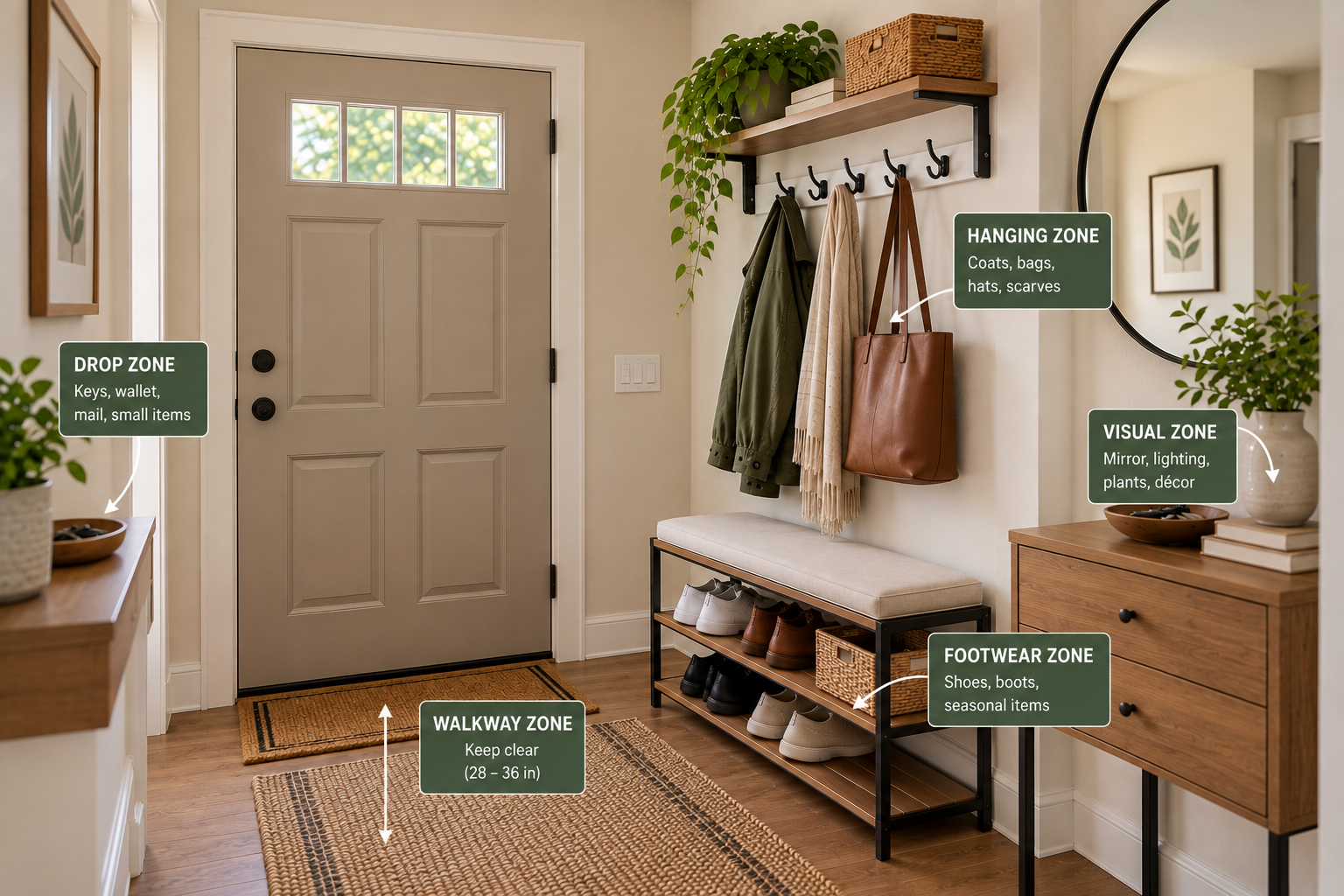
You do not need four separate pieces of furniture. The four zones are functional jobs. One compact solution may serve more than one zone.
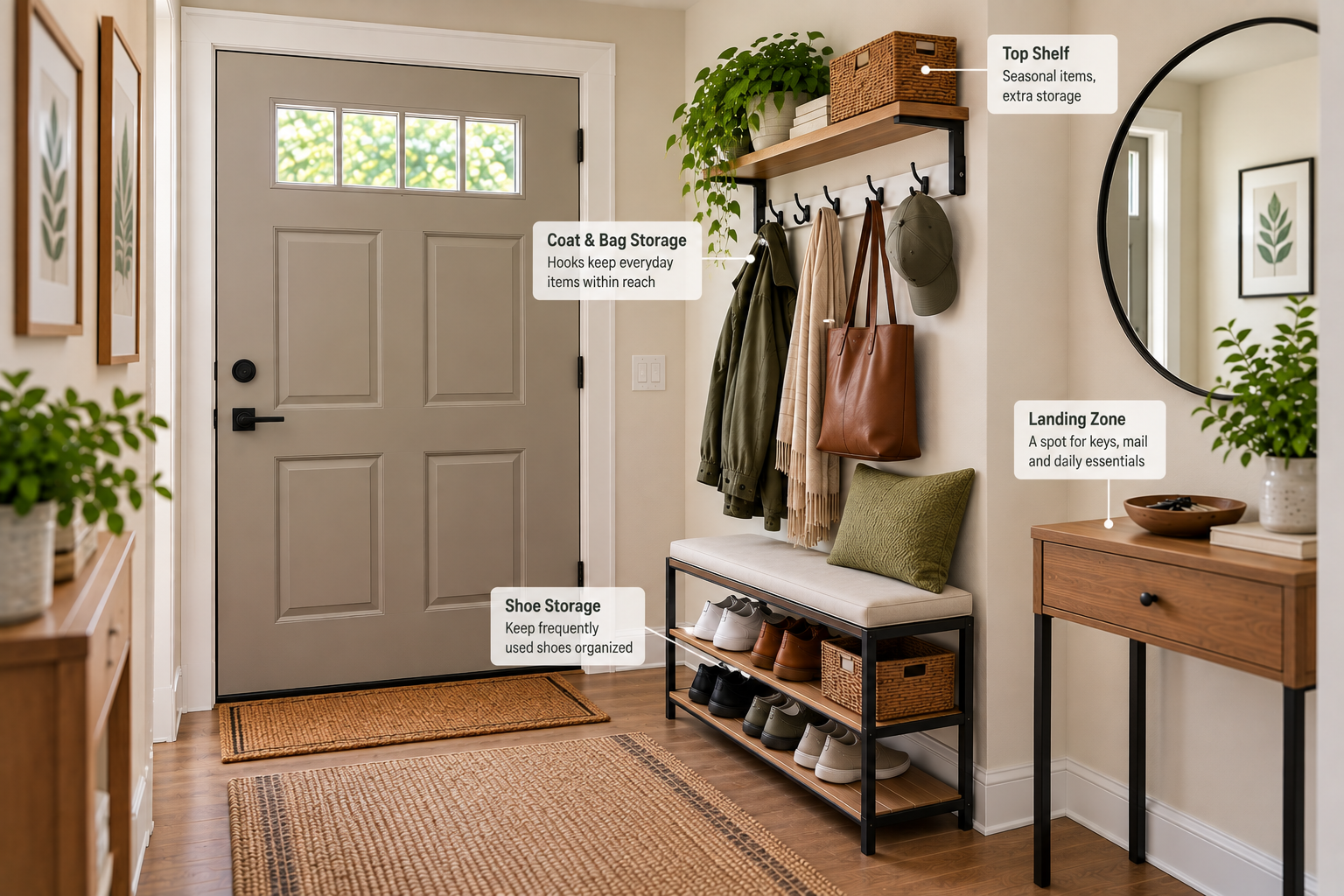
Coat + Bag Zone
Give current outerwear and daily bags a defined vertical home. Keep the active inventory limited to what the household actually uses.
Active Shoes Zone
Keep only the footwear that genuinely needs to stay near the entrance. Seasonal and rarely used shoes can live elsewhere.
Landing Zone
Create a small, deliberate home for keys, wallet, mail, or other daily essentials instead of allowing the nearest surface to become a catch-all.
Overflow Zone
Temporary items such as returns and outgoing packages need a controlled place. The zone should be easy to clear rather than becoming permanent storage.
6. Where Should Coats Go Without an Entryway Closet?
Start with the coats that are being worn now. Give them a vertical home in the location that interferes least with the door and walking path.
Seasonal coats should not automatically join the daily entryway inventory. If they are not being worn, storing them elsewhere can free valuable entryway capacity.
If a wall-mounted solution fits your measured space and your wall conditions allow it, a compact hook-based storage option can solve the coat-and-bag problem without requiring a full closet.
View the entryway storage option
7. How Do You Organize Shoes in a Small Entryway?
Shoes are often the first category to consume floor space. The easiest way to reduce that pressure is to separate active footwear from everything else.
Ask which shoes are actually being used during the current season. Those are the candidates for the entryway. The rest can be stored somewhere else.
If shoes remain the specific bottleneck after editing, a compact shoe-storage solution can be considered. Measure the available width, height, and depth before choosing one.
8. What If There Is Little or No Floor Space?
When floor space is already doing important circulation work, look at the vertical surfaces before adding another floor-standing item.
Depending on the wall, door, and rental restrictions, vertical storage may be able to handle coats, bags, or small essentials while leaving more floor area open.
The key is not simply to move storage upward. The installation still needs to respect door movement, usable reach, wall conditions, and the way the household actually enters and leaves.
9. Renter-Friendly Entryway Organization
The first decision is whether drilling or permanent mounting is allowed.
| Constraint | Possible direction |
|---|---|
| Mounting is allowed | Consider suitable wall-mounted storage after measuring the wall and surrounding operating space. |
| Mounting is not allowed | Use freestanding, furniture-based, or other removable solutions that fit the measured footprint. |
Do not choose an adhesive or removable solution simply because it is described as renter-friendly. Check the actual installation requirements and the conditions of the surface before relying on it.
10. How Do You Organize a Family Entryway?
A family entryway usually needs clearer boundaries, not necessarily more storage.
Where space allows, give each person a defined daily location for the items they repeatedly use. This can reduce the tendency for coats, bags, and shoes to migrate into one shared pile.
Keep the shared area reserved for things that genuinely need to be shared.
11. What About Wet Shoes, Boots, and Umbrellas?
Storage needs to work with the condition of the item, not just its dimensions.
Wet shoes and boots may need a drying area before they are returned to their normal storage location. Damp umbrellas and outerwear also need a place where they can dry without creating a new clutter problem.
This is one reason a beautiful storage system can fail in real life: it may contain dry items well but have no practical answer for wet ones.
12. Match Storage to the Actual Problem
Once the entryway has been edited and measured, identify what problem remains. Only then choose a storage type.
If several functions still need to fit into one measured footprint, a compact combined storage solution may make sense. It should be evaluated against the same space and circulation constraints rather than chosen simply because it contains more storage.
View the combined storage option
13. Before Buying an Entryway Organizer
- What exact problem am I trying to solve?
- Does this item genuinely need to live near the door?
- Have I measured the operating space?
- Will it interfere with the door?
- Will it narrow the walking path?
- Could editing the inventory solve the problem first?
- Does it still work when fully loaded?
- Can everyone who needs it use it easily?
- Will it be simple to reset?
14. Test the System in Real Life
Do not judge the organization system only when the entryway is freshly arranged. Test it during the routines that created the clutter in the first place.
Arrival Test
Come through the door normally. Put away your coat, bag, shoes, and small essentials without consciously thinking about where they go.
Departure Test
Leave the house normally. Check whether the things you need are easy to retrieve without creating a new pile.
Door Test
Open and close the door through its normal movement. Make sure storage does not become an obstruction.
Circulation Test
Walk through the entryway while carrying normal bags or household items. The system should support movement rather than make it harder.
15. Failure Signals: How to Know the System Needs Changing
- Shoes repeatedly spread beyond their defined area.
- Coats start appearing on furniture in nearby rooms.
- Keys and mail migrate to another surface.
- Returns and packages remain in the entryway for days.
- The walking path becomes narrower when the system is fully used.
- You have to reorganize the area repeatedly just to make it usable.
These signals can point to too much inventory, the wrong storage type, poor placement, or a routine that does not match the system.
16. Create a Simple Reset Routine
A good entryway system should be easy to restore.
Return coats, bags, shoes, and small essentials to their defined homes.
Clear temporary clutter such as returns, packages, and items waiting to leave.
Move low-frequency coats, shoes, and accessories out of the active entryway inventory.
Frequently Asked Questions
How do I organize a small entryway without a closet?
Start by identifying what genuinely needs to stay near the door. Measure the operating space, protect the walking path, then create defined zones for daily outerwear, active shoes, bags, and small essentials. Move seasonal and rarely used items elsewhere and add storage only where a specific problem remains.
What should I keep in a small entryway?
Keep the items that support your normal arrival and departure routine, such as current outerwear, active shoes, daily bags, keys, wallet, and a small number of conditional items. Seasonal, rarely used, unrelated, and temporary items should generally have another home.
Where do coats go if there is no entryway closet?
Give current coats a defined vertical home where they interfere least with the door and walking path. A wall-mounted hook-based solution can work when the wall and installation conditions allow it. Seasonal coats can be stored elsewhere.
How do I organize shoes in a small entryway?
Separate active footwear from seasonal and rarely used shoes. Keep only the footwear that genuinely needs to be near the door, then choose storage that fits the measured width, height, and depth without reducing useful circulation.
How do I organize a small entryway with no floor space?
Protect the floor for circulation first. Where wall or door conditions allow it, consider vertical storage for coats, bags, and small essentials. The solution still needs to respect door movement, reach, installation conditions, and the household routine.
How do I organize a small apartment entryway?
Treat the entryway as a transition zone rather than a storage room. Keep the daily inventory small, define a few functional zones, measure the operating space, and choose compact storage only for problems that remain after editing.
How do I organize a narrow entryway?
Measure the walking path and door movement before adding storage. Favor solutions that preserve circulation and use available vertical or otherwise underused space when appropriate.
How do I create an entryway drop zone?
Choose a small, deliberate location for the items that repeatedly arrive with you, such as keys, wallet, mail, or outgoing items. Keep the zone limited so it does not become a general-purpose surface.
How do I organize a small entryway without drilling?
Start by determining whether a freestanding, furniture-based, or removable solution can perform the required function within the measured footprint. Do not assume that every adhesive or removable product is suitable for every wall or load.
How much storage should a small entryway have?
Enough to support the household’s actual daily arrival and departure inventory without reducing usable circulation. The right amount depends on the number of people, daily items, space, and storage constraints rather than a fixed capacity target.
Related Guides
The Goal Is a Working Entryway, Not a Full Entryway
A small entryway without a closet does not need to imitate a large mudroom. It needs to support the specific things your household does at the door.
Start with the inventory. Define what belongs. Measure the operating space. Protect circulation. Build the four functional zones. Then choose storage only for the problem that remains.
When the system works during arrival, departure, door movement, and everyday use, the entryway has enough organization. It does not need to hold everything.