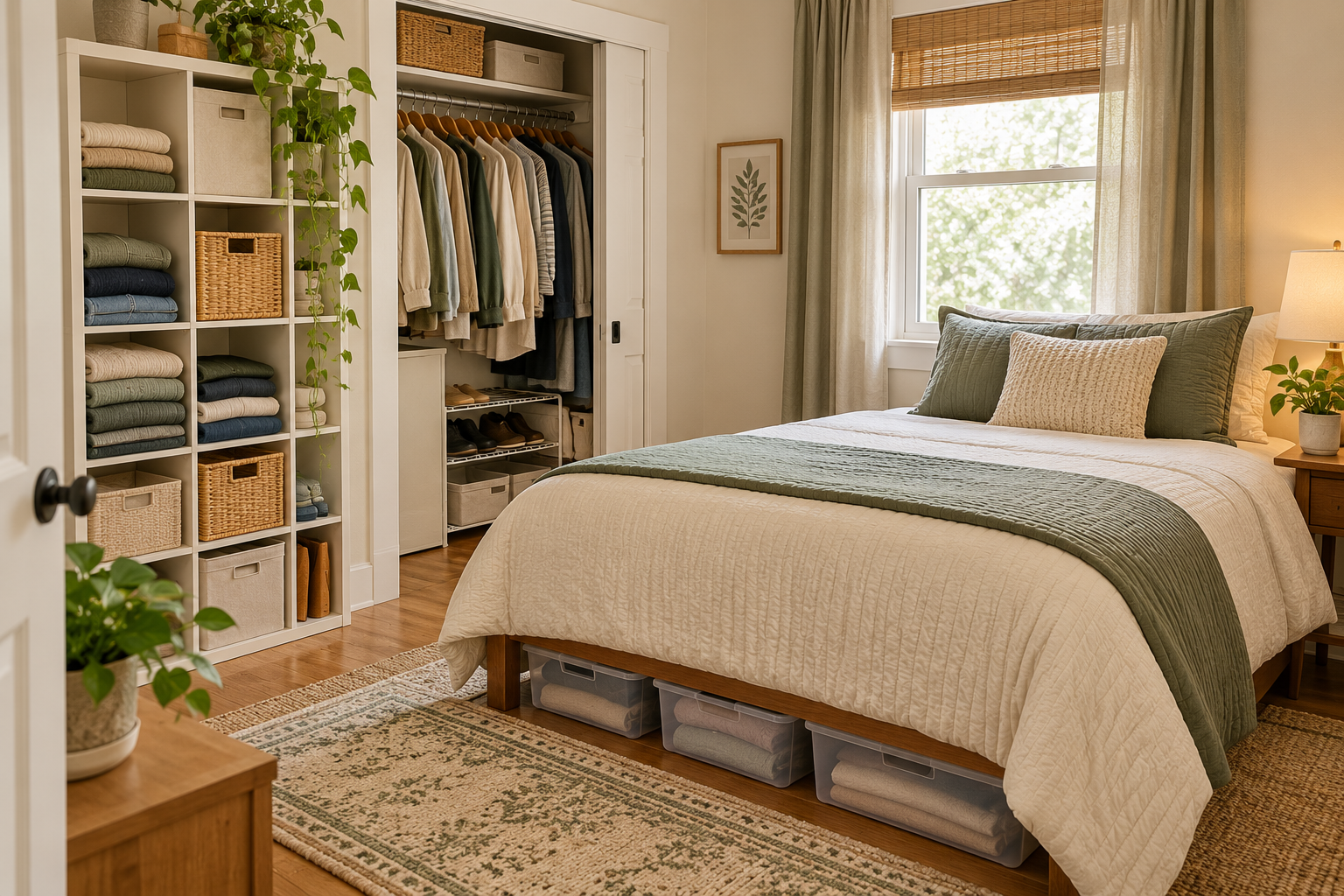
A dresser is useful, but it is not the only way to store clothes. In a small bedroom, you can distribute the jobs a dresser normally handles across existing storage, compact vertical solutions, and carefully chosen secondary storage.
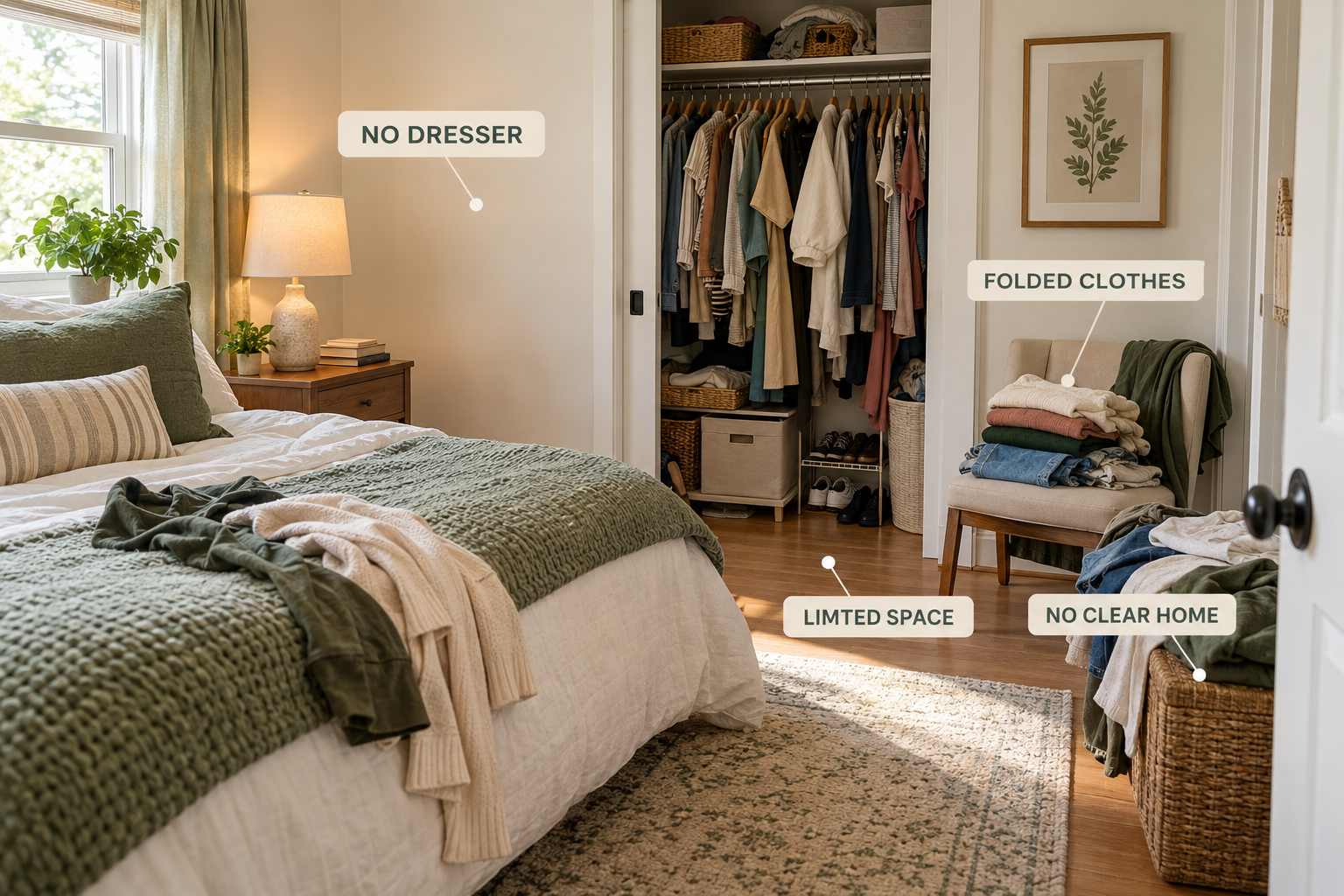
To organize a small bedroom without a dresser, first decide what the dresser was supposed to store. Give everyday folded clothes an easy-to-reach home, keep small clothing items together, move seasonal items into lower-frequency storage, and use vertical or existing space before adding another large piece of furniture.
The goal is not to find a single replacement for the dresser. It is to give each storage job an appropriate place.
Why a Dresser May Not Work in a Small Bedroom
A dresser takes up a meaningful amount of floor space. In a small bedroom, that space may already be needed for walking, opening the closet, reaching the bed, or using another essential piece of furniture.
The problem is often not that you have no storage. The problem is that one large piece of furniture is being asked to perform several different storage jobs.
Once you separate the jobs the dresser was handling, you can decide where each category belongs without automatically replacing the dresser with another large piece of furniture.
Start With the Clothes, Not the Furniture
Before buying anything, look at what you actually need to store.
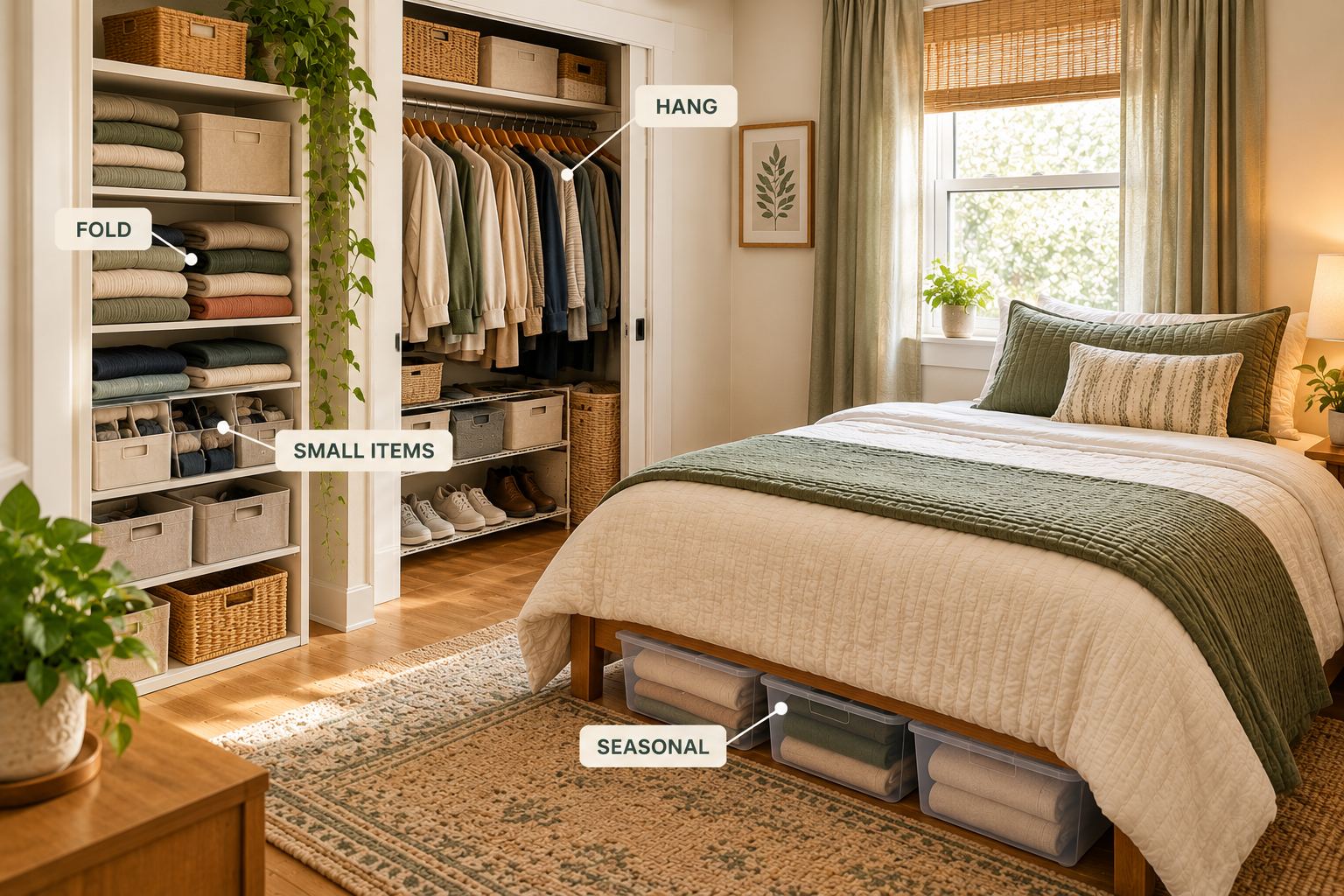
Separate clothing by how often you use it and how it needs to be stored. This prevents you from buying a storage unit simply because it looks useful.
- Everyday clothing: items you reach for frequently.
- Small clothing: socks, underwear, and other small pieces.
- Seasonal clothing: items that are needed less often.
- Accessories: smaller items that need their own contained zone.
- Occasional items: clothing that does not need prime storage space.
Once these groups are clear, you can give each one a storage location.
Replace the Jobs of the Dresser
Instead of asking, “What can replace my dresser?” ask, “What jobs was my dresser doing?”
Replace the Storage Jobs
Give Each Category a Job
Keep it in an accessible shelf, cubby, drawer alternative, or other compact storage location that is easy to reach every day.
Give small items a contained zone so they do not become scattered across larger storage spaces.
Move lower-frequency clothing away from the prime storage locations used for everyday items.
Keep smaller accessories together instead of allowing them to occupy valuable folded-clothing storage.
Use Existing Bedroom Space Before Adding Furniture
A small bedroom often has more usable storage space than it first appears to have. Look at the storage you already own before adding another piece of furniture.
Check the closet, existing shelves, under-bed area, wall-adjacent vertical space, and other storage that is already part of the room.
Check the Closet
Look for unused vertical space and determine whether some folded clothing can be moved into a suitable shelf or contained zone.
Look Up
Vertical storage can use wall height without requiring the same floor footprint as a wide dresser.
Look Under the Bed
Reserve under-bed storage for items that do not need to be accessed constantly.
Reuse Existing Storage
Before buying furniture, see whether an existing shelf or suitable storage unit can take over one of the dresser’s jobs.
When Under-Bed Storage Makes Sense
Under-bed storage is useful because it uses space that is already occupied by the bed. That can make it valuable in a bedroom where floor space is limited.
But it is not automatically the best place for everyday clothing.
- Seasonal clothing
- Occasional clothing
- Spare bedding
- Items used less frequently
These items do not need to occupy your easiest-to-reach storage every day.
If you use an under-bed storage product, choose one that fits the available clearance and can be accessed without creating a new daily frustration.
When Vertical Storage Makes More Sense
If floor space is the main constraint, vertical storage can be more useful than another wide piece of furniture.
Compact cube storage can create contained zones for folded clothing when you have an appropriate shelf or compatible storage structure.
The important question is not simply whether a storage unit holds clothing. It is whether the location keeps frequently used clothing visible, accessible, and easy to put away.
Amazon Basics Collapsible Fabric Storage Cubes
A compact cube-storage option for creating contained folded-clothing zones without adding a traditional dresser.
Best use: folded clothing and secondary clothing categories where compatible shelving is available.
Create a Clothing Zone Instead of a Dresser Zone
A dresser normally creates one obvious clothing-storage location. Without one, you need to create that sense of order another way.
Keep related storage together where possible. Everyday clothing should not be scattered between several inconvenient locations simply because there is no dresser.
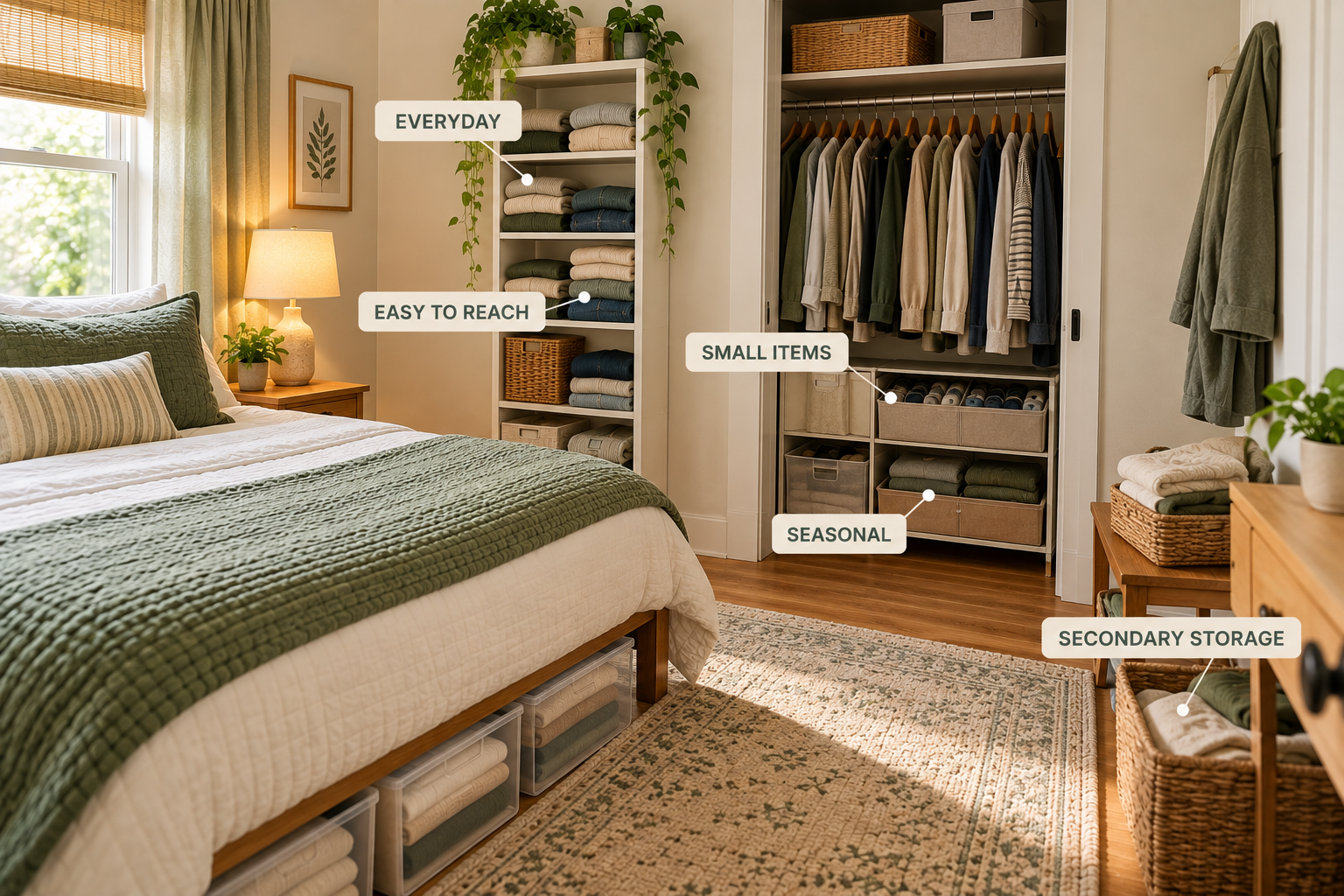
Place Clothing by Frequency
Give them the easiest access.
Keep them together in a contained zone.
Move them into secondary storage.
Keep them out of prime everyday storage.
Keep Everyday Clothes Easy to Reach
One of the easiest ways for a dresser-free bedroom to become frustrating is to put frequently used clothing in storage that is technically available but inconvenient.
If you wear something several times a week, it should not require moving several other categories out of the way first.
- Keep frequently used clothing at comfortable reach.
- Keep small items contained together.
- Put seasonal clothing farther away from the daily routine.
- Avoid creating several scattered clothing stations.
- Leave enough space for clothing to be returned easily.
What Not to Do
Removing a dresser does not automatically make a small bedroom more functional. The replacement system can create new problems if it is chosen without considering access and floor space.
- Replacing one large piece with another large piece: this may solve storage while keeping the same floor-space problem.
- Putting everyday clothing under the bed: convenient storage on paper can become inconvenient in daily use.
- Using too many small containers: more containers do not necessarily create a better system.
- Scattering clothing across the room: separate storage zones should still feel like one system.
- Buying before measuring: storage must fit the available space and leave enough room to use it.
How to Keep a Dresser-Free Bedroom Organized
A dresser-free system works best when the reset is simple.
Every time clothing comes back into the room, it should have an obvious destination. If returning an item requires several decisions, the system is probably too complicated.
The Simple Reset
If one category repeatedly ends up on a chair, bed, or floor, treat that as information. Its current storage location may not be working for the way you actually use it.
Before You Buy Storage
Measure Before You Buy
- Measure the space where the storage will actually go.
- Check the available height, width, and depth.
- Consider how the storage will be accessed.
- Decide which clothing category it will hold.
- Check whether the location works for the frequency of use.
- Only then choose the storage format.
For under-bed storage, check the available clearance and make sure the container can be pulled out far enough to use comfortably.
For vertical storage, check the available floor footprint and the surrounding circulation space. A compact unit is only useful if the room remains easy to move through.
Under-Bed Storage Option
A secondary storage option to consider for clothing that does not need to be accessed every day.
Best use: seasonal or lower-frequency clothing when the available under-bed space is suitable.
As an Amazon Associate I earn from qualifying purchases. Some links below are paid links, which means Simply Tidy Home may earn a commission if you purchase through them, at no additional cost to you.
Key Takeaways
- You do not need to replace a dresser with another large piece of furniture.
- Start by identifying the storage jobs your dresser was handling.
- Keep everyday clothing in the easiest-to-reach storage.
- Use vertical storage when floor space is the main constraint.
- Use under-bed storage primarily for lower-frequency items when it is practical to access.
- Keep small clothing categories contained.
- Measure before buying any storage solution.
- A good system should be easy to reset after normal daily use.
Related Simply Tidy Home Guides
Frequently Asked Questions
What can I use instead of a dresser in a small bedroom?
You can distribute the dresser’s jobs across existing closet storage, compact vertical shelving or cubes, contained small-item storage, and secondary storage such as under-bed space. The right combination depends on what you need to store and how often you use it.
How do I store folded clothes without a dresser?
Use an accessible shelf, cubby, closet shelf, or other compact storage location that can hold folded clothing without making everyday items difficult to reach. Keep the most frequently used clothing in the easiest location.
Is under-bed storage good for clothes?
It can be useful for seasonal or lower-frequency clothing. Everyday clothing may be better kept in storage that is easier to reach without repeatedly bending, pulling, or moving other items.
How do I organize clothes without a dresser?
Start by dividing clothing into everyday, small items, seasonal, accessories, and occasional categories. Then assign each category to the storage location that best matches its frequency of use and the space available.
Where should everyday clothes go?
Everyday clothes should generally go in the most accessible storage available. The goal is to make both taking clothes out and putting them away easy enough to support your normal routine.
How do I keep a small bedroom from getting cluttered without a dresser?
Give every clothing category a defined home, avoid scattering clothing across multiple unrelated locations, keep everyday items accessible, and make the reset simple enough to repeat after normal use.
A small bedroom does not necessarily need a dresser. It needs a storage system that fits the room, the clothing you actually own, and the way you use that clothing.
Start with the jobs. Assign each category a home. Keep everyday items easy to reach. Then choose storage only where the existing space cannot do the job.