
SMALL-SPACE HOME OFFICE
Office supplies are easier to manage in a small space when you stop treating every item the same. Give daily-use supplies easy access, move occasional items farther away, and keep back-stock out of prime workspace.
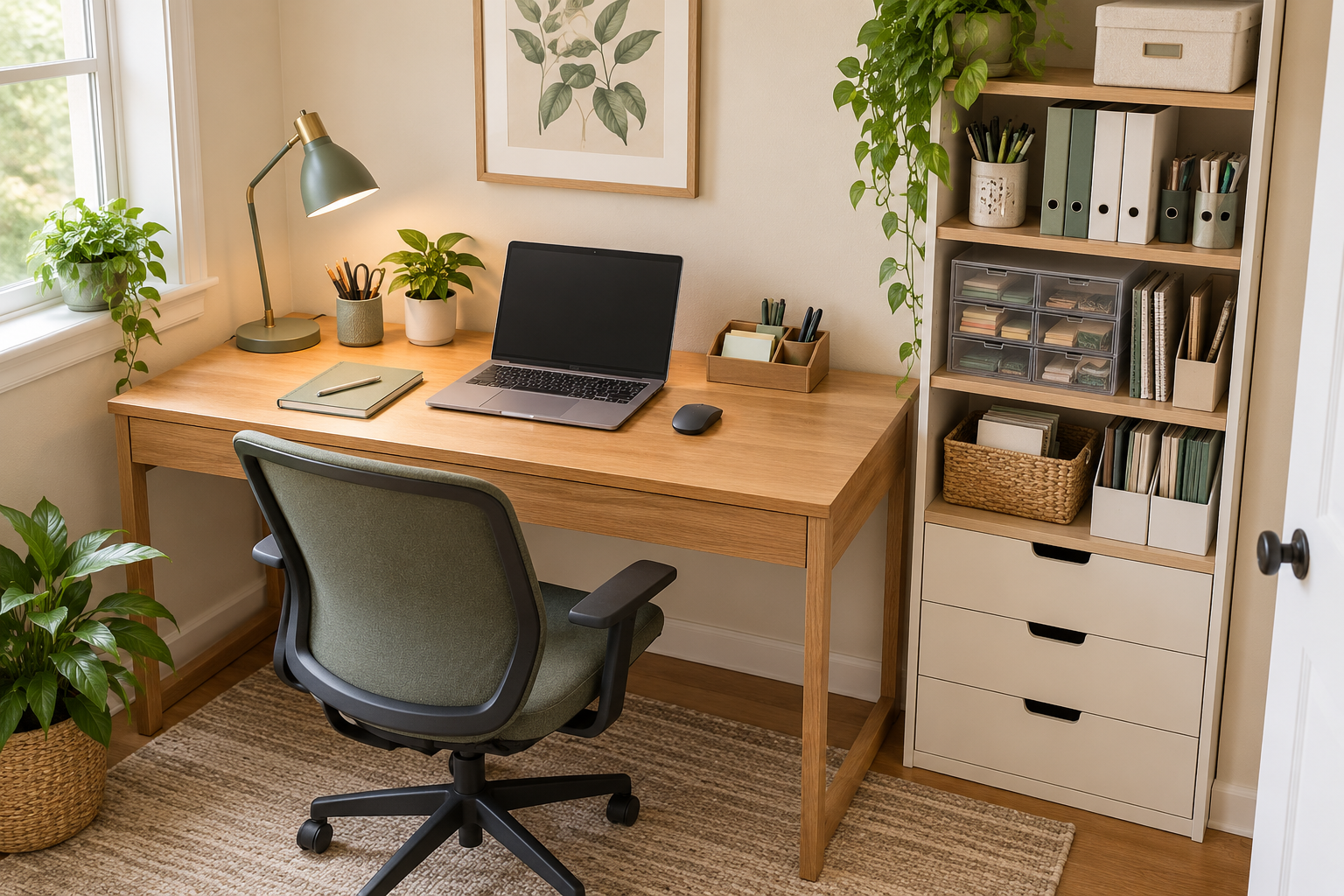
To organize office supplies in a small space, first remove duplicates and unused items. Then group supplies by function and separate daily-use items from occasional supplies and back-stock. Give each group a specific home, using compact containment for small items and vertical or nearby storage for paper and larger supplies.
The Our Office-Supply System
Why Office Supplies Take Over Small Spaces
Office supplies create a different kind of storage problem from larger household items.
Pens, clips, sticky notes, folders, paper, tape, and notebooks are individually small. Together, they can consume a surprising amount of useful space.
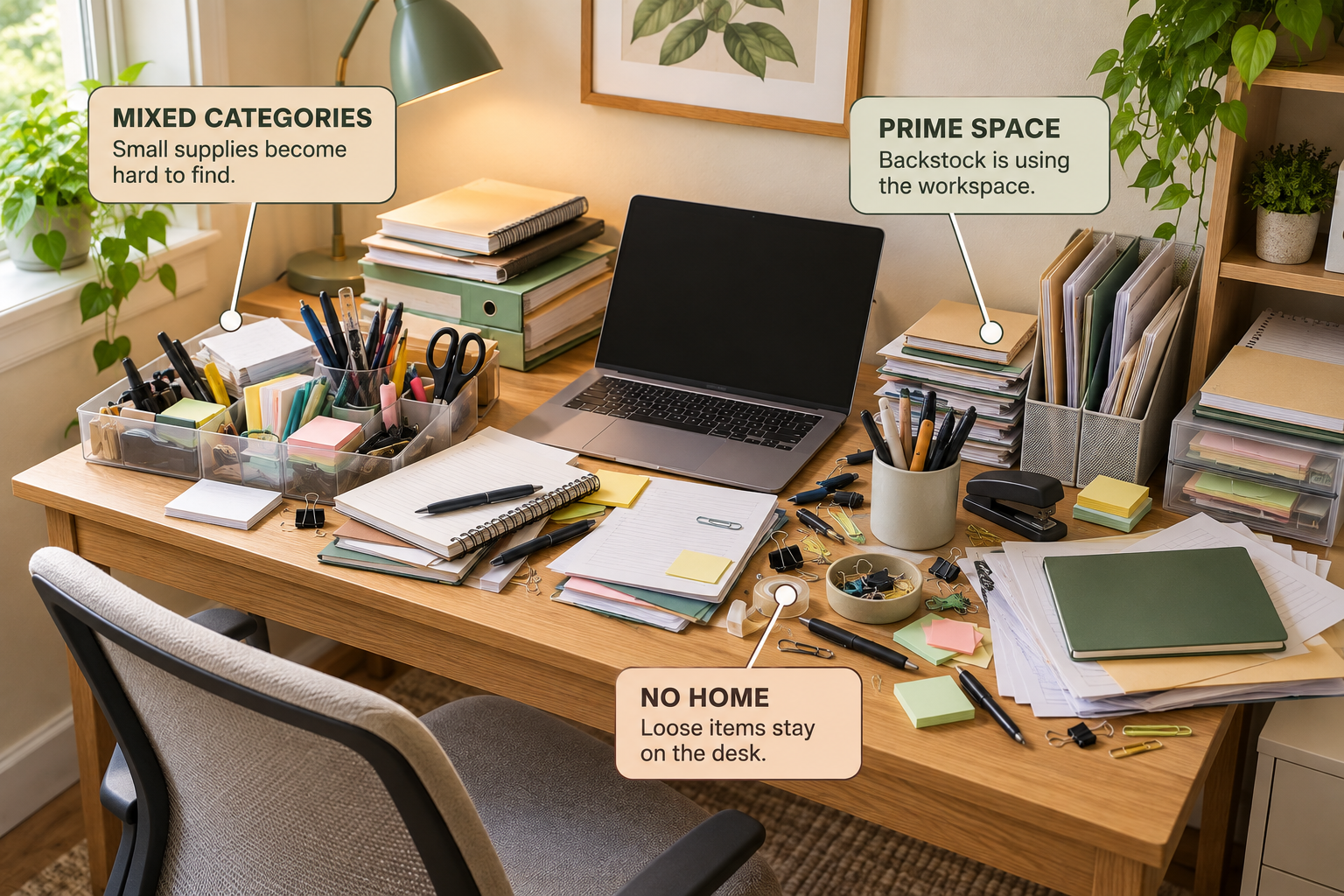
The problem usually gets worse when everything is stored according to size instead of use. Daily supplies become mixed with backups. Paper occupies the desk. Small items collect in random drawers or containers.
AUDIT — Empty the Supply Areas First
Before buying another organizer, take the office supplies out of their current storage areas.
Put similar items together where you can see them. This makes duplicates, forgotten supplies, and misplaced items much easier to identify.
- Keep and use regularly
- Keep but use occasionally
- Back-stock or replacement supplies
- Duplicates you do not need
- Items that belong somewhere else
- Damaged, dried-out, or unusable supplies
Do not organize an item simply because you already own it. If a supply has no useful role, it does not need a better container.
GROUP — Sort Supplies by Function
Once the excess is removed, group supplies by what they do.
Writing
Pens, pencils, markers, and highlighters.
Paper
Printer paper, notebooks, envelopes, and folders.
Fastening
Paper clips, binder clips, staples, and related supplies.
Cutting and Tape
Scissors, tape, and other small tools.
Technology
Small accessories and supplies associated with your equipment.
Back-stock
Extra supplies that are useful but do not need prime access.
PRIORITIZE — Separate Daily Supplies From Back-stock
This is one of the most important steps in a small office.
Not every supply needs to be within arm’s reach. A pen you use every day has a different storage requirement from a replacement pack of pens.
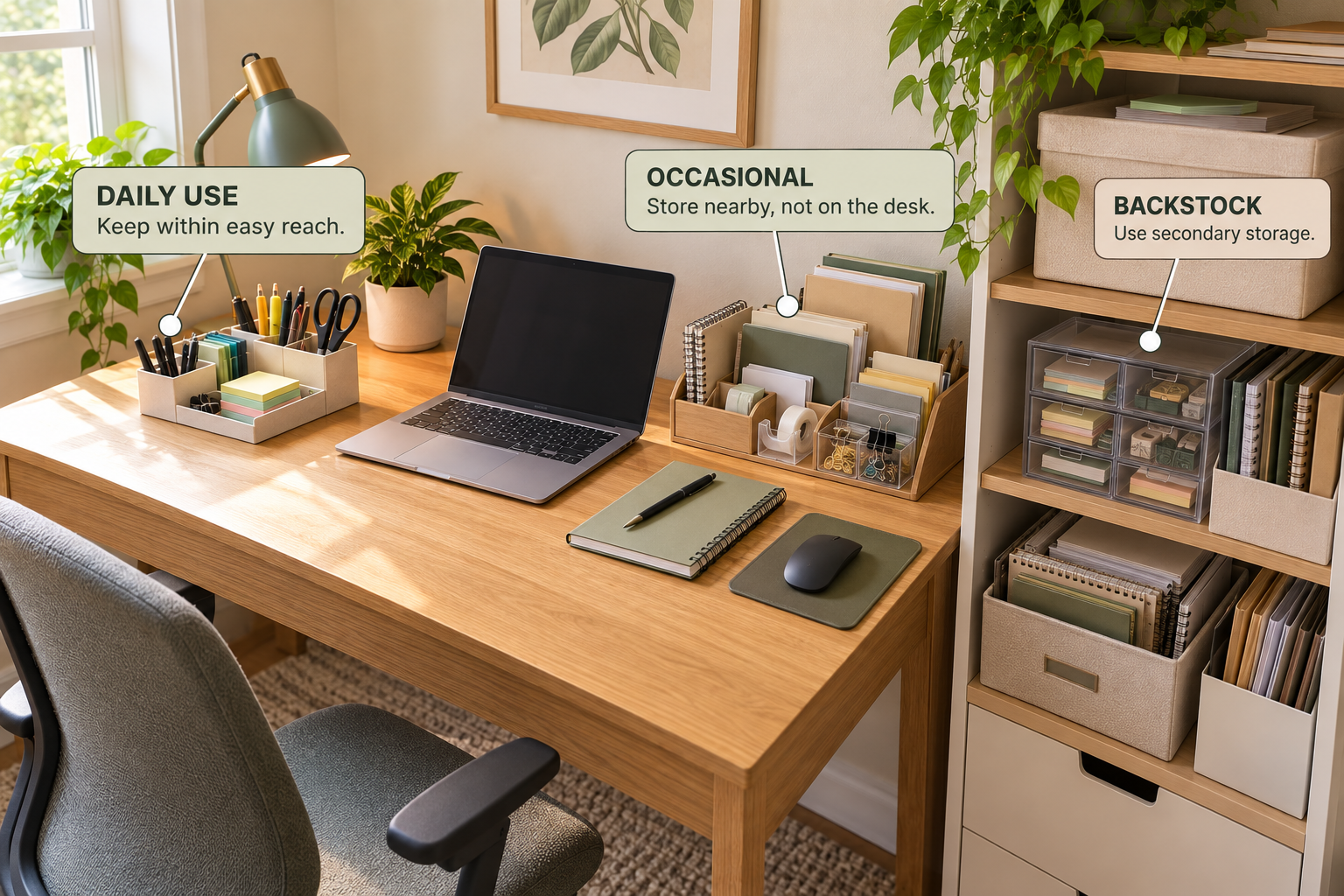
| Supply priority | Storage goal | Typical examples |
|---|---|---|
| Daily use | Easy access | Pens, notebook, sticky notes |
| Occasional | Nearby but contained | Tape, labels, folders |
| Back-stock | Secondary storage | Extra paper, replacement supplies |
The goal is not to hide everything. The goal is to make the right supplies easy to reach without allowing every supply to occupy prime workspace.
ASSIGN — Give Every Category a Home
After grouping supplies, decide where each category will live.
A small office usually works better when storage is divided into a few clear zones instead of one large mixed container.
Primary Supply Zone
Daily-use writing tools and the small supplies you reach for repeatedly.
Paper Zone
Active papers, folders, notebooks, and other paper-based supplies.
Secondary Supply Zone
Occasional supplies that should remain accessible without occupying the desk.
Back-stock Zone
Replacement and extra supplies that can live farther from the active workspace.
CONTAIN — Choose Storage Based on the Supply
Storage should solve the physical problem created by the supply.
Small loose objects need containment. Paper needs a way to stay visible without spreading across the desk. Backup supplies need capacity without taking over prime storage.
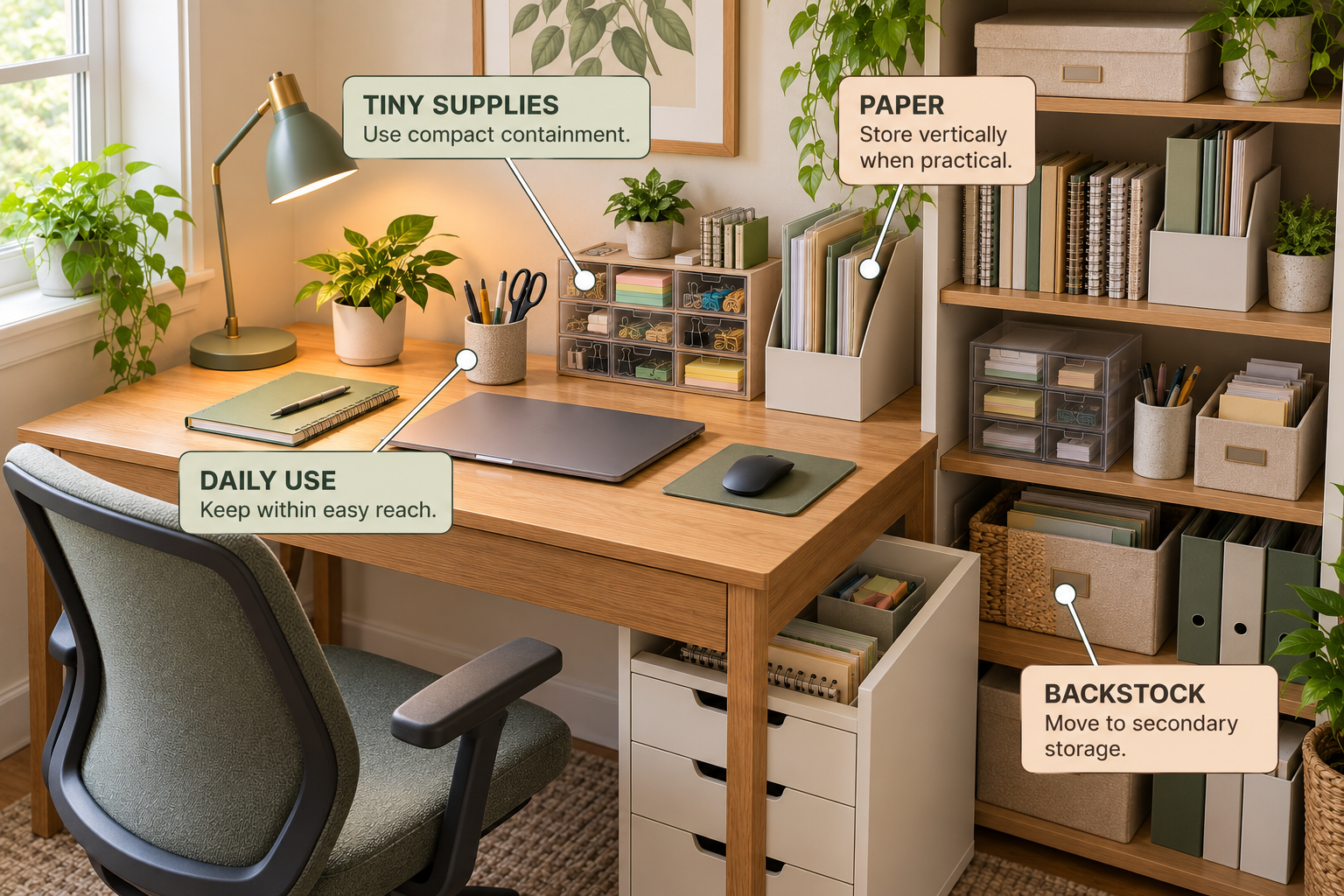
| If the problem is… | Start with… |
|---|---|
| Tiny loose supplies | Compact compartments |
| Daily writing tools | Easy-access holder |
| Active papers | Vertical file storage |
| Extra paper | Lower or nearby storage |
| No drawers | Vertical or nearby storage |
| Too much back-stock | Separate backup zone |
| Mixed categories | Re-sort before buying storage |
| Desk becoming crowded | Move supplies away from the main work surface |
Store Small Office Supplies
Small supplies are easiest to lose when they are stored together without boundaries.
Pens, clips, staples, sticky notes, and similar items should have a defined container or compartment. You do not need a separate organizer for every type. The important thing is that small items have a predictable home.
Keep only the quantity that makes sense for your normal use in the primary supply zone. Extra quantities can move to back-stock.
Before you buy storage: Count the categories you actually need to store and check the space available for them. The organizer should fit the supplies and the available storage area, rather than the other way around.
Compact Desk Organizer
A multi-level desk organizer can combine small stationery storage with paper and file space when a small workspace needs several functions in one footprint.
Affiliate disclosure: This article contains affiliate links. If you purchase through a link, Simply Tidy Home may earn a commission at no additional cost to you.
Store Paper and Larger Supplies
Paper behaves differently from pens and clips. It needs more physical space and can quickly spread across a small desk.
Active papers can benefit from vertical storage because the files remain contained while using less horizontal workspace.
Extra paper, older files, and replacement supplies can usually live farther from the main work area.
Vertical Wall File Organizer
A multi-tier wall file organizer can move paper storage away from the desk surface while keeping active folders separated and visible.
Organize Office Supplies Without Drawers
A desk does not need drawers to have an organized supply system.
If drawers are unavailable, look at the space beside, above, and below the workspace before allowing supplies to accumulate on the desktop.
- Use vertical space where it is practical.
- Use a nearby shelf or cabinet for occasional supplies.
- Contain small daily-use items in one compact area.
- Move back-stock away from the primary workspace.
- Use under-desk space only when it does not interfere with legroom or movement.
The goal is to create a supply home, not to reproduce a drawer somewhere else.
Keep Back-stock From Taking Over
Back-stock is useful, but it should not occupy the easiest storage space simply because there is a lot of it.
Store replacement supplies together in a secondary zone. When the primary supply runs low, refill it from that zone instead of storing every extra item beside the workspace.
Reset the Office Supply System
A good organization system should be easy to restore after normal use.
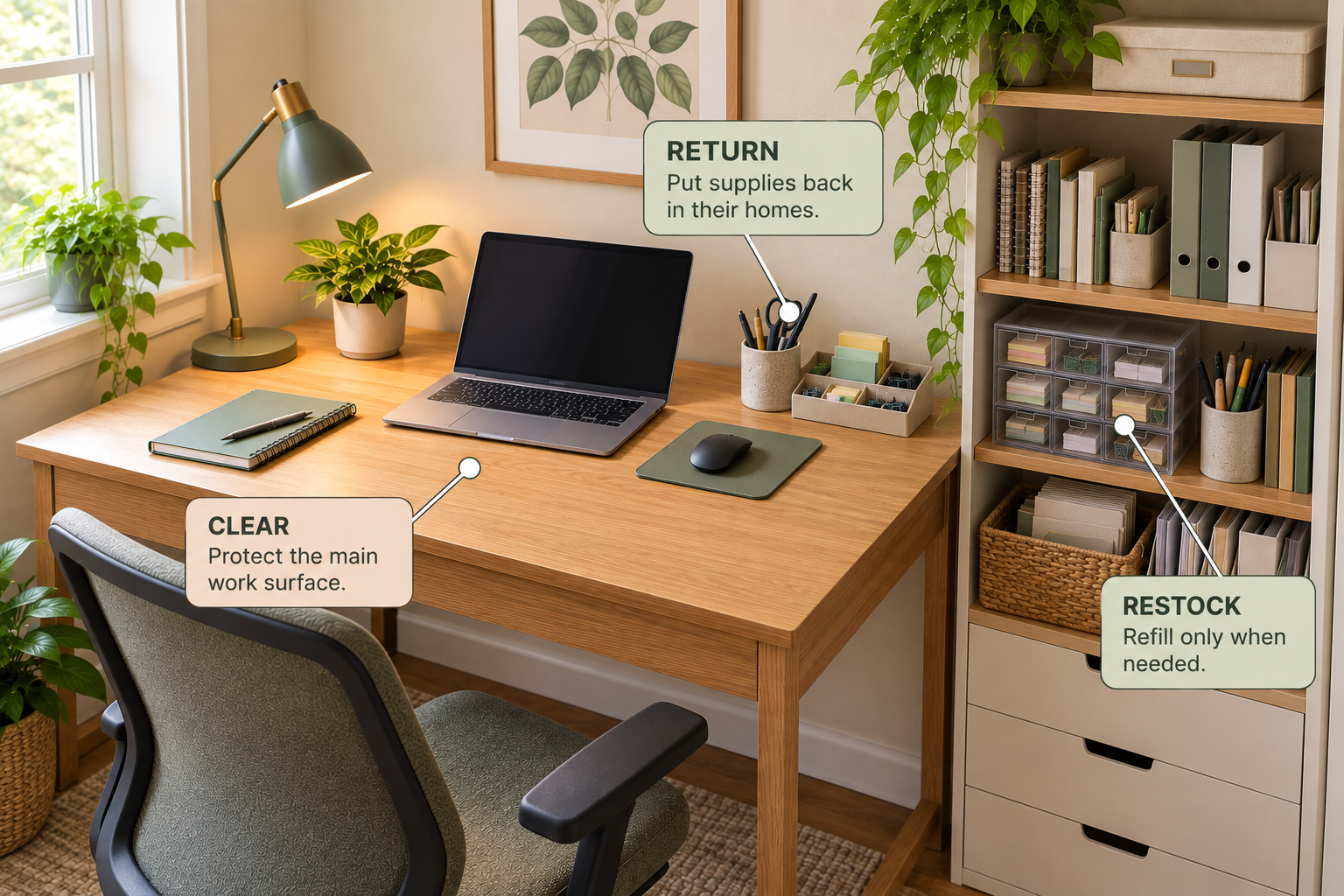
RETURN
Put supplies back in their assigned homes.
CLEAR
Remove unrelated supplies from the main work surface.
RESTOCK
Refill daily-use supplies only when needed.
This reset should take very little effort because each category already has a defined location.
Common Office Supply Organization Mistakes
- Buying containers first: Storage cannot fix excess supplies or unclear categories.
- Mixing daily supplies with back-stock: This makes prime storage less useful.
- Using the desk as the supply cabinet: The work surface should remain available for work.
- Making one giant supply bin: A large mixed container can create another searching problem.
- Giving occasional supplies prime space: Storage should reflect frequency of use.
- Ignoring paper: Paper often needs a different storage method from small stationery.
- Adding storage without measuring: Check the actual available space before buying an organizer.
Small-Space Office Supply Decision Flow
Use this when your supplies keep getting out of control.
Too many supplies?
Audit the collection and remove duplicates or unusable items.
Categories mixed?
Group supplies by function.
Everything within reach?
Separate daily-use, occasional, and back-stock supplies.
No storage home?
Assign each category a specific zone.
Still crowded?
Move suitable storage upward, beside the workspace, or into secondary storage.
System working?
Reset supplies after use and refill only when necessary.
Frequently Asked Questions
How do I organize office supplies in a small space?
Audit the supplies first, group them by function, separate daily-use items from back-stock, then give each category a defined storage zone. Use compact containment for small supplies and vertical or nearby storage for paper and larger items.
How do I organize office supplies without drawers?
Use a combination of compact containers, vertical storage, nearby shelves, and other secondary storage. Keep only the supplies you use frequently within easy reach.
Where should office supplies go in a small home office?
Daily-use supplies should stay close to the active workspace. Occasional supplies can go in nearby storage, while back-stock can move to a secondary zone farther from the desk.
How should I organize pens and other small office supplies?
Keep daily-use writing tools in one easy-access container and group other small supplies into compact compartments. Avoid mixing unrelated categories into one large container.
Where should I store paper in a small office?
Keep active papers in an accessible vertical file or similar system. Store extra paper and less frequently used paper supplies in secondary storage.
How do I stop office supplies from cluttering my desk?
Decide which supplies actually need to remain on the desk. Move occasional and backup supplies into assigned storage and keep the central work surface available for active work.
Related Simply Tidy Home Guides
The Goal Is Not More Storage
A small office does not need every supply within reach.
The better system is to decide what deserves prime space, give every category a home, and keep backup supplies from competing with the workspace.
When each supply has a clear job and a clear home, the office becomes easier to use and easier to reset.