
Towels and sheets are easy to mix together in a small closet because they behave differently. Towels need stable stacks and easy one-item retrieval. Sheets need to stay together as complete sets and remain easy to identify. The goal is not to fit the most linen into the closet. It is to make the space easy to use every day.
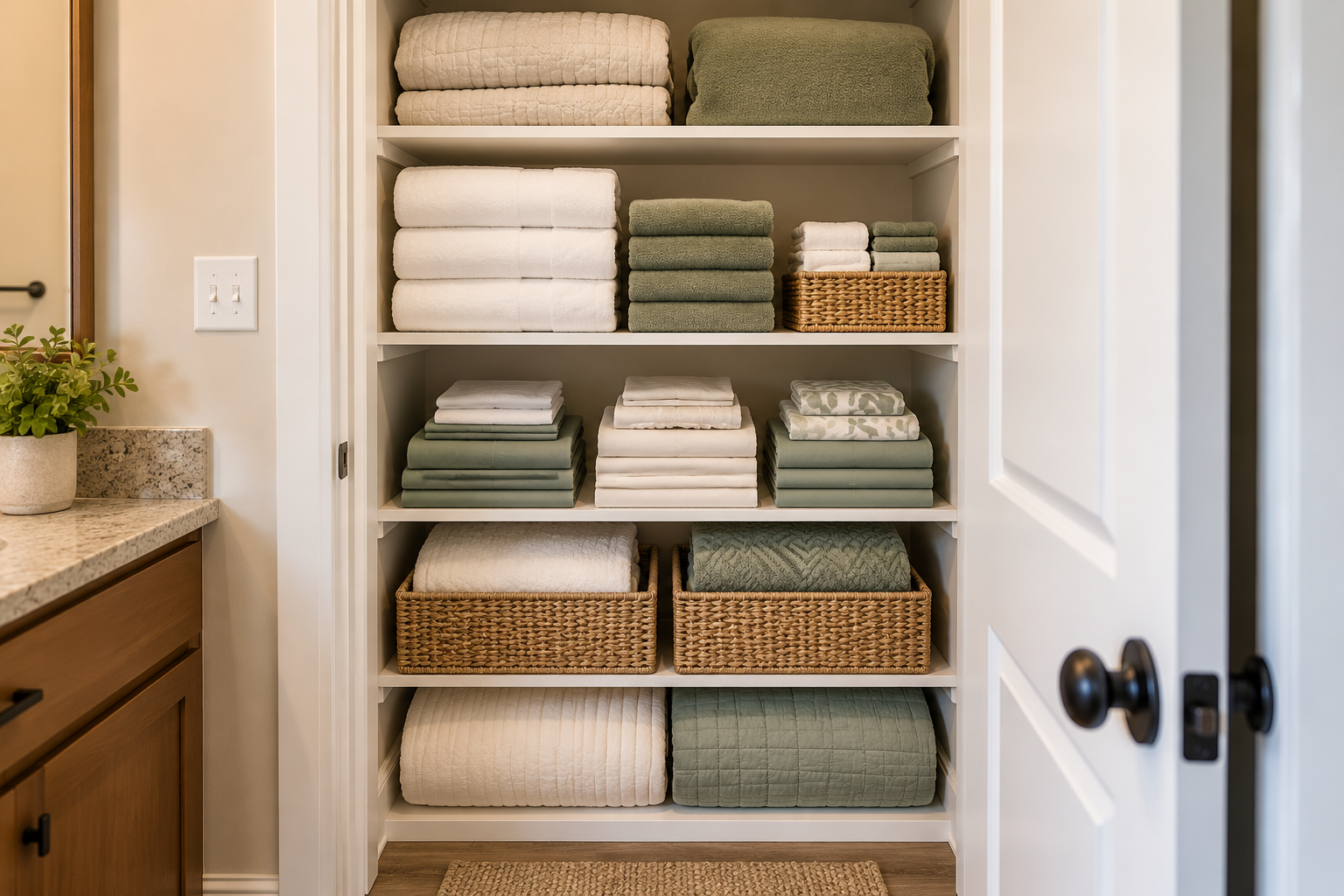
To organize towels and sheets in a small closet, separate the two categories first, measure the usable shelf space, choose a towel fold that creates stable stacks, keep each sheet set together, and assign separate zones based on how often each item is used. Add dividers or bins only when they solve a specific storage problem.
The Small-Closet System
Towels and Sheets Have Different Storage Problems
A small linen closet becomes difficult to use when every item is treated the same way.
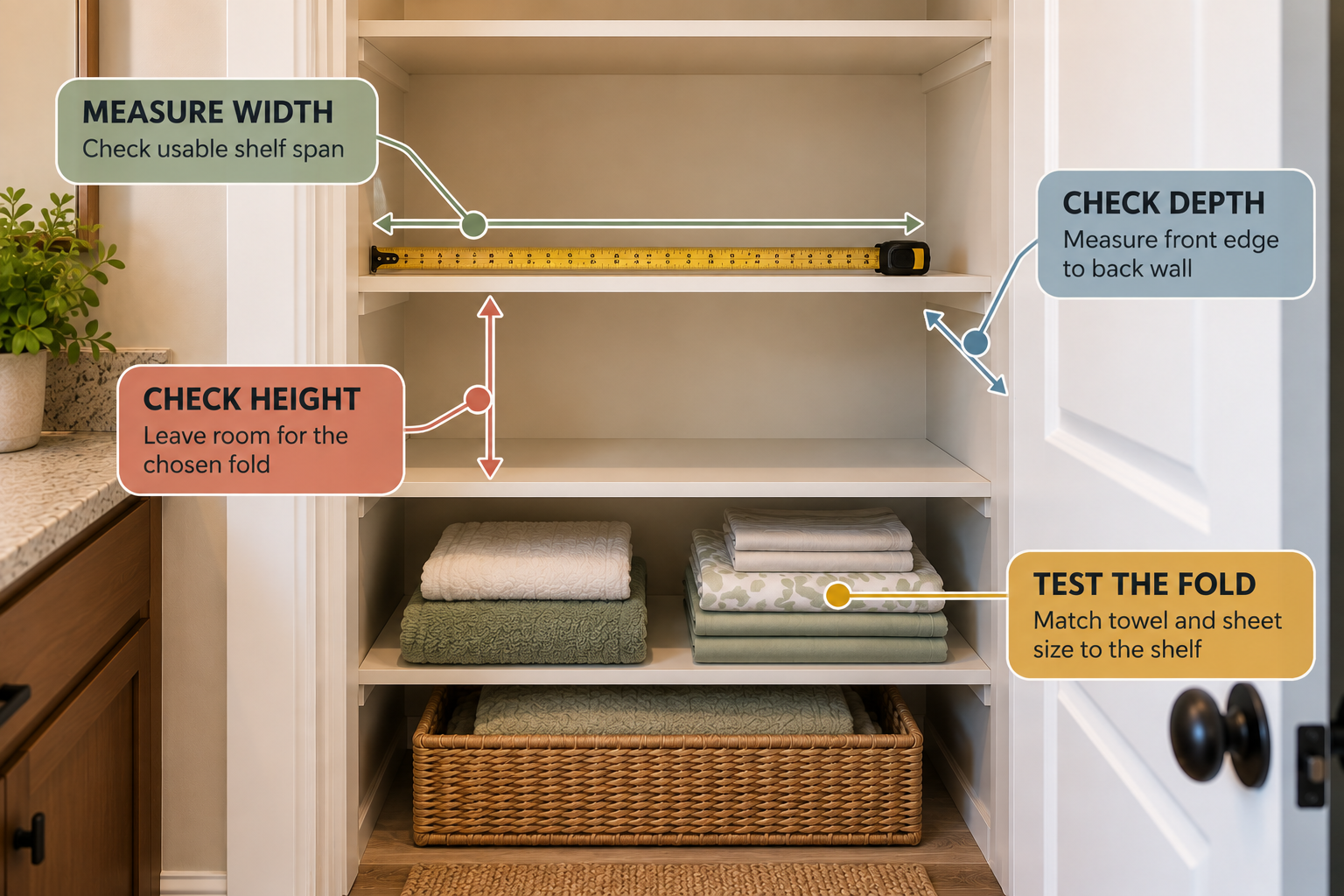
Towels are usually stored as stacks. Their main problem is stability. If one towel is removed from the middle or bottom of a loose pile, the rest can shift or fall.
Sheets have a different problem. A sheet set contains several pieces that belong together. If the fitted sheet, flat sheet, and pillowcases are separated, the closet may look organized while making laundry day and bed changes harder.
Towels
Prioritize stable stacking, clear categories, and easy one-item retrieval.
Sheets
Prioritize complete sets, clear bed-size grouping, and easy identification.
Measure the Shelf Before Folding Anything
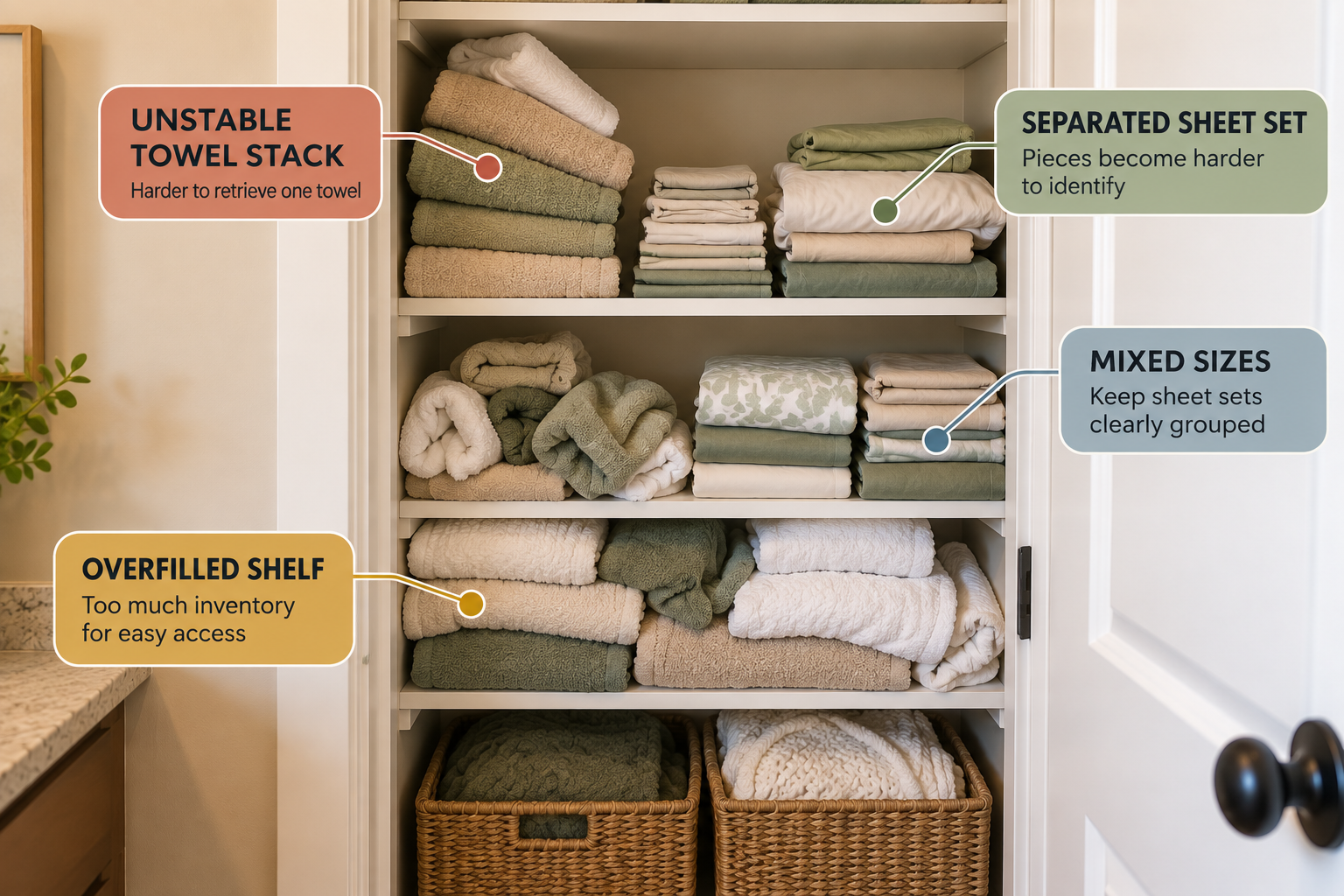
Do not choose a folding method or storage container first. Start with the space you actually have.
In a small closet, a few inches can change whether a stack is stable, whether a folded sheet set fits, or whether you can reach an item without disturbing the items beside it.
Measure These Three Dimensions
- Width: Measure the usable shelf span from side to side.
- Depth: Measure from the front edge of the shelf to the back wall.
- Height: Measure the vertical space available for the planned stack or container.
Also check the door opening and the amount of clearance you have when reaching into the closet. A container that technically fits may still make the shelf harder to use.
How to Organize Towels in a Small Closet
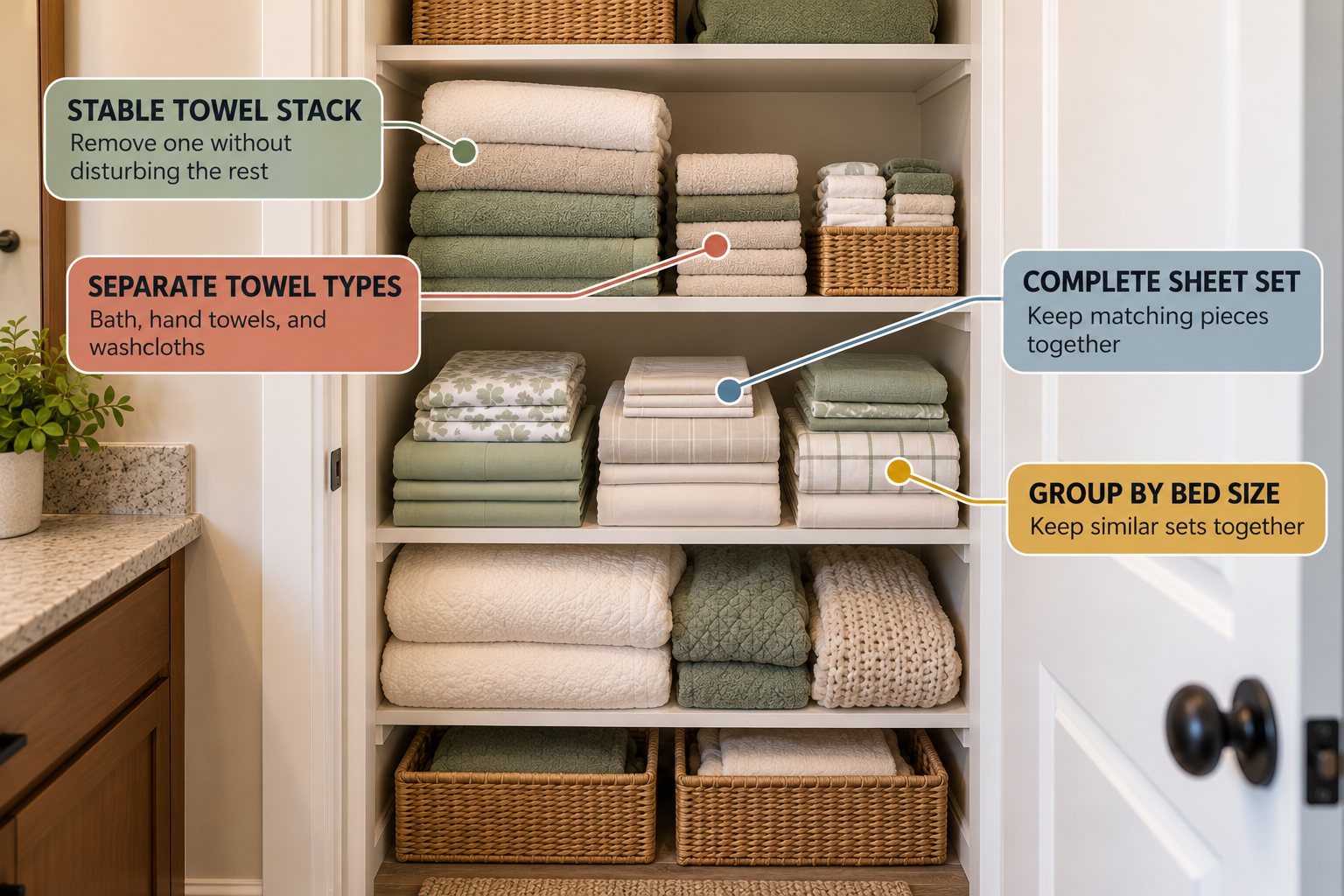
Start by grouping towels according to their actual use. You may have bath towels, hand towels, washcloths, and specialty towels. You do not need a separate container for every category.
The important thing is that you can tell where each type belongs and remove one towel without causing the rest of the stack to collapse.
1. Remove Towels You Do Not Need in This Closet
A small closet cannot compensate for unlimited inventory. If rarely used towels occupy the easiest-to-reach shelf, everyday towels become harder to access.
Keep the towels that genuinely belong in the space. Move less-frequent or specialty linens to a secondary storage area when appropriate.
2. Group Towels by Type
Keep bath towels together. Keep hand towels together. Keep washcloths together.
This does not mean every category needs its own bin. A clear shelf boundary may be enough.
3. Build Stable Stacks
Fold towels consistently so the stack has a predictable footprint. The exact fold matters less than matching the fold to the shelf and keeping the finished stack stable.
If removing one towel causes the whole pile to shift, change the folding direction, reduce the stack height, or create a clearer boundary between categories.
Choose a Towel Fold That Matches the Shelf
There is no single towel fold that works for every small closet.
A narrow shelf may benefit from a compact fold that keeps the towel footprint shallow. A deeper shelf may allow a different fold that creates a more stable stack.
Use the Shelf to Choose the Fold
Check shelf depth. The folded towel should sit securely without being pushed against the back wall.
Check stack height. Leave enough room to remove the top towel without catching the shelf above.
Test retrieval. Remove one towel from the intended position and see whether the remaining stack stays stable.
How to Organize Sheets in a Small Closet
Sheets are easier to manage when each set stays together as a single unit.
Instead of spreading individual sheets across the closet, create identifiable sheet-set groups. The goal is to pick up one set and know what it contains.
Keep Each Sheet Set Together
Fold the matching pieces together and keep the set contained as one group. This reduces the chance that a pillowcase ends up on another shelf while the fitted sheet is buried underneath something else.
If you use a folded pillowcase to contain the other pieces, make sure the finished bundle remains easy to identify and does not become too bulky for the shelf.
Organize Sheets by Bed Size
If your household uses more than one bed size, keep those sets clearly separated.
A simple bed-size boundary can prevent the common problem of pulling out a sheet set only to discover that it does not fit the bed you intended to make.
You can use shelf zones, dividers, or clearly separated stacks depending on the space available.
Decide Whether to Organize by Type or by Bed
The best arrangement depends on how your household actually uses the linens.
If everyone knows the bed sizes and changes sheets independently, grouping by bed size can make retrieval easier.
If you frequently use different sheet types for the same bed, grouping by type may make more sense.
The test is simple: can you find the correct complete set quickly without opening several stacks?
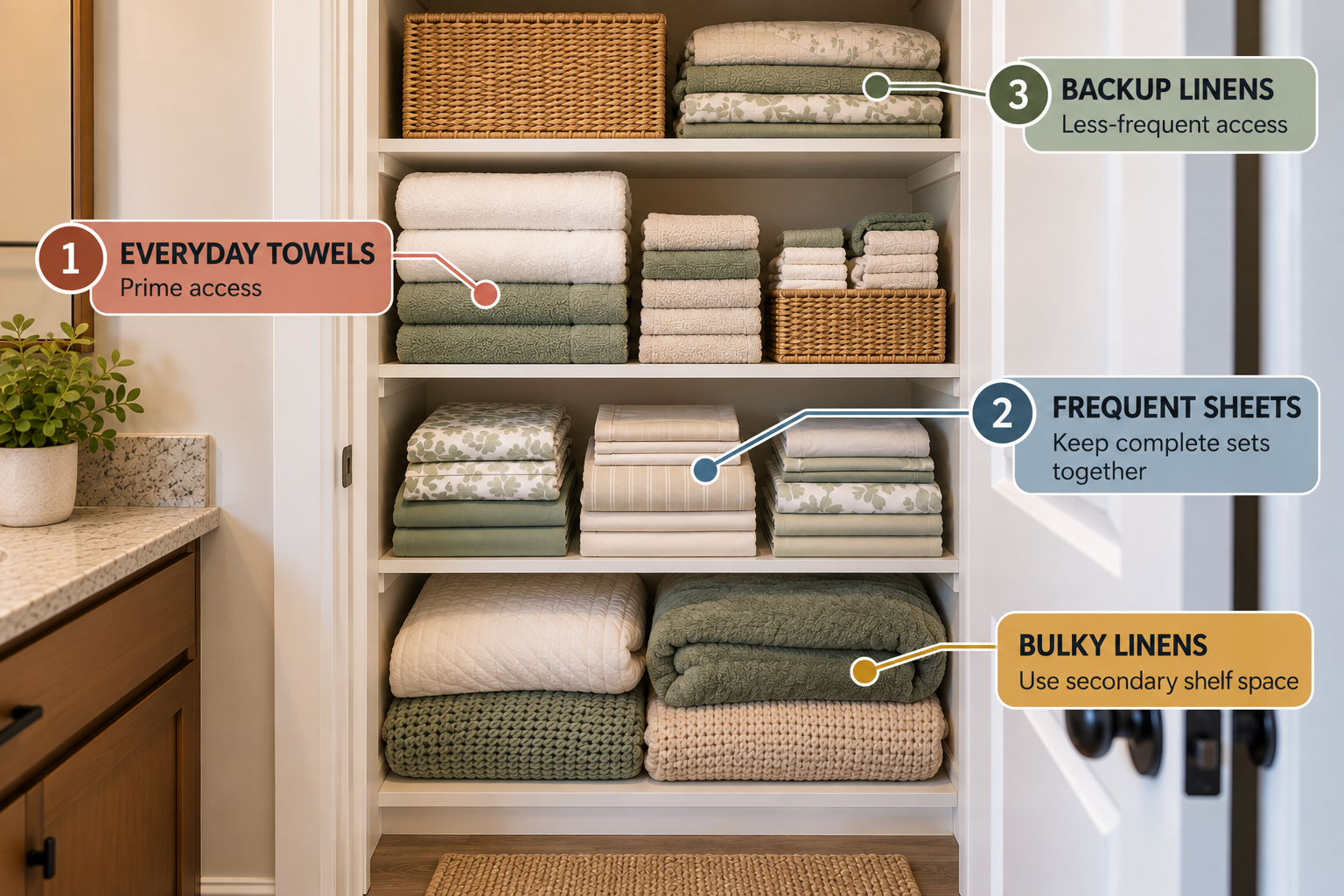
Put Towels and Sheets Into Separate Zones
Once the individual categories are organized, give them predictable shelf locations.
Everyday towels should usually receive the easiest access because they are handled frequently. Frequently used sheet sets can also stay within comfortable reach.
Less-frequent linens can use harder-to-reach shelf space.
Everyday Towels
Place the towels used most often where they are easy to reach and return.
Frequently Used Sheets
Keep complete sets together in a zone that is easy to identify.
Backup Linens
Move less-frequent items away from the prime access area when space is limited.
Bulky or Specialty Linens
Give larger or rarely used pieces a defined secondary location rather than mixing them into everyday stacks.
When to Use Dividers
Dividers can help when towel stacks lean, migrate, or mix with another category.
They are most useful when the shelf itself does not provide enough separation. They should create a clearer boundary, not simply add another object to the closet.
If you use shelf dividers, measure the shelf thickness and check the product’s compatibility before buying. Do not assume a divider will work with every shelf.
Before You Buy a Shelf Divider
- Measure the shelf thickness.
- Check how the divider attaches to the shelf.
- Make sure the divider solves an actual stability or category-boundary problem.
- Keep enough usable width for the towels or linens you need to store.
When a Bin Helps
Bins make the most sense for categories that do not stack neatly.
Washcloths, loose pillowcases, and other small linens can spread across a shelf and make the space look messy even when the larger towel and sheet groups are organized.
A bin can give these smaller pieces a defined home. But a large bin can also consume valuable shelf space in a small closet, so measure first.
HBlife 6 Pack Clear Shelf Dividers
A practical option when towel stacks need a clearer boundary. The product is designed as a clear shelf divider that slides onto compatible solid shelves. Check your shelf thickness before purchasing.
Amazon Basics Collapsible Storage Bins
These 10.5 × 10.5 × 11-inch fabric bins can help contain loose washcloths, pillowcases, or other small linens that do not stack well. Their size means they should be used only after checking the available shelf space.
As an Amazon Associate I earn from qualifying purchases. Some links below are paid links, which means Simply Tidy Home may earn a commission if you purchase through them, at no additional cost to you.
The One-Item Retrieval Test
A closet can look organized and still be difficult to use.
Test the system by removing one towel from each towel category and one sheet set from each sheet zone.
If the surrounding items shift, collapse, or become difficult to identify, the system needs adjustment.
The Test
Remove one item without moving several other items first.
The Goal
The closet should remain orderly while normal items are being used.
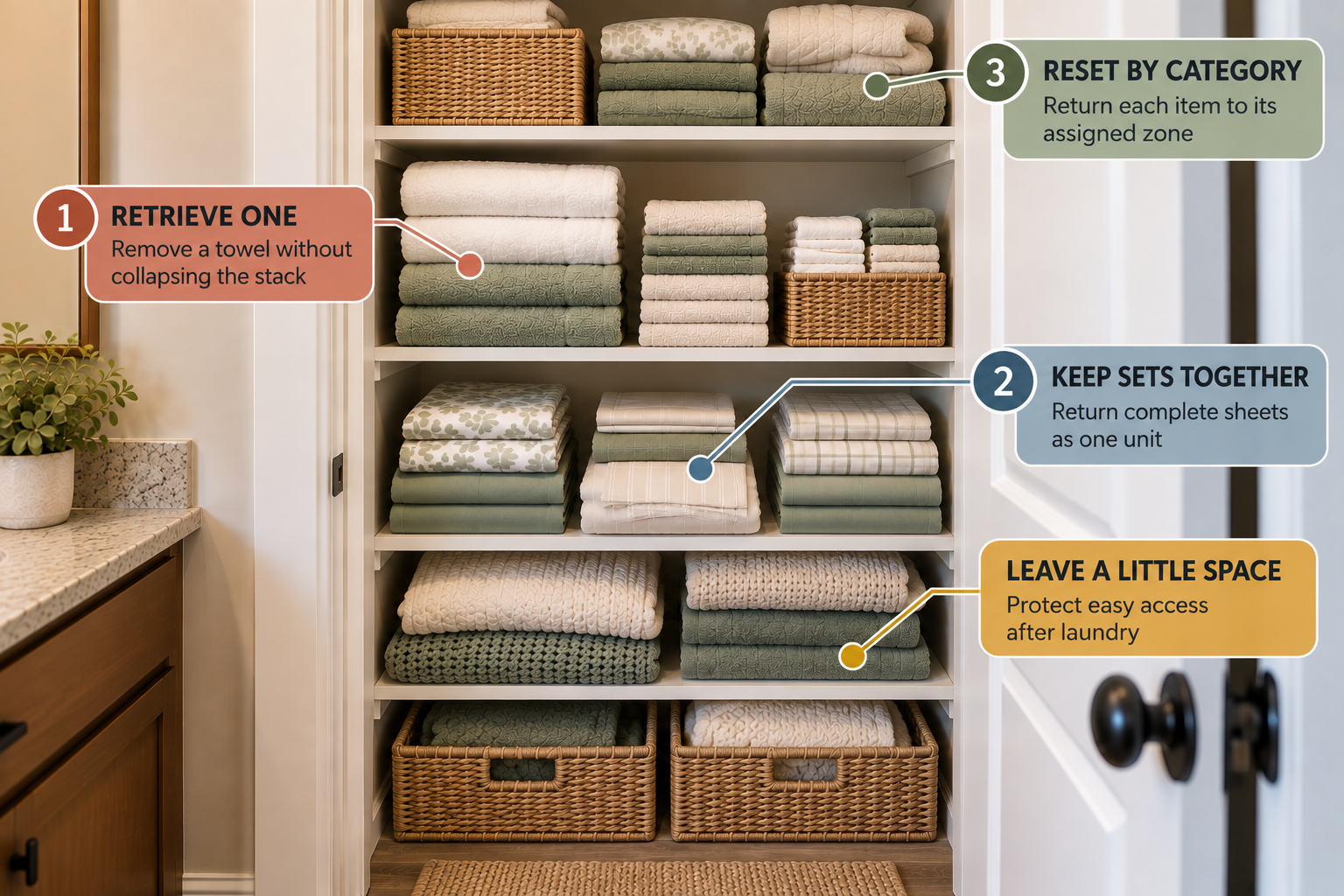
Laundry-Day Reset
The easiest organization system is one that is simple to restore.
After laundry, do not simply put clean linens into the first available gap. Return each item to its assigned category and zone.
1. Retrieve
Remove the used or needed item without disturbing the surrounding stack.
2. Keep Sets Together
Return matching sheet pieces together as one identifiable set.
3. Reset by Category
Return towels, sheets, and smaller linens to their assigned zones.
Common Mistakes in a Small Towel and Sheet Closet
- Using one folding method for everything. Towels and sheets have different storage needs.
- Stacking too high. A tall stack may use vertical space but become difficult to retrieve from.
- Separating sheet-set pieces. A visually tidy shelf is not useful if matching pieces become difficult to find.
- Mixing bed sizes. Similar-looking sets are easier to confuse when different sizes share the same zone.
- Buying containers before measuring. A container that fits a general cube or shelf elsewhere may consume too much space here.
- Overusing dividers. Not every stack needs containment. Add one when it solves a real stability problem.
- Ignoring retrieval. Organization should be tested during normal use, not only judged immediately after arranging the closet.
Use This Decision Flow
A Simple Way to Decide What Goes Where
Is it a towel or a sheet? Separate the two groups before arranging them.
What is the shelf geometry? Measure width, depth, and height.
Does it stack? If yes, use a stable fold and category grouping. If not, consider a measured bin.
Does it move or lean? If a towel stack shifts, consider a divider or reduce the stack.
Can you identify one complete sheet set? If not, improve the grouping before adding more storage products.
Can you remove one item without disturbing the rest? If not, adjust the fold, stack height, zone, or containment.
Frequently Asked Questions
How should I organize towels in a small closet?
Group towels by type, choose a fold that matches the shelf, keep stacks stable, and place the most frequently used towels in the easiest-to-reach zone.
How do you store sheets in a small closet?
Keep each sheet set together as one identifiable bundle. Group sets by bed size or another system that matches how your household uses them, then place frequently used sets in an easy-access zone.
Should towels and sheets be stored together?
They can share the same closet, but separate zones usually make retrieval easier because towels and sheet sets have different storage behaviors.
Are shelf dividers useful for towels?
They can help when towel stacks lean, shift, or mix with another category. Measure the shelf and check the divider’s compatibility before buying.
Should I use bins for sheets?
A bin can help contain loose small linens, but complete sheet sets often work well as identifiable folded bundles. In a small closet, measure the bin before using valuable shelf space for it.
How can I keep a small linen closet organized after laundry?
Give each category a fixed zone and return clean items to that same zone. Keep sheet sets together and maintain towel stacks so one item can be removed without disturbing the rest.
Related Simply Tidy Home Guides
A small linen closet does not need to hold everything.
It needs a clear system for the things you use.
Separate towels from sheets, measure the space, build stable stacks, keep sheet sets together, assign practical zones, and test the system through normal retrieval.