
A small bedroom does not need more furniture just because storage feels limited. The better approach is to decide what actually needs to stay in the room, give each storage area a clear job, and use hidden or vertical space before taking up more floor space.
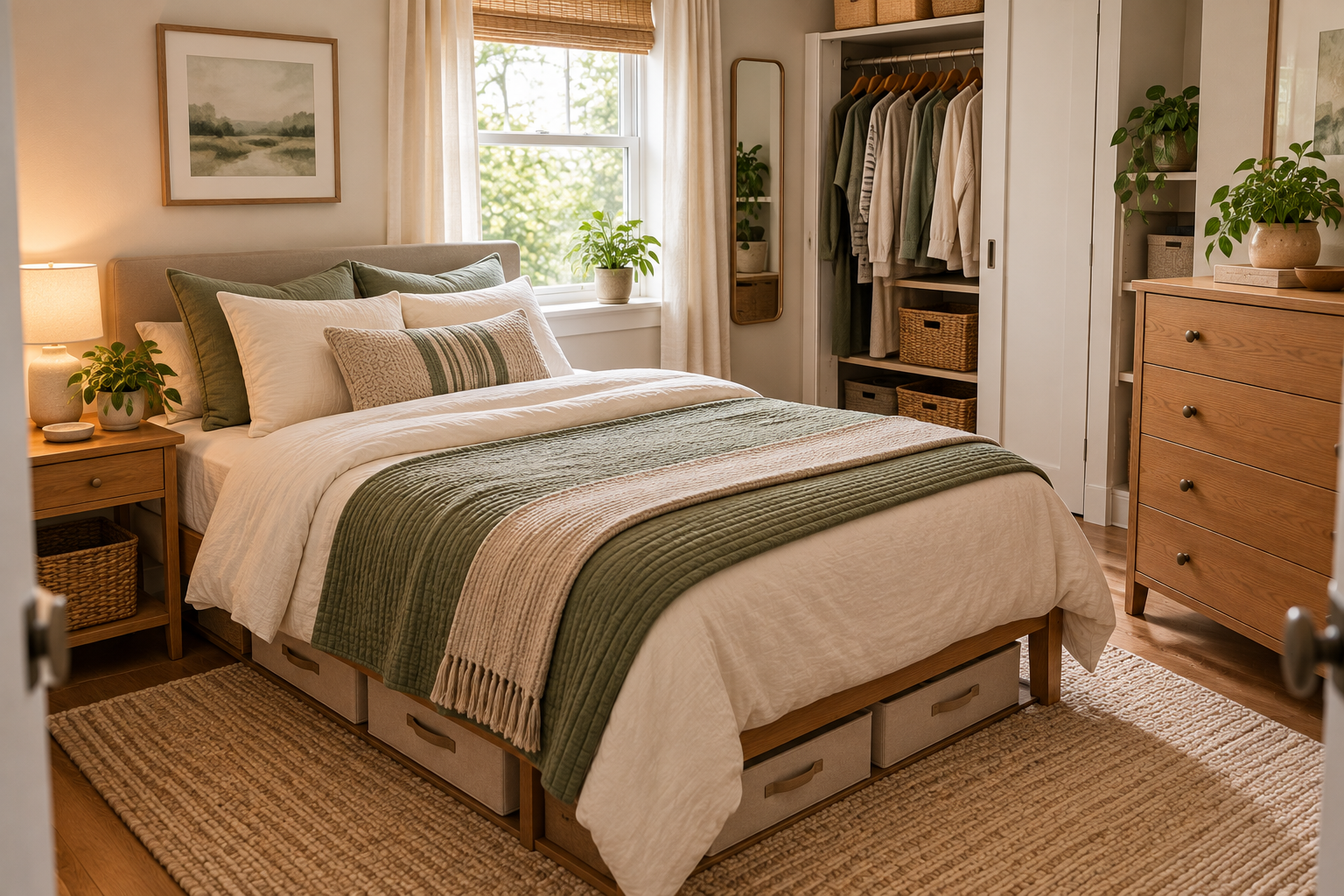
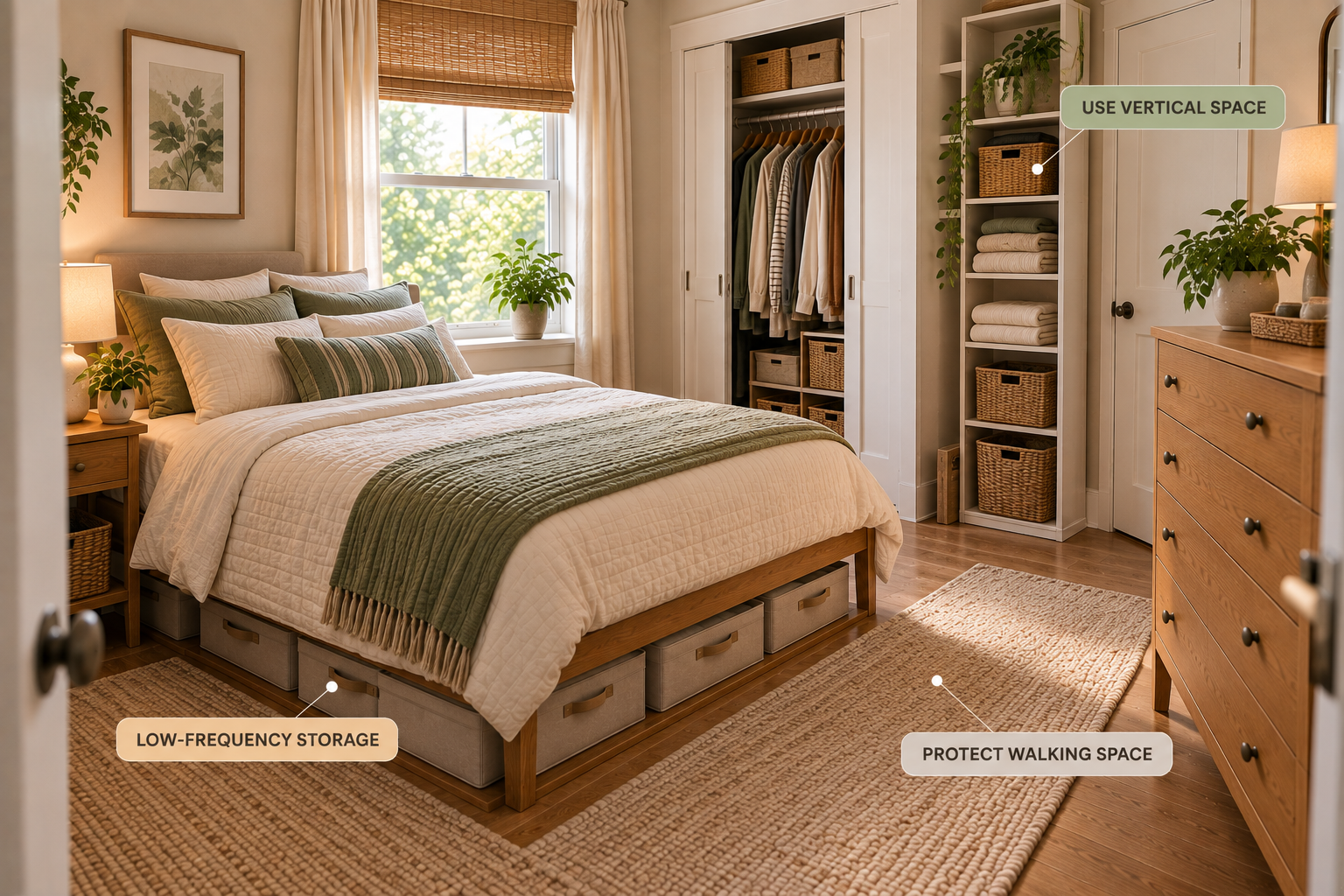
To organize a small bedroom with limited storage, first reduce what actually needs to stay in the room. Then assign the closet, dresser, drawers, under-bed space, and other available areas different jobs. Keep everyday items in the easiest-to-reach locations and move seasonal or occasional belongings into less convenient storage. Use vertical space before adding bulky furniture, and protect the walking space that makes the room functional.
The Small-Bedroom Storage System at a Glance
The goal is not to fill every empty space. The goal is to make each available storage area do a useful job without making the room harder to move through.
1. Start by Mapping Every Storage Space
Before buying another organizer or piece of furniture, identify the storage capacity you already have.
Look at the entire bedroom rather than one problem area at a time.
- Closet or wardrobe
- Dresser
- Bedroom drawers
- Under-bed clearance
- Available wall space
- Behind suitable doors
- Unused vertical areas
- Existing furniture with unused storage capacity
2. Measure the Room Before Adding Storage
Limited storage often comes with limited floor space. That makes measurement more important than simply finding a product that looks useful online.
Measure These Areas First
- Room width and length
- Bed footprint
- Main walking paths
- Door swing and clearance
- Closet or wardrobe depth
- Dresser depth and width
- Available vertical space
- Under-bed clearance
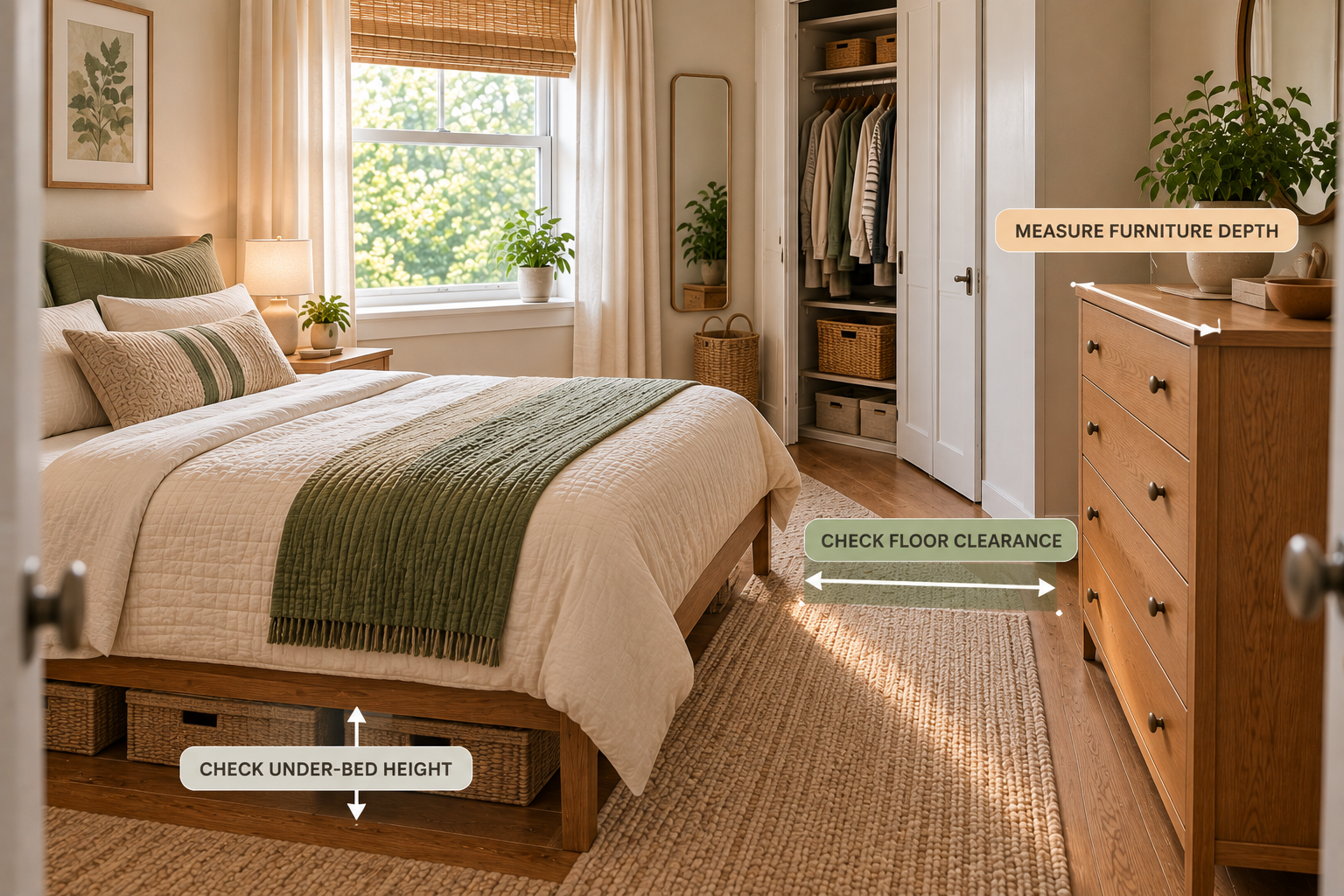
Pay particular attention to the space you need to walk through every day. Storage that technically fits can still be a poor solution if it blocks a door, narrows the main path, or makes drawers and doors difficult to open.
Answer
Measure the bedroom and the available storage zones before choosing new storage.
Why
In a small bedroom, a storage solution has to fit both the available dimensions and the way the room needs to function.
3. Reduce What Actually Needs to Stay in the Bedroom
More storage cannot solve an inventory problem forever.
Gather the belongings that are competing for bedroom storage and sort them before deciding what organizer or furniture you need.
Keep in the Bedroom
Items used frequently enough to justify taking up valuable bedroom storage.
Move Elsewhere
Items that do not need to occupy bedroom storage can be stored in a more suitable part of the home.
Seasonal
Items needed only during part of the year can move into less convenient storage.
Occasional
Special-use belongings can use storage that is harder to reach but still easy enough to access when needed.
If the bedroom is already holding more belongings than its storage can reasonably accommodate, adding another container may only move the problem around. Reduce or relocate first.
4. Give Every Storage Zone One Job
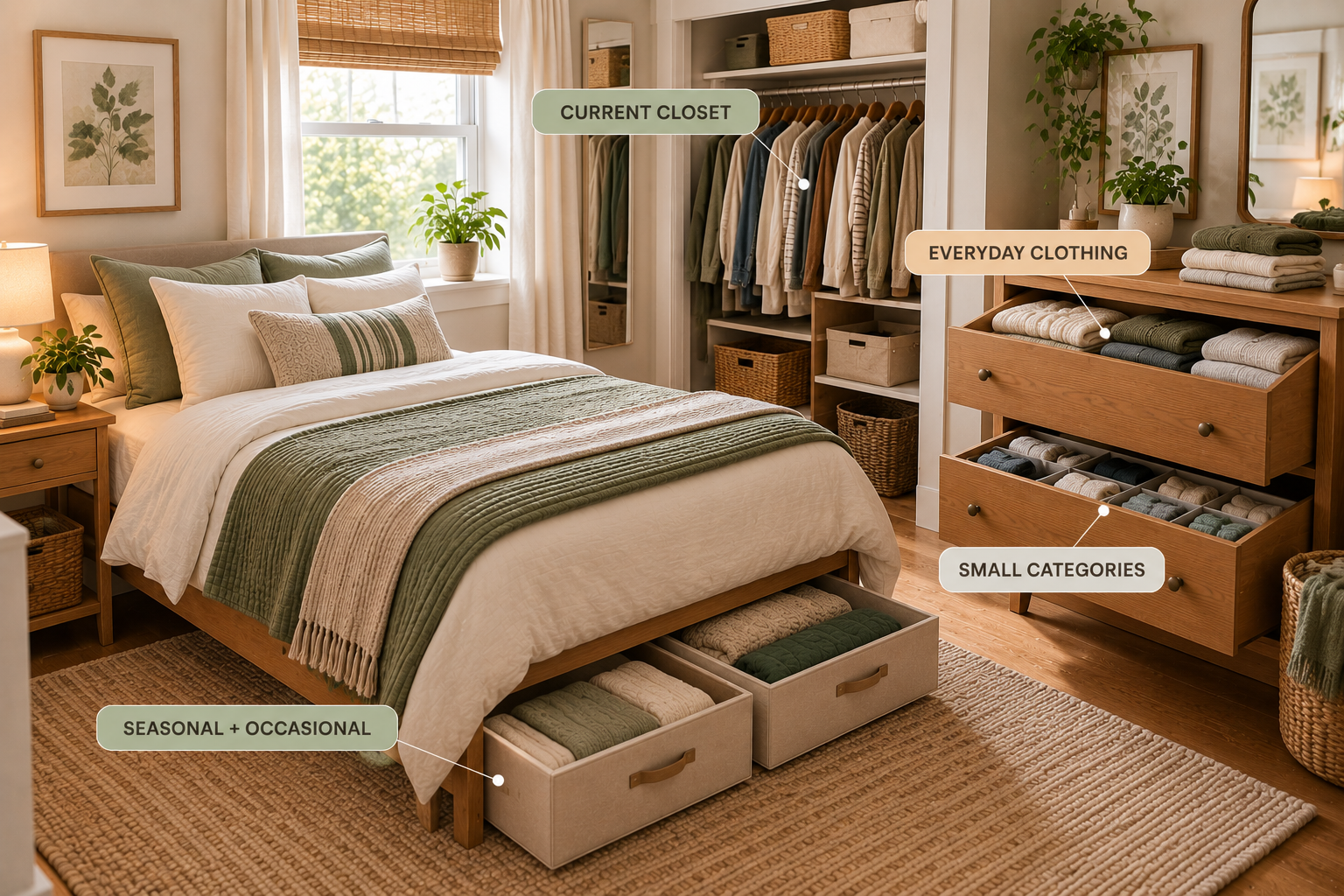
A small bedroom becomes easier to manage when the closet, dresser, drawers, and hidden storage are not all trying to hold the same kinds of things.
| Storage zone | Primary job |
|---|---|
| Closet or wardrobe | Current hanging clothes and frequently used wardrobe pieces |
| Dresser | Folded everyday clothing |
| Bedroom drawers | Smaller clothing categories such as underwear and socks |
| Under-bed storage | Seasonal or occasional belongings |
| Higher storage | Items that are used less frequently |
| Wall or door space | Suitable lightweight or small categories where practical |
These are starting points, not fixed rules. The right assignment depends on the furniture, measurements, access, and the items you actually own.
5. Protect the Floor Before Adding More Furniture
In a very small bedroom, the floor is functional space. It is not simply empty space waiting for another cabinet.
Before adding a dresser, cabinet, shelf, or storage tower, ask:
This changes the order of decisions. Instead of automatically adding another piece of furniture, first examine vertical space, under-bed capacity, existing furniture, and other hidden areas.
6. Use Vertical Space Before Adding More Floor Furniture
When floor space is limited, height can provide additional capacity without using the same amount of floor area.
Depending on the room, useful vertical locations can include:
- Space above existing furniture
- Unused upper wall areas
- A narrow vertical storage footprint
- Suitable space behind a door
- Existing tall furniture that has unused capacity
The important part is not simply going upward. The storage still needs to be stable, accessible, appropriately sized, and compatible with the room.
Before You Buy Vertical Storage
- Measure the available width.
- Measure the available depth.
- Check the usable height.
- Confirm that doors, drawers, and walkways still have clearance.
- Consider how often the stored items need to be reached.
7. Use Under-Bed Space for the Right Things
Under-bed space is valuable because it can add storage without taking another piece of furniture’s footprint from the room.
It is usually better suited to items that do not need to be accessed every day.
- Seasonal clothing
- Extra bedding
- Luggage
- Occasional shoes
- Other lower-frequency belongings
Everyday items are usually poor candidates because repeatedly reaching underneath the bed creates unnecessary friction.
Under-bed storage products vary in height and footprint. Measure the actual clearance underneath your bed and compare it with the product dimensions before purchasing.
Budding Joy 95L Under-Bed Storage Containers, 4 Pack
A four-pack of under-bed storage containers for using otherwise unused space beneath the bed. This is most relevant for seasonal clothing, extra bedding, luggage, and other lower-frequency items.
Best fit: hidden storage for items that do not need daily access.
8. Make the Closet, Dresser, and Under-Bed Storage Work Together
The biggest room-level improvement comes from treating storage areas as one system instead of several unrelated problems.
For example:
- Closet: current hanging wardrobe.
- Dresser: everyday folded clothing.
- Drawers: smaller clothing categories.
- Under bed: seasonal and occasional items.
- Higher storage: less frequently used belongings.
This prevents the easiest storage from becoming overloaded with items that could live somewhere less convenient.
9. Choose Furniture That Does More Than One Job
If the room genuinely needs more furniture, look for pieces that solve more than one problem without overwhelming the available floor area.
Depending on the room, this might include:
- A storage bed
- A nightstand with drawers
- A storage bench
- A narrow vertical storage tower
- Furniture with useful built-in compartments
But multi-functional does not automatically mean suitable. The piece still needs to fit the room’s measurements and preserve the circulation space you use every day.
MAX Houser 4-Drawer Narrow Vertical Storage Tower
A narrow fabric drawer tower designed to add vertical storage while using a relatively small floor footprint. It can be considered where a compact bedroom has a suitable narrow storage zone.
Best fit: small categories that need accessible vertical storage.
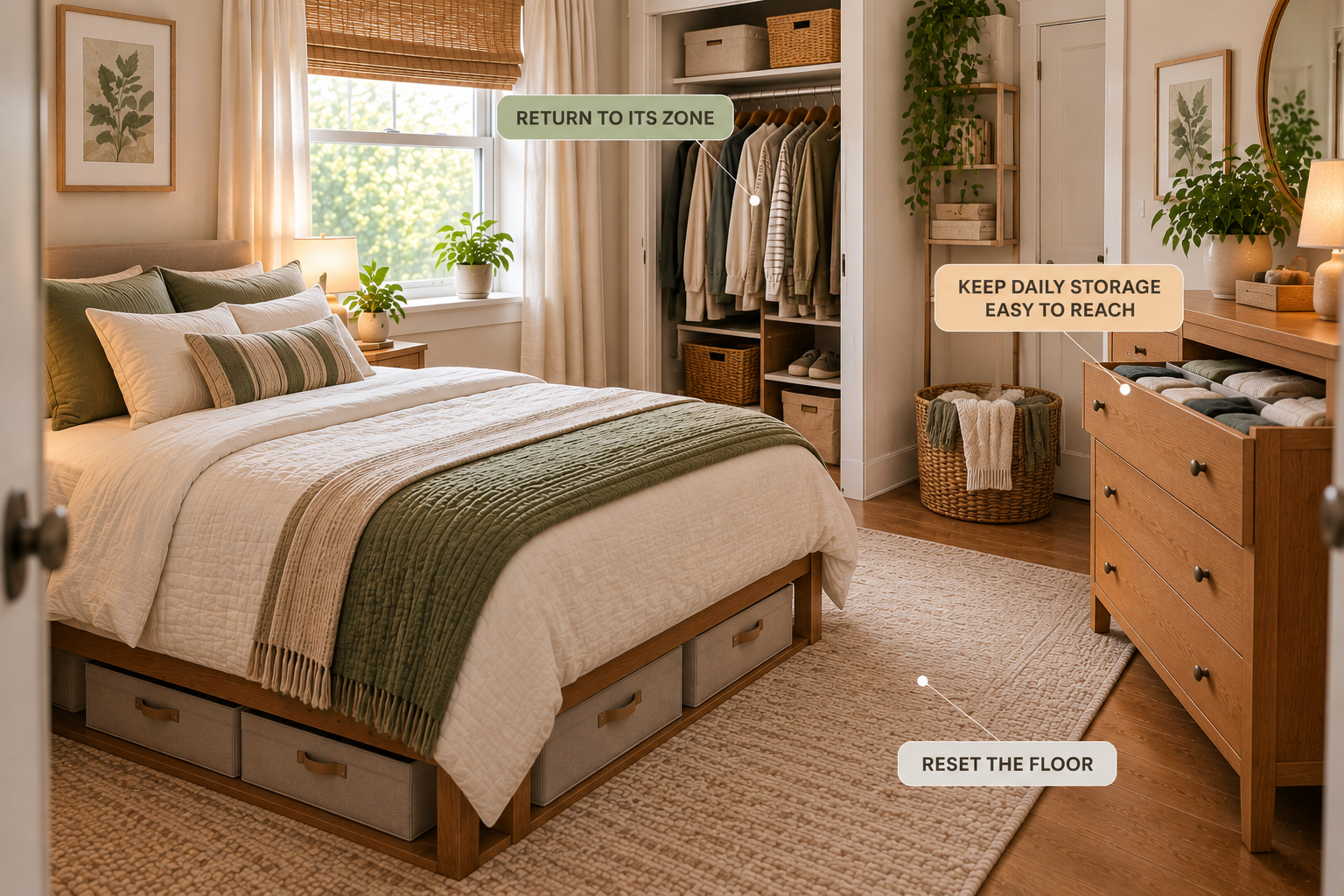
10. Create a Small Reset Zone
A small bedroom needs somewhere for things that are temporarily between locations.
Without a simple reset point, these items often end up on the floor, chair, bed, or another surface.
A small basket or designated temporary-return area can hold items that need to be put away or taken to another room. Keep this zone intentionally small so it does not become permanent storage.
Answer
Give temporary items one small place to wait before they return to their normal zone.
Why
A defined reset point prevents temporary clutter from spreading across the room.
11. What to Store Where
| Item type | First storage choice | Reason |
|---|---|---|
| Daily clothing | Easiest-access storage | Frequent access should require the least effort. |
| Small clothing categories | Drawers | Small categories are easier to contain and see in dedicated drawers. |
| Hanging clothes | Closet or wardrobe | Uses hanging capacity efficiently. |
| Seasonal clothing | Under bed or higher storage | These items do not need prime-access storage. |
| Extra bedding | Under bed or upper storage | Useful but generally not needed every day. |
| Luggage | Less convenient storage | Usually does not justify prime-access space. |
| Accessories | Small dedicated zone | Containment helps prevent small items from spreading. |
| Rarely used belongings | Higher or less convenient storage | Prime space should remain available for frequent-use items. |
12. Keep the Storage System Safe and Practical
Organization should not create a new safety problem.
- Do not block the bedroom door or main walking path.
- Do not overload shelves or storage furniture beyond their intended capacity.
- Secure furniture appropriately where stability is a concern.
- Keep frequently used items easy enough to reach safely.
- Keep household chemicals and other hazardous products according to their labels and away from children and pets.
The goal is storage that works in everyday use, not storage that simply looks full and organized.
13. Common Small-Bedroom Storage Mistakes
Adding Furniture Too Early
Buying storage before measuring often creates a larger floor-space problem.
Using Floor Space First
A second or third low piece of furniture can consume the circulation space the room needs.
Using Under-Bed Space for Daily Items
Frequent access becomes inconvenient when everyday belongings are stored underneath the bed.
Giving Every Zone the Same Job
Storage becomes easier when each area has a clear role instead of holding random categories.
Ignoring Seasonal Items
Seasonal belongings can consume the easiest storage even though they need much less frequent access.
Buying Containers Before Measuring
A useful container is still a poor solution if it does not fit the available space.
14. Use This Decision Flow When Storage Still Feels Too Small
Find the actual problem first
Storage is overflowing?
Reduce the inventory before adding more storage.
The floor feels crowded?
Stop adding floor furniture and examine vertical or hidden storage.
The closet is full?
Move seasonal and occasional items into less convenient storage.
Under-bed space is unused?
Measure the clearance and assign it to suitable low-frequency items.
Everything has a place but the room still feels cluttered?
Reduce visible storage and consolidate categories.
Daily items are difficult to reach?
Move them into prime-access storage and relocate occasional items.
A new organizer does not fit?
Measure again instead of forcing the room to accommodate the organizer.
15. Reset the Bedroom Regularly
A storage system is only useful if it remains easy to maintain.
The reset should be simple enough that putting things away does not feel like another organization project.
Return
Put everyday belongings back into their assigned storage zones.
Reduce
Remove items that have gradually accumulated without a clear reason to stay.
Protect
Keep the floor and main walking paths clear so the room continues to function well.
Frequently Asked Questions
How do you organize a small bedroom with little storage?
Start by reducing what needs to stay in the room. Then assign the closet, dresser, drawers, under-bed area, and other available spaces specific jobs. Keep frequently used items in the easiest-to-reach locations and use hidden or vertical storage for lower-frequency belongings.
How do you maximize storage in a small bedroom?
First use the storage you already have more efficiently. Measure unused vertical and under-bed space, move seasonal items out of prime-access storage, and consider compact multi-functional furniture only when the room genuinely needs additional capacity.
Where should clothes go in a small bedroom?
Keep frequently worn clothes in the easiest-to-reach closet, dresser, or drawer storage. Less frequently used and seasonal clothing can move to under-bed or higher storage so prime space remains available for everyday items.
What should be stored under a bed?
Under-bed storage is generally most useful for seasonal clothing, extra bedding, luggage, occasional shoes, and other belongings that do not need daily access. Measure the actual clearance before choosing containers.
How can I add storage without making a bedroom feel smaller?
Protect the floor first. Look at vertical storage, under-bed space, existing furniture capacity, and narrow storage footprints before adding another large piece of floor furniture.
How do you organize a small bedroom with too much stuff?
Separate belongings by how often they are used and whether they actually need to remain in the bedroom. Reduce duplicates and unnecessary items, move seasonal or occasional belongings into less convenient storage, and then assign clear jobs to the remaining storage zones.
Related Guides
Some product links on this page are affiliate links. If you purchase through one of these links, Simply Tidy Home may earn a commission at no additional cost to you. Product recommendations are included only where they fit the organization problem discussed in the article.
A small bedroom does not need every storage solution.
It needs the right storage jobs in the right places. Measure first, reduce what does not need to stay, protect the floor, use hidden and vertical capacity, and keep everyday items easy to reach.