
Cleaning supplies can become surprisingly difficult to store when every cabinet, shelf, and closet is already doing a job. The solution is usually not more containers. It is a simple system that reduces clutter, groups supplies by use, and gives each category a practical home.
To organize cleaning supplies in a small space, first gather everything and remove duplicates or products you no longer use. Then group supplies by purpose, decide where each group should live, and use compact storage only where it solves a specific problem. Keep everyday supplies easy to reach, backup supplies together, and cleaning tools where they can be accessed without disturbing other storage.
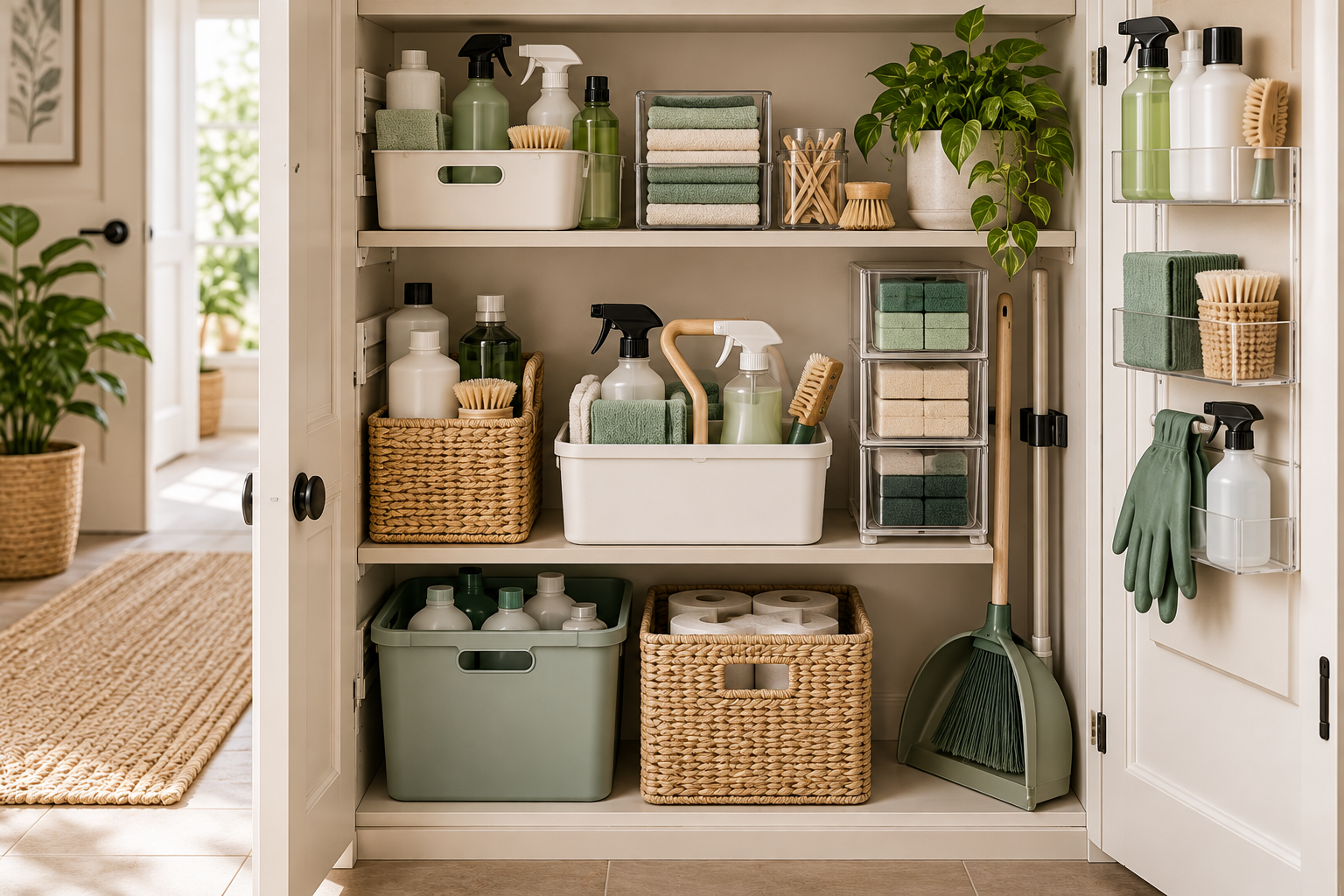
The System at a Glance
Why Cleaning Supplies Become Hard to Store
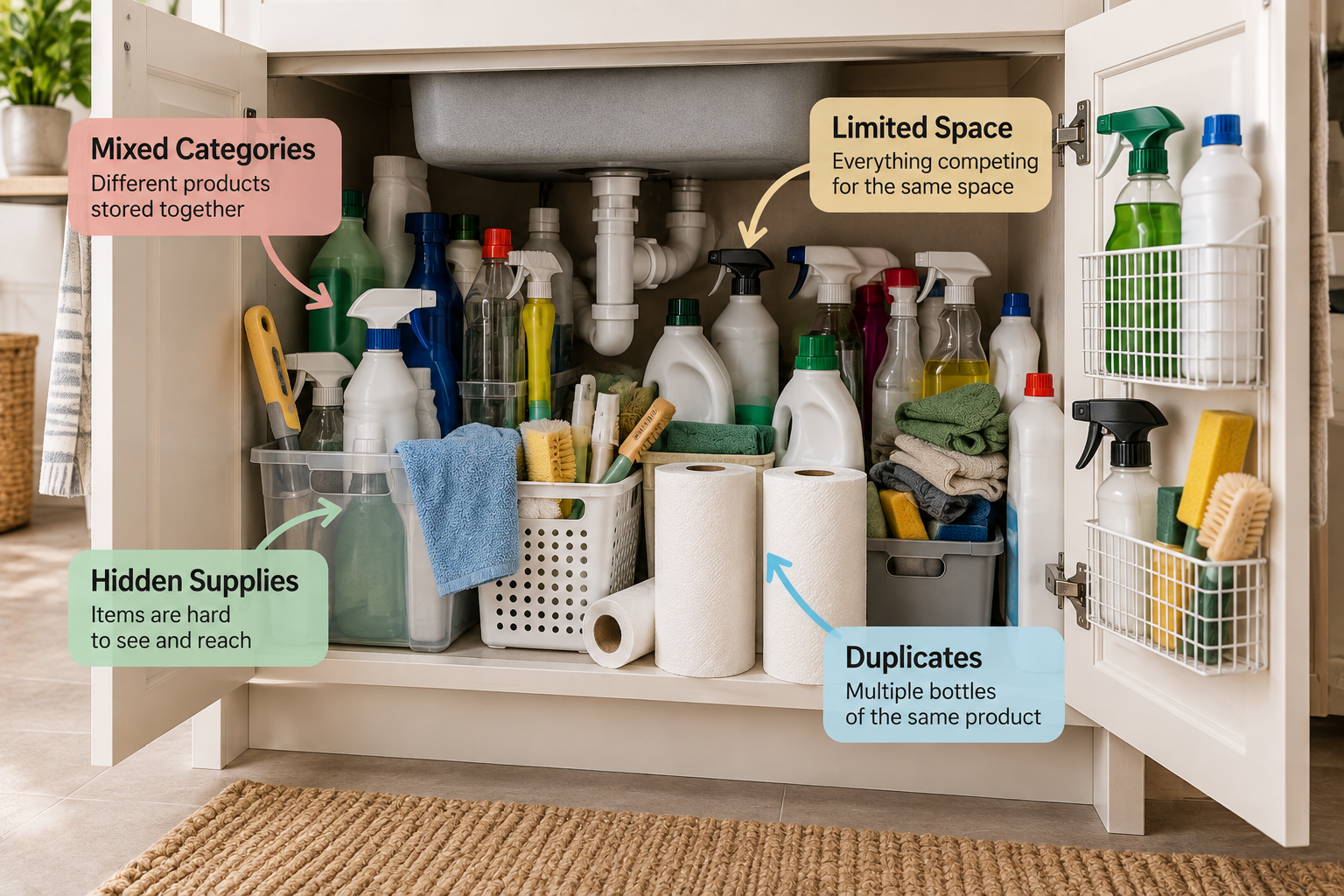
Small homes rarely have one large space dedicated to cleaning supplies. Instead, bottles, cloths, brushes, refills, and tools end up competing for space under sinks, inside cabinets, in bathrooms, or wherever an empty shelf appears.
The problem is often not the total amount of storage. It is that too many different types of supplies are competing for the same space.
What should you do first?
Take all of your cleaning supplies out of their current storage areas and see the complete collection before buying or moving anything.
Why?
Scattered storage can hide duplicates, forgotten products, half-used bottles, and supplies that no longer belong in your routine.
1. Gather Everything Before Organizing
Start by collecting your cleaning supplies from every storage location.
Check under sinks, inside bathroom cabinets, laundry areas, closets, utility spaces, and any other place where cleaning products have accumulated.
Put them together long enough to see what you actually have. This makes the next decision much easier.
Storage should be chosen after you understand what needs to be stored and where it needs to be used.
2. Reduce the Amount You Need to Store
Small storage spaces become much easier to manage when you reduce unnecessary volume before trying to organize it.
Look for duplicates, empty containers, products you no longer use, and supplies that do not fit your current cleaning routine.
Keep the products that have a clear purpose in your home. Avoid keeping multiple versions of the same type of product simply because there is room for them.
A container can make a group of supplies look neater without actually reducing the amount of stuff you have. In a very small home, reducing unnecessary items usually creates more useful space than adding another organizer.
3. Decide What Stays Together
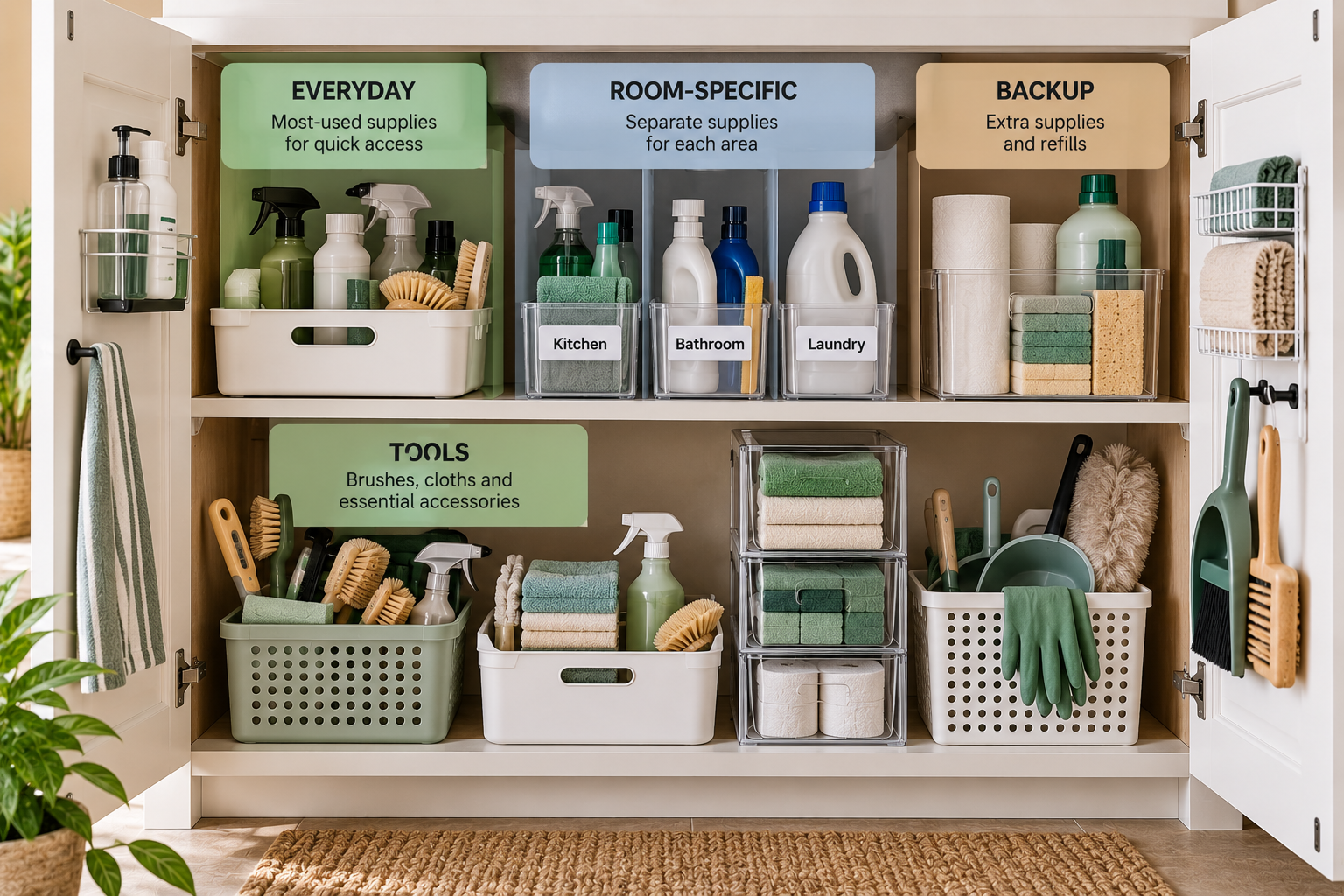
Once you know what you are keeping, group supplies according to how they are used.
| Category | Examples | Storage Priority |
|---|---|---|
| Everyday | Frequently used sprays, cloths, sponges, and basic cleaners | Keep easy to reach |
| Room-Specific | Bathroom, kitchen, glass, or other specialized supplies | Store near the area when practical |
| Backup | Refills and unopened replacement supplies | Keep together in a less-accessed zone |
| Tools | Brushes, cloths, gloves, dusters, and other reusable tools | Store where they can dry and remain accessible |
The goal is not to create the maximum number of categories. It is to create groups that make finding and putting away supplies easier.
4. Create Zones for Your Cleaning Supplies
After grouping the supplies, decide which areas of the home make the most sense for each category.
Choose the Storage Zone First
Everyday kitchen supplies may belong under or near the kitchen sink. Bathroom-specific products may be easier to manage in the bathroom.
Refills and unopened products usually do not need to occupy the easiest-to-reach part of a cabinet.
If you regularly clean several rooms with the same supplies, a small caddy can reduce repeated trips back to the storage area.
5. Measure the Space Before Choosing Storage
In a small space, a storage product should fit the space you actually have. Do not choose the organizer first and hope it works afterward.
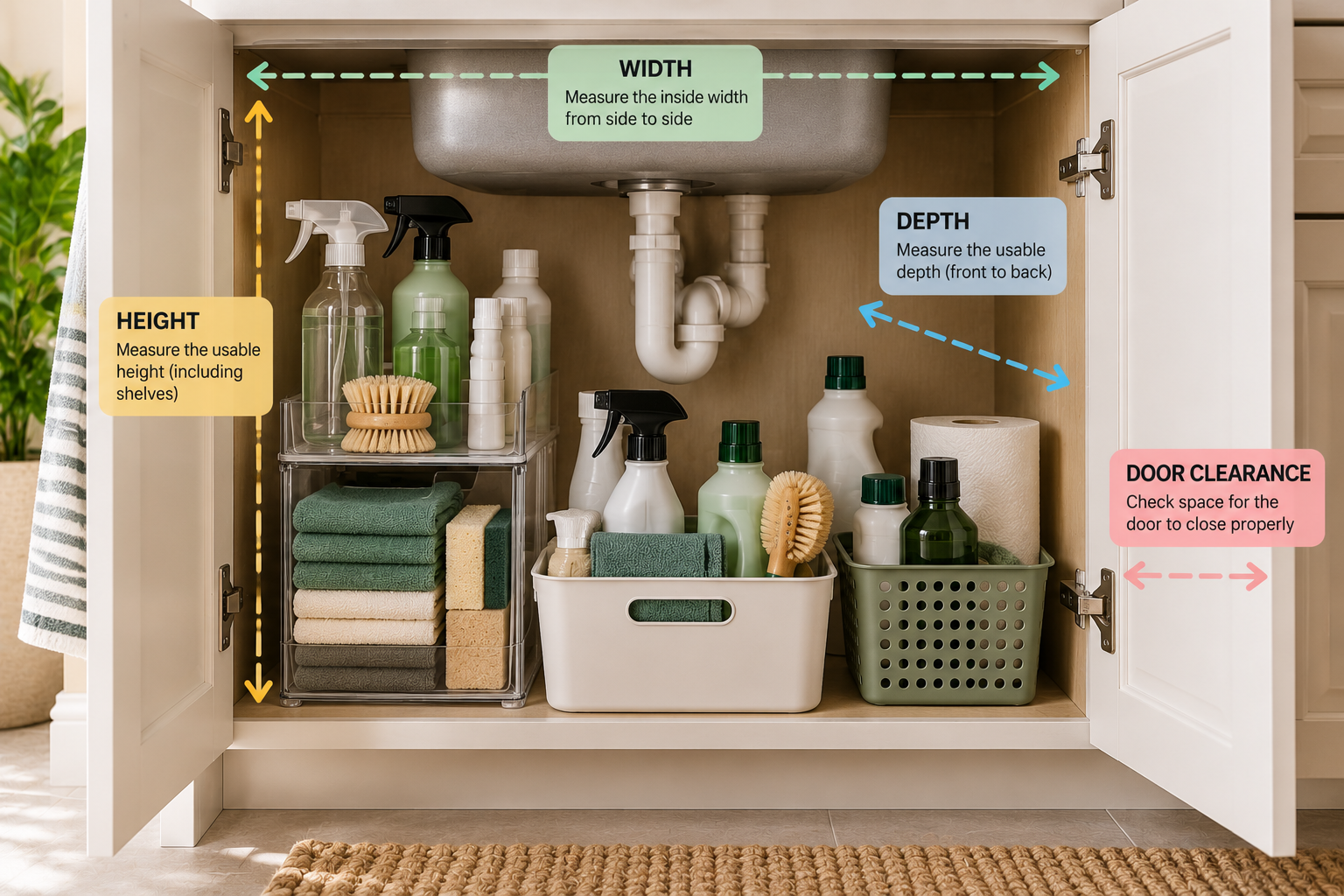
Measure These Four Things
- Width: how much horizontal space is available?
- Depth: how far can an organizer extend without blocking other items?
- Height: how much vertical space can be used?
- Door clearance: will the cabinet or closet door still close after storage is added?
Also check the shape of the space. Pipes, hinges, shelves, drawers, and fixed hardware can reduce usable storage even when the overall cabinet looks large.
6. Use Under-Sink and Cabinet Space Carefully
Under-sink cabinets can be useful because they are close to where many cleaning tasks happen. They can also be awkward because plumbing takes away usable space.
Use the area for supplies that benefit from being close to the kitchen or bathroom. Keep the layout simple enough that frequently used items do not disappear behind less-used products.
If you already have a small cleaning closet, focus on making that space work before spreading supplies into additional areas. Our guide to organizing a small cleaning closet covers that specific situation.
For homes where cleaning supplies share space with household equipment, see our guide to organizing a utility closet.
7. Create a Simple Distributed Storage System
You do not always need one central cleaning-supply location. In a small home, a distributed system can be easier to use.
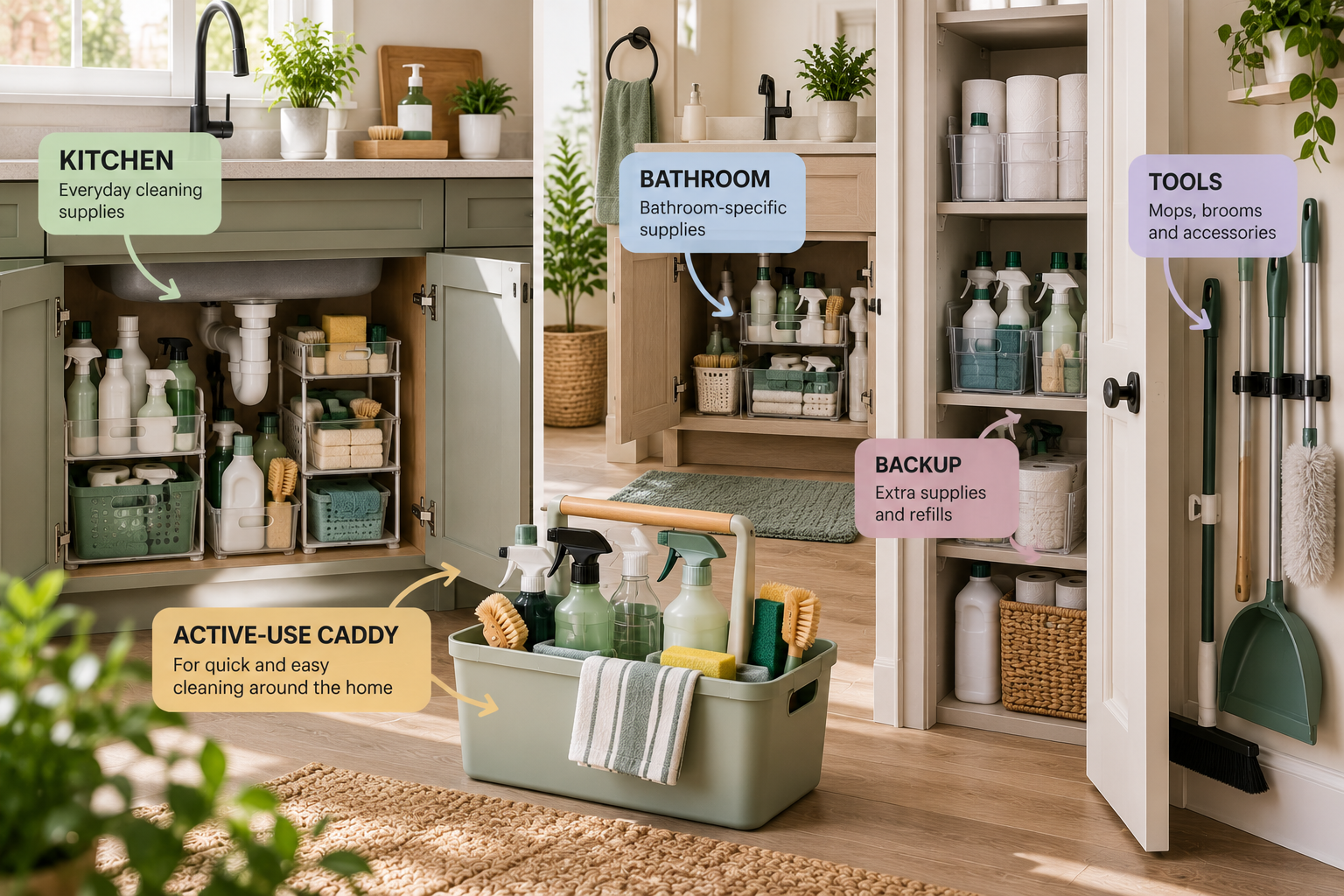
A practical small-home system might look like this:
Everyday Zone
Keep the cleaning products you use most often in the easiest-to-reach location.
Room Zone
Keep a small number of room-specific supplies near the room where they are regularly used.
Mobile Zone
Use a caddy for supplies that move between several rooms during the same cleaning session.
Backup Zone
Keep unopened refills and less frequently used supplies together in secondary storage.
8. Use a Cleaning Caddy When Supplies Move Around the Home
A caddy is useful when the same group of cleaning supplies is regularly carried from room to room.
The goal is not to put every cleaning product into one large container. Keep the caddy limited to the supplies that genuinely travel together.
If you repeatedly carry the same supplies from storage to several rooms, a caddy may solve a movement problem. If the supplies normally stay in one room, permanent local storage may be simpler.
9. Use Vertical and Door Space When the Main Shelf Is Full
When horizontal cabinet space is limited, look at the unused height and the inside of cabinet doors.
A small shelf riser can create another level inside a cabinet. A door-mounted organizer can provide additional shallow storage when the door has enough clearance.
Before You Buy a Cabinet Organizer
- Measure the available width, depth, and height.
- Check whether pipes, hinges, or shelves interfere with the organizer.
- Check door clearance if the organizer will sit on or near the door.
- Decide what category the organizer will hold.
- Make sure the organizer solves a specific storage problem rather than simply adding another container.
SONGMICS Cabinet Organizer Shelf
A two-piece cabinet shelf set can be useful when a cabinet has unused vertical space and the existing shelf height is creating wasted room.
Use it only when the cabinet dimensions and the items you plan to store make the extra level practical.
10. When Every Cabinet Is Already Full
If every cabinet is full, adding another organizer may not be the answer.
First look for supplies that are taking up prime space even though they are rarely used. Backup products are a common example. They need storage, but they do not necessarily need the easiest access.
You can also reconsider whether every cleaning product needs to live in the same location. Moving room-specific supplies closer to where they are used can free the main cleaning area without increasing the total amount of storage.
A small home often works better with fewer categories, clearer zones, and less duplicate inventory rather than a larger collection of organizers.
11. Store Backup Supplies Separately
Backup products should not compete with everyday supplies for the same easy-access space.
Group unopened refills and replacement supplies together. This makes it easier to see what you already have and reduces the chance of buying another product before using the existing backup.
iDesign Storage Bin with Handles
A clear handled bin can be useful for grouping backup cleaning supplies or other related items inside a cabinet or on a shelf.
The handles can make a less frequently accessed group easier to pull forward when needed.
12. Common Cleaning-Supply Storage Mistakes
- Buying organizers before measuring: the organizer may not fit the actual usable space.
- Keeping duplicates together: extra products consume space without improving the system.
- Putting backups in prime storage: rarely used supplies should not block everyday items.
- Creating too many categories: excessive sorting can make the system harder to maintain.
- Ignoring where products are used: storage should support the cleaning routine rather than create extra trips.
- Overfilling containers: a full bin can become difficult to search and return items to.
13. Maintain the System With a Simple Reset
Small-space storage only works when it remains easy to reset.
You do not need a major reorganization every month. A short reset is usually enough to return misplaced supplies, check backups, and remove items that have accumulated without a clear purpose.
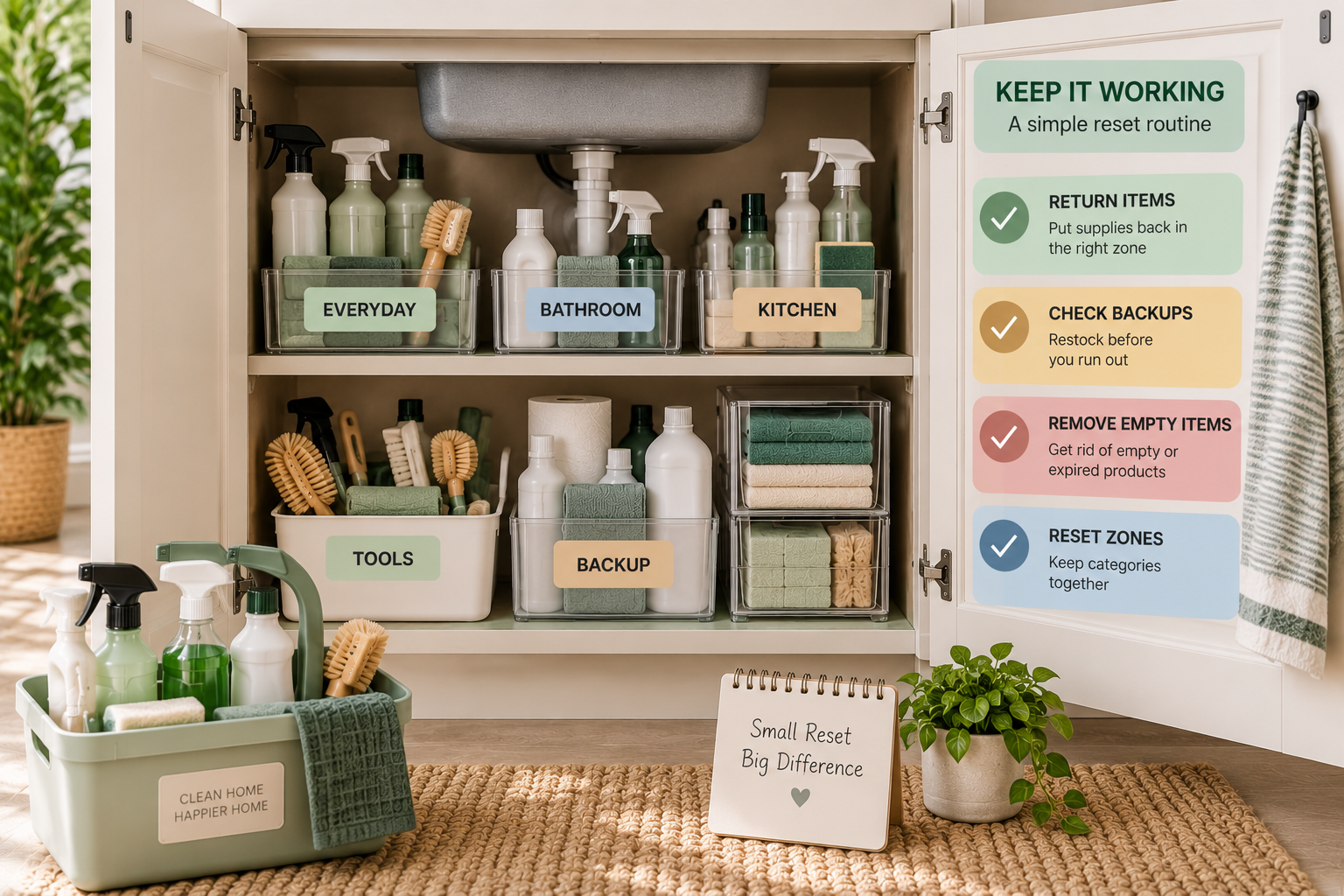
Return
Put supplies back into their assigned zones after cleaning.
Check
Notice whether backups are accumulating or frequently used items are becoming difficult to reach.
Reset
Remove empty containers, correct misplaced items, and adjust the system when your routine changes.
Cleaning-Supply Storage Safety
Cleaning products should remain in their original containers and be stored according to their labels.
Do not mix cleaning products unless the product instructions specifically allow it. Some combinations can create dangerous chemical reactions.
Keep products that could be harmful away from children and pets, and keep cleaning chemicals separate from food and food-preparation areas.
A storage system is only successful if it keeps products appropriately contained, identifiable, and safely separated from incompatible items.
Quick Answers
What is the best way to organize cleaning supplies in a small space?
Gather all supplies, reduce duplicates, group items by use, assign practical zones, and then choose storage that fits those zones. Keep everyday supplies accessible and backups together in secondary storage.
Where should cleaning supplies be stored in a small home?
Store supplies where they are safe and practical to access. Everyday supplies can stay near their main area of use, while backups can be stored in a less frequently accessed cabinet, closet, or shelf.
How do you organize cleaning supplies when you have no storage space?
Start by reducing duplicates and unused products. Then distribute supplies according to where they are used, use available vertical space, and keep only frequently needed items in prime storage locations.
Should all cleaning supplies be stored together?
Not necessarily. A small home can work better with a central backup zone plus smaller local zones for supplies that are used frequently in specific rooms.
Are cleaning caddies useful in a small home?
They can be useful when the same supplies are regularly carried between several rooms. If supplies stay in one room, permanent local storage may be simpler.
Should I buy storage containers before organizing cleaning supplies?
No. Measure and sort first. Buying containers before understanding what you need to store often creates more containers without solving the underlying storage problem.
Related Guides
The goal is not to fit more cleaning supplies into a small space.
The goal is to make the supplies you actually use easy to find, easy to return, and easy to manage.
Gather what you have, reduce what you do not need, create clear zones, and choose storage only after the system makes sense.